
Overview
Custom CNC Sealing Jaws and Guide Components for Packaging Machines
ZSCNC supplies drawing-based sealing jaws, sealing bars and guide components for packaging equipment OEMs and maintenance buyers. Our Wuxi machining base focuses on CNC milling and turning. Send the approved revision, sample quantity, quantity per batch and estimated annual demand so we can review the manufacturing and inspection scope for repeat supply.
What Are Sealing Jaws and Guide Components?
These specialized mechanical parts handle thermal sealing and precise material steering within packaging equipment:
- Heat Sealing Jaws: Precision CNC machined sealing jaws apply controlled temperature, pressure, and time to weld flexible films, pouches, and foils into airtight closures.
- Guide Components: Packaging machine guide rails, wear strips, and chain guides keep containers, trays, and films aligned throughout high-speed transport.
Where These Components Are Used in Packaging Equipment
Custom CNC machined parts operate at critical contact points across diverse automated packaging lines:
| Equipment Type | Application Area | Key Function |
|---|---|---|
| Form-Fill-Seal (VFFS/HFFS) | Cross-seal and end-seal jaw assemblies | Rapid thermal sealing and film cutting |
| Tray Sealers & Thermoforming | Sealing dies and cavity perimeter guides | Perimeter film welding and tray positioning |
| Filling & Capping Lines | Container neck guides and transfer rails | High-speed container tracking and stabilization |
| Conveyor Systems | Straight/curved wear strips and chain tracks | Low-friction material transit |
Custom Manufacturing From OEM Drawings and CAD Models
We review 2D drawings and matching 3D models for material, critical dimensions, tool access and finishing requirements. STEP with a dimensioned PDF is preferred for review. Replacement fit and equipment performance need customer validation; design or material changes require approval before production.
Common CNC Machined Sealing and Guide Components
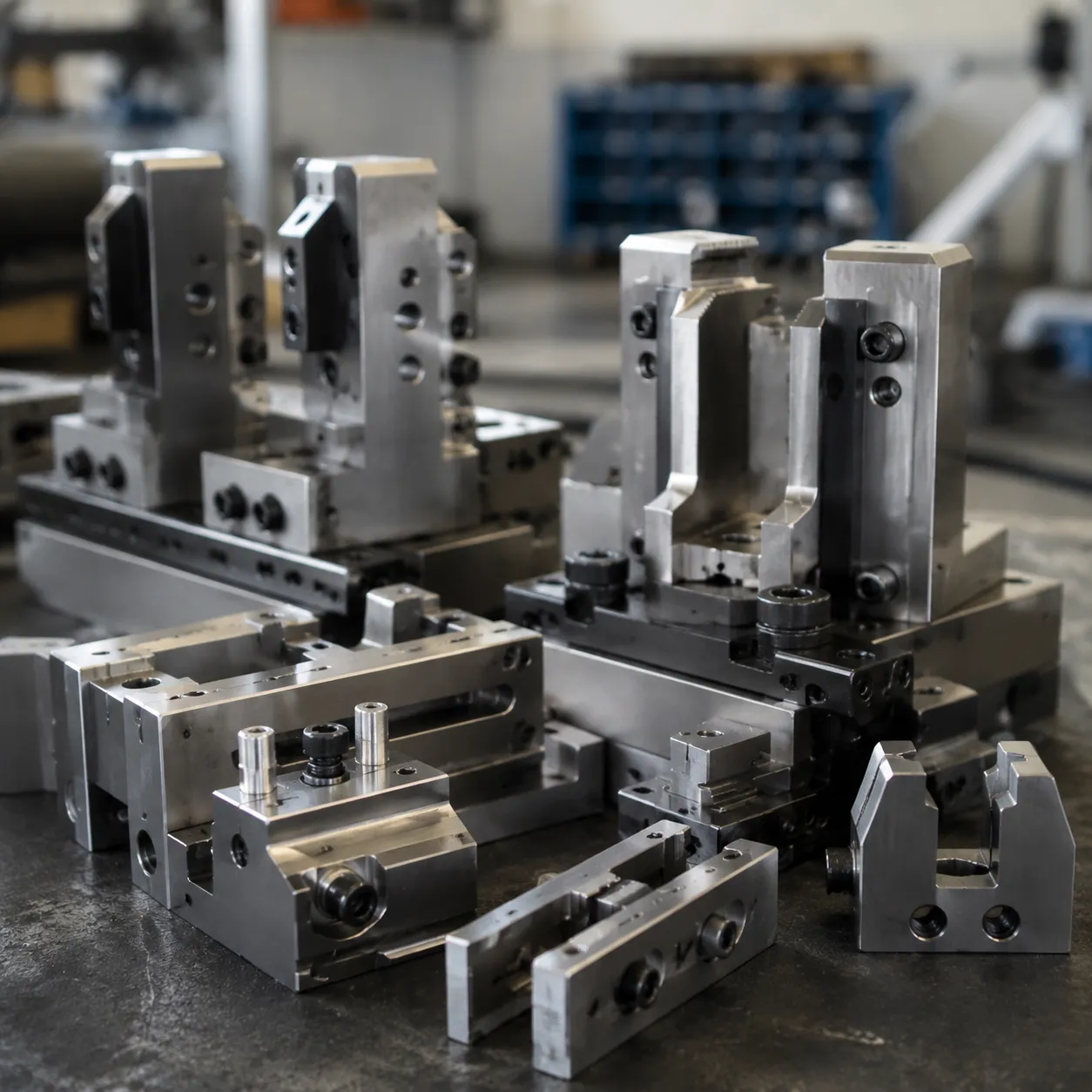
We review sealing and guide parts by geometry and application. Machinability, finishing and inspection are confirmed from the drawing before order acceptance.
Heat Sealing Jaws and Sealing Bars
Specify sealing-face width, serration pitch and profile, mounting datums, heater bores, sensor locations and knife clearances where present. Film type and operating conditions belong in the application brief. Seal strength and leak performance depend on the complete machine and validated settings. Related parts include sealing jaws and heat plates for tray sealers.
Guide Rails and Product Guide Components
Specify the container envelope, running clearance, entry radii, guide length and mounting pattern. Define contact surfaces and edge condition on the drawing. Material and surface changes should be approved against the actual product, speed, load and cleaning environment.
Chain Guides and Conveyor Wear Strips
Send the chain or mating-track specification, guide cross-section, mounting details and wear limits. Plastic grade, clearance and expansion allowance are application-specific; a low-friction material alone does not establish service life or eliminate line jams.
Custom Replacement Components for Existing Packaging Machines
Provide the OEM part reference, approved drawing and mating-part details. If only a worn sample is available, separate wear from the intended nominal geometry and agree a replacement drawing before batch production. State whether the order covers a single part number, a matched jaw pair or a multi-part maintenance kit.
Critical Features of CNC Machined Sealing Jaws
Sealing Face Flatness and Parallelism
Mark the sealing area, datum scheme, flatness and parallelism on the drawing. Agree whether acceptance applies before or after finishing and under which measurement condition. Feasible limits depend on part length, section, material and process route; machining inspection does not prove flatness at operating temperature.
Machined Sealing Profiles and Surface Condition
Specify tooth pitch, depth, included angles, radii, surface-texture locations and edge limits. Agree any coating thickness and masking requirements. Our related sealing-jaw surface-finish article provides application context; the approved drawing and customer seal trials govern acceptance.
Heater and Temperature-Sensor Features When Required by the Design
| Feature | RFQ details |
|---|---|
| Heater bores | Heater dimensions, specified fit, insertion length and inspection access. |
| Sensor features | Sensor specification, position, depth and retention method. |
| Isolation slots | Geometry, remaining wall section and protected surfaces. |
State whether heaters, sensors and purchased items are supplied by the customer or included in the requested scope. Thermal performance is validated in the assembled equipment.
Mounting Holes and Alignment Features
Define bolt patterns, dowel fits, reference faces and their positional relationships. Include the mating assembly or relevant interface drawing. Customer installation checks establish any adjustment needed; a matching hole pattern alone does not guarantee interchangeable operation.
Critical Features of Packaging Machine Guide Components
Guide geometry, material and mounting must suit the product being handled. Identify the functional features that require inspection so repeat batches can be accepted against the same drawing.
Guide Profiles and Product-Contact Geometry
Provide the product envelope, guide clearance, transition radii and contact zones. Check proposed profiles in the actual line before batch approval. Mark protected surfaces and allowable edge condition rather than relying on an unspecified smooth finish.
Low-Friction and Wear Surfaces
| Requirement | What the drawing or RFQ must define |
|---|---|
| Contact surface | Material pair, texture limits and measurement locations. |
| Wear material | Exact UHMW-PE, POM or metal grade, load and operating temperature. |
| Secondary finish | Coating type, thickness, masking and final dimensions where required. |
Friction and wear depend on the selected grade and operating conditions; agree an application trial where performance is critical.
Mounting and Locating Features
Specify fixed and adjustable mounting points, slot travel, counterbores and locating datums. Related packaging mounts and brackets should be quoted with their own part numbers, quantities and interface revisions.
Dimensional Consistency Across Replacement Parts
Repeat orders should identify the approved drawing revision, material grade, finish and acceptance record. Confirm any changes to mating hardware or package format before releasing the next batch. Inspection limits apply to the defined features and measurement condition.
Material Options for Sealing Jaws and Guide Components
Selecting the right raw material is crucial when manufacturing CNC machined sealing jaws and packaging machine guide rails. We match alloys and engineering polymers directly to your line speed, washdown protocols, thermal demands, and mechanical loads.
Aluminum for Lightweight Heat-Sealing Components
State the required alloy and temper rather than requesting generic aluminum. Selection for heated or moving parts depends on the design load, temperature, coating and dimensional requirements; the OEM must approve substitutions.
Stainless Steel for Corrosive and Washdown Environments
304 and 316L components are reviewed against the specified grade, cleaning chemistry, temperature and contact requirements. Stainless steel is not a universal corrosion or hygiene guarantee. Request any required material evidence before quotation.
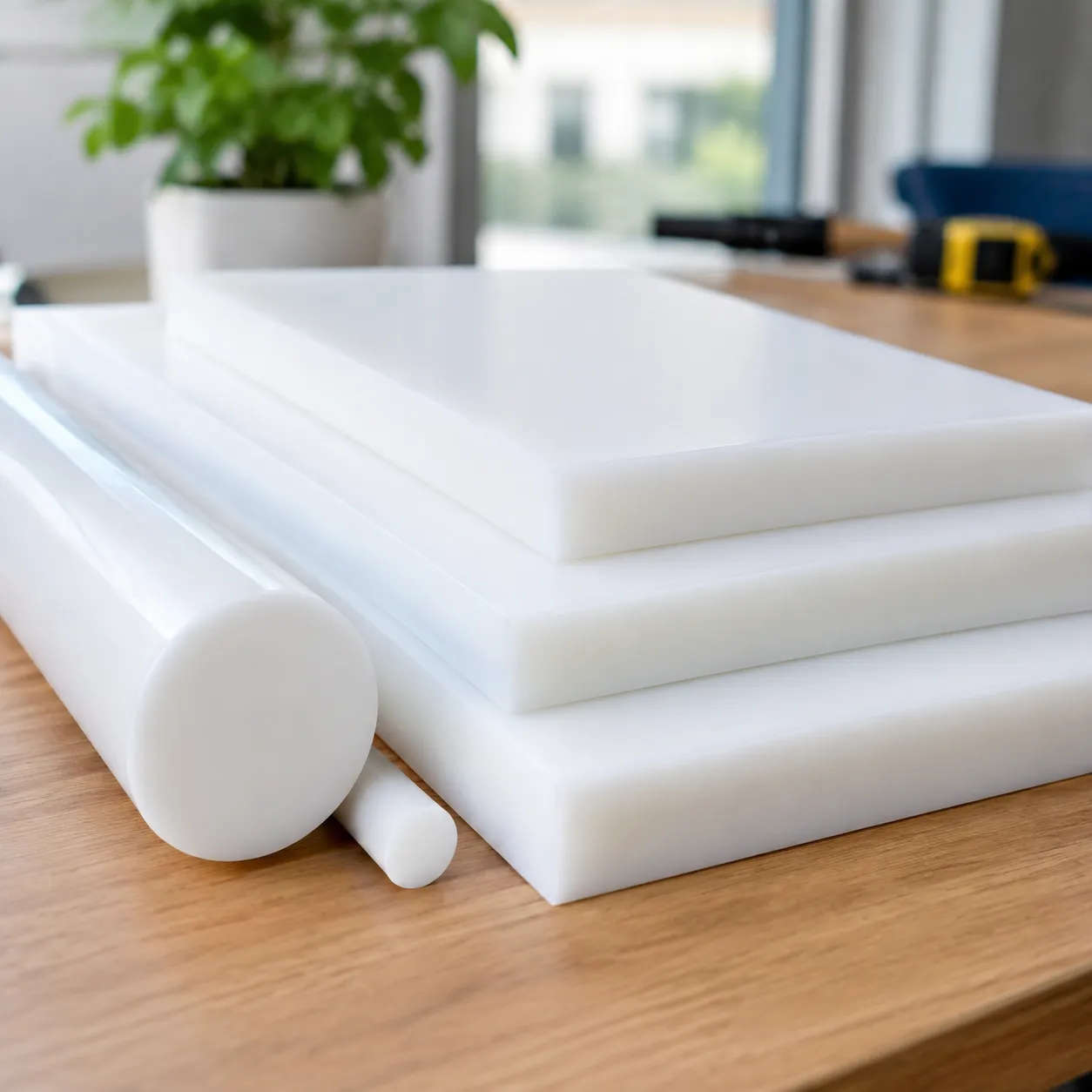
UHMW-PE for Low-Friction Wear and Guide Components
UHMW-PE may suit sliding guides and replaceable wear surfaces. Define the exact grade and account for temperature and load in the design. See related UHMW-PE guide rails and wear strips; food-contact documentation must be confirmed for the selected stock.
POM and Other Engineering Plastics for Precision Guides
Select engineering plastics by grade-specific properties and the intended duty. Specify contact loads, temperature, cleaning exposure and critical fits. Material substitution requires customer approval.
Material Selection According to Temperature, Load, Wear, and Environment
| Material group | Information required for review |
|---|---|
| Aluminum | Alloy, temper, heated or moving duty and finish. |
| Stainless steel | Grade, cleaning conditions and required documents. |
| UHMW-PE / POM | Exact grade, contact duty, temperature and dimensional requirements. |
| Other engineering plastics | Specified grade, stock availability and application evidence. |
CNC Machining of Packaging Sealing and Guide Parts
Our machining scope centers on CNC milling and turning in Wuxi. We review cutter access, workholding and datum transfer before confirming a route. We have no in-house 5-axis machining, EDM or wire cutting; extra process needs are confirmed separately.
Precision CNC Milling of Sealing Faces and Profiles
The milling route is reviewed against the sealing profile, pitch, depth, corner geometry and edge condition. Define which surfaces are functional and how they will be inspected. Machining does not replace customer validation of the finished seal.
Machining Long and Complex Guide Rail Profiles
Provide overall dimensions, sectional profile, straightness requirements and inspection condition. Workholding, cutter reach and machine travel must be reviewed before accepting long rails or deep channels.
Controlling Distortion in Long or Thin Components
We review stock condition, clamping support, removal sequence and inspection after unclamping. Any stress-relief or other secondary process must be specified and confirmed; it is not assumed for every order. Thin sections and long bars need geometry-specific feasibility review.
Maintaining Datum Relationships and Mounting Accuracy
Mark functional datums and the relationships between mounting holes, sealing faces and guide profiles. The route may require multiple setups; agree the inspection approach for critical relationships rather than assuming every feature can be machined in one setup.
Applications in Packaging Machinery
Vertical and Horizontal Form-Fill-Seal Machines
For VFFS and HFFS parts, provide sealing geometry, film and package details, heater interfaces and knife clearances where relevant. The OEM validates temperature, pressure, dwell time and seal performance on the machine.
Tray Sealing and Thermoforming Packaging Equipment
Tray-sealing bars and guide parts are quoted to the approved perimeter, mounting and thermal-interface drawings. Confirm the machining route and any secondary processing before order acceptance.
Filling, Capping, and Container-Handling Lines
Container neck guides, transfer parts and capping cams require matching container and interface information. State the package format and relevant revisions for each part number.
Conveyor and Product-Transfer Systems
We review drawing-based chain guides, wear strips and transfer guides. Specify chain or product geometry, contact clearances, material grade, mounting details and the operating environment.
Replacement Sealing Jaws and Guide Components
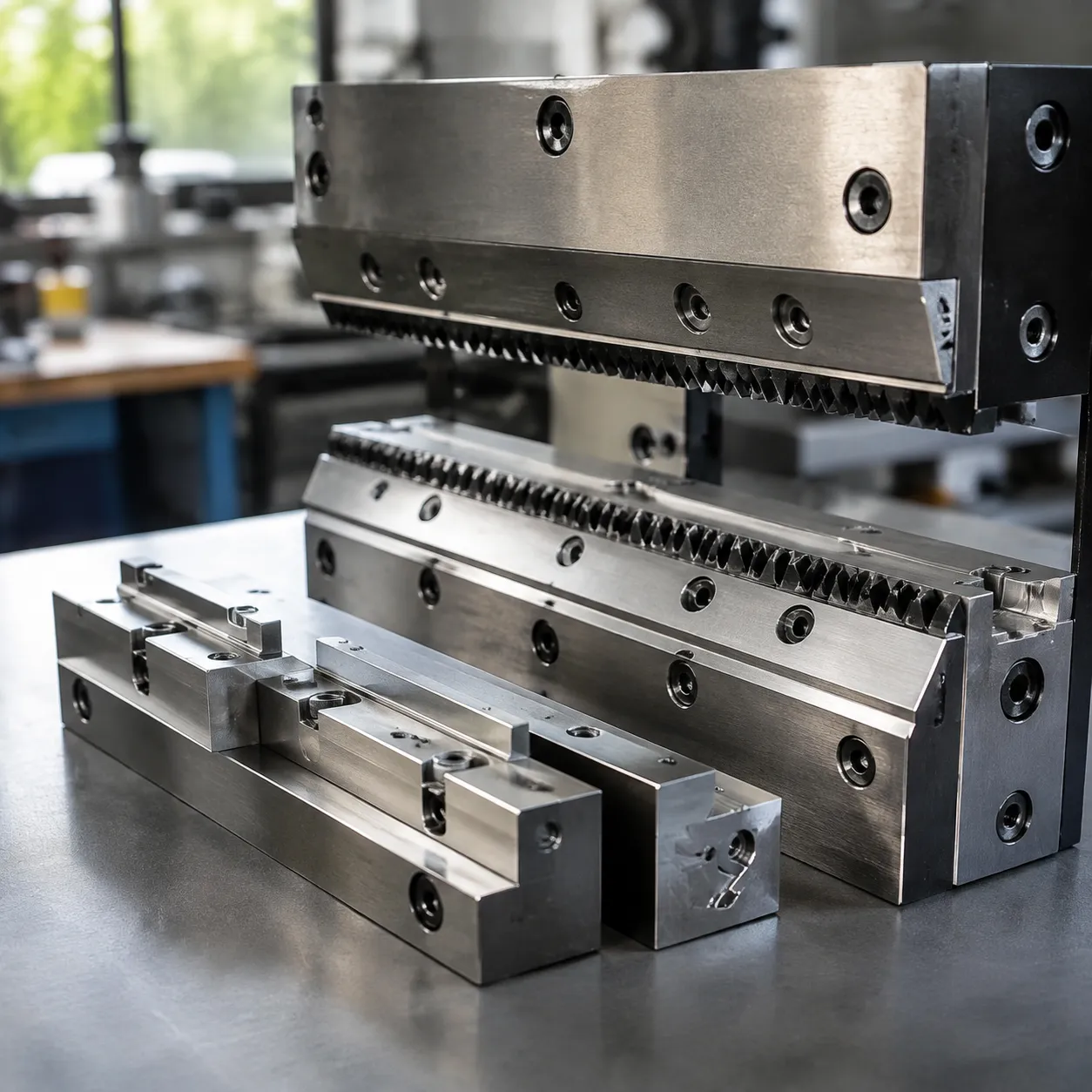
Replacement orders should use an approved drawing and defined acceptance criteria. A worn component can support review but cannot by itself establish the original dimensions or operating performance.
Manufacturing From Existing 2D Drawings
Supply a legible drawing with revision, dimensions, datums, thread callouts, material and finish. Identify missing or obsolete information before approving the manufacturing drawing.
Manufacturing From 3D CAD Models
A matching STEP model helps define geometry; a dimensioned drawing is still needed for tolerances, material, finishing and inspection. Any proposed DFM change is submitted for customer approval before machining.
Replacement of Worn or Difficult-to-Source Components
For obsolete parts, provide the best available drawing, sample history and mating interfaces. Agree the nominal geometry and sample acceptance before committing to a production batch. Price and delivery depend on the reviewed route and stock availability.
Prototype, Low-Volume, and Batch Production
Separate the sample or first-article quantity from the quantity per production release and estimated annual demand. For matched jaws, specify whether quantities mean individual pieces or complete pairs. Agree sample approval, part identification and requested delivery releases before repeat production.
Inspection and Quality Control
Flatness and Parallelism Inspection
Agree the datum support, measurement method, finishing condition and report coverage for flatness and parallelism. Inspection records demonstrate conformity only for the agreed characteristics and conditions.
Profile and Dimensional Verification
Specify the profile dimensions, pitch, radii and surface condition that require verification. Measurement access, equipment availability and reporting scope are confirmed during inspection review; no unverified optical or scanning equipment is promised.
Hole Position and Mounting Feature Inspection
Identify the datum system, locating-hole fits, mounting-hole positions and thread requirements. Agree how inaccessible features and mating interfaces will be checked before production.
CMM Inspection When Required by the Drawing
If CMM measurement or a particular report format is required, list it in the RFQ. Method, equipment access and report coverage must be confirmed before order acceptance; automated CMM inspection is not included by default.
Material and Inspection Documentation When Required
Request material certificates, lot traceability, dimensional reports or first-article records in the RFQ. Availability and coverage are confirmed for the selected stock and order; certification or regulatory compliance is not inferred from the material name.
What to Provide When Requesting a Quotation
To get an accurate quote and fast turnaround on your custom CNC sealing jaws and guide components for packaging machines, sending a complete engineering package is essential. We evaluate requests quickly when provided with clear, actionable technical specifications from the start.
| RFQ Component | Essential Information to Include |
|---|---|
| Design Files | 3D CAD models (STEP/IGES) paired with 2D drawings (PDF/DWG) |
| Material Specs | Material grade (e.g., 6061-T6 Al, 316L Stainless Steel, UHMW-PE, POM) |
| Surface Finish | Target Ra roughness, anodizing, plating, or specialized treatments |
| Tolerances | Sealing face flatness, parallelism, heater bore limits, and mounting alignments |
| Order Details | Sample quantity, quantity per release, annual demand, required inspection and available material documents |
2D Drawings and 3D CAD Models
Send a STEP model with matching 2D drawings for review; confirm other file formats before transfer. Always include matching 2D engineering drawings (PDF or DWG) with clear dimensions, thread callouts, geometric dimensioning and tolerancing (GD&T), and critical datum points for custom packaging machine parts.
Material and Surface Finish Requirements
Specify the exact material grade needed to match your operating environment—whether that means high-heat aluminum, washdown-ready stainless steel, or low-wear engineering plastics. Detail all required surface treatments, such as hard anodizing or tailored surface finishing to lower friction, improve release characteristics, and extend part life.
Critical Tolerances and Functional Features
Highlight functional dimensions that directly impact equipment performance. For CNC machined sealing jaws, specify sealing face flatness, parallelism, and sensor hole tolerances. For packaging machine guide rails and chain guides, indicate critical track profiles, slider geometry, and mounting alignment features.
Quantity and Inspection Requirements
State sample quantity, quantity per release, estimated annual demand, delivery destination and requested dates. Identify first-article features, report format and material-document requirements so they can be included in the quotation.
How are matched jaws and repeat batches approved?
For a jaw pair, identify both part numbers, orientation and whether the quantity is per piece or per set. Agree the sample revision, dimensional record and customer machine trial before releasing the batch. Confirm drawing, film, mating-part or finish changes on later orders.
Upload sealing-jaw and guide-component drawings for a batch quotation. Include the part-number list and quantities. Use PDF, STEP or DWG files up to 5 MB per file; email info@zscncpack.com for larger files or other formats.