
Stainless Steel Valve Manifolds for Beverage Filling Lines
Machining tolerance review: Typical machining tolerance is ±0.01 mm. Selected dimensions may achieve ±0.005 mm after technical review. Final tolerances depend on the drawing, material, part size, geometry, finishing and inspection requirements and must be confirmed before order acceptance.
316L sanitary valve assemblies for Japanese high-speed rotary beverage fillers in the beverage processing industry, optimized for fluid sealing and CIP scenarios in carbonated, juice, and functional drink lines.
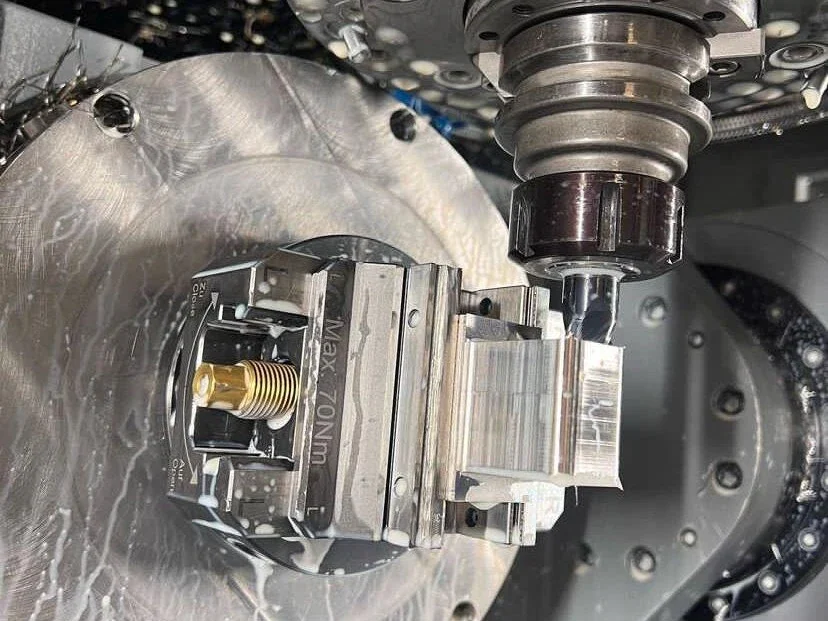
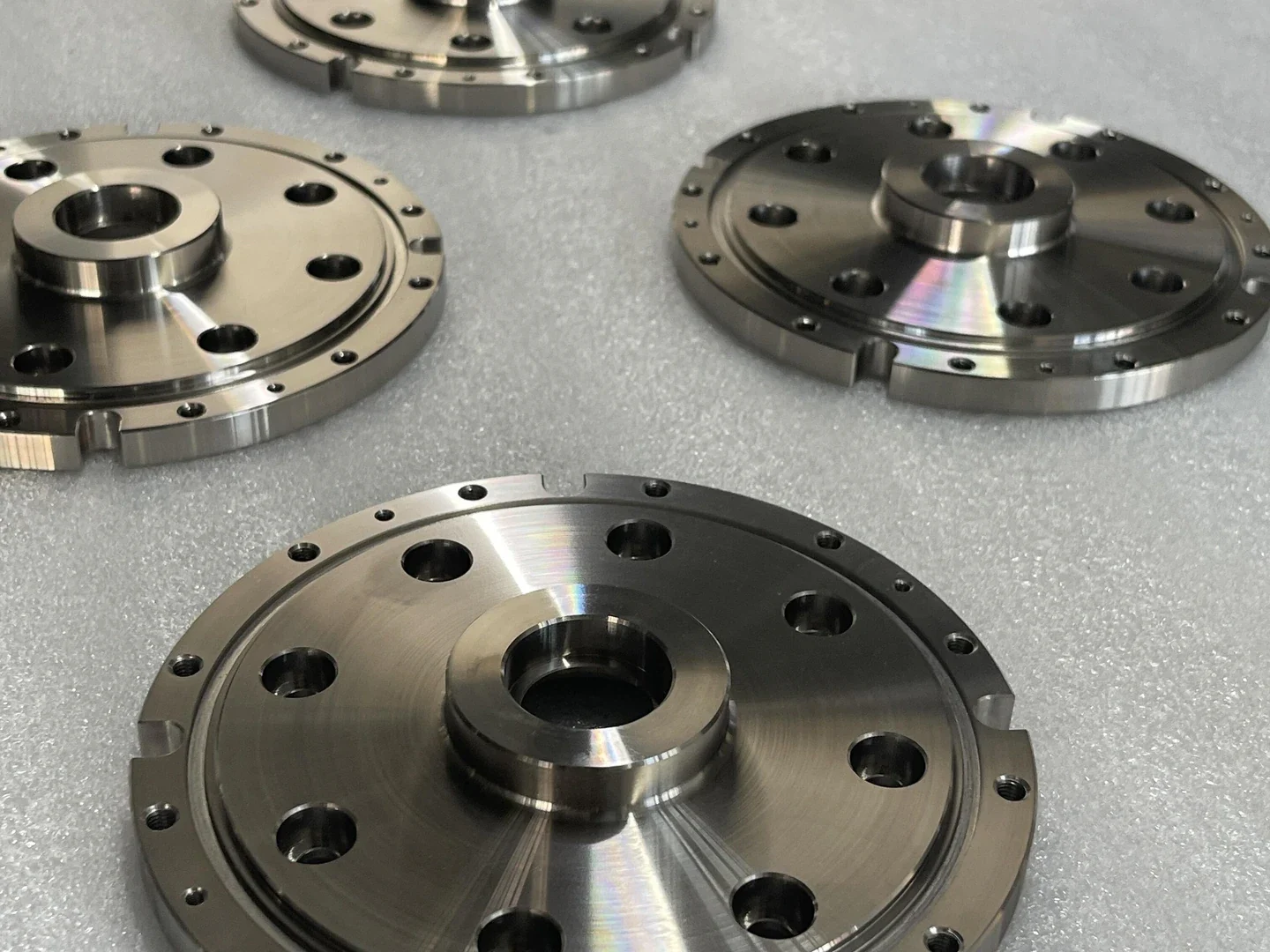
316L sanitary valve body on a 5-axis machine — cutting marks and fixture visible.
Material
316L Stainless Steel
Surface Finish
Ra 0.35μm Finish
Precision
5-Axis Mirror Milling
Compliance
EHEDG & FDA
Quality Impact
0.05% Defect Rate
Application
Japan Filler OEM
Project Snapshot and Technical Specifications
Rapid engineering evaluation and quantified performance metrics for high-speed sanitary liquid packaging components used in the beverage processing industry.
Project Profile
Case Study- Customer Profile
- Leading Japanese Beverage Filling Equipment OEM
- Component Part
- High-Speed Rotary Filler Valve Manifold Assembly
- Material Grade
- 316L Stainless Steel
- Manufacturing Partner
- ZSCNC Precision Machining
Target Applications & Interfaces
These interfaces also align with broader packaging industry requirements.
- Beverage processing lines and high-capacity bottling systems
- Filling machine valve blocks and fluid distribution manifolds
- CIP (Clean-in-Place) sanitation and aseptic sealing interfaces
Technical Specifications
Verified Specs- Raw Material Standard
- ASTM A276 316L Solid Bar Stock
- Primary Process
- 5-Axis CNC Precision Machining
- Surface Finish (Ra)
- Ra0.35μm (Target: Ra≤0.4μm)
- Sealing Face Flatness
- ≤drawing-specified
- Quality Control
- 100% CMM Digital Inspection Report
Guaranteed food-grade valve manifold quality with fully traceable mill test certificates and dimensional inspection data.
Quantified Engineering Results
Measured production gains after deploying ZSCNC Ra0.35μm sanitary machining across industries that demand hygienic filling performance.
Significant reduction in filling line leakage risks
Annualized maintenance and warranty overhead savings
Extended operational continuous run time between overhauls
Overall Equipment Effectiveness increase for beverage lines
Operational Challenges in High-Speed Beverage Filling Lines
The customer is a leading Japanese manufacturer of beverage filling machines. Its high-speed rotary fillers are widely used on carbonated soft drink, juice, and functional beverage lines in the beverage processing industry.
During long-term operation, however, core valve assemblies developed recurring micro-leakage. In particular during CIP cycles, 316L valve-body surface roughness often failed to hold Ra ≤ 0.4μm, creating biofilm residue risk and threatening food-safety compliance. Sealing-face perpendicularity deviations beyond ±0.01mm also accelerated elastomer wear, forcing about 2–3 unplanned shutdowns per month and depressing overall line OEE.
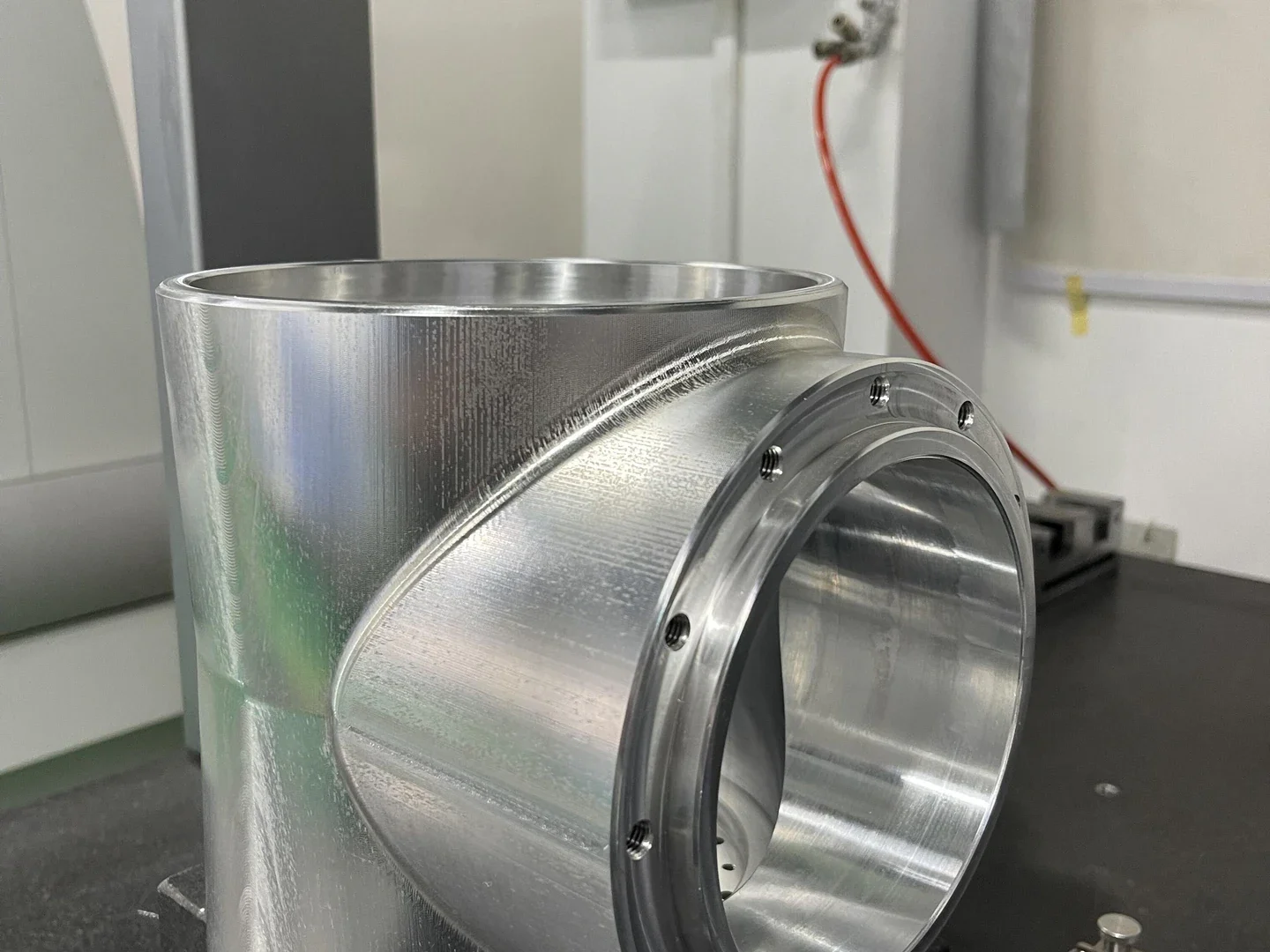
Biofilm Risk During CIP
Inconsistent 316L internal finishes failed to maintain the required Ra ≤ 0.4μm threshold, allowing bacterial biofilm accumulation during Clean-in-Place cycles.
Line Impact: Hygiene compliance failure risk
Sealing Face Geometric Drift
Perpendicularity errors on valve mating faces exceeded ±0.01mm, leading to premature elastomer wear and micro-leaking under high cycle pressures.
Line Impact: Accelerated seal degradation
Unplanned Downtime Events
Frequent gasket degradation forced 2 to 3 unscheduled line shutdowns every month for emergency component replacement, severely depressing OEE.
Line Impact: Severe OEE depression
Strict Traceability Requirements
The application demanded proven corrosion resistance, food-contact compliance (FDA/EHEDG), exact part fitment, and 100% material certificate traceability for food automation industry applications.
Line Impact: Audit and compliance exposure
ZSCNC Advanced Manufacturing Strategy
A dedicated engineering team tackled the problem from three sides—material upgrade, process optimization, and closed-loop inspection—to deliver sanitary valve manifolds for high-speed beverage fillers.
Material Upgrade — Certified 316L
We sourced ASTM A276 certified 316L stainless steel bar stock with mill test certificates and heat-treatment reports, ensuring corrosion resistance and mechanical properties for aggressive CIP chemistry.
- Mill test reports (MTR) provided
- Full heat treatment documentation
- EHEDG & FDA food-contact compliance
Process Optimization — 5-Axis Mirror Milling
Simultaneous 5-axis machining with PCD diamond tooling yields an ultra-smooth Ra0.35μm surface. Climate-controlled machining (±1°C) plus in-situ probing holds sealing-face flatness within drawing-specified.
- Ra0.35μm sanitary surface finish
- Climate-controlled shop (±1°C stability)
- In-situ probing for drawing-specified flatness
Inspection Loop — 100% CMM
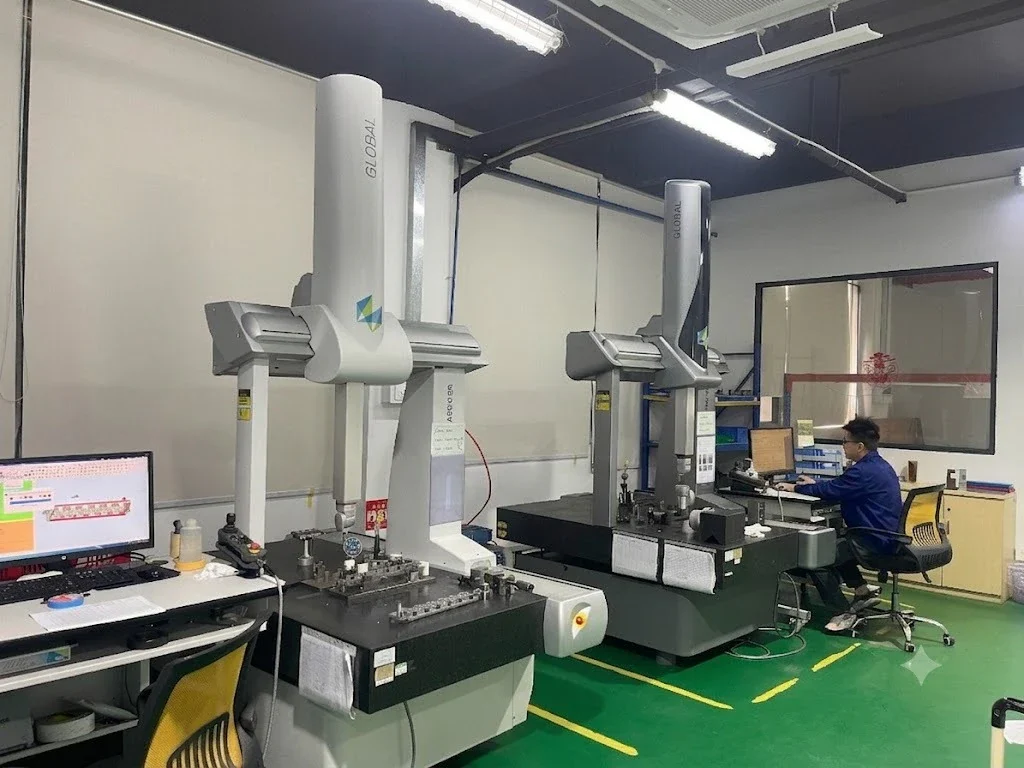
Every component undergoes full CMM dimensional and geometric inspection before dispatch, with digital reports archived so OEMs can trace each piece.
- 100% piece-by-piece dimensional inspection
- Digital inspection reports per shipment
- Complete quality audit trail for OEMs
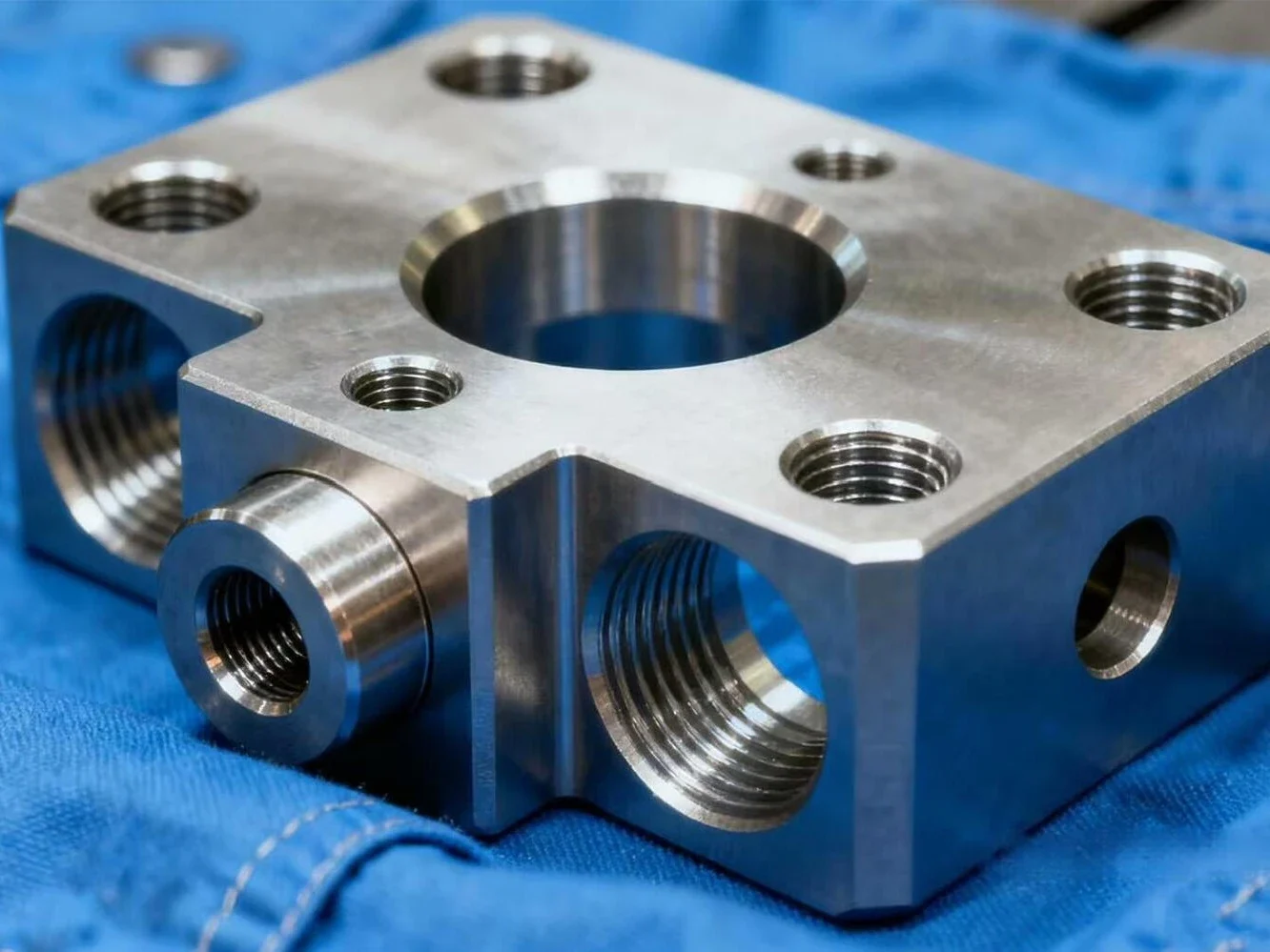
Precision Customization to Your Print
ZSCNC custom-machines internal flow paths, sanitary connections, sealing faces, and mounting points to precise customer specifications. Designed for seamless integration into high-speed Japanese filling equipment.
End-to-End Manufacturing Workflow
IQC Raw Material Check
ASTM A276 316L verification with chemical analysis
5-Axis Mirror Milling
Single-setup machining with PCD diamond cutters
In-Situ Probing
Real-time thermal and geometric dimension control
100% CMM Audit
Individual inspection reports archived for release
ZSCNC coordinates engineering support at our Shanghai office and precision production at our Wuxi facility — streamlining communication and shortening delivery lead times for global beverage equipment OEMs.
Manufacturing Process & Quality Assurance Timeline
Our end-to-end production protocol ensures repeatable serial manufacturing and complete quality traceability for high-speed beverage filling valve manifolds used in the beverage processing industry.
100% CMM Dimensional Inspection Per Part
Rather than relying on basic batch sampling, ZSCNC conducts individual CMM dimensional inspection on every single manifold to guarantee process capability and eliminate sealing defect risks before delivery.
Drawing Review & DFM
Engineering review of sealing face tolerances, internal fluid channels, and fixture strategies to guarantee optimal manufacturability.
Material IQC Verification
Incoming inspection of ASTM A276 316L stainless steel bar stock verified against mill test reports and heat lot certifications.
5-Axis Precision Machining
Diamond mirror milling inside a ±1°C climate-controlled shop with in-situ touch-probe compensation for complex face geometry.
Sanitary Surface Finishing
Controlled deburring and sanitary surface treatment to achieve Ra 0.35μm surface roughness for CIP hygiene compliance.
100% CMM Inspection
Full CMM dimensional analysis verifying ≤drawing-specified sealing face flatness and critical geometric tolerances on every piece.
Digital OQC & Archiving
Complete documentation package including CMM reports, MTRs, and heat treatment certs bundled for seamless client audit readiness.
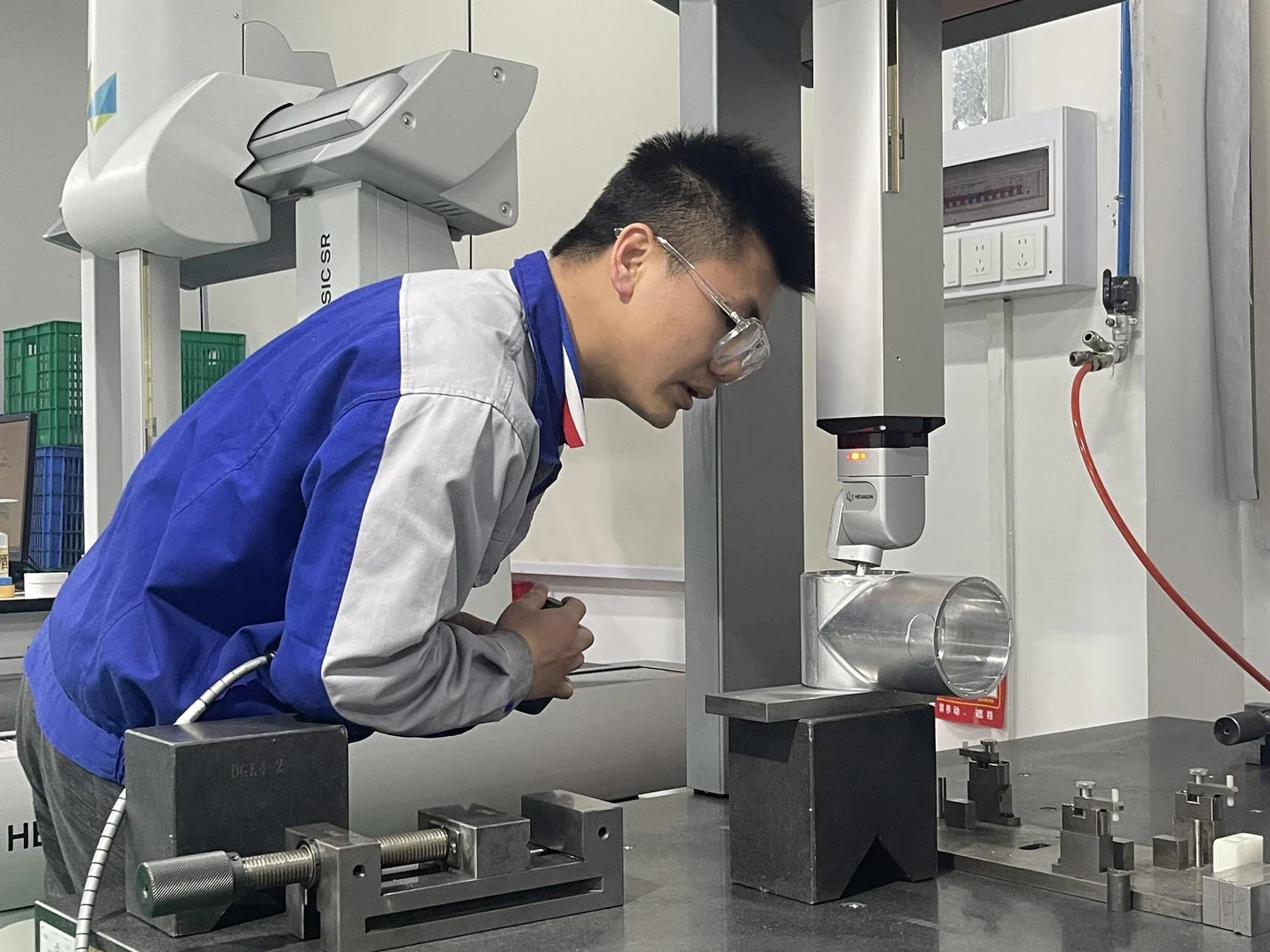
Repeatable Quality Control for Designated OEM Suppliers
ZSCNC enforces a process-based quality control system so that every batch of 316L stainless steel valve manifolds meets identical high-precision inspection standards. Digital CMM packages document Ra0.35μm surface finish and ≤drawing-specified sealing-face flatness for audit-ready traceability.
Application Scenarios and Quantified Results
Quality leap, compliance assurance, and line-efficiency gains delivered for this Japanese beverage filler OEM after deploying ZSCNC sanitary manifold machining.
Target Application Contexts
High-Speed Rotary Beverage Filling Machine Valve Blocks
Precision fluid manifolds engineered for carbonated drinks, juice, and functional beverage filling lines requiring flawless fluid dynamics.
CIP Sanitary Surface Cleaning Fluid Interfaces
Clean-in-place engineering designed specifically for proactive biofilm risk mitigation and maximum chemical resistance.
High-End Designated OEM Components
Critical spare parts and assemblies manufactured with absolute batch-to-batch consistency for dependable operational lifecycles.
Aseptic and Hygienic Filling Components
Advanced components calling for ultra-smooth Ra ≤ 0.4μm finishes alongside sub-micron sealing geometry accuracy.
Verified Project KPIs
Drastically reduced from a 3% historical baseline.
Direct reduction in after-sales maintenance costs.
Continuous equipment uptime extension across production cycles.
Measurable beverage filling line OEE improvement of eight percentage points.
"ZSCNC valve manifolds not only met our strict geometric tolerances, but also demonstrated exceptional sanitary-surface expertise. They are the only partner we trust for aseptic filling-line manifolds."
Technical Director
Japanese Beverage Equipment OEM
Hygiene & Stability
ZSCNC serves multiple food-processing equipment and packaging equipment OEMs worldwide. We deeply understand the dual manufacturing demands of strict hygiene protocols and long-term sealing stability in modern high-capacity beverage machinery.
Why 316L and 5-Axis Sanitary Machining Are Crucial for Beverage Fillers
An engineering analysis contrasting ZSCNC’s high-precision sanitary manufacturing against conventional 3-axis CNC methods for critical beverage-processing industry components.
| Comparison Dimensions | ZSCNC Optimized Strategy | Standard Machining Method |
|---|---|---|
| Surface Roughness | Ra0.35μm mirror finish via 5-axis sanitary machining eliminates microscopic bacterial anchoring points. | Ra0.8 to 1.6μm finish leaves tool marks and micro-crevices, creating severe biofilm risks. |
| Sealing Face Flatness | ≤drawing-specified flatness maintained through climate-controlled milling and real-time tool compensation. | 0.01 to 0.02mm flatness variations prone to micro-leakage and thermal distortion under pressure. |
| CIP Cleanability | High corrosion resistance against chemical flushes; ultra-smooth pathways ensure zero product retention. | Trapped beverage residue in coarser finishes leads to localized chemical pooling and pitting risks. |
| Maintenance Impact | Continuous equipment uptime increases by +40% by drastically reducing mating seal wear. | Frequent monthly replacement of gaskets and seals triggers recurring unscheduled line downtime. |
| Traceability | 100% individual CMM dimensional inspection paired with digital raw material heat lot certifications. | Random batch testing and standard paperwork lack rigorous part-by-part verification. |
Engineering Recommendation
When designing for direct beverage contact, aggressive CIP cleaning cycles, or aseptic sealing in the food-processing industry, specify an ASTM A276 316L stainless steel valve manifold engineered via controlled 5-axis milling. Optimizing the fluid channel geometry and achieving a stable Ra0.35μm surface finish is essential to protect filling systems against premature seal degradation and hygienic compliance failures.
ZSCNC tailors material and machining processes to your precise operating conditions, striking an ideal balance between long-term component service life, geometric performance, and strict regulatory standards.
Delivery Assurance & Partnership Workflow
Eliminate procurement risks with ZSCNC’s strict quality guarantees, comprehensive traceability tracking, and clear engineering workflows tailored for beverage-processing industry OEMs.
Collaboration Workflow
Submit Drawing & DFM Review
Send us your design files. Our engineers conduct an immediate DFM assessment, optimizing sealing faces, internal flow channels, and tolerances for high-precision manufacturing.
Commercial Quote & Technical Alignment
Receive a transparent, itemized commercial quotation along with formal technical alignment documents detailing raw material origins and processing cycles.
Sample Run & CMM Validation
We run initial prototypes or pilot batches, performing full geometric and dimensional checks on our CMM equipment to confirm total print compliance.
Batch Production & Global Delivery
Mass production proceeds under continuous process control. Every shipped batch includes full material, heat treatment, and dimensional tracking files.
Included Documentation Package
Verified TraceabilityTo satisfy demanding sanitary compliance and audit guidelines, every 316L fluid manifold shipment comes standard with an extensive quality dossier for food-processing industry and sanitary applications:
- Material Test Reports certified to ASTM A276 standards
- Official Heat Treatment and Hardness Certification
- 100% CMM Dimensional and Geometric Inspection Reports
- Signed Factory Certificate of Conformance (CoC)
Flexible Engagement Models
We adapt our production capacity to match your operational needs, supporting long-term beverage equipment OEM cooperation and machine component supply.
Ready to Request an OEM Custom Manufacturing Quote?
ZSCNC welcomes drawing submissions for precision sanitary manifolds and valve parts. Upload your blueprints today for immediate DFM feedback, lead-time verification, and a comprehensive CMM report machining quote. For a broader overview, visit our home page.
Frequently Asked Questions
Technical, quality, and procurement guidelines for custom 316L sanitary manifolds and beverage filler components.
Need a Custom 316L Beverage Filling Valve Manifold?
Submit your CAD drawings, sealing-face tolerances, or target surface roughness (Ra / flatness / material compliance) to ZSCNC. Our engineering team will deliver a detailed DFM review and competitive quote featuring Ra0.35μm mirror finishing, drawing-specified flatness control, and EHEDG / FDA ready documentation for the beverage-processing industry.
Engineered for high-speed filling machines, CIP sanitary loops, and sterile fluid processing components.
Shanghai Zhansong Industrial Co., Ltd.
Brand Name: ZSCNC
Direct Contact
Building 4, Block B, No. 925 Yecheng Road, Jiading District, Shanghai 201800, China
No.1 Workshop, No.16 Nanfeng 1st Road, Xinwu District, Wuxi City, Jiangsu, China
Engineering drawings and proprietary designs are handled under NDA.