Understanding Surface Finish in Tray Sealer Sealing Jaws
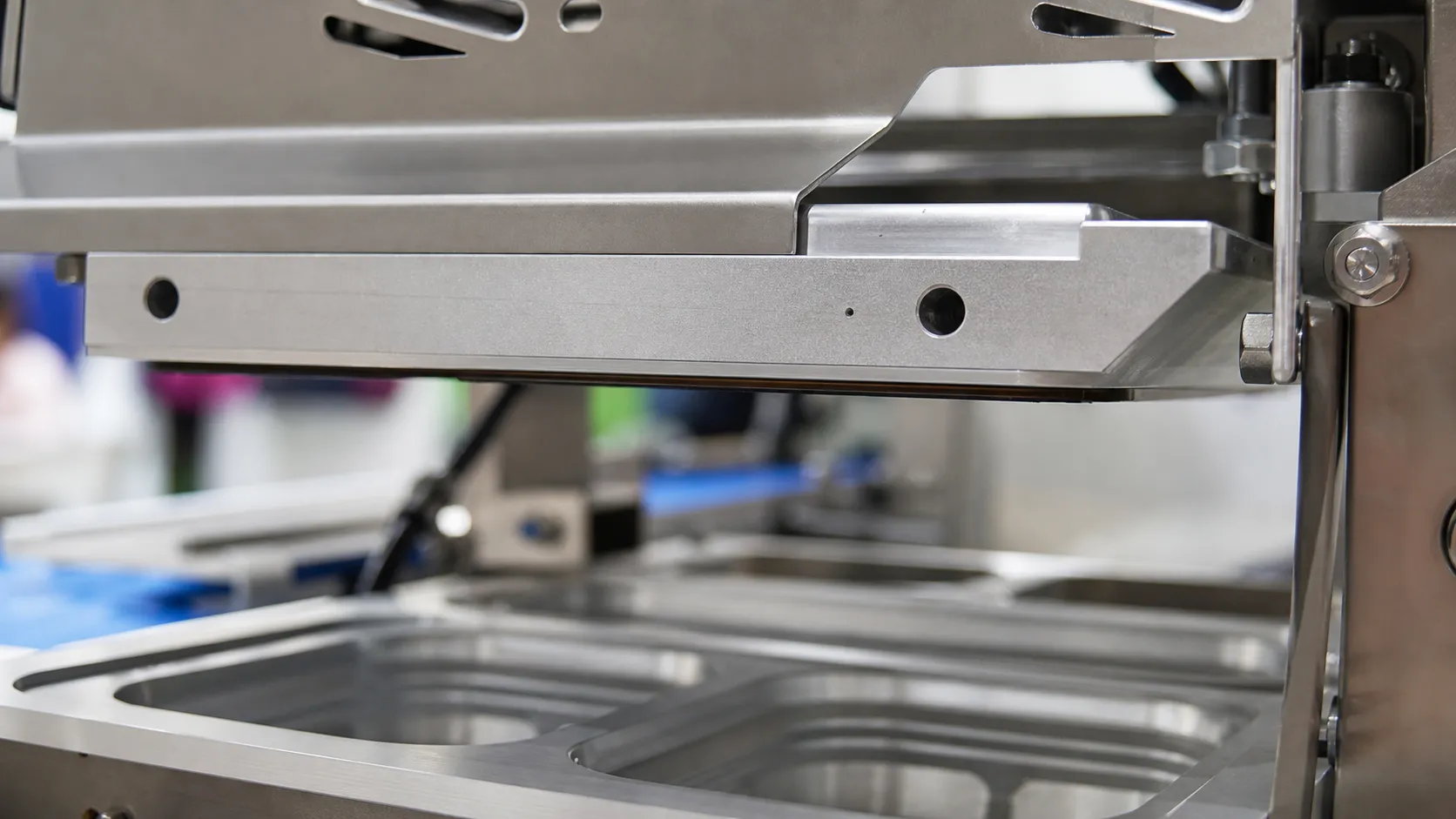
The surface finish of tray sealer sealing jaws directly governs heat transfer efficiency, pressure distribution, and overall package quality. Precision-engineered sealing faces ensure reliable, hermetic seals across automated packaging lines.
The Role of Jaw Surface Finish in Packaging Integrity
A micro-engineered sealing face provides uniform contact between the heat block and the tray film, eliminating microscopic channels that compromise barrier integrity.
- Hermetic Seal Consistency: Eliminates micro-leaks by optimizing the contact boundary.
- Film Release Performance: Reduces polymer buildup and prevents film sticking during high-speed cycles.
- Extended Tooling Life: Prevents localized wear caused by irregular pressure hot-spots.
Static vs Dynamic Sealing Surface Requirements
Sealing jaw surfaces must balance stationary conductive heat transfer with dynamic pressure delivery during rapid packaging operations.
| Parameter | Static Sealing Requirement | Dynamic Sealing Requirement |
|---|---|---|
| Primary Function | Direct conductive heat transfer | Uniform pressure distribution upon jaw closure |
| Surface Focus | High contact area, minimal air gaps | High wear resistance and friction control |
| Key Metric | Controlled surface roughness ($Ra$) | Coating durability and surface hardness |
| Package Impact | Eliminates cold spots along the seal line | Prevents tray flange deformation |
How Surface Roughness Affects Heat Contact
Surface roughness dictates how effectively thermal energy passes from the heated metal jaw into the tray sealing film.
- Excessive Roughness: Creates air gaps that act as thermal insulators, leading to uneven film melt, weak bond strength, and compromised seal integrity.
- Optimal Surface Texture: Maximizes direct contact area, ensuring fast thermal transfer efficiency and consistent seal strength.
- Over-Polished Finish: Risks film adhesion or vacuum-lock during the jaw opening cycle, slowing down throughput.
Key Surface Finish Parameters for Sealing Quality
When optimizing tray sealer sealing jaws, surface finish impact goes far beyond simple smooth-versus-rough comparisons. Relying on basic surface metrics often leads to undetected leak paths, inconsistent heat transfer, and poor bond strength. To ensure reliable, high-speed packaging, we must evaluate several specific micro-geometry parameters.
Why Ra Alone Is Not Enough for Sealing Quality
Roughness Average (Ra) is the standard industry metric, but it tells only part of the story. Ra calculates the arithmetic average of surface heights, meaning a surface with sharp, aggressive peaks can yield the exact same Ra value as a surface with rounded, shallow waves.
In sealing operations, sharp peaks cause localized pressure spikes and film burnout, while deep valleys leave channels where leaks form. For high-performance tooling, relying solely on Ra can disguise major surface flaws on the sealing face. Utilizing targeted precision surface finishing ensures that the micro-geometry matches your specific packaging film requirements.
Rz and Rmax: Peak-to-Valley Roughness Depth
While Ra measures the average, Rz (mean peak-to-valley height) and Rmax (maximum individual peak-to-valley depth) measure extreme variations across the jaw surface:
- High Peaks (Rmax): Concentrate sealing pressure into tiny points, risking film punctures or burning thin barrier layers.
- Deep Valleys (Rz): Prevent complete contact with flexible films, creating microscopic voids that compromise leakproof packaging.
Controlling Rz and Rmax ensures a consistent profile depth across the entire mating surface finish, preventing localized temperature drops.
Rmr (Material Ratio) and Contact Bearing Area
The Material Ratio (Rmr), also known as the bearing area curve, measures how much solid surface actually makes contact with the packaging film under sealing load.
- Low Rmr: Indicates the film touches only a few high points, restricting thermal transfer efficiency and leading to weak seal strength.
- High Rmr: Indicates a flat, plateaued surface profile that maximizes physical contact area, driving uniform heat transfer and steady sealing pressure across the entire tray rim.
Surface Lay and Machining Texture Orientation
Surface lay refers to the predominant direction of the machining marks left on the jaw face during manufacturing:
- Parallel Lay: Machining lines running parallel to the tray rim create continuous microscopic channels that allow gas or liquid leaks under pressure.
- Perpendicular or Multi-Directional Lay: Machining lines oriented perpendicular or criss-crossed relative to the seal path block continuous pathways, significantly improving package quality and seal integrity.
| Parameter | Primary Function in Sealing | Target Impact on Packaging |
|---|---|---|
| Ra | Overall surface roughness average | Baseline quality control metric |
| Rz / Rmax | Controls extreme peak height and valley depth | Prevents film puncture and micro-leaks |
| Rmr | Measures total contact bearing area | Maximizes heat transfer and pressure uniformity |
| Surface Lay | Defines directional machining pattern | Eliminates linear leak paths across the seal |
How Surface Finish Impacts Sealing Jaw Efficiency
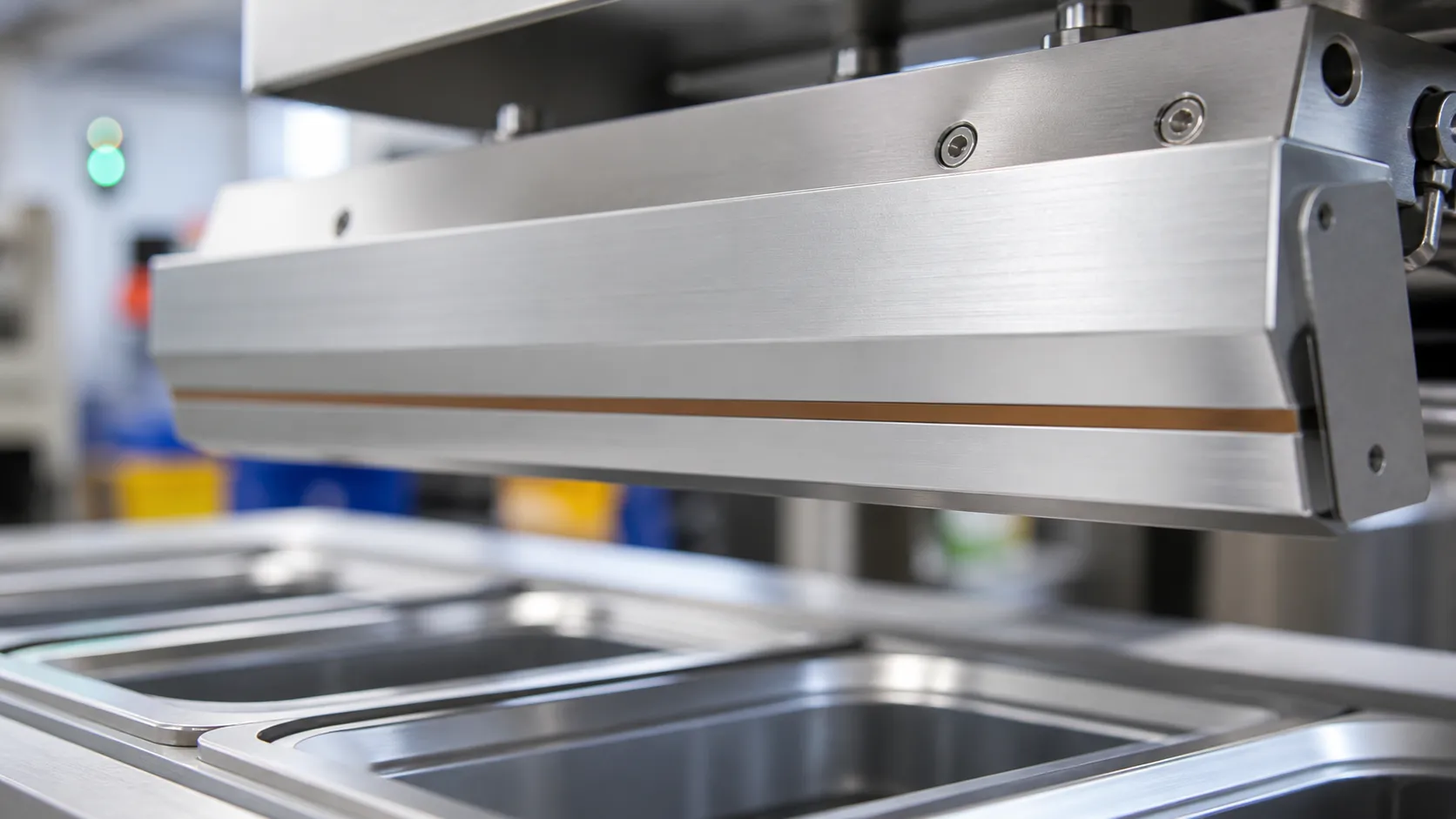
The micro-topography of the sealing face directly dictates how effectively energy and force transfer to the packaging film. When optimizing high-performance tray sealers, precise control over this texture eliminates operational variables and stabilizes production output.
Enhancing Thermal Transfer Efficiency
A precise mating surface finish minimizes microscopic air gaps between the jaw and the film. This maximizes thermal transfer efficiency, ensuring rapid, uniform heat transfer across the entire bond area. Without these micro-air gaps acting as insulation, the system achieves targeted melt temperatures much faster, reducing overall cycle times.
Optimizing Sealing Pressure Distribution
Microscopic peaks in surface roughness act as localized contact points under load. If the texture is inconsistent, sealing pressure distributes erratically across the film. We engineer specialized sealing modules with uniform topography to guarantee equalized mechanical force, preventing localized thin spots or weak points.
Ensuring Leakproof Seals on Packaging Trays
Achieving leakproof packaging requires the complete elimination of micro-channels that allow gas or liquid bypass.
- Consistent Surface Flow: Controlled roughness allows the molten film layer to flow evenly.
- Micro-Cavity Filling: The plastic fills the exact jaw profile perfectly.
- Defect Prevention: Eliminates the hidden valleys that cause slow leaks, lifting overall package quality.
Influence on Seal Width and Bond Strength
The relationship between the serration pattern and the surface Ra value directly dictates the final hermetic bond strength. An optimized finish regulates the lateral flow of the molten polymer. This stabilization maintains a consistent seal width and ensures high-integrity, burst-resistant bonds that withstand the rigors of distribution.
Common Surface Finish Defects and Sealing Issues
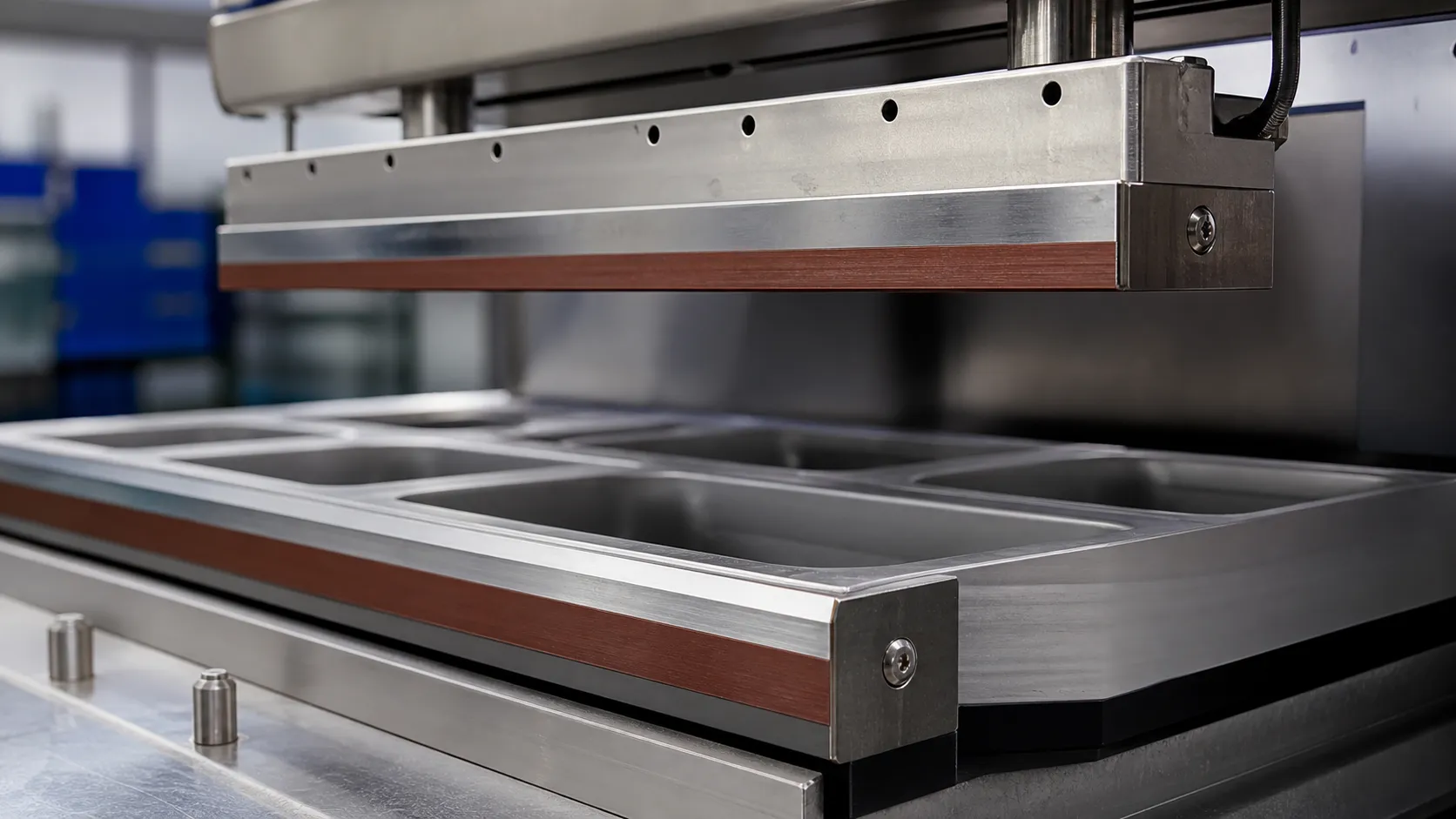
In our experience, even minute surface flaws on tray sealer sealing jaws can derail an entire packaging line. When the contact surface degrades, heat contact and pressure distribution suffer immediately, leading to costly downtime and scrap.
Surface Wear, Scratches, and Physical Damage
Repeated mechanical clamping and severe thermal stress inevitably take a toll on the sealing face. Scratches, gouges, and pitting disrupt the precise micro-geometry of the jaw surface, creating micro-channels where gas and liquids escape.
- Micro-channel leaks: Linear scratches prevent complete film fusion, leading to slow leaks.
- Localized pressure drops: Deep gouges drop the localized sealing pressure, leaving cold spots along the tray perimeter.
- Friction acceleration: Surface damage increases friction against the lidding film, causing drag and distortion.
Replacing degraded components with precision-engineered industrial wear parts restores uniform surface roughness and protects package quality.
Material Buildup and Contamination
Film resins, melted polymers, and product residues frequently stick to unmaintained sealing jaws. This buildup fills in the engineered surface texture, turning a calibrated finish into an uneven, insulated barrier.
| Contamination Effect | Operational Impact | Resulting Sealing Defect |
|---|---|---|
| Thermal Insulation | Debris blocks direct heat transfer | Weak seal bond strength and unsealed film zones |
| High-Pressure Hotspots | Carbonized residue creates localized high points | Punctures or tearing in thin lidding films |
| Adhesion Drag | Melted polymer sticks to the jaw face | Tray lifting, film misfeeds, and seal distortion |
Regularly addressing buildup is critical to maintaining thermal transfer efficiency and delivering consistent, leakproof packaging.
Setup and Misalignment Issues
Even a perfect surface finish cannot offset improper jaw setup. When sealing jaws sit out of parallel, sealing pressure concentrates unevenly, warping the mating surface finish and accelerating local wear.
- Uneven load distribution: Over-compresses film on one side while leaving the opposite side under-sealed.
- Serration profile damage: Misaligned closing forces crush fine serration patterns prematurely.
- Accelerated tool wear: Skewed forces create concentrated friction zones.
Monitoring mechanical alignment alongside analyzing wear tracks and coated components ensures your tooling delivers long-term durability and balanced performance.
Sealing Jaw Surface Design and Material Selection
Designing high-performing tray sealer sealing jaws comes down to matching the base metal, micro-finish, and protective coatings directly to your specific packaging line demands.
Selecting Jaw Materials and Surface Coatings
The core metal dictates thermal response and structural durability. We frequently utilize high-grade aluminum sealing jaws for their exceptional thermal transfer efficiency and rapid heat-up times. For harsh washdown environments or high-corrosion food lines, robust stainless steel tooling components offer the strength required to endure continuous, heavy sealing pressure.
Applying specialized surface treatments to the sealing face prevents film sticking and thermal degradation:
| Material | Surface Treatment / Coating | Primary Benefit |
|---|---|---|
| Aluminum | Hard Anodize with PTFE | High heat transfer, anti-stick, excellent wear resistance |
| Stainless Steel | PVD / Hard Chrome | Extreme durability, easy sanitation, corrosion resistance |
| Tool Steel | Electroless Nickel | Uniform hardness across complex profiles, wear reduction |
Integrating Serration Profiles and Surface Finish
A crisp serration pattern directs mechanical sealing pressure through the packaging film to yield reliable, leakproof packaging. However, the fine surface roughness within those serrations dictates how evenly heat transfers across the film interface.
- Coarse Machining Finish: Tool marks leave tiny air gaps inside the grooves, leading to uneven heat contact and weak seal spots.
- Polished Profile Valleys: Ensures full contact with the tray film for uniform melt and stronger seal integrity.
- Controlled Peak Radii: Softens ultra-sharp peaks so the serration pattern doesn't pierce or weaken thin film layers.
Tailoring Finish Parameters to Tray Materials
Different tray polymers react uniquely to the texture of the sealing face. Tuning your Ra value to the tray substrate prevents melt burn-through while securing optimal bond strength.
- Polypropylene (PP) Trays: Performs best with a medium-textured finish (Ra 0.8 – 1.6 µm) to balance grip and clean film release.
- CPET / APET Trays: Requires a finer mating surface finish (Ra 0.4 – 0.8 µm) to maximize direct heat contact for tougher seal layers.
- Foil & Barrier Labeled Trays: Demands fine micro-finishes to prevent puncturing delicate barrier layers under clamping load.
Maintenance Best Practices for Sealing Jaw Surfaces
Maintaining the precise surface finish on tray sealer sealing jaws is critical for long-term package quality and consistent heat transfer. Without proper upkeep, contamination buildup and mechanical abrasion quickly degrade the mating surface finish, leading to seal leaks and unnecessary line downtime.
Proper Cleaning Protocols to Prevent Surface Degradation
Preventing surface wear requires consistent, careful cleaning protocols tailored to precision packaging components:
- Avoid Abrasive Tools: Never use steel wire brushes or harsh abrasive pads that gouge the sealing face or alter the engineered Ra value.
- Clean Warm with Soft Tools: Use soft brass scrapers or non-abrasive synthetic pads while the jaws are warm to safely lift softened plastic residue.
- Apply Safe Solvents: Use food-grade solvents designed to dissolve burnt film buildup without stripping protective surface coatings.
- Enforce Shift-End Wipedowns: Clean sealing surfaces at the end of every production cycle to prevent residue carbonization that alters surface roughness.
Using Carbon Impressions to Inspect Surface Health
Visual inspections often miss micro-pitting and subtle jaw misalignment. Carbon impression tests provide an immediate, clear snapshot of sealing pressure distribution across the entire contact zone.
- Execution: Place a piece of carbon paper between two sheets of plain paper across the jaw length and cycle the machine under standard sealing pressure.
- Analysis: Inspect the resulting print for light spots or broken lines. Uneven pressure transfer highlights surface wear, warping, or damaged regions within the serration pattern.
Integrating carbon paper testing into a regular quality inspection routine helps catch minor wear before it results in compromised, non-leakproof packaging.
Preventative Refurbishment and Replacement Guidelines
Establishing clear operational thresholds ensures consistent thermal transfer efficiency and extends tool life:
| Action | Action Trigger | Standard Protocol |
|---|---|---|
| Surface Re-coating | Early non-stick wear or minor surface drag | Clean thoroughly and re-apply food-grade non-stick coatings before bare metal is exposed. |
| Precision Refurbishment | Carbon impression gaps or minor micro-scratches | Precision re-grind the jaw face to restore flat contact while keeping original dimensional tolerances. |
| Jaw Replacement | Deep surface gouges, heat-warped jaws, or tolerance loss | Replace the sealing jaw set completely to guarantee reliable bond strength and seal geometry. |