Overview
Custom CNC Machined Components for Counter-Pressure Fillers
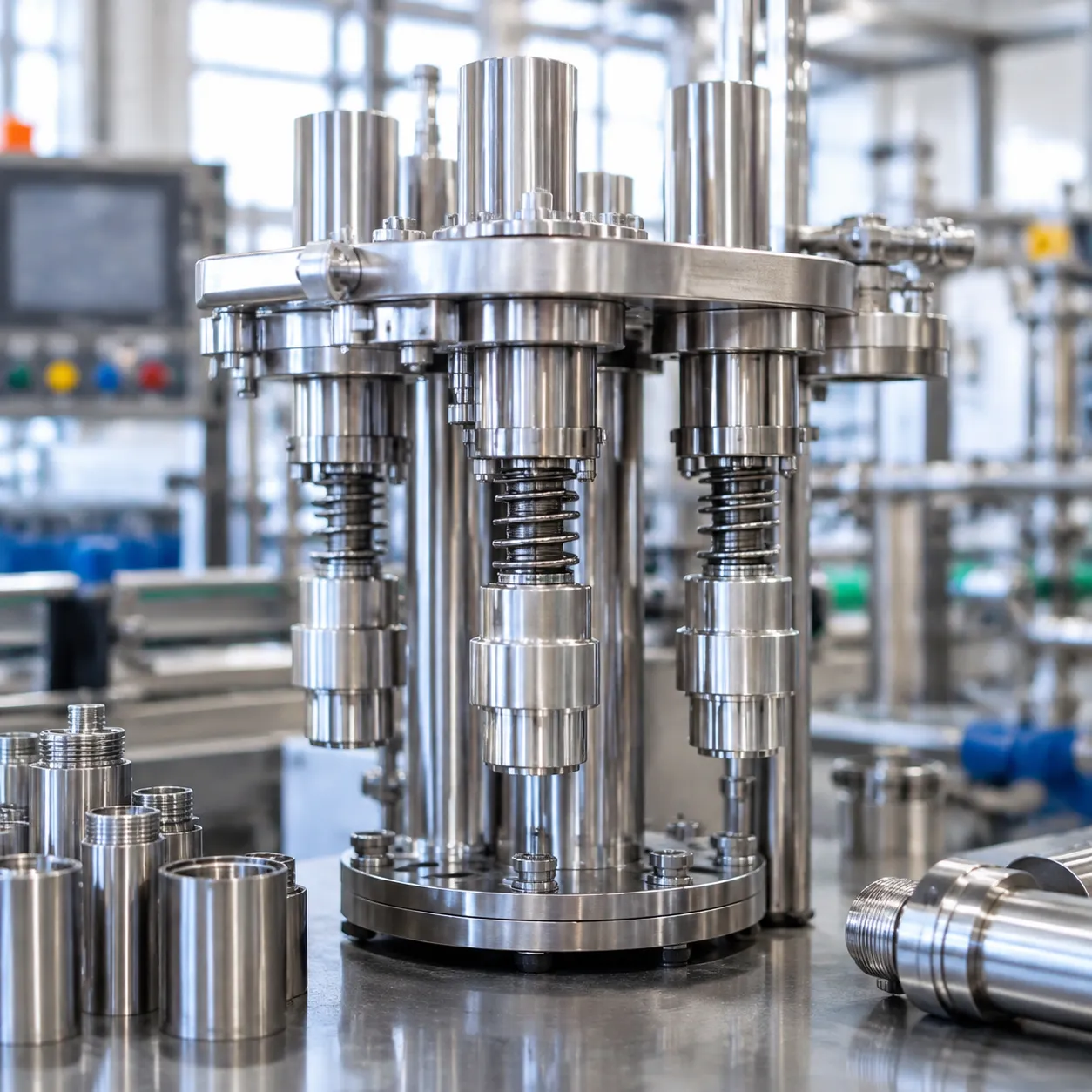
ZSCNC supplies drawing-based 316L counter-pressure filler components for beverage equipment manufacturers and maintenance teams. Our Wuxi machining base focuses on CNC milling and turning. Send your 2D drawing, 3D model, quantity and inspection requirements for a part-specific feasibility review and quotation.
Filling Valve Bodies, Sleeves and Seats
Valve bodies, sleeves and seats are machined to the specified bore sizes, sealing geometry, threads and mounting interfaces. Material grade, stock form and any secondary finishing are confirmed before production. Machining accuracy alone does not establish leakage performance; the complete valve assembly requires the equipment owner's validation.
Valve Stems, Pistons and Guide Components
For stems, pistons and guide rods, specify the datum scheme, diameter fits, straightness and runout requirements on the drawing. Surface texture and seal-entry edges should be agreed for each mating interface. See our guidance on surface finish for sealing and sliding components.
For a drawing-review checklist covering mating features, datums and approval records, see our filling valve stem specifications guide.
Filling Nozzle Interfaces and Locating Parts
Related drawing-based parts may include nozzle interfaces, centering cups, spacers, lock rings and mounting housings. Tool access, bore depth and internal deburring access are reviewed before quotation. The customer defines flow-path geometry and validates filling, foam-control and cleaning performance in the assembled equipment.
Critical Machining and Inspection Requirements
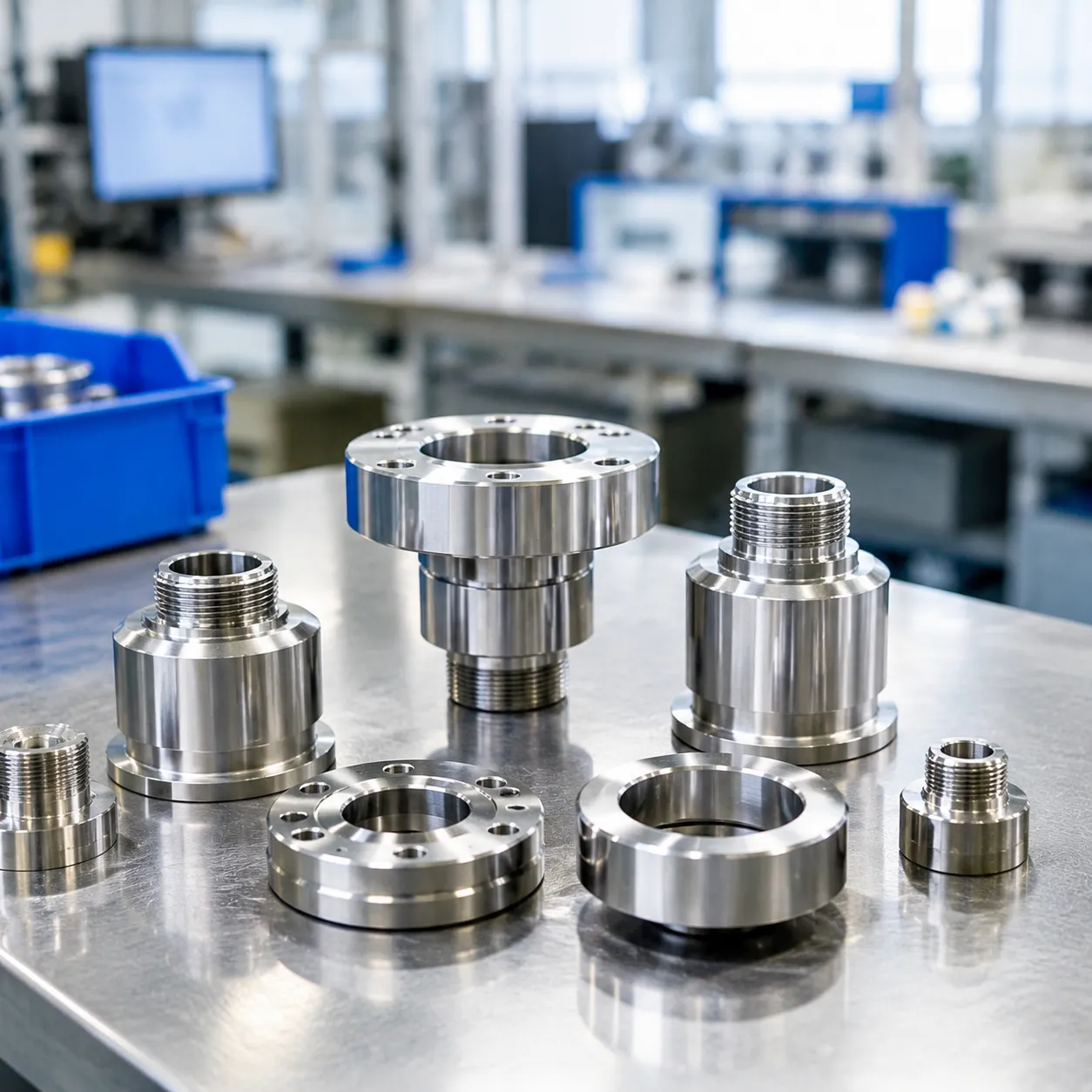
Valve Seats and Mating Features
Specify sealing angles, bore fits, thread standards and positional tolerances rather than applying a single tolerance to every part. Achievable tolerances depend on geometry, material, process sequence and the inspection method agreed during technical review.
Runout and Datum Control
Valve stems and sleeves need clear inspection datums. Include the measurement length, supported condition and runout callout where these affect assembly. No universal runout limit or cycle-life guarantee is assumed.
Valve Guide Bushings: Clearance, Retention and Wear Limits
For custom valve guide bushings, provide the mating stem and housing references as well as the bushing drawing. Confirm the specified material pair and whether bore requirements apply before or after installation.
| Requirement | Information to confirm before quotation |
|---|---|
| Stem-to-bore clearance | Stem diameter limits, bushing bore limits, working length and relevant operating conditions. The OEM defines the required clearance and the condition in which it is inspected. |
| Bushing retention method | Housing bore and bushing outside-diameter limits, locating shoulders and any specified press fit, flange or retaining feature. Confirm installed position and inspection access. |
| Wear and replacement limits | The OEM's allowable wear or replacement criteria, inspection locations and any approved sample reference. A worn part alone does not define the nominal manufacturing dimensions. |
Surface Finish and Edge Requirements
| Area | Information to specify | Review point |
|---|---|---|
| Product-contact passages | Required Ra, measurement locations and finishing process | Tool and inspection access |
| Sealing and sliding interfaces | Surface texture, fit and seal-entry edge detail | Compatibility with the customer's seal design |
| External faces | Finish, edge breaks and cosmetic acceptance criteria | Drawing-based inspection |
Cross-holes, thread exits and seal-entry edges require defined burr-removal and acceptance criteria. Inspection scope and reporting are agreed with the order. Surface finish does not by itself certify hygienic compliance or complete cleanability.
316L Material and Documentation
316L is a customer-specified option for these components. Suitability for the beverage, cleaning chemistry, temperature and chloride exposure must be assessed for the intended application; corrosion resistance is not an unconditional guarantee.
State any material-certificate, heat-number traceability or food-contact documentation requirements in the RFQ. Availability and traceability are confirmed for the selected stock and order before acceptance. EN 10204 3.1 documents, FDA or EC 1935/2004 compliance, and laser marking are not included by default.
Applications in Beverage Filling Equipment
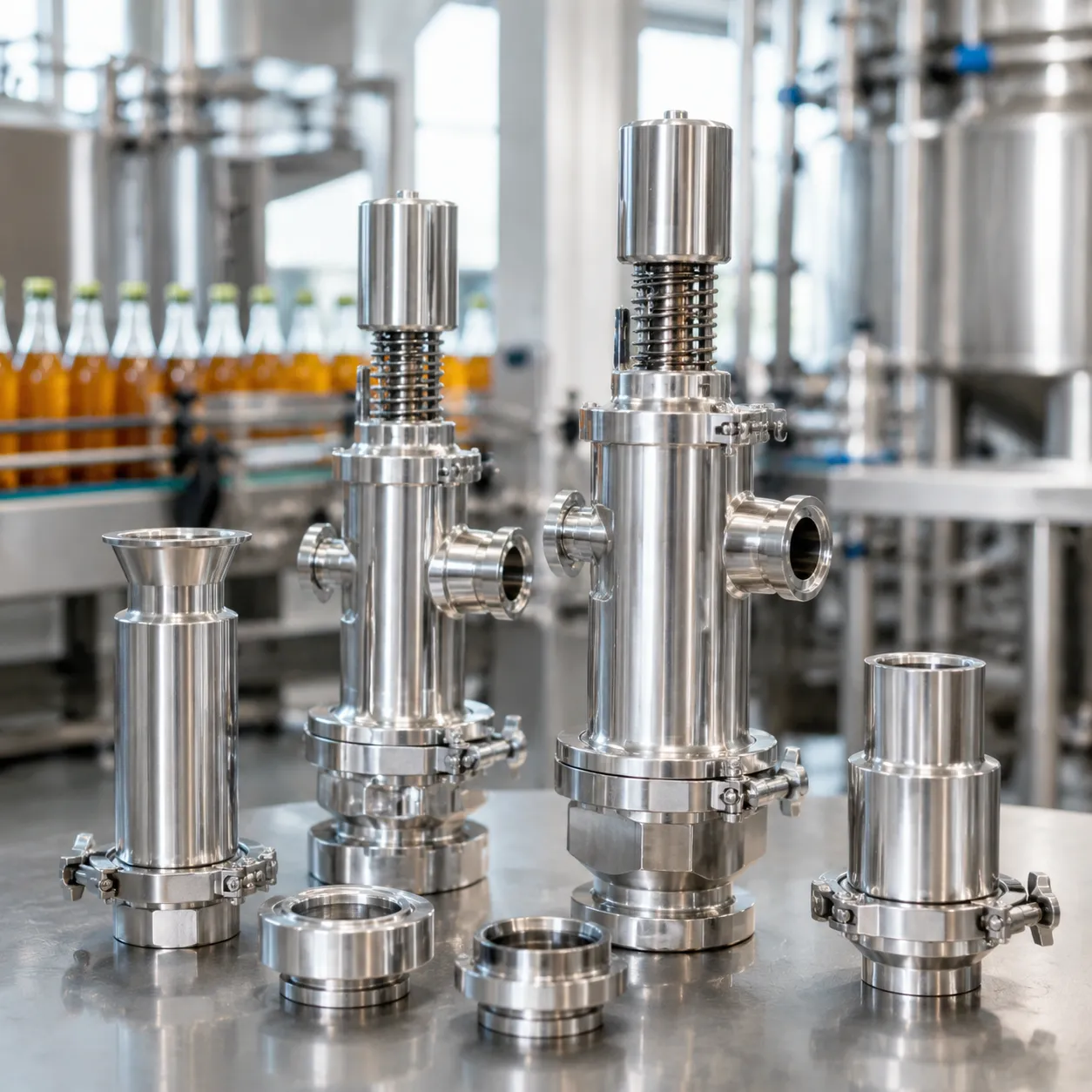
We review parts for carbonated soft-drink, beer and sparkling-beverage fillers, including rotary bottling, inline filling and container-format interfaces. Replacement parts are manufactured to the approved drawing revision. Changes to material or geometry require customer approval.
Explore the related filling-machine components. Part fit, pressure integrity, fill consistency and service life depend on the complete assembly and operating conditions and should be validated by the equipment owner.
Ordering Custom Counter-Pressure Filler Components
Prototype and Batch Requirements
Include prototype or batch quantities and the required delivery date. We review workholding, datum control and inspection requirements before confirming price and lead time. Secondary operations are quoted only after their process route and acceptance criteria have been confirmed.
Sample Approval and Repeat-Batch Inspection
Agree the drawing revision, mating-part references and sample acceptance criteria before production. For guide bushings, confirm whether bore size and retention features are checked as supplied or in the installed condition. Record the agreed measurement locations, inspection coverage and report requirements for repeat orders. Review drawing or mating-part changes with the OEM before using an earlier sample approval.
Information to Include With Your RFQ
- Current 2D drawing revision and 3D CAD model where available.
- Material grade, stock requirements and required documentation.
- Critical fits, sealing geometry, runout datums and surface-finish callouts.
- For guide bushings: mating stem and housing references, retention details, installed inspection requirements and OEM wear or replacement limits.
- Deburring, marking, inspection-report and packaging requirements.
- Prototype quantity, production quantity per release and estimated annual demand for repeat orders, where known.
- Delivery destination and required schedule for samples and production batches.
Submit these details through the page's Request a Quote enquiry. We will review the machinable features and any open technical points before confirming the order.