Overview
Overview of Hardened Extruder Shafts for Pet Food Processing
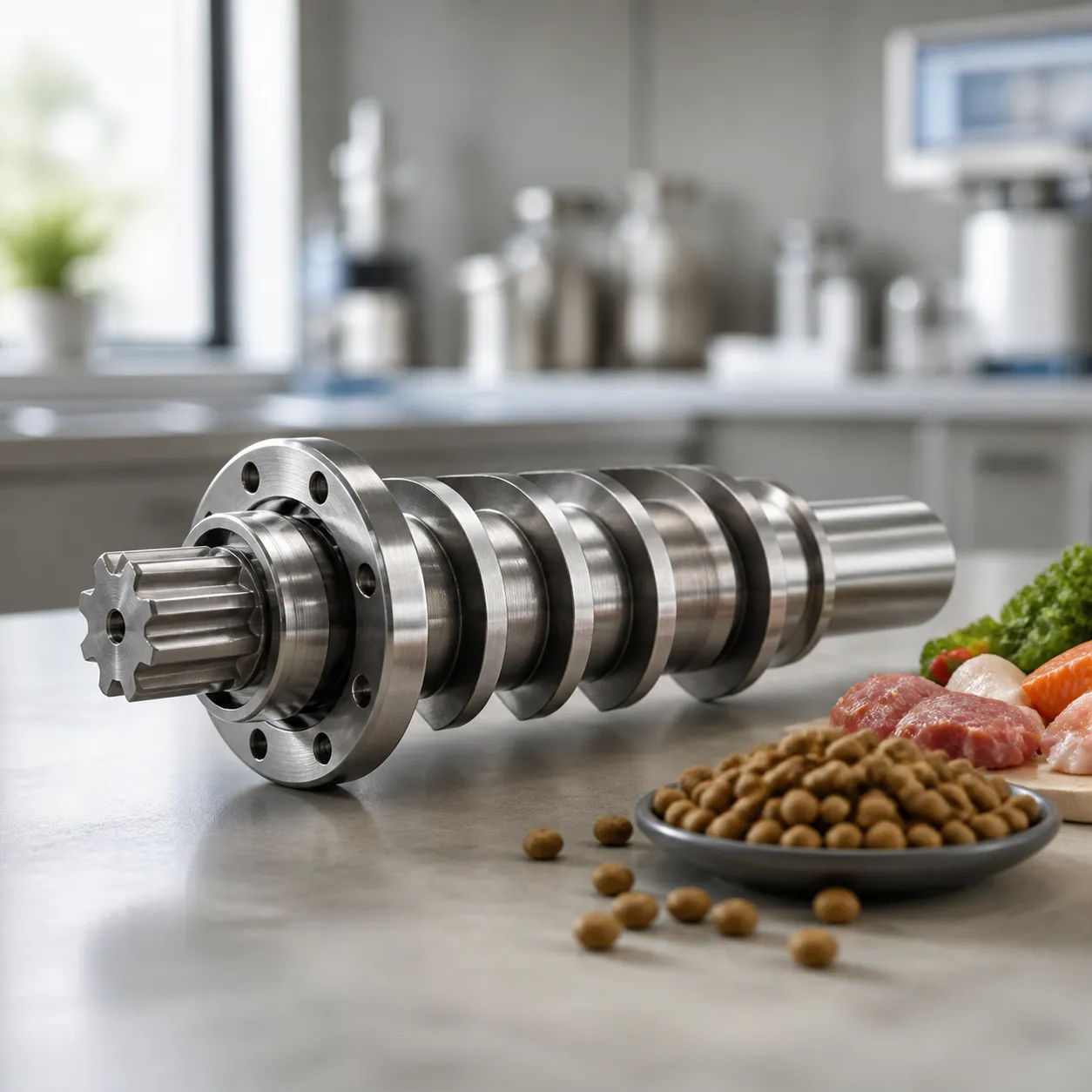
Hardened extruder shafts serve as the critical power transmission backbone in modern pet food manufacturing. As kibble production demands higher throughput and handles increasingly abrasive formulations, engineered drive shafts ensure consistent operational stability and long-term durability.
The Essential Role of Shafts in Pet Food Machinery
The primary function of an extruder shaft is to transmit motor power directly to the rotating screw elements, driving raw ingredients through the processing channel under continuous mechanical stress.
- High-Torque Transmission: Converts electrical energy into continuous rotational force to process dense starch and protein matrices.
- Axial Load Management: Directs continuous backpressure away from the drive system into the thrust bearing assembly.
- Precision Shaft Alignment: Retains tight physical tolerances between the screw elements and barrel walls to prevent mechanical binding.
Why Hardening Treatments Are Critical in Pet Food Extrusion
Processing dry pet food involving meat meal, bone fragments, and fiber creates extreme mechanical friction and surface wear. Standard untreated steels suffer rapid spline degradation and torsional shear under these aggressive conditions.
- Spline Protection: Specialized surface hardening prevents micro-fretting and rounding of drive splines.
- Structural Resilience: Deep case hardening combined with a tough, ductile core stops shaft cracking during high-torque startup surges.
- Extended Service Life: A wear resistant alloy shaft significantly cuts unscheduled maintenance downtime and spare parts inventory costs.
Single Screw vs. Twin Screw Extruder Shafts
Extruder shaft specifications vary depending on the drive configuration and product requirements:
| Shaft Type | Mechanical Function | Typical Application | Key Advantage |
|---|---|---|---|
| Single Screw Extruder Shaft | Keyed or single-spline torque transfer; handles linear pressure buildup. | Standard dry kibble production and basic pet treats. | Robust, cost-effective, and easy to maintain. |
| Twin Screw Extruder Shaft | Co-rotating, multi-spline shafts designed for balanced high-torque transfer. | Premium kibble, high-moisture meat, and complex shapes. | Superior mixing efficiency and high pressure extrusion stability. |
Key Advantages of Hardened Extruder Shafts
When running high-capacity pet food machinery, shaft failure is simply not an option. Investing in premium hardened extruder shafts for pet food equipment provides the essential core strength required to keep continuous processing lines operating at peak reliability under intense load conditions.
High-Torque Transmission Efficiency
Extruding dense recipes like dry kibble demands massive mechanical power. Hardened drive shafts deliver efficient torque transmission directly from the gearbox to the processing zone without flexing or twisting.
- Prevents Spline Damage: High core strength prevents spline shear and twisting during sudden load spikes or unexpected cold starts.
- Uniform Processing: Constant, stable rotation ensures continuous material flow and uniform product expansion.
- Energy Savings: Minimizes mechanical power loss, allowing drive motors to run efficiently under heavy load.
Superior Resistance to Wear and Mechanical Stress
Raw materials like bone meal, minerals, and starches create extreme abrasive wear inside the extruder barrel. Advanced heat-treating technologies give the shaft surface the toughness needed to handle constant mechanical shock. Combining these shafts with complementary pet food wear tracks and DLC coated components ensures your entire drive train resists severe surface gouging and fatigue during high pressure extrusion.
Enhanced Corrosion Resistance for Moisture-Rich Ingredients
Modern pet food formulations rely heavily on fresh meat slurries, liquid digests, and high-temperature steam injection. Standard steel quickly degrades in these damp, acidic conditions.
- Protects Against Pitting: Surface hardening treatments block moisture penetration, preventing stress corrosion cracking.
- Maintains Product Purity: Prevents rust flakes and metal debris from contaminating wet treat or high-moisture meat formulas.
- Chemical Stability: Resists aggressive washdown chemicals and sanitizing agents used during daily CIP (Clean-In-Place) routines.
Extended Equipment Lifespan and Reduced Maintenance Downtime
Unscheduled line stops to replace a seized or bent shaft can cost thousands in lost output. Hardened drive components significantly improve overall equipment effectiveness (OEE).
| Operational Benefit | Impact on Extrusion Line |
|---|---|
| Longer Component Life | Protects mating screw elements and thrust bearing assemblies from misalignment wear. |
| Reduced Labor Costs | Eliminates frequent teardowns required to service worn-out keyways and splines. |
| Maximized Throughput | Maintains precise tolerances through demanding multi-shift manufacturing runs. |
Material Specifications and Surface Hardening Technologies
High-Strength Alloy Steels and Special Stainless Steels
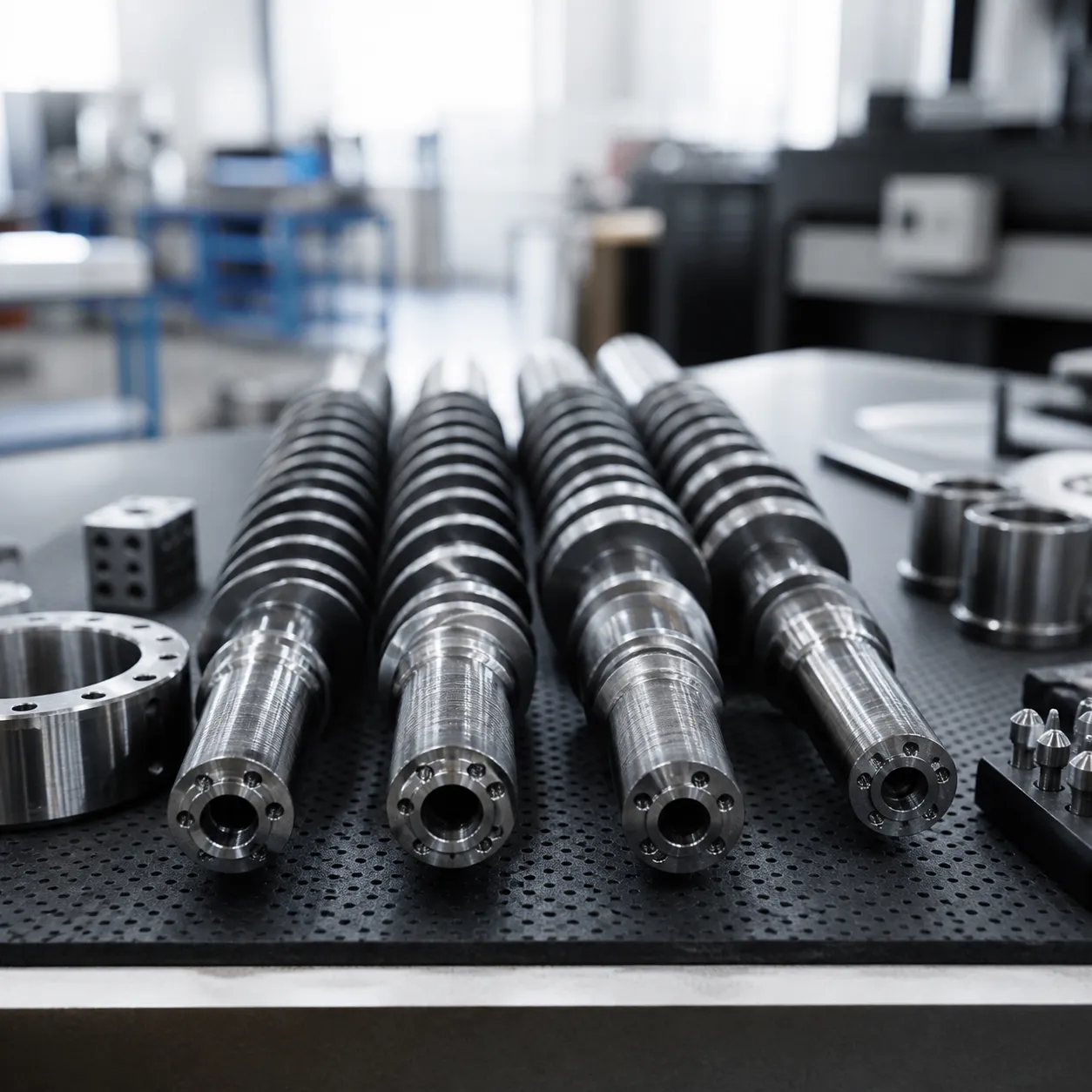
We manufacture hardened extruder shafts for pet food equipment using premium base metals built to handle heavy mechanical loads and high-moisture processing environments.
| Material Grade | Primary Advantage | Best Use Case |
|---|---|---|
| High-Strength Alloy Steel (e.g., 4140, 4340, 38CrMoAl) | Superior torsional strength and core toughness | High-torque twin screw extruder drive shafts |
| Special Stainless Steel (e.g., 17-4PH, 431) | Excellent yield strength with built-in corrosion defense | Acidic ingredient slurry and wet pet treat extrusion |
Utilizing high-performance stainless steel alloys prevents chemical pitting and ensures long-term structural integrity during aggressive clean-in-place (CIP) washdowns.
Heat Treatment and Nitriding Processes
Precise heat treatment balances core flexibility with extreme surface hardness, preventing shaft snapping under sudden torque spikes.
- Vacuum Quenching & Tempering: Hardens the inner core to resist shaft twisting and torsional fatigue.
- Gas & Liquid Nitriding: Produces a outer wear layer reaching 60–65 HRC to shield spline connections against galling.
- Ion Nitriding: Applies precise, low-temperature surface hardening to keep long single screw extruder shafts straight without thermal deformation.
Advanced Surface Coatings for Extreme Abrasion Protection
Adding specialized surface finishing layer protection shields critical shaft areas against abrasive bone meal, mineral premixes, and raw grains in high pressure extrusion lines.
- PVD Coatings (TiN / CrN): Minimizes friction, preventing galling between screw elements and shaft splines.
- Hard Chrome Plating: Delivers an ultra-smooth surface that resists material build-up and corrosion.
- Thermal Spray Cladding: Applies wear-resistant alloy layers to high-wear drive zones, dramatically reducing maintenance downtime during continuous kibble production.
Applications in Pet Food Extrusion Lines
We design hardened extruder shafts for pet food equipment to withstand severe operating conditions across diverse manufacturing setups. From high-throughput dry kibble to dense treat formulations, choosing the right shaft metallurgy keeps production lines running without unexpected downtime.
Dry Kibble Production Lines
In continuous dry pet food processing, drive shafts operate under constant high-torque loads. Abrasive ingredients like mineral mixes, starches, and bone meal create significant friction inside the extruder barrel during kibble production.
- Torque Load Handling: Effortlessly turns heavy-duty screw elements without spline shear or shaft twisting.
- Continuous Operation: Withstands severe mechanical strain during uninterrupted 24/7 manufacturing runs.
- System Efficiency: Operates seamlessly alongside specialized feed components, such as 316L kibble metering screws, to maintain stable high pressure extrusion.
High-Moisture Meat and Pet Treat Processing
Processing fresh meat slurries, high-fat recipes, and semi-moist treats introduces organic acids and moisture into the twin screw extruder. This environment accelerates both mechanical wear and surface corrosion on standard equipment parts.
We utilize special core materials and surface treatments for our hardened shafts to prevent pitting, spline rounding, and fatigue failure. Understanding how DLC coating extends pet food wear part life highlights why pairing high-strength shaft cores with superior surface protection is critical for long-term reliability in moist environments.
Dental Chews and Specialized Extruded Products
Manufacturing dense dental chews and functional treats requires forcing highly viscous dough through restricted dies under high head pressure.
| Process Requirement | Operating Challenge | Hardened Shaft Solution |
|---|---|---|
| Dense Dough Formulations | Torsional flex and extreme back-pressure | High-yield wear resistant alloy core prevents shaft bending |
| Cold Extrusion Shearing | High spline stress and fatigue | Precision-machined, heat-treated splines withstand heavy rotational forces |
| Tight Die Geometry | Output instability from drive shaft flex | Rigid structure maintains stable shaft alignment and uniform product density |
Our engineered shafts provide the stiffness and fatigue resistance necessary to process dense treat matrices reliably without snapping or losing drive alignment.
- How to Choose the Right Hardened Shaft for Your Extruder
Selecting the ideal hardened extruder shafts for pet food equipment requires a clear understanding of your production line's operational stress, material chemistry, and mechanical precision. We guide our customers to focus on three critical criteria to ensure maximum efficiency and prevent premature shaft failure.
Evaluating Torque and Mechanical Load Capacity
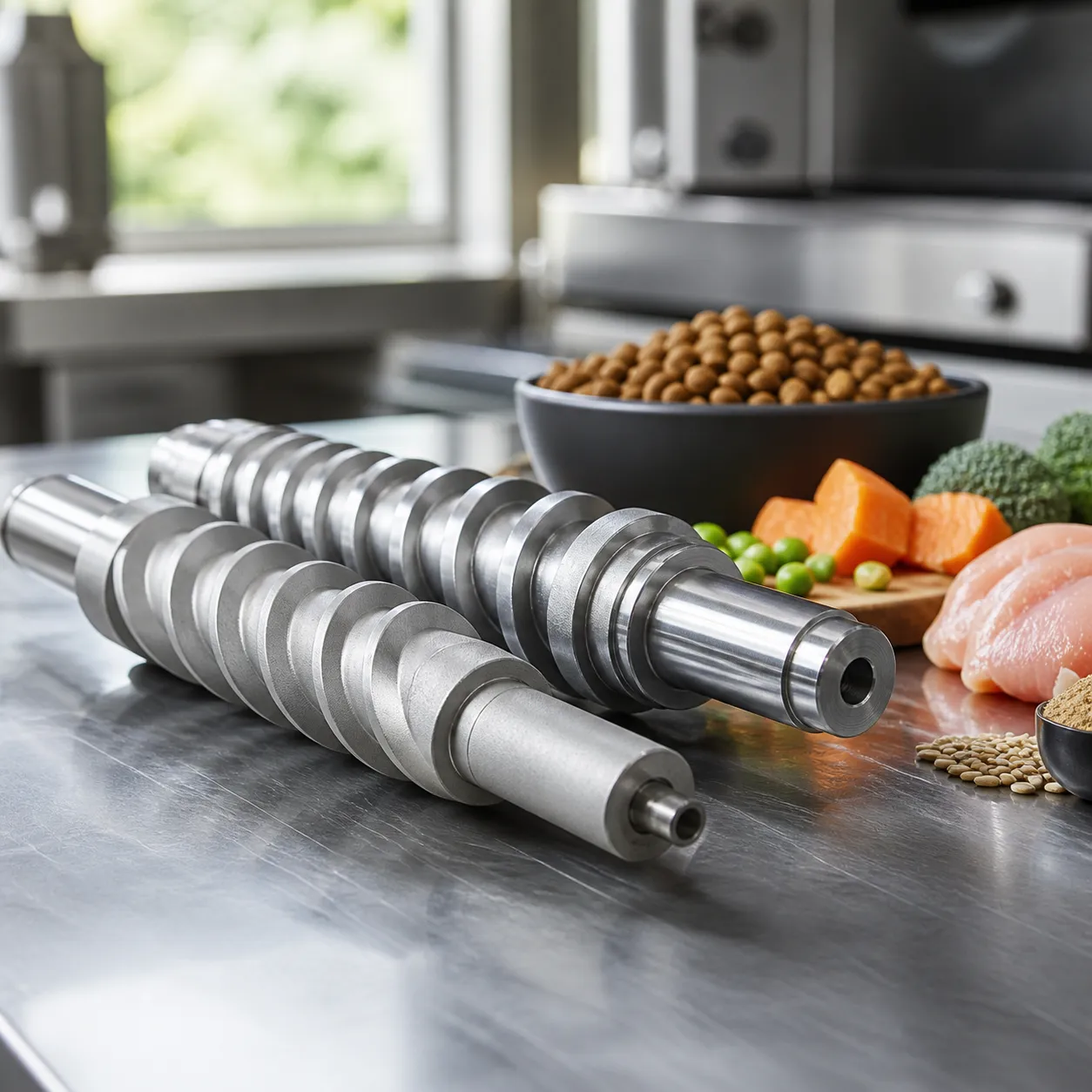
Your extruder shaft must handle extreme torsional loads without bending, twisting, or fracturing. During high pressure extrusion, the shaft transfers massive energy from the motor to the screw elements. If torque demands exceed shaft capacity, severe drive failures will follow.
- Drive Power Rating: Match shaft shear strength to peak motor kilowatt ratings.
- Spline Design: Ensure high-density spline geometry to distribute mechanical load evenly across all contact points.
- Thrust Loading: Verify that the shaft seamlessly integrates with your thrust bearing assembly to absorb axial pressure effectively.
| Torque Factor | Selection Metric | Impact on Production |
|---|---|---|
| Peak Torsional Load | Yield Strength (MPa) | Prevents shaft twisting under heavy load |
| Fatigue Resistance | Cyclic Endurance Limit | Extends lifespan during continuous high-speed runs |
| Spline Engagement | Surface Contact Area | Eliminates localized stress concentration |
Matching Material Metallurgy to Raw Material Abrasiveness
Raw ingredients used in dry pet food processing—such as bone meal, ash, minerals, and coarse grains—act like liquid sandpaper on drive components. Choosing the right wear resistant alloy or hardened tool steel ensures your shaft resists surface scoring and mechanical degradation.
When formulating dense, high-mineral kibble production lines, learning how to design metering screws for abrasive kibble helps align overall shaft metallurgy with feed screw wear resistance.
- High-Abrasiveness Recipes: Opt for hardened tool steel or specialized alloys featuring deep nitriding surface treatments.
- Acidic & Moisture-Heavy Mixes: Select corrosion-resistant stainless steel grades that withstand slurry environments without pitting.
- Thermal Endurance: Choose metallurgy that maintains high core toughness even under sustained operating temperatures.
Ensuring OEM Compatibility and Precise Shaft Fit
A hardened extruder shaft must fit seamlessly into your machinery. Microscopic misalignments or inaccurate spline tolerances cause heavy vibration, accelerated wear on extruder spare parts, and gearbox failure.
- Precision Machining: Enforce strict dimensional tolerances to guarantee exact shaft straightness and concentricity. Understanding when to choose 5-axis CNC for food machinery components highlights how complex splines achieve perfect tolerance matches.
- Exact Fitment: Ensure 100% direct-replacement compatibility with leading single screw extruder and twin screw extruder systems.
- Standardized Splines: Confirm spline pitch matches your drive couplings to prevent play, vibration, and backlash.
Maintenance, Inspection, and Shaft Replacement
Keeping hardened extruder shafts for pet food equipment running smoothly requires proactive maintenance. Catching minor wear early prevents catastrophic drive failures and keeps your production line running without costly unplanned downtime.
Signs of Extruder Shaft Wear and Spline Fatigue
Regular visual and mechanical checks reveal fatigue before a shaft breaks. We recommend checking for these key warning signs:
- Spline Deformation and Cracking: Heavy torque loads can twist splines or cause stress cracks at keyways, leading to slip or binding.
- Excessive Shaft Runout: Bent or warped shafts cause uneven wear on screw elements and barrel liners.
- Increased Vibration: Unexplained drive-end vibration often signals shaft misalignment or failure within the thrust bearing assembly.
- Surface Abrasion: Deep scoring along the shaft body indicates abrasive dry pet food raw materials have worn through the hardened surface layer.
Routine quality inspection processes allow us to measure runout tolerances and detect microscopic spline fatigue before catastrophic machine failure occurs.
Proper Assembly and Alignment Procedures
Proper installation protects high-torque hardened shafts from premature failure. Follow these core procedures during every teardown and reassembly:
- Clean Spline Mating Surfaces: Thoroughly clean drive splines to remove leftover pet food residues and grit that cause surface galling.
- Verify Centerline Alignment: Use precision laser tools to align the shaft perfectly with the gearbox output drive.
- Apply High-Temperature Anti-Seize: Coat the splines with approved lubricants to facilitate future disassembly without cold-welding.
- Torque to Manufacturer Specs: Over-tightening fasteners risks cracking hardened tool steel components, while under-tightening causes slop.
Shaft Refurbishment and Reconditioning Services
When an extruder shaft shows wear, full replacement isn't always the only option. Depending on the depth of the damage, reconditioning can restore critical dimensions at a fraction of the cost.
- Precision Surface Grinding: Removes shallow scoring and restores concentricity across the shaft body.
- Spline Rebuilding and Re-Nitriding: Restores worn drive splines back to original tolerances while renewing the hard protective skin.
- Direct Replacement: For severe fatigue or cracks, replacing the component with premium extruder wear parts ensures your single screw or twin screw extruder returns to peak high-pressure extrusion performance immediately.