Are you trying to design a metering screw feeder that can handle abrasive kibble without constant wear, poor flow, or inconsistent dosing?
The right screw design can make the difference between reliable production and frequent downtime. From flight geometry and variable pitch to abrasion-resistant materials, hopper flow, and drive torque, every detail affects metering accuracy and equipment life.
In this guide, you’ll learn how to design durable, efficient metering screws for abrasive bulk solids—and how to keep kibble moving smoothly from hopper to process line.
Understanding Metering Screw Feeders for Bulk Solids
What Is a Metering Screw Feeder?
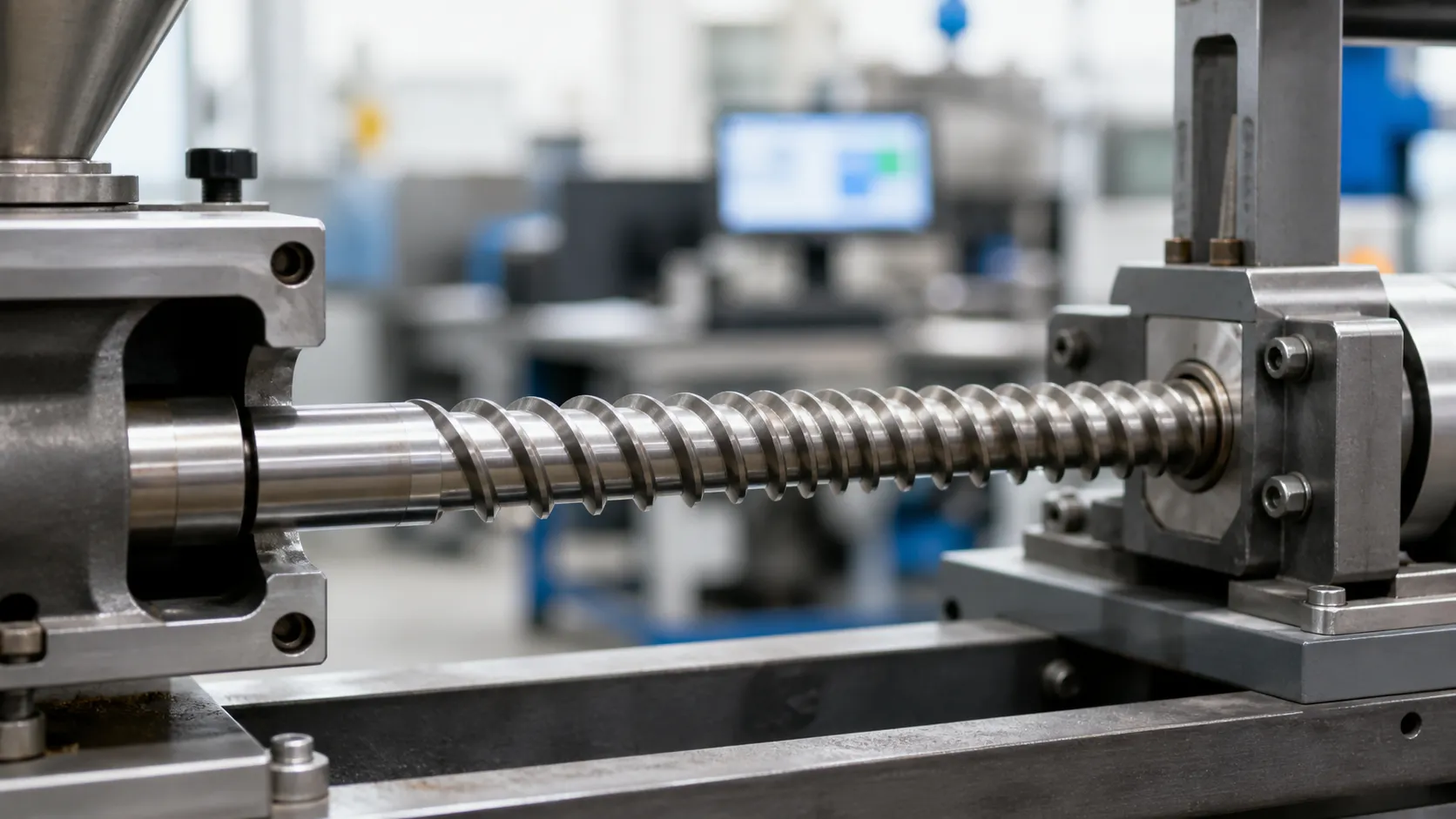
A metering screw feeder moves a controlled volume of bulk solids through a rotating screw. In kibble processing, it supports consistent transfer from a hopper or inlet point to the next processing, packaging, or dosing stage.
The screw flight captures and conveys product along a defined path. Accurate screw geometry, controlled clearances, and a stable drive system are essential because abrasive kibble can create friction, dust, and progressive component wear.
Key functions include:
- Maintaining a repeatable product flow
- Reducing uncontrolled surging from the hopper
- Supporting stable downstream filling or dosing
- Managing abrasive contact within food-processing equipment
Volumetric vs. Loss-in-Weight Metering
A volumetric feeder controls output by screw speed and the known displacement of each screw revolution. It is a practical approach when the material flow characteristics remain sufficiently stable.
A loss-in-weight feeder, also called a gravimetric screw feeder, measures weight reduction over time and adjusts screw speed to maintain the target feed rate. This approach can compensate for changes in material density, hopper level, and product flow behavior.
For abrasive kibble, both systems depend on mechanically consistent screw performance. Wear on flights, shafts, housings, or contact surfaces can alter conveyed volume and affect metering accuracy over time.
Role of Screw Feeders in Kibble Processing
Screw feeders help manage kibble as a bulk solid during controlled transfer and dosing. Their design must account for particle shape, dust generation, product movement, and continuous abrasive wear.
A properly engineered metering screw for abrasive kibble should provide:
- Smooth, controlled product movement
- Stable feed rate control at the required operating speed
- Minimal retention areas that can collect fines or residue
- Food-grade materials and sanitary surface finishes where product contact is required
- Precision-machined interfaces that support reliable assembly and repeatable operation
For OEM equipment, precision CNC machining is particularly important for flight profiles, transition zones, shafts, mounting features, and housing interfaces. Tight dimensional control helps maintain intended clearances and reduces the risk of binding, leakage, or uneven product flow.
Material Characteristics of Abrasive Kibble
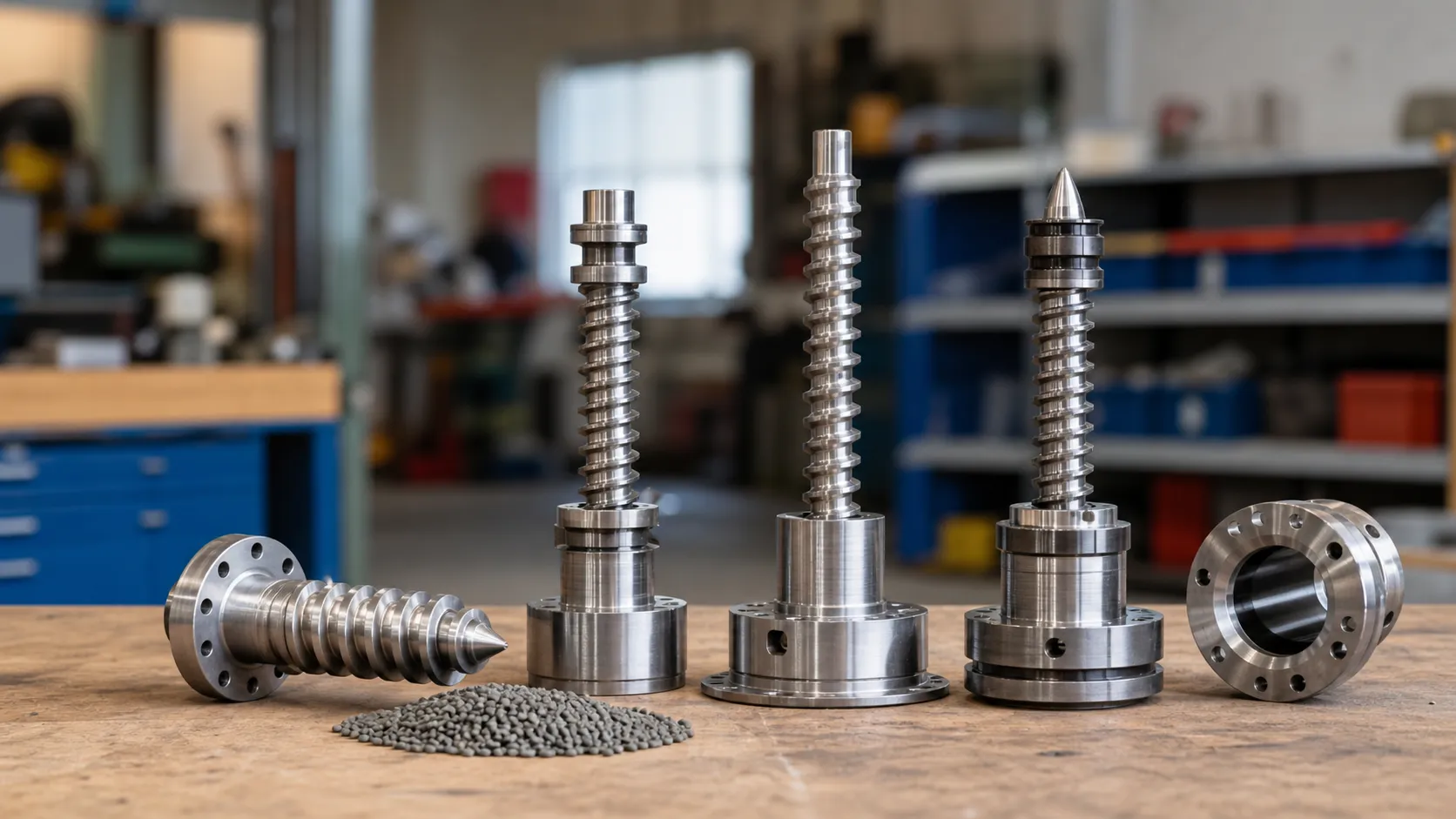
A reliable metering screw starts with the real behavior of the kibble. Particle shape, material density, fines, moisture variation, and surface hardness all affect how bulk solids fill the screw and how quickly contact surfaces wear. We assess these conditions before finalizing food-contact materials, clearances, and surface finishing.
Bulk Density and Compressibility
Kibble bulk density can vary by recipe, particle form, and handling conditions. This changes the amount of material carried per screw revolution, so a fixed-speed volumetric feeder may deliver different outputs when density shifts.
Compressibility also matters. Fragile or irregular pieces can settle differently in the hopper and compact under their own weight. For stable metering, the screw should be designed around the product’s actual loose bulk density and expected operating condition rather than a single nominal value.
Key checks include:
- Loose and settled bulk density
- Product behavior during hopper refill
- Changes caused by fines or broken kibble
- Sensitivity to compression and vibration
Flowability and Particle Size Distribution
Kibble rarely behaves as one uniform material. A production batch may contain whole pieces, smaller fragments, and dust. Broad particle size distribution can affect filling consistency, create uneven flow, and increase the chance of particles collecting in tight areas.
Metering screw contact zones should support smooth product movement without unnecessary traps, sharp corners, or restrictive gaps. Clean transitions and controlled clearances help reduce binding while limiting buildup of kibble dust. Where complex geometry is needed, 5-axis CNC machining for food machinery components supports accurate profiles and smooth, sanitary transitions.
Impact of Abrasiveness on Component Wear
Continuous kibble movement creates abrasive wear on screw flights, troughs, housings, guide elements, and nearby sealing surfaces. As flight edges and clearances wear, the feeder can lose consistent volumetric efficiency and require more frequent calibration.
We use food-grade Stainless Steel 304 or 316L where corrosion resistance and washdown performance are required. For specified wear zones, DLC coating can improve surface hardness and reduce friction. Our pet food wear tracks and DLC-coated components apply the same wear-focused approach to high-contact pet food equipment parts.
For hygienic service, passivation, electropolishing, or food-grade polishing can reduce microscopic surface imperfections that retain dust and residue. Material traceability, dimensional inspection, and controlled tolerances down to ±0.002 mm help maintain fit as replacement parts are produced.
Screw Design Principles and Flight Geometry
A metering screw for abrasive kibble must deliver a stable feed rate while limiting particle damage, dust buildup, and flight wear. We machine screw profiles to suit the product’s material density, particle size, required throughput, and the available space in the feeder body. Tight, repeatable geometry is essential where consistent volumetric dosing matters.
Screw Diameter and Variable Pitch Options
Screw diameter sets the available conveying volume per revolution. A larger diameter can move more kibble, while a smaller diameter can support lower, more controlled output. The correct selection depends on the target feed rate and the product’s flow behavior.
A variable pitch screw changes the flight spacing along the shaft. This helps manage how kibble enters, compacts, and exits the metering zone.
| Design option | Practical use in kibble metering |
|---|---|
| Constant pitch | Suitable for stable, predictable product flow |
| Shorter pitch near discharge | Helps control final dosing volume |
| Variable pitch | Supports smoother transfer where feed conditions change |
| Larger screw diameter | Handles higher volumetric capacity |
| Smaller screw diameter | Improves control for lower feed rates |
For OEM replacement work, we can machine custom screw forms from CAD files, samples, or dimensioned photos. 316L kibble metering screws for pet food manufacturing are a suitable reference for food-grade screw construction and precision-machined replacement components.
Tapered and Mass Flow Flight Configurations
A tapered flight or changing root diameter can progressively adjust the space between the screw and housing. This design can help keep material moving evenly instead of allowing excessive compression at one point.
For abrasive kibble, smooth transitions are important. Abrupt changes in flight depth, sharp edges, or poorly blended screw sections can increase friction and create locations where fines collect. We use multi-axis CNC machining to produce controlled profiles, smooth radii, and consistent transitions across complex metering screw geometries.
Key design priorities include:
- Smooth flight-to-shaft transitions to reduce local wear points
- Controlled flight depth for steady bulk solids handling
- Balanced pitch changes to avoid sudden material surging
- Clearance matched to the feeder housing to reduce binding and dust traps
- Crevice-minimizing geometry for more sanitary cleaning access
Where corrosion resistance and washdown performance are required, stainless steel selection also matters. Our guidance on 304 and 316L for auger screw applications outlines the food-processing considerations behind these common stainless steel choices.
Maximizing Volumetric Efficiency
Volumetric efficiency depends on how consistently each screw rotation carries kibble from inlet to discharge. The objective is not simply to maximize fill volume; it is to maintain a repeatable volume without crushing the product or creating unstable flow.
| Geometry factor | Effect on volumetric feeder performance |
|---|---|
| Flight pitch | Controls conveyed volume per revolution |
| Screw diameter | Establishes overall capacity |
| Root diameter | Changes pocket volume between flights |
| Flight clearance | Affects leakage, friction, and abrasive wear |
| Surface finish | Helps reduce product hold-up and dust adhesion |
| Discharge transition | Supports smoother, more consistent dosing |
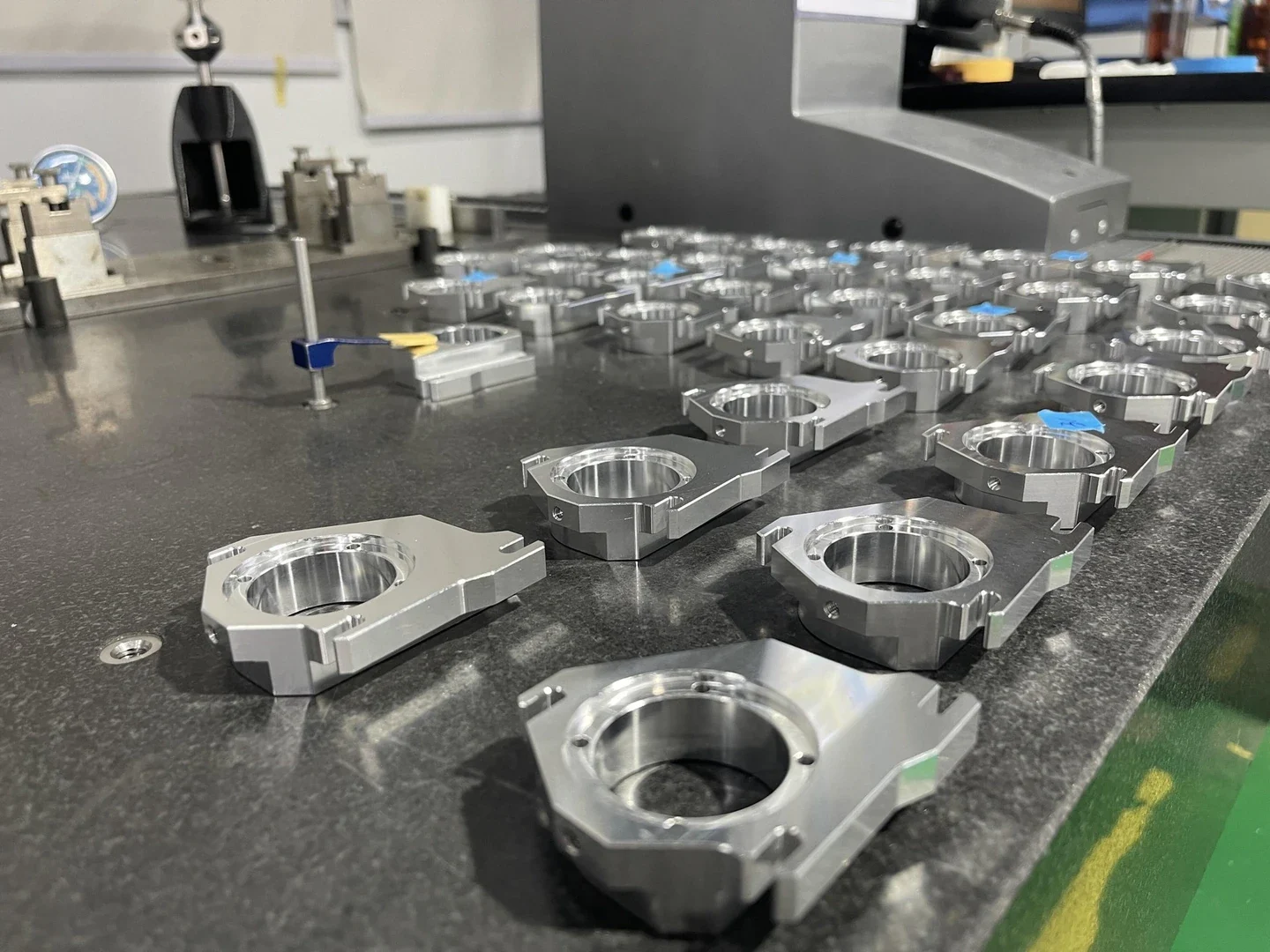
We apply precision CNC milling, turning, and 5-axis machining where required to maintain the specified screw geometry. Tolerances down to ±0.002 mm, combined with dimensional verification, support accurate fitment between the metering screw, housing, and connected dosing assembly.
Abrasion-Resistant Design Features for Metering Screws
For abrasive kibble, we design metering screws as wear components, not standard conveying parts. The screw flight, trough, housing, shaft, and bearing areas must resist constant particle contact while maintaining stable clearances and hygienic surfaces.
Hardfacing and Protective Coatings for Screw Flights
Screw flights experience the highest abrasive wear. Stainless Steel 304 or 316L provides a food-grade base material, while DLC coating can improve surface hardness and reduce friction in high-contact zones. Passivation, electropolishing, and food-grade polishing also help create smoother surfaces that are easier to clean.
| Design area | Recommended approach | Purpose |
|---|---|---|
| Screw core | Stainless Steel 304 or 316L | Corrosion resistance and structural strength |
| Flight surfaces | DLC protective coating | Reduced abrasive wear and friction |
| Food-contact finish | Passivation or electropolishing | Smooth, sanitary finish |
| Wear guides or inserts | UHMW-PE, POM, or PEEK where suitable | Low-friction contact and replaceable wear protection |
For guide and wear components, material selection should balance friction, cleanability, and mechanical load. Our comparison of UHMW-PE, POM, and PEEK for food conveyor guides covers practical differences between these engineering plastics.
Heavy-Duty Trough and Housing Construction
The trough and housing must keep the metering screw aligned under load. We use rigid construction, controlled internal clearances, and smooth transition areas to reduce kibble buildup and uneven wear.
Key design points include:
- Maintain consistent screw-to-trough clearance to support volumetric accuracy.
- Use smooth radii instead of sharp internal corners where kibble dust can collect.
- Design removable wear sections when frequent replacement is expected.
- Finish food-contact surfaces to support washdown and hygienic operation.
- Machine mating features precisely to prevent shaft misalignment and housing distortion.
For complex housing profiles, variable-pitch screw interfaces, and close-clearance assemblies, 5-axis CNC machining supports accurate part fitment. Tolerances can be controlled down to +/-0.002 mm where the application requires it.
Shaft and Bearing Protection Against Abrasive Dust
Fine kibble dust can enter bearing zones, increase drag, and accelerate shaft wear. We protect these areas through guarded layouts, sealed interfaces, and precision-machined support features that keep abrasive material away from rotating components.
| Component | Protection feature | Operating benefit |
|---|---|---|
| Shaft | Smooth, corrosion-resistant finish | Less dust adhesion and easier cleaning |
| Bearing zone | Sealed or shielded arrangement | Reduced abrasive contamination |
| End supports | Accurate concentric machining | Lower vibration and uneven wear |
| Housing interface | Controlled fit and sanitary geometry | Reduced particle ingress |
A metering screw for abrasive kibble performs best when the wear surfaces, shaft supports, and housing interfaces are designed as one assembly. This approach protects feed rate control, supports repeatable production, and makes replacement parts easier to verify through dimensional inspection and material traceability.
Hopper Design and Material Conditioning
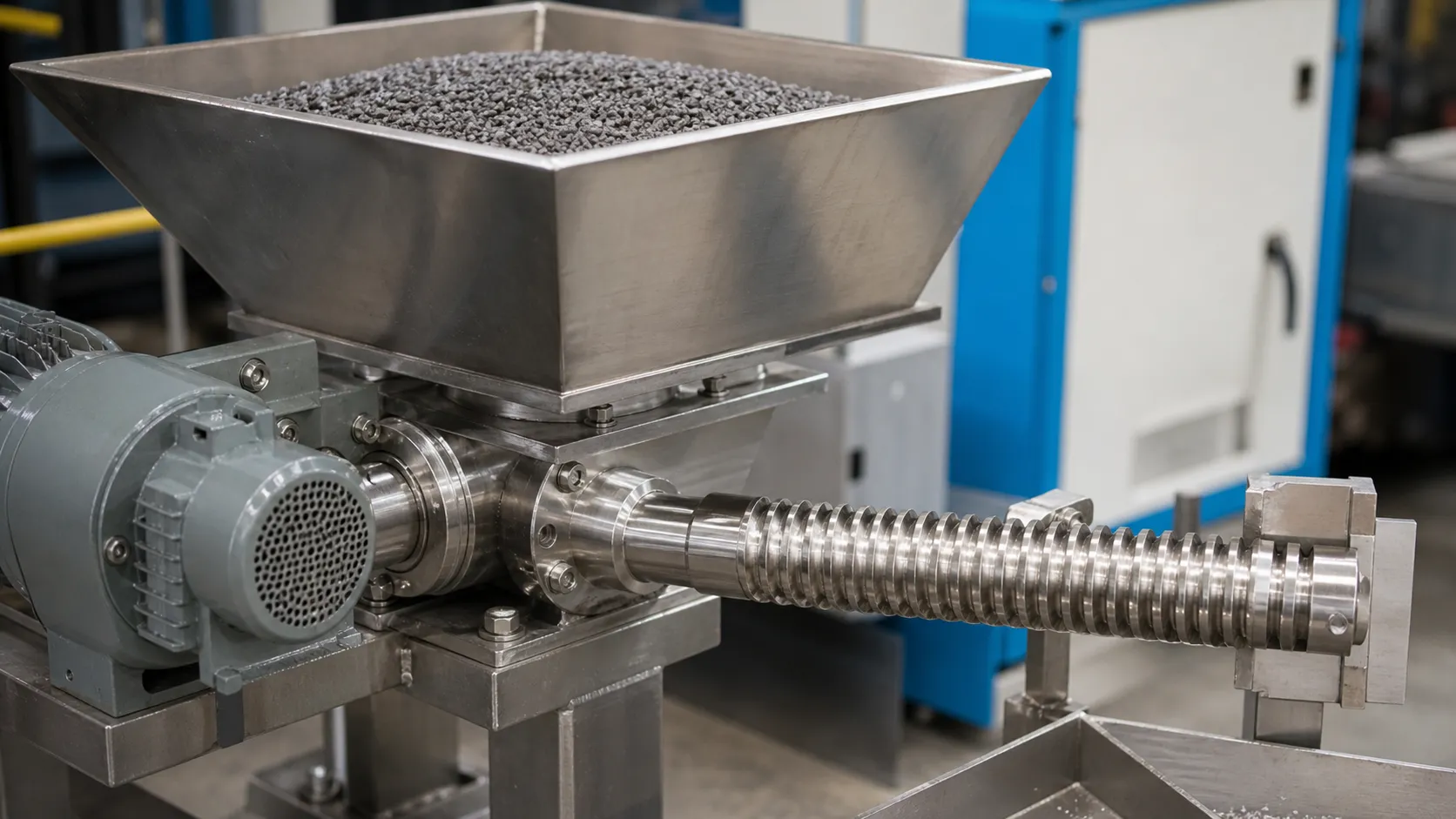
Optimizing Hopper Geometry for Uniform Flow
For abrasive kibble, hopper geometry must promote steady, repeatable discharge into the metering screw. A hopper with smooth internal transitions, suitable wall angles, and no unnecessary ledges helps reduce stagnant zones where fines can collect. The outlet should feed the screw consistently across its intake area rather than directing material to one side.
We use food-contact materials and sanitary surface finishing where the hopper or feed-zone components require washdown resistance. Stainless steel 304 and 316L are practical options for durable, hygienic construction; see our stainless steel machining material options for compatible CNC-produced parts.
Key hopper design points include:
- Smooth radii instead of sharp internal corners
- A discharge opening sized for the required feed rate
- Consistent hopper walls that limit material hang-up
- Accessible surfaces for cleaning and inspection
- Controlled clearances between the hopper outlet and screw inlet
Agitation and Flow Aids to Prevent Bridging
Kibble can vary in particle size, fines content, bulk density, and compressibility. These changes can cause bridging or irregular flow above a volumetric feeder. Light, controlled agitation or a properly designed flow aid can keep material moving without crushing kibble or creating excessive dust.
The goal is not maximum movement inside the hopper. It is stable replenishment at the screw inlet. Over-agitation may damage product, increase fines, and accelerate abrasive wear on contact parts. Wear-prone agitator arms, guides, and supports should be designed as replaceable components with smooth, sanitary surfaces.
Refill Systems and Shroud Considerations
A refill system should maintain a stable head of material above the screw while avoiding sudden surges that disrupt metering consistency. Controlled refill cycles, correctly positioned inlets, and suitable shrouds help contain dust and protect the feed zone from outside contamination.
Shrouds and transition pieces should have smooth internal surfaces with minimal crevices. For abrasive kibble applications, precision-machined mounting features and sealing interfaces help maintain alignment during operation and cleaning. Our one-stop CNC sourcing approach for packaging machinery parts supports custom hopper interfaces, wear parts, brackets, and related feed-system components with inspection and material traceability.
Drive Mechanisms and Speed Control
Selecting Drive Systems for Variable Flow Rates
Abrasive kibble can create changing loads as product density, particle mix, and hopper level vary. We design metering screw feeders with stable, adjustable drive control so operators can match screw speed to the required feed rate without sacrificing repeatability.
| Drive consideration | Design focus |
|---|---|
| Variable flow demand | Use controlled speed adjustment to fine-tune volumetric output |
| Screw geometry | Match the drive range to screw diameter, pitch, and flight profile |
| Product variation | Allow practical adjustment for shifts in material density and flow behavior |
| Equipment fit | Maintain accurate shaft alignment and secure mounting interfaces |
For high-precision assemblies, the drive connection, screw shaft, and mounting datums must work as one system. Our CNC machining process supports close-tolerance interfaces down to ±0.002 mm where the application requires it, helping reduce play that can affect consistent rotation and feed rate control.
Managing Torque Requirements for Abrasive Materials
A drive must provide enough torque to start and run the metering screw through abrasive kibble without overload, speed loss, or repeated shock loading. Torque demand rises when kibble compacts near the screw inlet, when particles create resistance along the trough, or when abrasive dust enters poorly protected moving interfaces.
Key torque design practices include:
- Select a shaft diameter and drive connection suited to the operating load.
- Avoid abrupt flight transitions that can create localized material packing.
- Use smooth, precision-machined surfaces to support steadier material movement.
- Protect drive-side interfaces from dust ingress and abrasive wear.
- Verify clearances between the screw and housing to limit rubbing while maintaining controlled conveying.
For food-contact and washdown environments, stainless steel 304 or 316L can provide a sanitary base material, while passivation, electropolishing, and DLC coatings can be applied where wear and cleanability are critical. The same hygienic machining principles used for precision 316L sanitary valve bodies help maintain smooth, cleanable component surfaces in demanding processing systems.
Maintenance and Operational Best Practices
Reliable metering depends on more than the original screw design. For abrasive kibble, we recommend a planned inspection, calibration, and cleaning routine that protects volumetric consistency, food-contact hygiene, and component service life.
Inspecting Screw Wear and Flight Clearance
Abrasive wear gradually changes flight thickness, screw diameter, and the clearance between the screw and housing. As clearance grows, fines can bypass the flight, output can become less stable, and dust may collect in areas that are harder to clean.
| Inspection point | What to check | Operational effect |
|---|---|---|
| Screw flights | Worn edges, thinning, uneven surfaces | Reduced conveying consistency |
| Screw-to-housing clearance | Excessive gap or contact marks | Leakage, binding, and variable feed rate |
| Root and shaft | Scoring, corrosion, or fatigue | Reduced structural reliability |
| Housing and trough | Grooves, wear tracks, and buildup | Poor fit and more abrasive wear |
| Bearings and seals | Dust ingress or rough movement | Premature drive-end failure |
Use dimensional inspection to compare critical features against the approved drawing. For replacement parts, our CNC machining process can hold tolerances down to ±0.002 mm, supporting precise fitment in OEM feeder assemblies. Protective surfaces should also be reviewed during each service interval; DLC-coated pet food wear parts are especially relevant where kibble contact creates persistent friction.
Calibrating Metering Accuracy for Kibble Products
Kibble material density can vary by recipe, moisture condition, particle size, and handling method. A volumetric feeder should therefore be checked using the actual product being processed, not only a nominal setting.
Maintain accurate feed rate control by:
- Recording screw speed, run time, and discharged weight for each product.
- Checking output after changes in kibble grade, density, or particle condition.
- Verifying that the hopper is feeding uniformly during the test.
- Reviewing the results after screw replacement, coating changes, or housing repairs.
- Keeping approved calibration records for repeat production runs.
For loss-in-weight feeder systems, confirm that the weighing system and refill sequence do not disrupt stable discharge. A well-machined screw profile and consistent flight clearance help reduce variation, but calibration remains essential whenever the material or operating conditions change.
Easy-Clean and Quick-Changeover Features
Food-grade metering screws should be designed for routine washdown, inspection, and product changeovers. Smooth transitions, sanitary finishing, and minimal crevices reduce places where kibble dust and residue can remain.
Prioritize these practical features:
- Smooth radii and cleanable transitions around flights, shafts, and mounting interfaces.
- Passivation, electropolishing, or food-grade polishing where sanitary surface quality is required.
- Traceable Stainless Steel 304 or 316L materials for applicable food-contact components.
- Modular screw and housing interfaces that simplify removal and refitting.
- Wear-resistant replaceable elements in high-contact zones to avoid replacing a complete assembly unnecessarily.
For guide and contact surfaces around the feeder, food-safe UHMW-PE guide rails and wear strips can provide a low-friction option where the application requires engineered plastic wear components. Combined with documented inspection and cleaning procedures, these design choices support dependable abrasive kibble handling across global production environments.