Overview
Understanding Equipment Wear and Wear Tracks in Processing Machinery
Modern pet food manufacturing and PET container processing demand continuous high-speed operations under severe physical stress. Over time, persistent sliding contact, heavy mechanical loads, and abrasive raw materials degrade metal surfaces, forming deep wear tracks across critical components. Managing surface friction and mechanical erosion is essential to preserving machinery integrity and line velocity.
Causes of Severe Wear in Pet Food and PET Processing
Industrial food and packaging processing environments present unique mechanical challenges that accelerate component breakdown:
- Abrasive Formulations: Dry kibble recipes contain hard minerals, ash, bone meal, and dense grains that act as relentless abrasives against extruder screws, barrels, and guide rails.
- High Pressure and Contact Load: Heavy extrusion and conveyoring forces produce extreme localized pressure, breaking down standard metal-on-metal wear points.
- Thermal Cycling and Resin Friction: PET packaging machinery undergoes rapid thermal cycles and aggressive sliding friction from polymer resins, causing micro-scouring and localized metal fatigue.
Impact of Wear Tracks on Machine Efficiency and Product Quality
Once wear tracks form on processing surfaces, the resulting mechanical degradation impacts the entire production line:
| Operational Factor | Impact of Unmaintained Wear Tracks |
|---|---|
| Energy Efficiency | Elevated friction increases motor drive loads, pushing energy consumption higher. |
| Product Consistency | Dimensional loss causes flow turbulence, resulting in uneven kibble sizing or irregular PET container wall thickness. |
| Hygienic Compliance | Deep surface grooves capture raw ingredients and polymers, creating severe contamination hazards and difficult cleaning routines. |
| Downtime Costs | Surface breakdown accelerates unexpected component failure, forcing costly line shutdowns. |
Traditional Maintenance vs. Advanced Thin-Film Surface Coatings
Conventional maintenance strategies typically rely on frequent component replacement, heavy weld overlays, or standard thermal spraying. While these methods temporarily rebuild component geometry, they often alter critical tolerances, increase component weight, and wear down rapidly under high abrasion.
Engineered advanced thin-film surface coatings replace reactive repairs with proactive surface protection. Applying ultra-thin, high-hardness surface treatments preserves critical engineering tolerances while providing superior friction reduction and long-term surface durability.
What is DLC (Diamond-Like Carbon) Coating?
In high-throughput manufacturing, diamond-like carbon (DLC) serves as a specialized thin-film surface coating that merges the extreme hardness of diamond with the slickness of graphite. We apply DLC coatings to critical machinery parts to prevent severe pet food wear tracks & DLC coated components from deteriorating under heavy friction and continuous operational load.
Fundamental Properties and Hardness of DLC Coatings
DLC films consist of an amorphous carbon matrix structured with sp² and sp³ atomic bonds. This unique structure yields exceptional wear resistance and superior tribological properties without altering the precise dimensions of your original parts.
- Extreme Hardness: Delivers surface hardness ratings reaching 2,000 to 3,000 HV, easily surpassing standard stainless steel or hardened tool steel.
- Ultra-Thin Profile: Applied at consistent thicknesses of 1 to 5 microns, preserving tight dimensional tolerances on critical components.
- Substrate Hardness Enhancement: Bonds seamlessly with stainless steel, titanium, and alloy metals commonly used across the pet food industry.
How DLC Coatings Prevent Friction and Material Degradation
Uncoated metal-on-metal sliding surfaces quickly develop localized wear tracks due to friction, abrasive particulates, and high contact pressure. DLC coatings drastically lower surface energy and eliminate micro-galling between sliding components.
| Performance Metric | Uncoated Component | DLC Coated Component |
|---|---|---|
| Friction Coefficient | High (0.50 – 0.80) | Extremely Low (0.05 – 0.10) |
| Sliding Properties | Prone to galling and binding | Smooth, self-lubricating movement |
| Surface Durability | Rapid wear track formation | Long-term wear resistance |
| Cleanability & Release | Severe residue buildup | High demolding efficiency & non-stick |
This dramatic drop in surface friction prevents material degradation, stops galling, and ensures continuous, smooth operation without relying on liquid lubricants that could contaminate product lines.
Food Grade and Industrial Standards Compliance
When outfitting food processing equipment, safety standards are just as critical as mechanical durability. DLC coatings are chemically inert, dense, and fully compliant with global food contact regulations.
- FDA & EU Compliance: Completely non-toxic and certified for direct contact with pet food products and primary packaging materials.
- Corrosion & Washdown Resistance: Withstands harsh acidic, alkaline, and high-pressure steam sanitation cycles without degrading or delaminating.
- Zero Flaking Risk: Outstanding thin-film adhesion ensures the coating will not chip, peel, or introduce foreign particulates into your processing line.
Key Benefits of DLC Coated Components
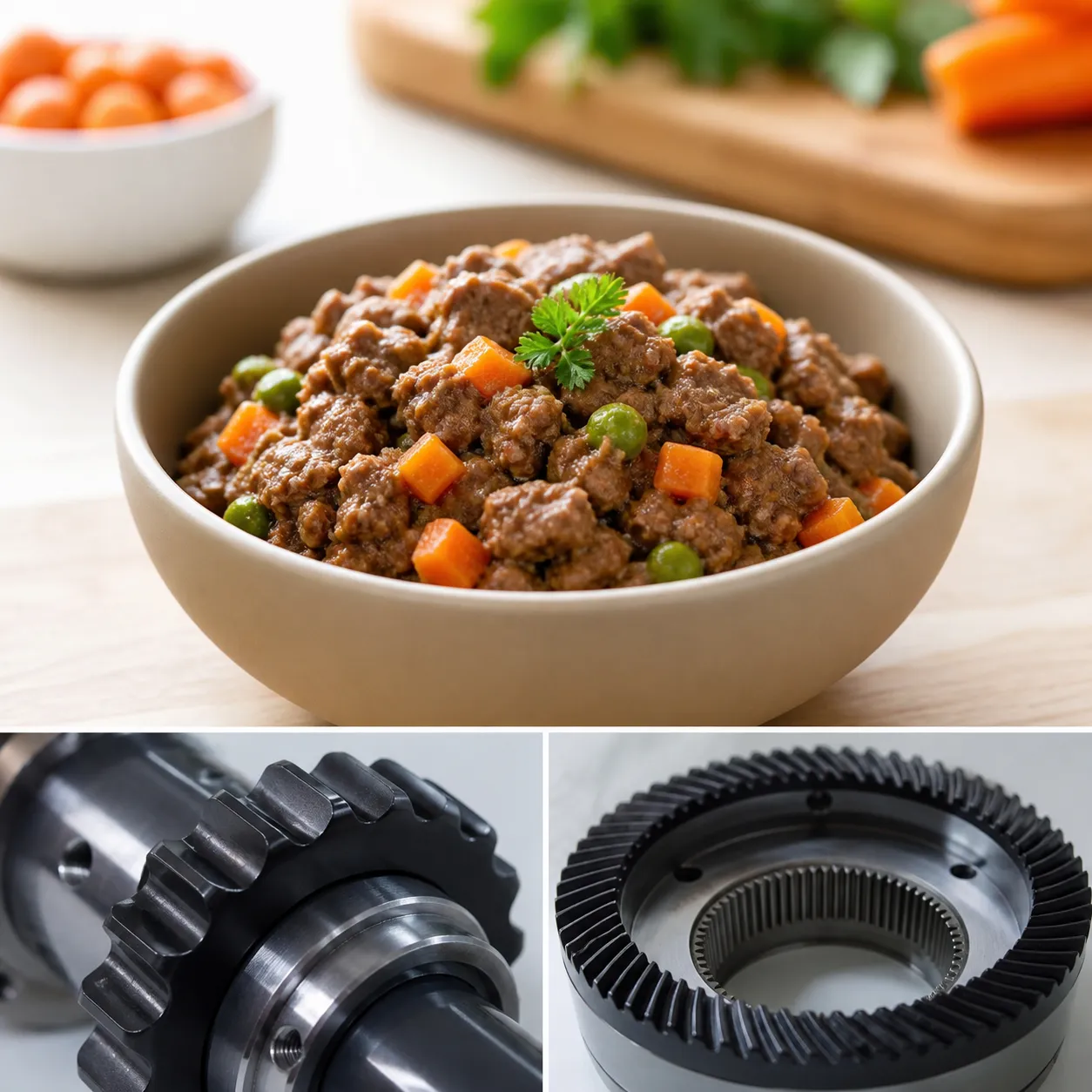
I see severe equipment wear ruin production schedules every day. Upgrading your machinery with DLC coated components completely transforms how your line handles abrasive stress, eliminating deep pet food wear tracks and protecting critical moving parts.
Superior Resistance to Wear Tracks and Surface Abrasion
Abrasive ingredients like bone meal, minerals, and hard kibble quickly score untreated metal surfaces. Diamond-like carbon (DLC) creates an ultra-hard protective barrier that withstands extreme contact pressure. By applying our advanced surface finishing solutions, we stop wear tracks before they start, preventing metal flaking and preserving exact mechanical tolerances over millions of cycles.
Low Friction Coefficient for Higher Energy Efficiency
DLC coatings dramatically lower the friction coefficient between sliding metal parts. Reducing contact friction delivers immediate operational advantages:
- Reduced motor load: Drive motors draw significantly less power during heavy extrusion and conveying operations.
- Friction heat suppression: Lower working temperatures prevent heat-sensitive pet food fats and proteins from scorching or degrading.
- Smoother mechanical action: Sliding components glide effortlessly without galling, seizing, or micro-welding.
Non-Stick Surface Properties and Easy Hygienic Cleaning
Sticky slurries, fats, and palatants cling aggressively to raw steel, causing frequent line stops for manual scraping. DLC coatings provide a slick, low-surface-energy finish that optimizes demolding efficiency and product release.
- Faster washdowns: Process residue slides off effortlessly during normal sanitation cycles.
- Enhanced hygiene: Eliminating wear tracks removes the microscopic crevices where bacteria and mold accumulate.
- Higher product yield: Less raw material sticks to chutes, transfer plates, and shaping dies.
Extended Component Lifespan and Reduced Machine Downtime
Protecting high-wear zones with DLC yields immediate returns by keeping production lines running continuously without surprise maintenance halts.
| Operational Metric | Standard Metal Components | DLC Coated Components |
|---|---|---|
| Wear Track Resistance | Low (prone to heavy scoring) | Maximum (scratch-resistant surface) |
| Friction Coefficient | High (0.5 – 0.8 μ) | Ultra-Low (< 0.1 μ) |
| Material Buildup | Frequent (requires manual scraping) | Minimal (slick non-stick surface) |
| Part Lifespan | Baseline (1x) | Extended (up to 5x–10x longer) |
| Unplanned Downtime | High | Significantly Reduced |
Essential Machinery Components Benefiting from DLC Coatings
In high-volume pet food and container packaging, friction and abrasive wear constantly threaten production uptime. Upgrading high-wear hardware with advanced diamond-like carbon surface treatment prevents deep pet food wear tracks & DLC coated components deliver unmatched durability across critical processing nodes.
Wear Tracks, Guide Rails, and Sliding Components
Linear tracks and guide rails endure continuous contact from high-speed conveying equipment. Without proper protection, repeated sliding creates deep wear tracks that cause alignment failures and machine jamming.
- Low Friction Coefficient: DLC coatings minimize surface friction, ensuring smooth component travel.
- Abrasive Wear Resistance: Shields underlying metal from continuous sliding contact and particle abrasion.
- Reduced Vibration: Smooth sliding properties eliminate stick-slip motion, reducing operational noise.
Extrusion Screws, Dies, and Cutting Blades
Pet food kibble extrusion subjects tooling to high pressure, elevated heat, and highly abrasive ingredient slurries.
- Extrusion Screws & Dies: High surface hardness prevents severe erosion on screw flights and die orifices, maintaining exact kibble dimensions.
- Cutting Blades: Keeps cutting edges sharp significantly longer, yielding clean cuts without tearing or premature blade replacement.
Blow Molds and Tooling for PET Container Processing
Mass production of PET packaging requires fast cycle times and flawless demolding. Applying DLC surface coatings to mold cores and cavities enhances overall operations in the beverage processing industry.
- Enhanced Demolding Efficiency: Non-stick properties ensure clean bottle release without sticky resin buildup.
- Scuff Protection: Prevents optical flaws and scratches on preforms and finished containers.
- Thermal Stability: Withstands continuous thermal cycling without flaking or degrading.
Dosing, Metering, and Coating Application Valves
Liquid fat and palatant dosing systems rely on pinpoint volumetric accuracy. High-frequency valve cycling can cause galling and severe wear on internal seats and spools.
| Component Type | Primary Failure Mode | DLC Coating Solution |
|---|---|---|
| Dosing Valve Spools | Surface galling & friction scoring | Lowers friction, preventing seizure during high-frequency actuation |
| Metering Seats | Particle erosion from liquid fats | High substrate hardness shields sealing edges from continuous wash |
| Application Manifolds | Material buildup & stickiness | Smooth, hydrophobic finish works alongside equipment like a beverage valve manifold 316L for sanitary processing to prevent clogging |
Application Scenarios Across Production Lines
We see heavy mechanical stress and surface friction impact uptime across every stage of processing. Integrating DLC coated components directly eliminates wear tracks on critical production machinery, keeping operations running at peak throughput.
Dry Pet Food (Kibble) Extrusion and Conveying
Extruding kibble involves highly abrasive ingredients like bone meal, minerals, and tough fibers. Over time, these materials carve deep wear tracks into extrusion screws, barrels, and conveying guide rails.
- Extreme Wear Resistance: Diamond-like carbon coatings protect vulnerable metal surfaces against heavy slurry friction and particle scuffing.
- Enhanced Sliding Properties: Lowering friction allows raw materials to move smoothly through the die, preserving precise pellet shapes and dimensions.
- Preventing Metal Flaking: Superior substrate bonding ensures the surface layer stays intact, eliminating contamination risks in high-output food processing equipment.
Palatant Liquid and Powder Coating Systems
Applying fats, digest liquids, and flavor powders onto kibble creates severe buildup on application valves, spray nozzles, and metering shafts.
By applying a specialized DLC surface coating to component surfaces, we drastically drop the friction coefficient and create an easy-release, hydrophobic barrier. Upgrading your liquid application lines and filling machines with DLC treated components prevents sticky palatant buildup, guarantees exact dosing accuracy, and shortens washdown cycles during product changeovers.
PET Hot-Fill Processing and Molding Applications
Container molding and high-speed packaging lines demand smooth release cycles and uncompromised dimensional accuracy under elevated temperatures.
- Higher Demolding Efficiency: DLC coatings stop warm PET preforms and blow-molded bottles from sticking inside mold cavities, preventing scuffs and structural defects.
- Eliminating Slide Wear: Neck-ring plates, stretch rods, and high-speed transfer grippers avoid localized groove formation and galling.
- Maximum Tool Durability: Maintaining high surface hardness minimizes tool refurbishment costs and prevents premature mold wear.
Selection and Purchasing Guide for DLC Coated Components
Choosing the right DLC coated components requires matching the diamond-like carbon surface treatment to your specific processing demands. In pet food manufacturing, preventing deep wear tracks relies as much on proper base substrate selection as it does on the coating process itself.
Assessing Substrate Compatibility and Coating Specifications
A DLC surface coating is extremely thin, typically 1 to 5 microns thick. To withstand extreme contact pressures without cracking or peeling, the underlying material must offer high core hardness. We evaluate several core factors before applying coatings to pet food processing equipment:
| Substrate Material | Substrate Hardness | Best Suited DLC Type | Common Components |
|---|---|---|---|
| Stainless Steel (316L, 17-4PH) | > 35 HRC | Chromium-Doped DLC (a-C:H:Cr) | Metering valves, guide rails |
| Tool Steels (D2, M2) | 58–62 HRC | Pure Hydrogenated DLC (a-C:H) | Extrusion dies, cutting blades |
| Titanium Alloys | > 30 HRC | Multi-layer DLC | High-speed sliding elements |
Evaluating Friction, Load, and Operational Temperature Demands
To ensure long-term durability and eliminate pet food wear tracks, we carefully analyze operating environment parameters. High temperature or heavy mechanical loads alter a component's tribological properties and sliding properties over time.
- Operating Temperature: Standard DLC coatings perform best below 300°C (572°F). High-heat zones like hot extrusion require temperature-stabilized formulations.
- Friction Coefficient: Target ultra-low friction values (0.05 to 0.10) to reduce energy draw on motor drives and eliminate material buildup.
- Contact Load & Pressure: High-load sliding parts demand localized substrate hardening (nitriding) prior to DLC application to maintain surface integrity under pressure.
Integrating these engineering standards into your workflow safeguards critical machinery across demanding https://zscncpack.com/industries/](https://zscncpack.com/industries/)">industrial sectors where continuous throughput is non-negotiable. Similar precision is crucial for automated setups in the https://zscncpack.com/industries/packaging-industry/">packaging industry, where smooth feeding and low friction directly dictate overall equipment effectiveness.
Key Factors in Choosing a DLC Coating and Component Supplier
Partnering with the right supplier ensures consistent wear resistance and full regulatory compliance for food contact applications. We recommend evaluating coating partners against four critical criteria:
- Food Contact Certification: Verify compliance with FDA or EU food contact regulations for all product-facing components.
- Coating Uniformity: Ensure the vendor uses advanced physical vapor deposition (PVD) or PECVD methods to achieve uniform coverage on complex geometries.
- Quality Control & Testing: Require surface roughness (Ra) certification and adhesion scratch testing reports before batch deployment.
- Turnaround & Technical Support: Partner with suppliers offering re-coating services to restore worn tooling without full component replacement.