Understanding 5-Axis CNC Machining for Food Equipment
Machining tolerance review: Typical machining tolerance is ±0.01 mm. Selected dimensions may achieve ±0.005 mm after technical review. Final tolerances depend on the drawing, material, part size, geometry, finishing and inspection requirements and must be confirmed before order acceptance.
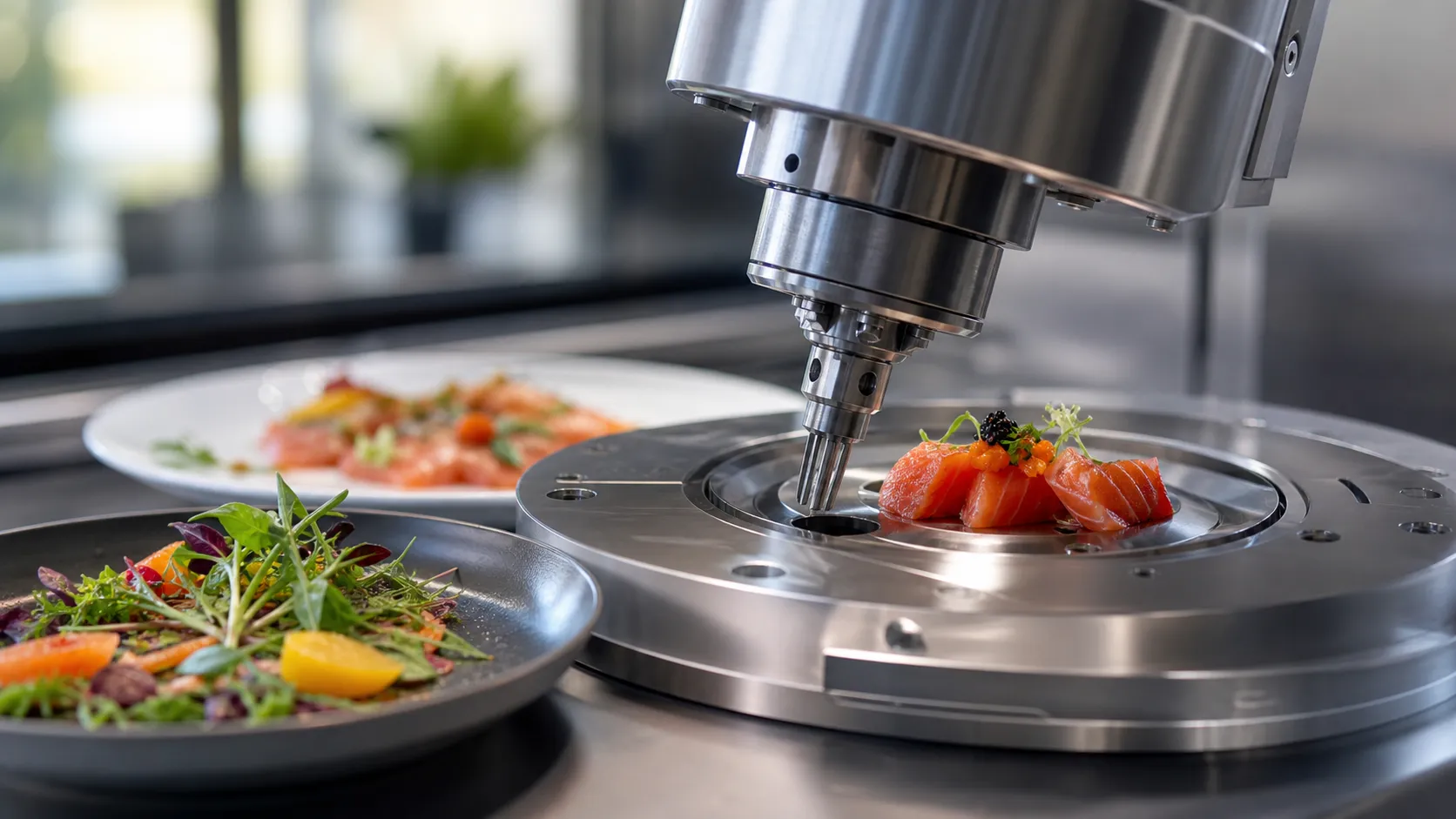
In modern food processing equipment manufacturing, precision and hygiene are mandatory standards. 5-axis CNC machining represents the peak of advanced manufacturing technology, enabling the production of highly complex, ultra-precise food-grade components that meet strict global regulatory requirements.
What is 5-Axis CNC Machining?
5-axis CNC machining is a high-precision manufacturing process where a computer-controlled cutting tool moves simultaneously across five distinct axes. Unlike traditional machining, it combines standard linear movements with rotational flexibility to craft complex parts in a single setup.
- Linear Axes: X (left/right), Y (forward/backward), Z (up/down)
- Rotational Axes: A (rotation around X-axis), B (rotation around Y-axis), or C (rotation around Z-axis)
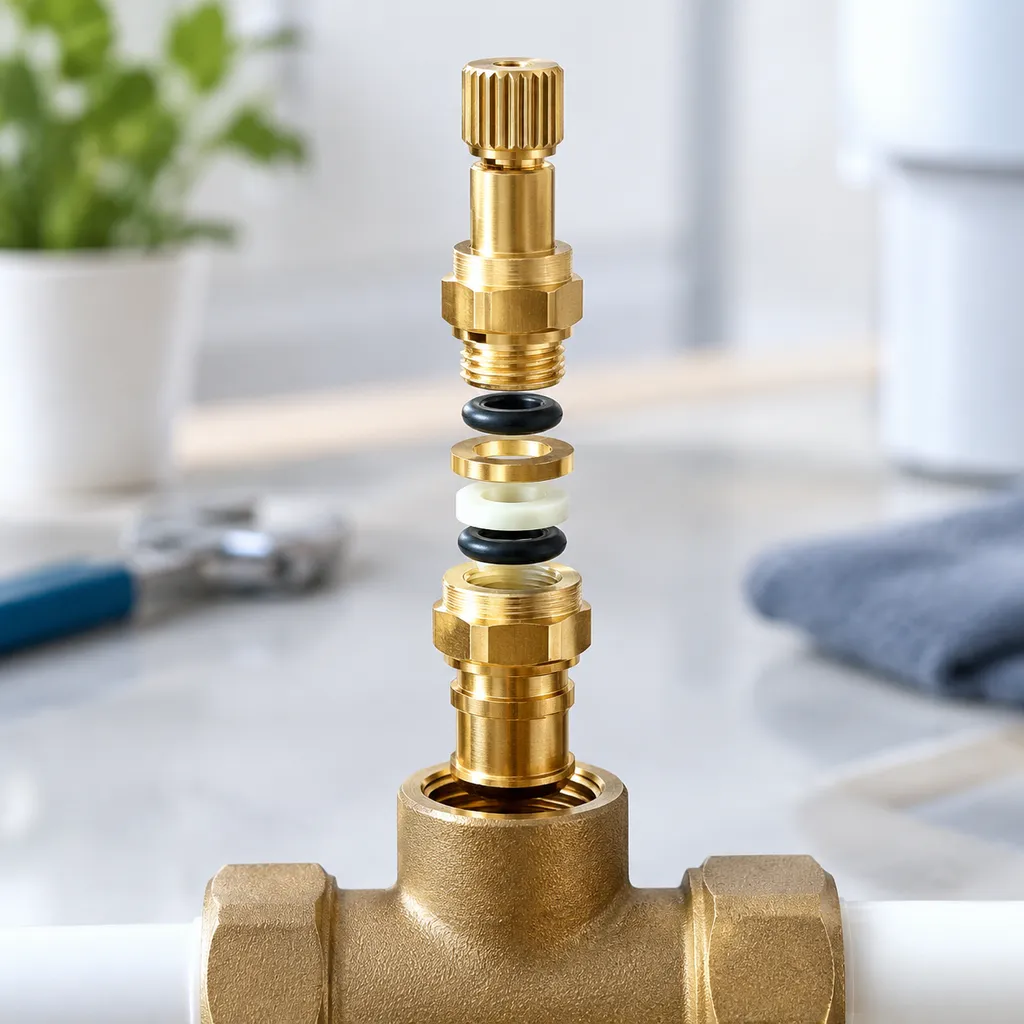
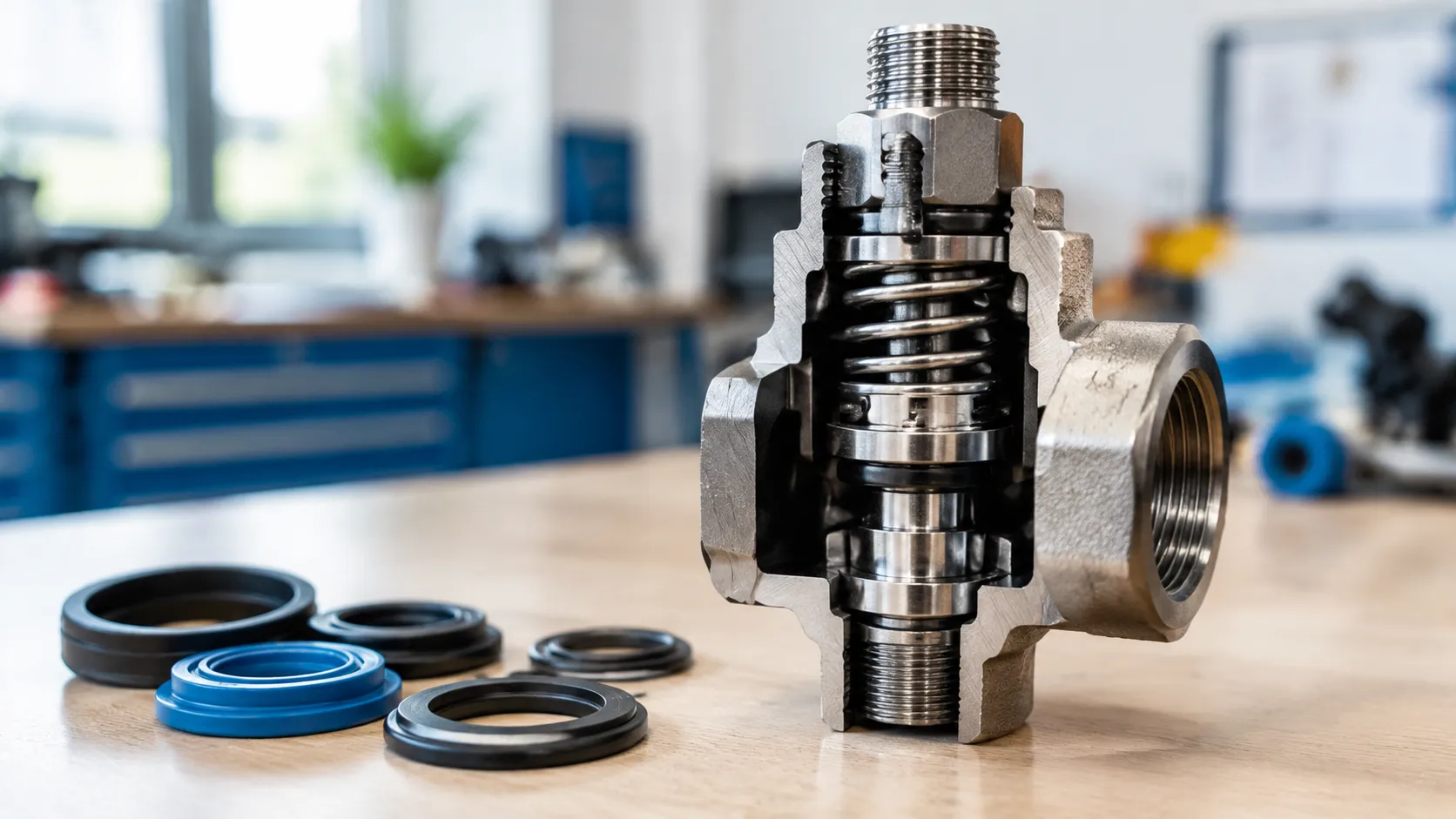
For food machinery parts—such as pump impellers, sanitary valves, and custom extrusion dies—this multi-axis milling capability delivers unmatched geometric freedom, superior surface finishes, and strict adherence to sanitary design requirements.
How 5-Axis Machining Works
The core mechanics of 5-axis machining rely on synchronized motion between the cutting tool and the workpiece. By continuously rotating the part or tilting the spindle, the machine maintains an optimal cutting angle throughout the entire operation.
- Shorter Cutting Tools: Tool tilting allows the use of shorter, highly rigid cutters, dramatically reducing tool deflection and chatter.
- Continuous Tool Contact: Maintains ideal contact angles across contoured surfaces, resulting in smoother cuts and flawless finishes.
- Eliminated Re-Fixturing: Accesses multi-sided geometries in one continuous process, ensuring exact dimensional integrity.
3-Axis vs. 3+2 Axis vs. Continuous 5-Axis Machining
Selecting the right machining approach depends on part complexity, tolerance demands, and required surface finish.
| Machining Type | Axis Movement | Primary Capabilities | Best Used For in Food Machinery |
|---|---|---|---|
| 3-Axis | X, Y, Z move simultaneously | Flat profiles, simple slots, and standard vertical drilling | Basic mounting plates, simple brackets, flat cover plates |
| 3+2 Axis (Positional) | Tool locks at fixed angles; X, Y, Z execute cuts | Efficient multi-sided machining without manual re-clamping | Prismatic valve bodies, angled manifolds, gear housings |
| Continuous 5-Axis | All 5 axes move simultaneously in dynamic motion | Complex organic curves, sculptured contours, smooth blends | Impellers, mixing blades, augers, seamless flow components |
Key Advantages of 5-Axis CNC for Food Machinery
Upgrading to multi-axis milling transformed how we manufacture complex components for the food industry. By moving beyond traditional 3-axis limitations, 5-axis CNC machining directly solves critical manufacturing challenges for hygiene-critical applications.
Superior Surface Finish for Sanitary Standards
Food safety relies heavily on a clean sanitary design. Standard machining often leaves microscopic tool marks and crevices where bacteria thrive, making washdown procedures difficult.
- Optimal Tool Orientation: Continuous 5-axis movement keeps the cutting tool at a constant angle relative to the part, virtually eliminating tool chatter.
- Shorter Cutting Tools: By tilting the workpiece or spindle, we use shorter, rigid tools to produce ultra-smooth, polished surface finishes.
- Micro-Finish Consistency: Reaching an Ra surface finish of 0.8 µm (32 µin) or better directly off the machine reduces post-processing labor and minimizes micro-voids where food particles collect.
High Precision and Tight Tolerances
When manufacturing critical food processing equipment, even slight misalignment causes premature wear, leaking, or material jams.
5-axis machines let us hit tight tolerances consistently by eliminating multi-stage handling. Moving a workpiece across multiple fixtures introduces compounding stack-up errors. Machining complex features in a single setup guarantees absolute concentricity and geometric alignment. For specialized cutting mechanisms like sanitary knife holders and cutter seats, this single-setup precision ensures flawless, repeatable alignment during high-speed production.
Reduced Setup Times and Manufacturing Costs
In custom food machinery manufacturing, setup time eats away at profitability.
| Process Metric | Traditional 3-Axis Machining | 5-Axis CNC Machining |
|---|---|---|
| Number of Setups | 4 to 6 separate fixtures | 1 single setup ("Done in One") |
| Fixture Costs | High (Multiple custom jigs) | Low (Universal workholding) |
| Operator Intervention | High risk of re-alignment errors | Minimal handling required |
| Lead Time | Days or weeks | Hours or days |
Eliminating fixture changes speeds up delivery and slashes labor costs. When doing a realistic ROI calculation, the time saved on setup and custom tooling quickly justifies the investment for complex food processing components.
Extended Tool Life and Machining Efficiency
Working with tough food-grade materials like 316L stainless steel, titanium, or specialized polymers quickly destroys standard end mills if cutting conditions aren't optimized.
- Ideal Cut Angles: 5-axis positioning maintains the sweet spot on the cutting edge, avoiding the center point of ball-nose end mills where cutting speed drops to zero.
- Faster Feed Rates: Rigid setups allow higher spindle speeds and chip loads without sacrificing accuracy.
- Superior Heat Dissipation: Constant chip load reduces heat build-up during heavy stainless steel machining, dramatically extending tool life and cutting overall tooling overhead.
When to Choose 5-Axis CNC for Food Machinery Components
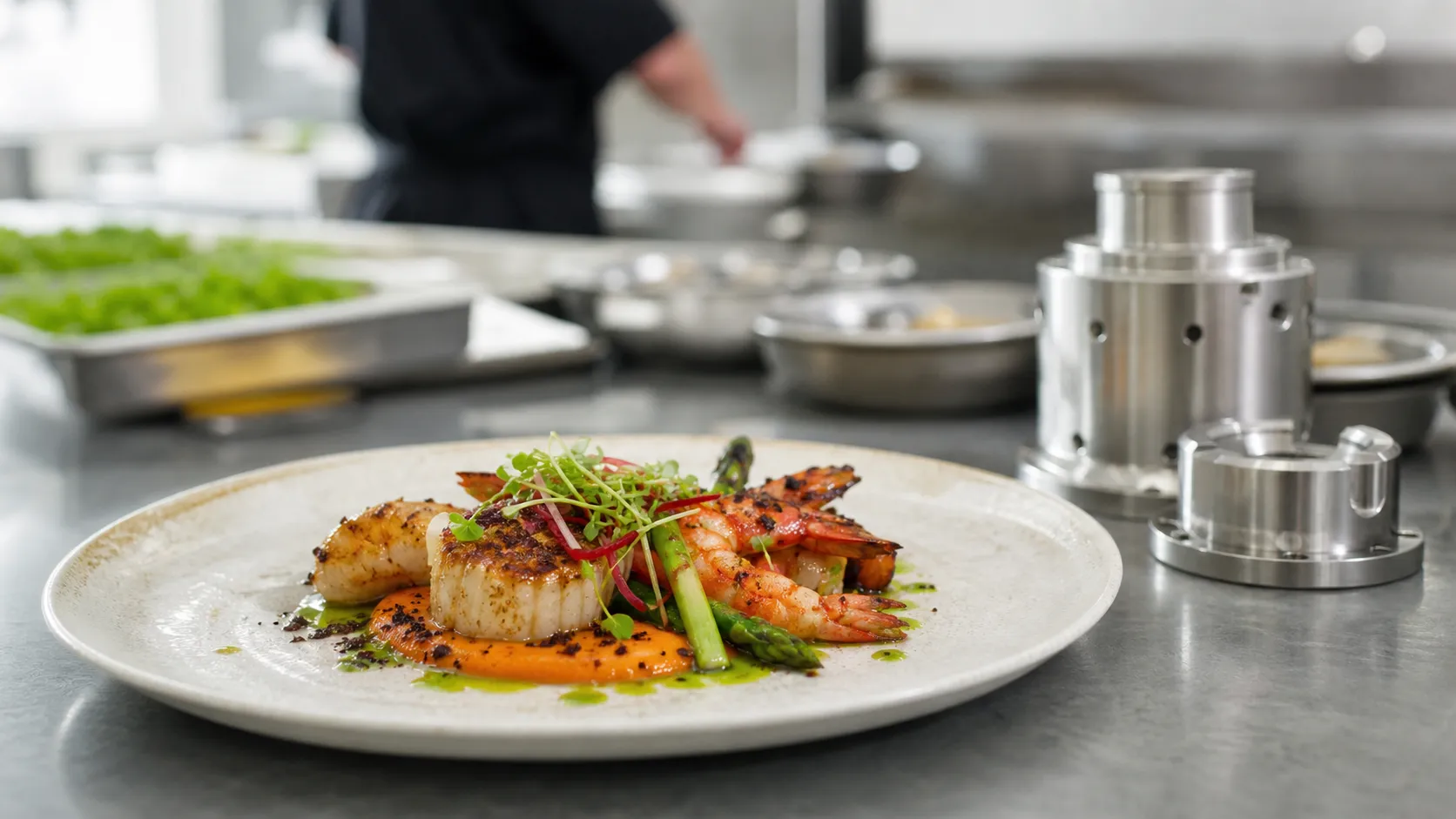
Upgrading to 5-axis CNC machining isn't necessary for simple flat plates, but it becomes essential when component design directly impacts hygiene, fluid dynamics, and production uptime. We recommend switching to 5-axis technology when traditional 3-axis methods hit their limits in precision and sanitary standards.
Machining Complex Geometries and Organic Shapes
Modern food equipment relies heavily on optimized fluid flow, gentle product handling, and precise dosing. Standard 3-axis mills struggle with organic curves, internal undercuts, and compound angles without requiring expensive, specialized fixtures.
- Curved impeller blades: Maintains continuous fluid pressure without cavitating sensitive liquids.
- Complex flow passages: Eliminates sharp internal angles where ingredients can stall and spoil.
For intricate parts like a 5-axis CNC machined rotary valve body, multi-axis motion allows us to carve complex geometries and sweeping internal channels in continuous tool passes.
Components Requiring Single-Setup Precision
Every time a machinist re-clamps a part to machine another side, tolerance stack-up errors accumulate. In high-speed filling, capping, and sorting equipment, minor misalignments cause seal failure, vibration, and premature wear.
| Machining Approach | Typical Setups | Tolerance Stack-Up Risk | Position Accuracy |
|---|---|---|---|
| Standard 3-Axis | 3 to 5 Setups | High | Moderate (±0.05 mm) |
| Continuous 5-Axis | 1 Setup | Minimal | Tight (±0.005 mm (selected dimensions; subject to review)) |
By completing complex components in a single setup, we preserve critical reference points and guarantee exact concentricity across every angled feature.
Meeting Strict Washdown and Hygiene Requirements
Sanitary design requires smooth, self-draining surfaces that prevent bacterial harborages during high-pressure washdown cycles. 5-axis machines maintain the optimal cutting angle relative to the workpiece, eliminating tool chatter and minimizing manual polishing.
- Optimized Surface Finish: Achieves smooth Ra values directly off the spindle.
- Radiused Transitions: Easily creates blended, rounded pockets so washdown fluids drain completely.
- Zero Dead Legs: Machine seamless contours that stop food particles from trapping in tight joints.
Processing Hard-to-Machine Food-Grade Materials
Food-contact parts demand tough materials—like 316L stainless steel, titanium, and specialized polymers—that are prone to work-hardening or burr formation during milling.
5-axis positioning lets us utilize shorter, more rigid end mills tilted at optimal angles, cutting heat build-up and tool deflection on tough metals. For lightweight conveyor and wear components, selecting the right polymer is just as vital—check out our UHMW-PE vs POM vs PEEK for food conveyors guide to evaluate material machinability and thermal stability before running high-speed toolpaths.
Common Food Machinery Components Produced via 5-Axis CNC
We frequently rely on 5-axis CNC machining to build parts with challenging geometry, strict sanitary requirements, and tight tolerances. Eliminating multiple setups allows us to deliver high-precision components ready for immediate deployment on modern food processing lines.
Impellers, Pumps, and Valve Housings
Fluid-handling components require continuous, ultra-smooth internal passages to maintain sanitary performance and eliminate bacterial harborage points.
Complex Internal Cavities: We machine complex internal flow channels with smooth, continuous multi-axis motion.
High-Grade Stainless Steel: Machining dense food-grade alloys without chatter ensures smooth surfaces and maximum corrosion resistance.
Streamlined Manifolds: See how we manufactured a high-precision beverage valve manifold in 316L stainless steel to solve strict hygienic flow requirements.
Mixing Blades, Augers, and Rotors
Industrial mixing equipment relies on organic sweeps and helical profiles to move heavy food pastes, doughs, and liquids evenly.
Helical Precision: Continuous 5-axis toolpaths effortlessly follow the exact contours of variable-pitch augers and helical rotors.
Dynamic Balance: Cutting the entire part in a single setup prevents runout, reducing shaft vibration and seal wear in high-speed mixing operations.
Fine Surface Finishes: Optimized multi-axis toolpaths minimize the manual polishing needed to meet strict washdown standards.
Custom Extrusion Dies and Molds
Extrusion dies dictate the shape, texture, and density of extruded snacks, pasta, and pet food products.
Intricate Profiles: Multi-axis clearance angles allow us to mill sharp internal transitions and detailed mold profiles cleanly.
Uniform Material Flow: Precise channel geometry ensures even pressure distribution and consistent product yield across the die face.
Repeatable Tolerances: Maintaining tight tolerances across large-batch mold runs minimizes material waste and downtime.
High-Speed Packaging and Sorting Parts
High-speed packaging equipment requires lightweight, perfectly aligned components to handle rapid indexing cycles without wearing out.
Single-Setup Precision: We machine multi-sided mounting features in a single pass to guarantee accurate alignment during rapid operations.
Weight Reduction: Strategically removing material from pick-and-place sorting arms reduces inertia without sacrificing structural rigidity.
Custom Mounting Components: Our production of custom packaging integrator mounts demonstrates how 5-axis techniques optimize weight and fit for fast-moving automation systems.
2>Types and Configurations of 5-Axis CNC Machines
Selecting the right machine architecture depends directly on part size, weight, and geometric complexity. When evaluating when to choose 5-axis CNC for food machinery components, understanding how different equipment setups handle tough materials like stainless steel is key to maximizing accuracy and shop floor efficiency.
Trunnion Style 5-Axis Machines

In a trunnion-style setup, the machine table tilts and rotates to position the workpiece while the spindle operates along the standard linear axes.
- Mechanism: A heavy-duty trunnion table provides A-axis tipping and C-axis rotation to tilt the workpiece directly toward the cutter.
- Best Applications: Smaller to medium-sized components requiring deep undercuts and multi-side access.
- Key Advantages: Exceptional rigidity and high torque retention. This configuration is ideal for tight-tolerance sanitary parts like pump impellers, manifold blocks, and compact valve housings.
Swivel Head Style 5-Axis Machines
Swivel head machines rotate the spindle head itself rather than rotating the entire workpiece on the table.
- Mechanism: The spindle head tilts along B and C axes while the table moves strictly along linear X, Y, and Z coordinates.
- Best Applications: Oversized, bulky, or extremely heavy stainless steel billets that would overload a rotating table.
- Key Advantages: Accommodates heavy food processing equipment parts—such as long mixing augers, large filler housings, and heavy structural frames—without bogging down rotary drives.
3+2 Positional vs. Continuous 5-Axis Capabilities
Not every complex component requires full simultaneous tool movement. Choosing between positional indexing and continuous motion depends on the surface profile of the part.
| Feature | 3+2 Positional Machining | Continuous 5-Axis Machining |
|---|---|---|
| Tool Movement | Rotates to a fixed angle, locks in place, then cuts via 3 linear axes | All 5 axes move simultaneously throughout the entire cutting pass |
| Primary Benefit | Accesses multiple faces in a single setup using shorter, stiffer tooling | Produces smooth, organic 3D shapes without tool dwell marks |
| Target Components | Multi-faced valve blocks, mounting plates, indexable housings | Swept mixing blades, custom extrusion dies, curved fluid rotors |
By leveraging advanced 5-axis machining solutions, we match the precise machine setup—whether 3+2 indexing or simultaneous multi-axis milling—to meet strict hygiene standards and geometric specifications without adding unnecessary cycle time.
Key Considerations When Selecting a 5-Axis CNC Solution
Selecting the right setup for food equipment manufacturing requires balancing machining accuracy, material versatility, and operational efficiency. Knowing when to choose 5-axis CNC for food machinery components comes down to matching your specific sanitary production goals with the right equipment capabilities.
Machine Rigidity and Thermal Stability
Machining tough food-grade materials like 304 and 316L stainless steel generates significant cutting forces and heat.
- Heavy-Duty Cast Construction: Ensures high damping capacity to absorb vibration and deliver superior surface finishes.
- Thermal Compensation Systems: Neutralizes spindle expansion, preserving tight tolerances during continuous production runs.
- Dynamic Rigidity: Protects delicate tooling while maintaining stability across complex tool paths.
Spindle Speed and Power Capabilities
Choosing the proper spindle torque and RPM profile depends on your target material and surface roughness requirements:
| Feature Focus | High-Torque Spindles | High-Speed Spindles |
|---|---|---|
| Primary Application | Roughing heavy stainless steel parts | Finishing complex 3D contoured surfaces |
| Typical RPM | 6,000 – 12,000 RPM | 18,000 – 30,000+ RPM |
| Key Advantage | High material removal rates | Smooth, clean surfaces built for sanitary design |
Control System and Software Compatibility
Complex multi-axis movement demands flawless integration between your CAM software and machine controller. Implementing high-efficiency 5-axis CNC milling strategies requires:
- Real-Time Collision Avoidance: Simulates motion dynamically to protect high-value workpieces and spindle heads.
- Tool Center Point Control (TCPC): Maintains precise tool tip positioning across continuous curved surfaces.
- Advanced Look-Ahead Capabilities: Prevents acceleration pauses that cause dwelling marks on washdown parts.
Technical Support and Maintenance Services
Minimizing downtime is essential when manufacturing mission-critical processing hardware.
- Rapid Parts Replacement: Quick access to replacement components keeps equipment running reliably.
- Scheduled Preventive Calibration: Regular geometry checks preserve long-term machining accuracy.
- Expert Technical Support: Working with dependable partners ensures high precision for all high-use food machinery parts.