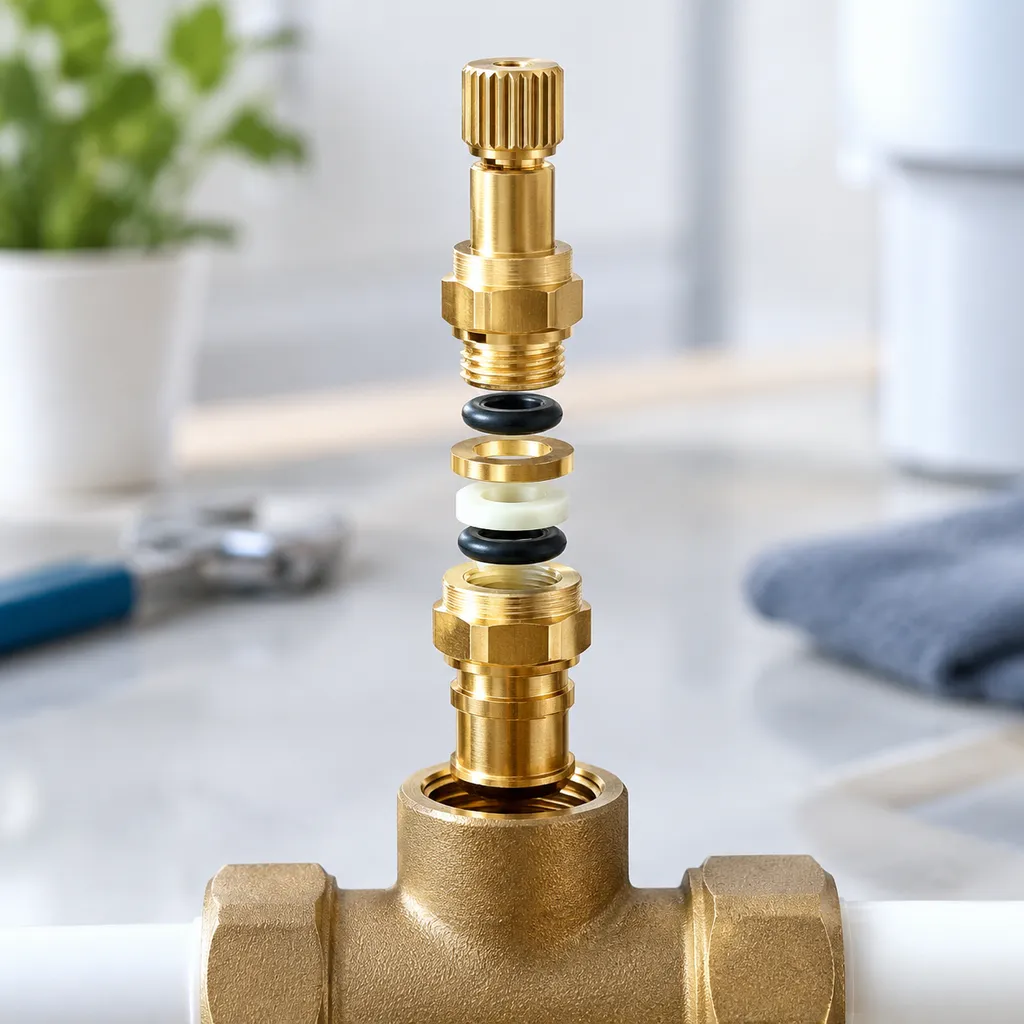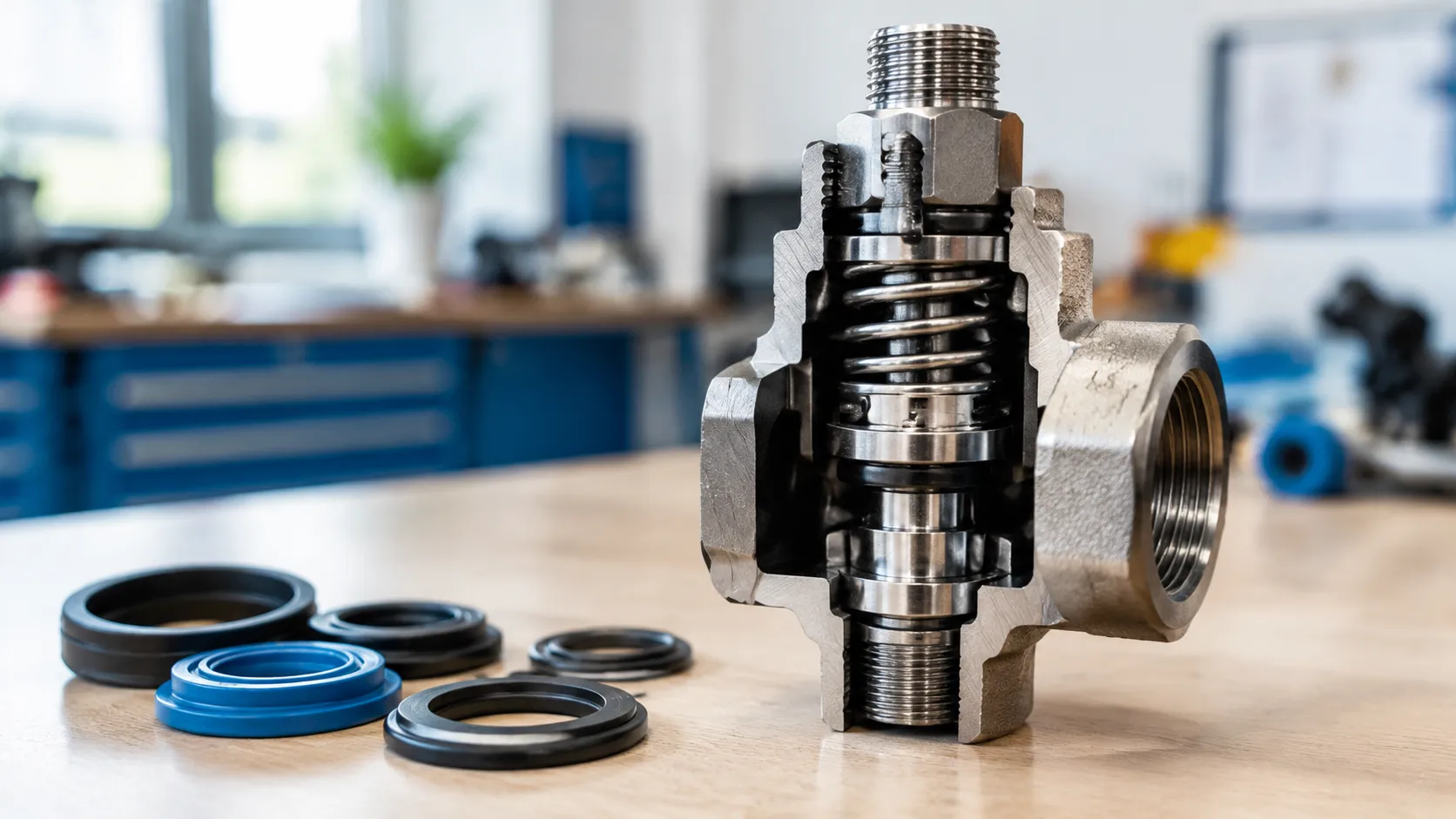
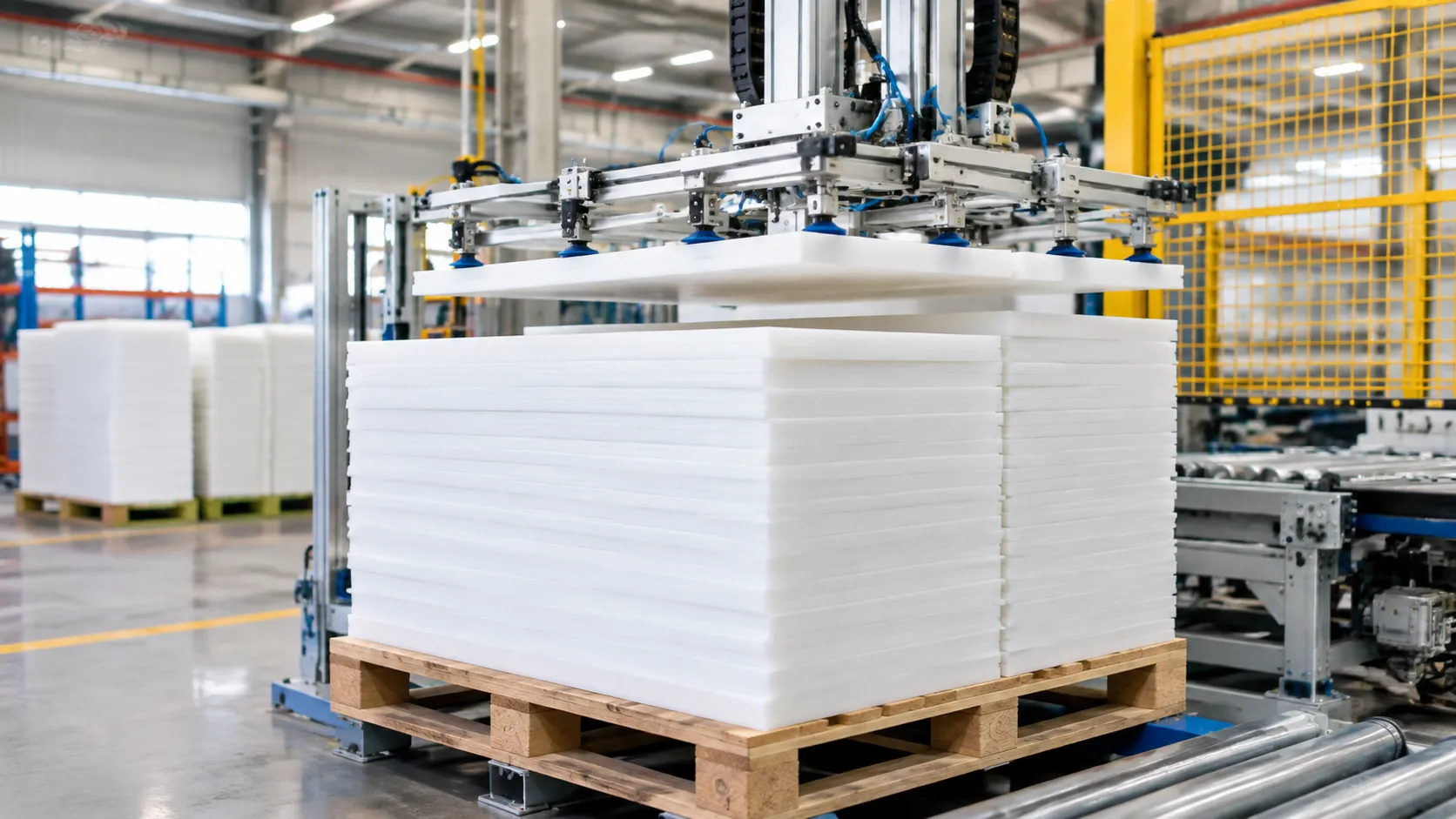
Are you trying to choose the right gripper pad material for your packaging automation line?
Selecting an unsuitable gripper pad material can contribute to product marking, unstable friction behavior, premature wear, and more frequent maintenance. UHMW-PE is often considered for palletizer gripper pads because of its low friction, wear resistance, toughness, and suitability for replaceable contact components.
In this guide, we break down the real engineering trade-offs—including UHMW-PE vs POM—to help you determine exactly when UHMW-PE is the right choice for your palletizer wear parts and packaging machine wear parts.
What Palletizer Gripper Pads Actually Do
In modern packaging automation systems, palletizer gripper pads serve as the critical mechanical interface between high-speed robotic end-of-arm tooling (EOAT) and the handled cargo. Whether installed on layer-pick heads, clamp-style palletizers, or Cartesian gantry systems, these components execute high-frequency load cycles while directly engaging cartons, shrink-wrapped bundles, plastic crates, and totes.
Their primary operational functions across automated palletizing lines include:
- Load Engagement and Secure Transfer: Gripper pads apply controlled, uniform clamping pressure to stabilize payloads during rapid acceleration, directional changes, and high-speed multi-axis motion.
- Packaging Surface Protection: As direct contact points, they can help reduce surface scuffing and localized damage
- Sacrificial Wear Absorption: Designed as replaceable packaging machine wear parts, gripper pads absorb mechanical abrasion and cyclic impact, effectively helping protect the primary metal gripper structure from direct wear.
- Controlled Friction Interface: Depending on the palletizing mechanism—whether bottom-support lifting, lateral squeeze clamping, or sliding layer transfers—pads provide tailored surface contact to either grip securely or allow smooth, low-resistance product release.
Because pads operate at the point of package contact, their geometry and material can influence handling behavior. Confirm performance through the intended equipment trial.
Why Gripper Pad Material Selection Matters
Picking the right gripper pad material directly impacts palletizer efficiency, product integrity, and maintenance cycles. In high-speed packaging lines, gripper pads endure continuous cycles of clamping, sliding, and mechanical shock. Choosing an unsuitable material leads to rapid surface wear, product scuffing, and costly unplanned downtime.
When we evaluate materials for palletizer gripper pads, we focus on four core operational demands:
- Surface Protection: The pad must secure corrugated boxes, plastic crates, or shrink-wrapped goods without scratching, tearing, or leaving residue.
- Wear and Abrasion Resistance: Constant micro-friction against abrasive packaging surfaces quickly grinds down soft plastics, while overly hard materials can crack under cyclic impact.
- Frictional Control: Balancing grip and slip ensures products seat correctly without sticking during release cycles.
- Maintenance Longevity: High-performance plastic wear components extend changeout intervals, keeping packaging automation lines running smoothly at full capacity.
Review the motion profile, load and contact surface before selecting a material. For drawing-based supply, see our custom UHMW-PE palletizer gripper pads; the equipment team validates the final design.
When UHMW-PE Is a Good Choice for Palletizer Gripper Pads
UHMW-PE is commonly considered for replaceable sliding-contact and wear components. The selected grade, package surface and load arrangement determine whether it suits a particular palletizing mechanism.
Repeated Sliding or Contact
Consider UHMW-PE where a facing, guide or support pad repeatedly contacts packages. Compare wear using the actual counterface, contamination and motion. Do not infer a service-life ranking against steel or other plastics without comparable test conditions.
Low-Friction Contact Surfaces
Low friction can assist sliding and release, but it does not establish adequate grip for friction-only lifting. The equipment designer must validate retention and package damage limits. Surface and edge requirements should be specified for the actual contact area; see our surface-finish discussion for related specification questions.
Replaceable Wear Components
Define the replacement limit, fastening access and minimum remaining thickness above recessed hardware. Inspect wear during service rather than assuming uniform wear or a fixed replacement interval.
Impact and Repeated Mechanical Loading
Review the manufacturer's grade data and validate the complete pad geometry under the intended loads and operating temperature. Material data alone does not establish package-handling performance.
Humid or Washdown-Adjacent Environments
Low moisture absorption does not establish compatibility with every cleaner. Provide chemical names, concentrations, exposure time and temperature, and confirm compatibility for the specified stock grade.
When UHMW-PE May Not Be the Best Choice
While UHMW-PE excels at reducing friction and absorbing repeated impacts, it is not a universal solution for every palletizing setup. In our experience building custom tooling, specific operating conditions expose the material's mechanical limits.
- High cantilever/clamping load → creep or deformation risk
- Elevated temperature → reduced stiffness / dimensional stability
- Very tight dimensional requirements → dimensional movement may become more significant
- Certification-sensitive applications → specified compliant grade required
High Structural Loads
UHMW-PE has relatively low tensile and compressive stiffness compared to rigid engineering plastics. When subjected to continuous high clamping pressures or heavy cantilevered loads, the material undergoes "cold flow" (creep) and deforms permanently over time. If a gripper pad must act as a primary load-bearing structural arm rather than a sacrificial contact face, using rigid metals like 17-4 PH stainless steel for high-load packaging parts or stiff reinforced composites provides the necessary rigidity.
Elevated Temperature Applications
UHMW-PE has higher thermal expansion and lower stiffness than many metals and some engineering plastics. For applications with elevated temperature or very tight dimensional requirements, material selection should be reviewed carefully against the actual operating conditions and drawing requirements.
Very Tight Dimensional Stability Requirements
Review expansion, stiffness and time under load using the selected grade data. Agree measurement temperature and support conditions for critical dimensions; do not assign one machining tolerance to every pad. Related comparison: POM vs UHMW-PE for packaging wear parts.
Applications Requiring Specific Certification or Material Documentation
State the intended contact application and required regulatory or customer documentation before selecting stock. Virgin, recycled-content, detectable and static-dissipative grades must be identified by their actual designation. Availability and document coverage require confirmation; a generic polymer name does not establish compliance, traceability or detector performance.
UHMW-PE vs POM for Palletizer Gripper Pads
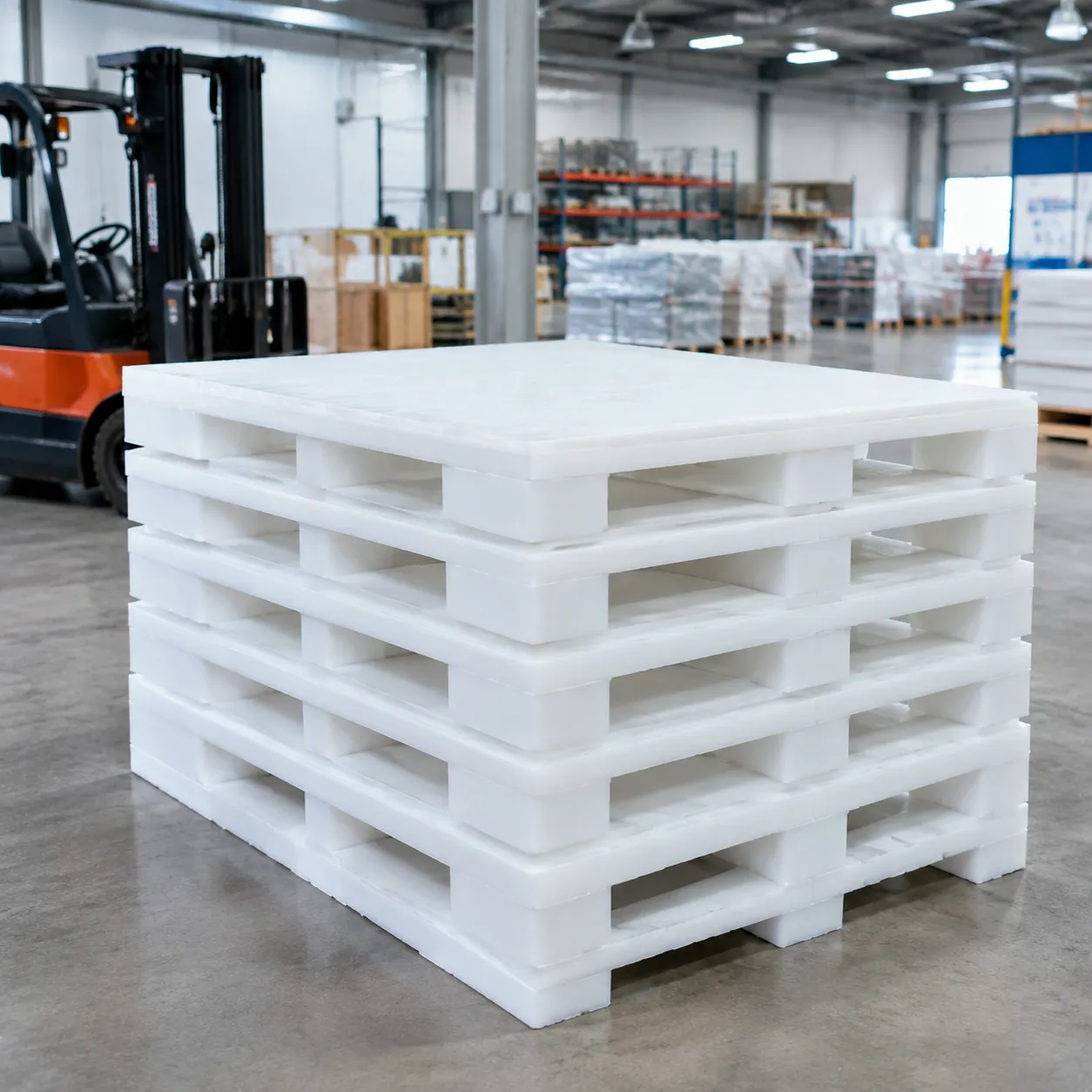
Compare specific UHMW-PE and POM grades against the application. Manufacturer data identifies low friction and wear properties for UHMW-PE grades, while POM grades may offer useful rigidity and dimensional stability. Neither description determines which pad will safely hold a given package.
| Decision point | What to compare before approval |
|---|---|
| Sliding or friction gripping | Load path, package surface, retention method and equipment trials. |
| Stiffness and deformation | Grade data, support geometry, contact pressure, temperature and time under load. |
| Wear and marking | Actual counterface, dust, movement and acceptable package damage. |
| Dimensions and inspection | Finished drawing limits, material condition, inspection support and temperature. |
| Documentation | Exact grade, required compliance evidence and stock availability. |
For wider context, review UHMW-PE, POM and PEEK for conveying systems. A substitution requires customer approval and, where relevant, a renewed sample trial.
How Gripper Pad Geometry Affects Performance
The drawing should connect the contact profile, mounting interface and available wear allowance. There is no universal pad thickness or edge radius suitable for every palletizer.
Contact Surface Geometry
Define flat, grooved or contoured areas and their functional dimensions. Specify allowable package marking and validate contact behavior using the intended packaging surface. Grooves do not automatically provide enough friction to retain a load.
Pad Thickness and Support
Specify finished thickness, support area and allowable deformation. Identify the minimum remaining material above fastener heads at the replacement limit.
Mounting Holes and Locating Features
Provide datums, hole locations, slots and counterbore depths. Include hardware or insert details and the design allowance for thermal movement. Do not copy a worn pad's measured dimensions into a replacement design without approval.
Edge Radii and Burr Control
Dimension functional entry radii or chamfers and define unacceptable burrs on package-contact surfaces. Confirm the checking method and sample acceptance rather than promising that a particular edge size eliminates all film damage.
Machining Considerations for UHMW-PE Gripper Pads
Workholding
Review how a flexible pad will be supported during machining and inspection. Agree whether acceptance dimensions apply in the free state or under specified restraint.
Heat Generation During Machining
Tooling, chip removal and the machining sequence are reviewed for the geometry and stock condition. The process must account for dimensional changes between machining and inspection. No particular cooling equipment or five-axis setup is included by default.
Sharp Tooling and Burr Control
Define the required edge condition, surface finish and handling protection. Tool selection and deburring methods follow the reviewed manufacturing route; the relevant result is the agreed acceptance condition.
Dimensional Inspection
Agree measurement temperature, stabilization, support and contact conditions for critical features before production. Measurement equipment and report coverage are confirmed for the order, rather than assuming laser or optical inspection of every pad.
Questions to Ask Before Choosing UHMW-PE
- How is the load retained? Identify friction-only gripping, mechanical support or another retention method. The equipment team validates the holding arrangement.
- What are the loads and temperatures? Provide operating and cleaning conditions and time under load for grade review.
- What touches the pad? Identify carton coatings, film, containers, contamination and acceptable marking.
- Which dimensions matter? Define the contact profile, mounting datums, wear allowance and inspection condition.
- What evidence is required? State material documentation, sample trials and dimensional-report requirements.
CNC Machining Custom UHMW-PE Palletizer Gripper Pads
ZSCNC's Wuxi machining base focuses on CNC milling and turning to approved drawings. We review custom pad profiles, mounting features and quantities before quotation. We have no in-house five-axis machining, EDM or wire cutting.
Custom Machining Capabilities
Provide a dimensioned PDF drawing and matching STEP model where available, including material grade, contact geometry, mounting holes, inserts and critical tolerances. Confirm stock availability and the machining route before ordering. Related mating components such as custom 6061-T6 aluminum CNC parts must be listed by their own drawing and revision.
For repeat batches, retain the approved material specification, drawing revision and inspection plan. State sample quantity, quantity per release and quantities per matched set. A changed package, load or mounting interface may require renewed customer approval.
Request a Quote for Custom UHMW-PE Gripper Pads
For custom UHMW-PE palletizer pads, send the approved drawing revision, exact material grade, critical dimensions, sample quantity, quantity per release and expected repeat demand. Identify left/right versions and whether quantities mean individual pads or complete sets.
Upload palletizer pad drawings for a batch quotation. The current form accepts PDF, STEP and DWG up to 5 MB per file; email info@zscncpack.com for larger files or other formats. List required material documents, inspection records and delivery dates. Feasibility, price and lead time follow the confirmed order scope.
Material Data References
Consult the selected grade's current manufacturer data. These examples explain material properties; they do not establish that ZSCNC supplies the named brands or that a particular pad meets your application requirements.