Overview
What Are Timing Screws for Bottle Capping Machines?
Definition and Core Purpose of Feed Screws
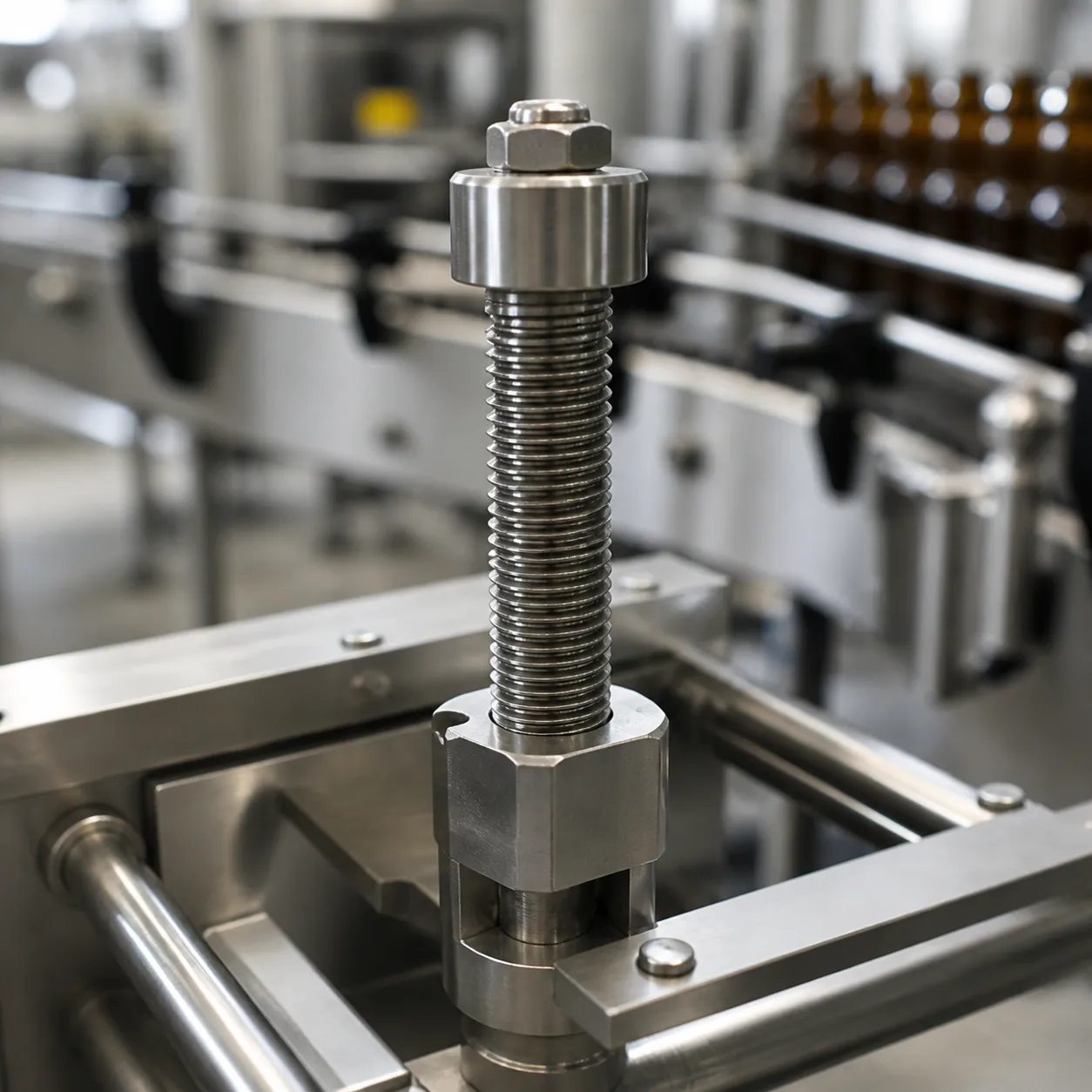
316L timing screws for bottle capping machines—commonly known as feed screws—are precision-machined components designed to regulate container flow on high-speed packaging lines. Their core purpose is to transform an uncontrolled stream of incoming containers into a perfectly timed, evenly spaced sequence required for downstream processing.
Without precise bottle indexing and consistent container spacing, high-speed capping machinery cannot accurately thread, torque, or press closures onto containers. Primary operational goals include:
Line Synchronization: Matching container delivery rates exactly with the speed of downstream equipment.
Container Protection: Eliminating bottle-to-bottle contact to prevent tipping, jamming, and cosmetic surface damage.
Pitch Transformation: Adjusting the distance between containers to match the pocket centerlines of star wheels or rotary capper turrets.
How Timing Screws Work in Automated Capping Lines
As bottles travel down the conveyor, the revolving helical flight (thread profile) of the screw engages each container individually. The continuously rotating thread captures the bottle at the infeed and controls its movement along the transport path.
- Infeed Capture: A wide initial pocket receives incoming containers smoothly, eliminating backpressure from upstream conveyors.
- Metering & Spacing: The changing geometry of the thread accelerates, decelerates, or pauses the bottle to create exact pocket distances.
- Synchronized Transfer: The screw delivers each bottle into downstream star wheels or inline capping stations with exact millisecond timing.
Key Components and Drive System Integration
For reliable performance in packaging line automation, feed screws must integrate directly with the machine's primary drive assembly. Key components and integration elements include:
- Custom-Machined Shafting: The central core featuring specialized helical pockets custom-cut to match specific bottle profiles.
- Drive Journals & Adapters: Precision-machined shaft ends engineered for quick installation into gearboxes or servo drive hubs.
- Synchronized Drive Motor: Powered by independent servo motors or mechanical line shafts equipped with rotary encoders to maintain total phase alignment with overall packaging equipment.
Why Choose 316L Stainless Steel for Timing Screws?
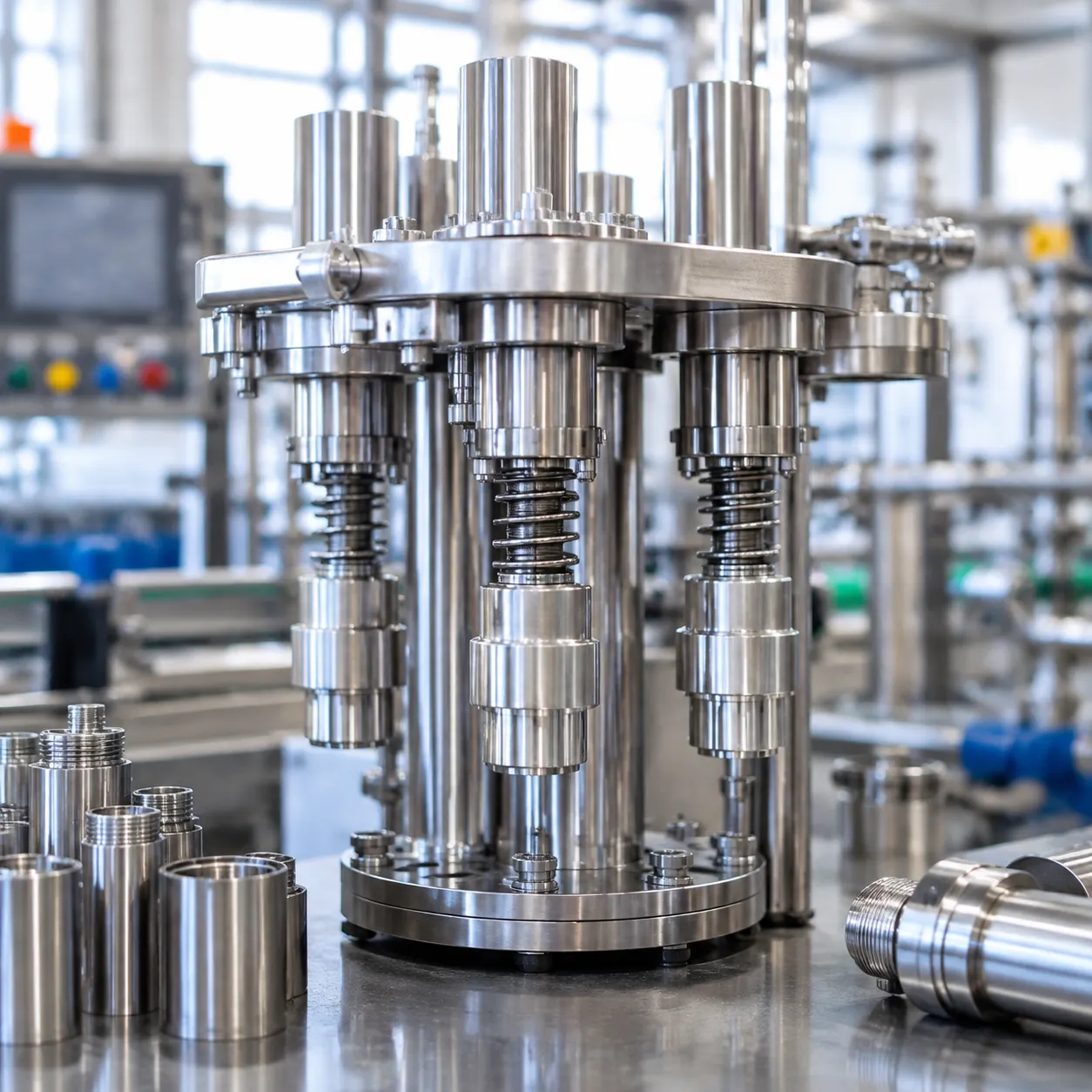
When building reliable packaging line automation, material choice directly impacts machine uptime and product safety. We engineered our 316L timing screws for bottle capping machines to withstand aggressive washdown chemicals, abrasive liquids, and constant physical contact without degrading.
Superior Corrosion Resistance for Harsh Environments
Standard metals quickly deteriorate when exposed to harsh chemical environments, acidic liquids, or caustic sanitizing agents. The 316L alloy incorporates 2–3% molybdenum, turning it into a high-grade corrosion resistant steel.
- Chemical Defense: Resists pitting, crevice corrosion, and chemical attacks from salts, solvents, and acidic products.
- Moisture Protection: Prevents rust and oxidation in high-humidity processing rooms where liquid spills frequently happen.
High Durability and Wear Resistance in Continuous Operation
High-speed bottle indexing places constant friction on your feed equipment. The low-carbon formulation of 316L stainless steel prevents structural fatigue during manufacturing, keeping structural strength high.
- Long Service Life: Maintains rigid pitch accuracy across millions of cycles under full-speed capping machinery operation.
- Reduced Downtime: Eliminates frequent material surface degradation, cutting maintenance costs and line stops.
304L vs 316L Stainless Steel Material Comparison
While 304L works fine for dry or light-duty container spacing, 316L delivers essential protection for harsh bottling lines. When comparing 316L vs 304 for acidic beverage auger screws, 316L provides far greater defense against chemical pitting and surface degradation.
| Feature | 304L Stainless Steel | 316L Stainless Steel |
|---|---|---|
| Molybdenum Content | 0% | 2.0% – 3.0% |
| Corrosion Resistance | Standard | Superior (Acids, salts, caustics) |
| Pitting Resistance | Moderate | Exceptional |
| Washdown Suitability | Light / Mild Cleaners | Heavy / Chemical Washdowns |
| Lifetime Cost Value | Low initial cost | Lowest total operational cost |
Hygienic Design for Easy Washdown and Sanitization
Sanitary compliance is non-negotiable for food, beverage, and pharmaceutical packaging equipment. We precision-polish our feed screws to create non-porous, smooth surfaces that satisfy strict hygiene protocols.
- Seamless Line Integration: Coordinates perfectly with star wheels and other critical change parts without creating bacterial harbor points.
- Effortless Cleaning: Smooth surface finishes enable fast, complete washdowns, shortening turnaround time during product changeovers.
Main Types and Functions of Container Timing Screws
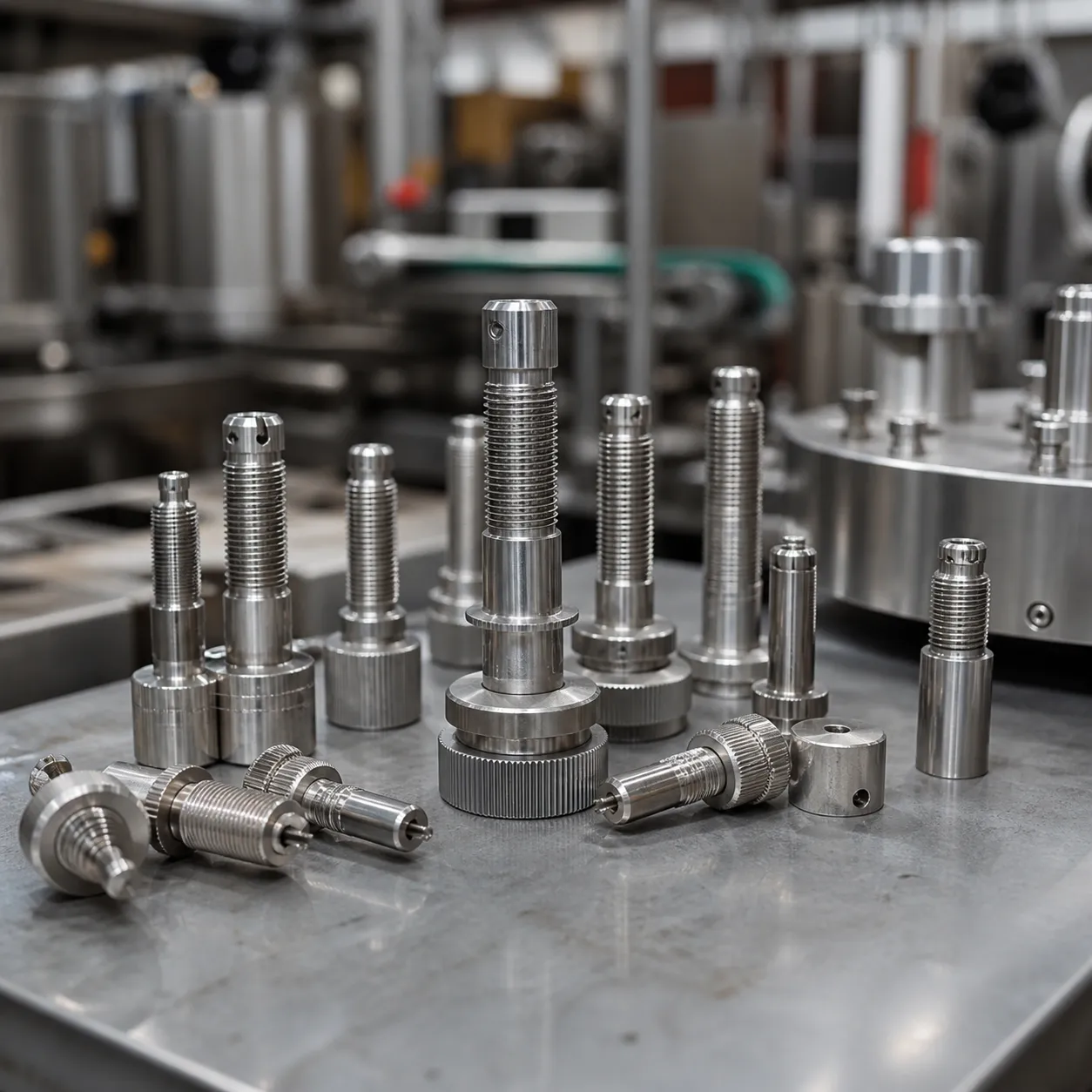
We build 316L timing screws for bottle capping machines to solve exact container handling challenges across high-speed packaging lines. Different bottle shapes, line layouts, and capping machinery require specific feed screw profiles to control container movement smoothly without tipping, scuffing, or line jams.
Infeed and Metering Screws
Infeed screws accept an erratic, back-logged stream of bottles from a conveyor and establish precise bottle indexing. By engineered pitch expansion, these components accelerate containers to match the exact speed and spacing of downstream star wheels and capping turrets.
- Controlled Acceleration: Eliminates line shocks and bottle breakage at the line entrance.
- Precise Container Spacing: Delivers every bottle into the capper pocket in perfect time.
- Stable Bottle Transfers: Keeps lightweight or tall containers balanced during high-speed transitions.
When dealing with specialized feed requirements or abrasive production environments, applying proven metering screw design strategies ensures long-term operational reliability without continuous maintenance.
Combining, Dividing, and Collating Screws
Managing multi-lane packaging lines requires specialized timing screws that route container streams seamlessly:
- Combining Screws: Merge two or more incoming bottle lanes into a single high-speed feed stream entering the capping machine.
- Dividing Screws: Separate a single bottle stream into multiple balanced lanes for downstream inspection or secondary packaging.
- Collating Screws: Regulate container gaps to group precise bottle counts (like 4-, 6-, or 12-packs) before continuous multi-head handling.
Orienting, Inverting, and Turning Screws
Containers often need precise positioning before receiving a closure. Custom 316L timing screws feature continuous variable pocketing to manipulate bottles on the fly:
- Turning Screws: Smoothly rotate oval, rectangular, or asymmetrical bottles 90° or 180° to align with capper chucks.
- Inverting Screws: Twist bottles upside down for air-rinsing or specialized liquid filling, then restore them to an upright position.
- Targeted Alignment: Holds shaped containers at exact angles so thread-matching and snap-capping operations perform reliably.
Dwell and Speed Change Screws
Dwell and speed change screws fine-tune container movement in critical process zones:
| Screw Type | Core Function | Primary Application |
|---|---|---|
| Dwell Screws | Keeps bottle spacing fixed while maintaining zero acceleration through a set distance. | Holds containers steady during cap placement, vision inspection, or code printing. |
| Speed Change Screws | Accelerates or decelerates bottle travel along a fixed thread path. | Matches bottle speeds between slower upstream fillers and high-speed rotary cappers. |
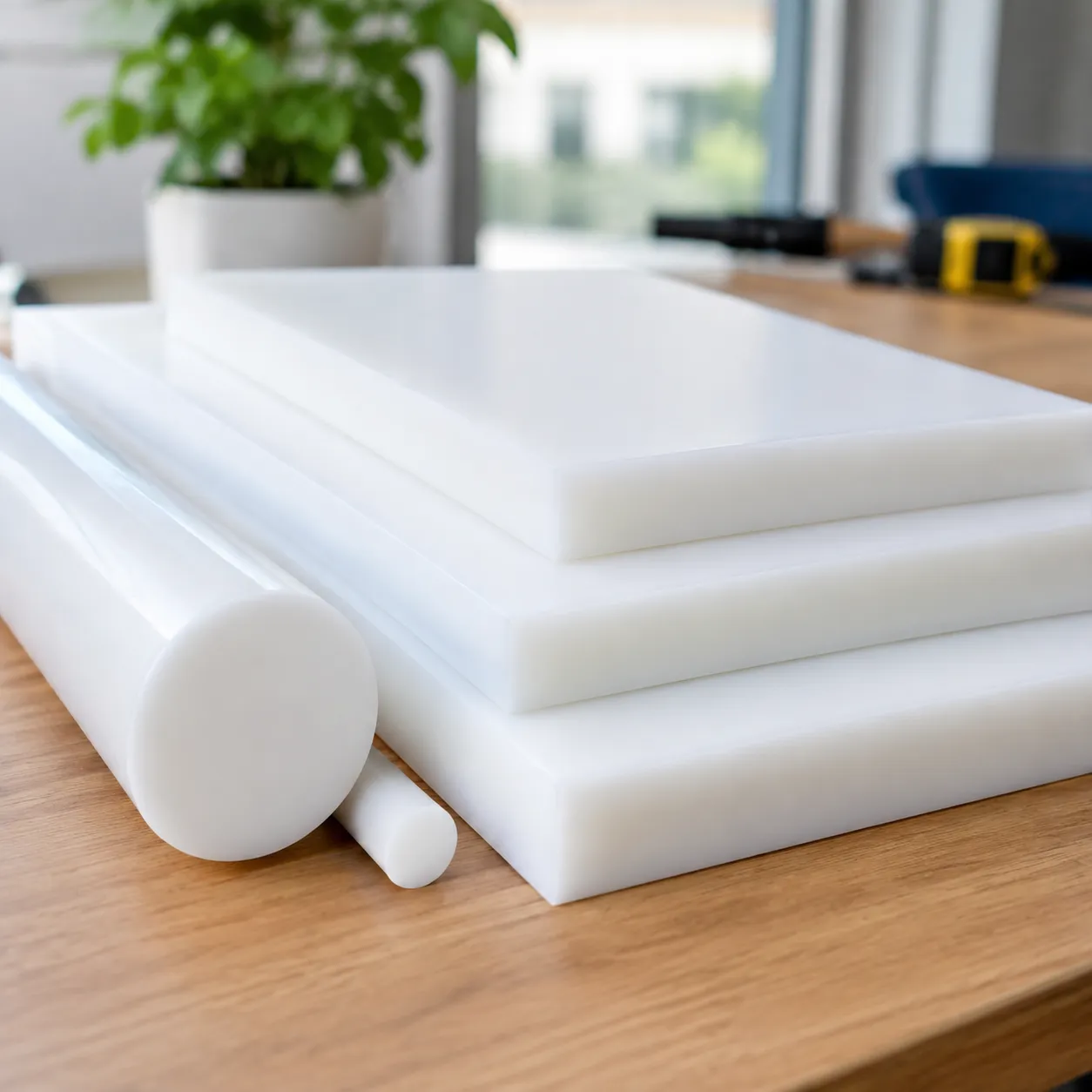
Our 316L stainless steel shafting and durable polymer change parts give your packaging line automation the accuracy and wear resistance needed for continuous operation.
Key Applications in Bottle Packaging Lines
Pharmaceutical and Biotech Container Handling
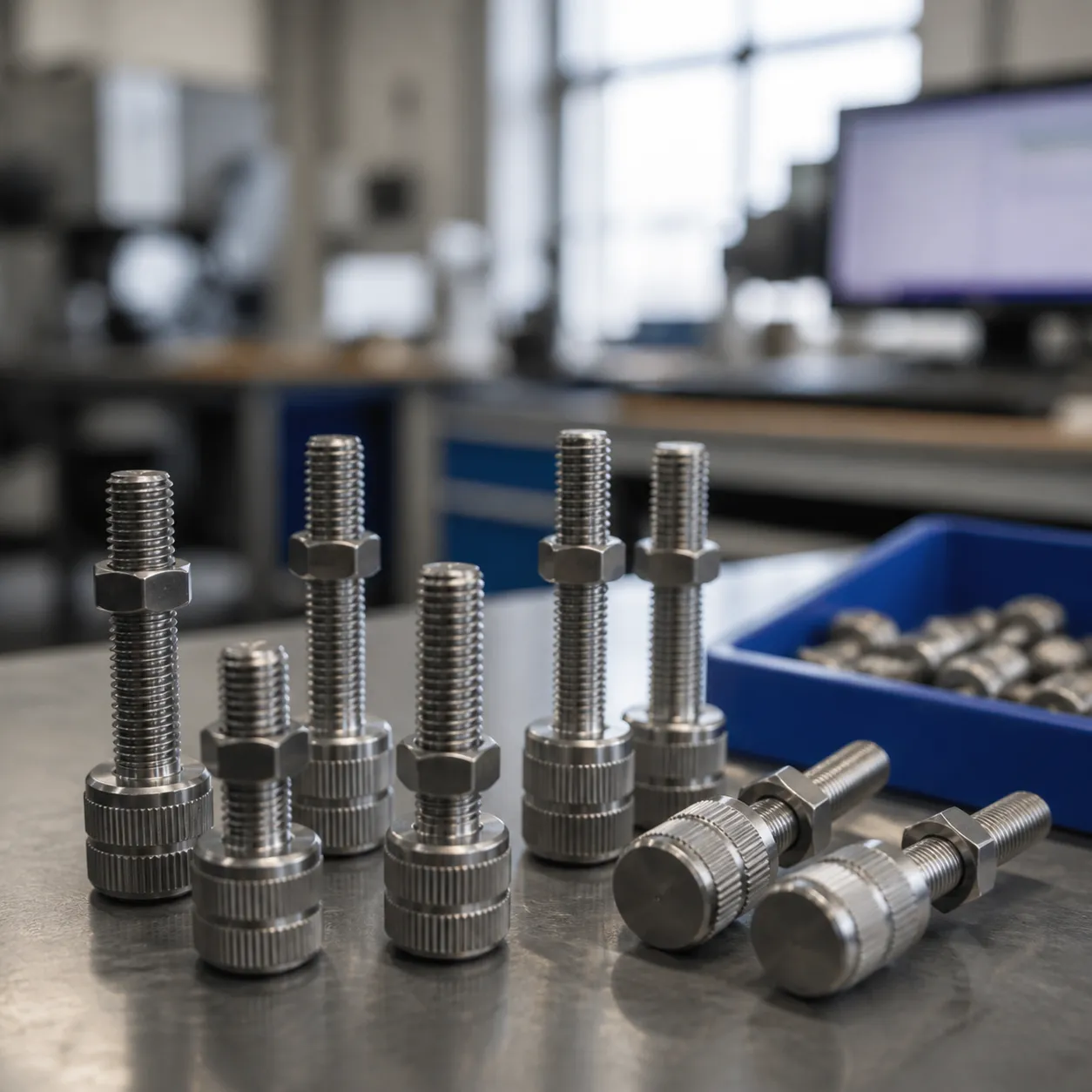
In pharmaceutical and biotech facilities, sanitary container handling is essential. We engineer 316L timing screws for bottle capping machines using high-grade, corrosion-resistant steel built to withstand rigorous chemical washdowns and frequent steam sterilization cycles. These feed screws deliver precise bottle indexing without scratching glass vials or sensitive polymer containers, eliminating friction damage and preventing glass breakage on high-speed filling lines.
Food and Beverage Capping Machinery
High-speed beverage and food packaging lines demand consistent container handling under demanding operating conditions. Exposure to sticky syrups, acidic juices, and hot liquid spills requires heavy-duty components that won't rust or degrade over time. Our 316L stainless steel screws work alongside downstream packaging machinery change parts to maintain flawless container spacing, eliminating tipping and line jams during high-volume production runs.
Chemical and Household Product Packaging
Industrial cleaners, harsh chemicals, and aggressive detergents rapidly destroy inferior metals. Utilizing 316L stainless steel guarantees maximum resistance against pitting, chemical stress, and surface erosion. These timing screws easily handle heavy, uniquely shaped containers, guiding them smoothly into capping machinery without mechanical wear or surface corrosion.
Single vs Dual Feed Screw System Selection
| Feature | Single Feed Screw System | Dual Feed Screw System |
|---|---|---|
| Ideal Container Shapes | Standard round, rigid bottles | Oval, rectangular, unstable, or lightweight bottles |
| Primary Function | Basic bottle spacing and indexing | High-precision orientation, stabilization, and turning |
| Line Speed | Moderate to high speeds | Ultra-high-speed packaging line automation |
| Integration Complexity | Simple setup and lower maintenance | Dual-axis synchronization required with downstream star wheels |
Custom Engineering and Integration Options
Standard off-the-shelf components rarely deliver maximum productivity on high-speed lines. We design custom 316L timing screws for bottle capping machines tailored to your exact container dimensions, line speeds, and machinery specifications.
Custom Container Pocket and Pitch Designs
Every bottle shape demands precise pocket geometry to maintain smooth bottle indexing and accurate container spacing without tipping, scratching, or jamming.
- Constant Pitch: Maintains uniform distance between containers feeding into high-speed capping machinery.
- Variable Pitch: Accelerates or decelerates bottles smoothly to match incoming and outgoing line speeds.
- Custom Pocket Contours: Machined precisely for round, oval, square, or irregular container profiles.
Integrating Timing Screws with Existing Capping Equipment
Seamless drive integration with synchronized star wheels and drive shafts prevents bottle crushing and downtime. We engineer feed screws using high-precision CNC equipment to match the exact pitch diameter and timing of your original packaging equipment. Upgrading your inline components alongside custom 316L filling nozzles for beverage lines establishes a fully integrated, corrosion-resistant setup for liquid packaging line automation.
Toolless Quick-Changeover Solutions
Frequent product transitions require fast, repeatable batch swaps. Our custom 316L changeover systems minimize production downtime during container size changes.
| Changeover Feature | Operational Advantage |
|---|---|
| Quick-Release Pins | Swaps screws in under two minutes without hand tools |
| Color-Coded Change Parts | Prevents operator mixing during multi-size line setup |
| Self-Aligning Mounts | Guarantees exact pitch alignment without manual re-calibration |
How to Choose the Right 316L Timing Screw
Selecting the right 316L timing screws for bottle capping machines ensures smooth container spacing, reliable bottle indexing, and zero downtime on your bottling line. We analyze three core factors to match your specific packaging equipment setup.
Evaluating Container Shape, Size, and Material
Every bottle geometry presents unique handling challenges during high-speed capping operations.
- Container Geometry: Round bottles use standard single-pocket profiles. Square, oval, or contoured containers require custom pocket designs to prevent rotation.
- Surface Fragility: Glass containers demand smooth transitions to prevent chipping, while thin-walled PET bottles require gentle handling to eliminate crushing.
- Dimensions and Tolerances: Account for minor wall-thickness variances in your containers to ensure precise engagement with downstream star wheels.
| Container Characteristic | Processing Requirement | Timing Screw Design Focus |
|---|---|---|
| Glass Bottles | High friction, risk of breakage | Gentle entry lead, smooth pocket finish |
| Thin PET / Plastic | Subject to deformation | Exact pocket match, zero pinch points |
| Unstable / Oval Shapes | Prone to tipping or rotating | Multi-point contact pocket geometry |
Determining Line Speed and Throughput Requirements
Line speed directly impacts thread acceleration and screw pitch calculations. Higher line speeds require longer screws with gradual pitch transitions to stabilize containers before entering capping machinery.
- Dwell Zones: Essential for syncing container arrival with capping heads or inspection stations.
- Acceleration Profiles: Smooth, variable-pitch curves prevent sudden jerks that cause liquid sloshing or bottle tipping.
- Operating Speed (BPM): High-speed lines (300+ BPM) require high-precision machining to minimize friction and wear on 316L stainless steel surfaces.
Working with Manufacturers for Custom Quotes
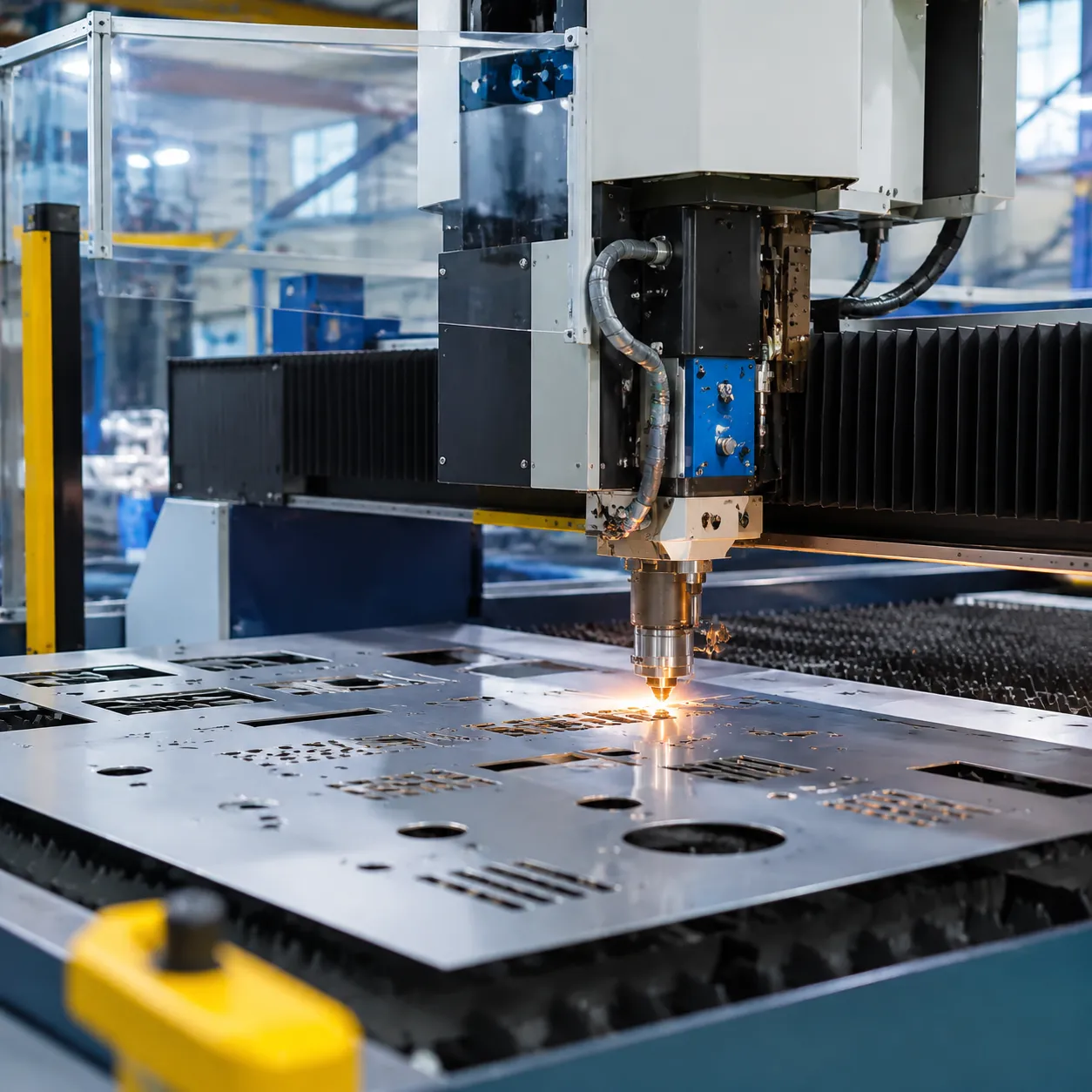
Getting the ideal 316L timing screw for bottle capping machines requires close collaboration with your manufacturing partner. We utilize specialized machining processes like 5-axis CNC for food machinery components to achieve exact pocket geometries and sanitary surface finishes.
When requesting a custom design and quote, prepare the following details:
- Physical Bottle Samples: Provide 6–10 production-run containers along with 3D CAD drawings.
- Machine Parameters: Shaft diameter, rotation direction, keyway size, and center-to-center distances on your capping machine.
- Line Environment: Washdown chemical details, operating temperature, and required toolless quick-change features.