Overview
Custom Titanium Guide Components for Packaging Equipment
Machining tolerance review: Typical machining tolerance is ±0.01 mm. Selected dimensions may achieve ±0.005 mm after technical review. Final tolerances depend on the drawing, material, part size, geometry, finishing and inspection requirements and must be confirmed before order acceptance.
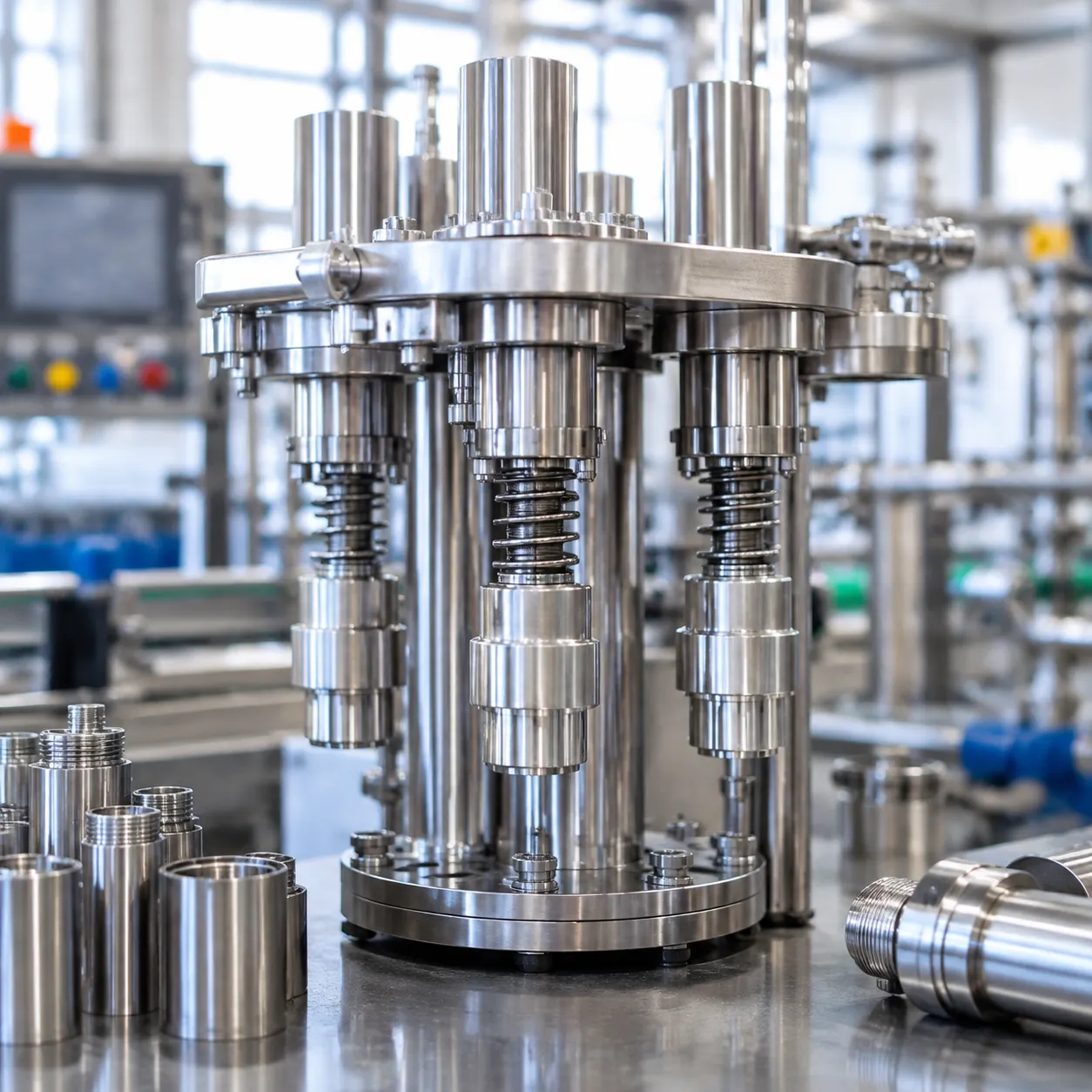
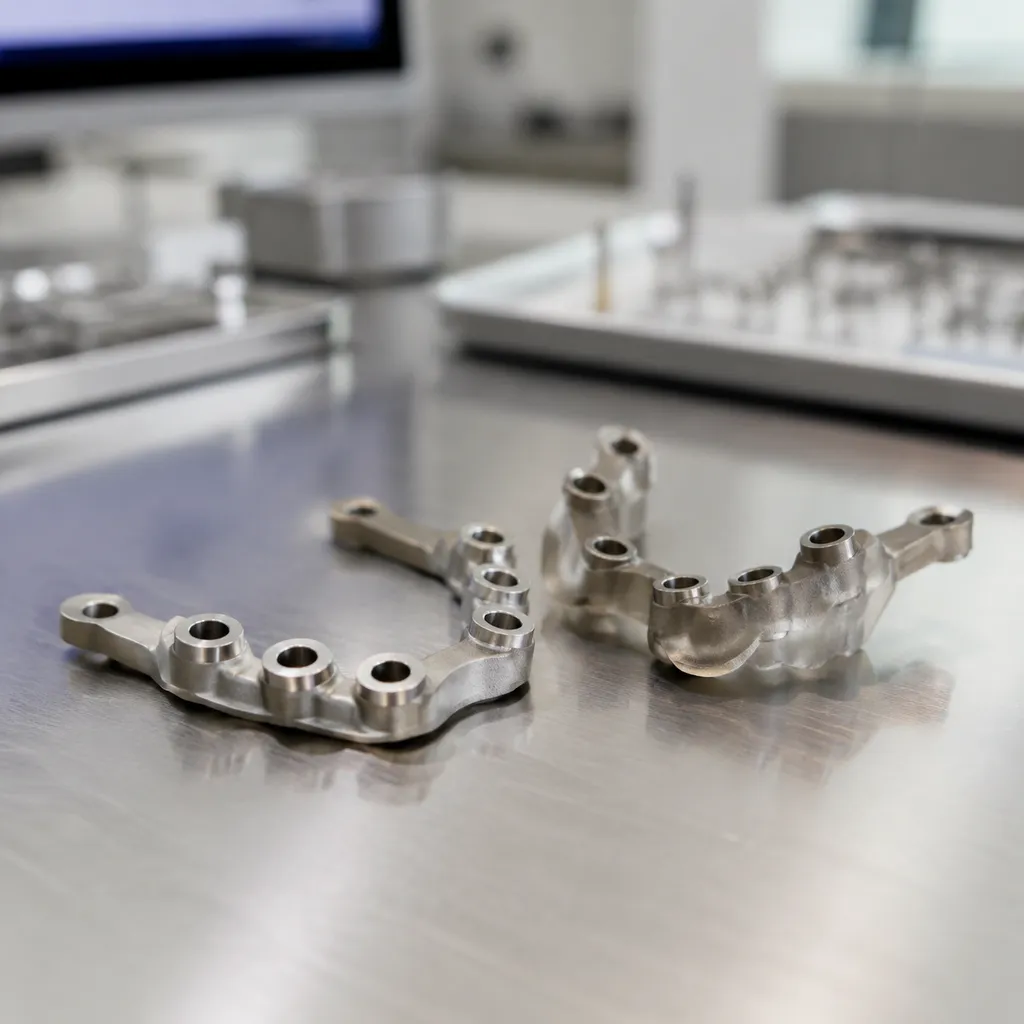
High-speed packaging machinery demands absolute precision, structural integrity, and long-term operating reliability. We manufacture high-precision custom titanium guide components engineered to withstand aggressive chemical environments, thermal fluctuations, and continuous mechanical stress. Utilizing premium Grade 5 (Ti-6Al-4V) and commercially pure titanium grades, our titanium packaging machinery components deliver superior strength-to-weight ratios and exceptional corrosion resistance to prevent operational downtime.
Made to Customer Drawings and CAD Models
Every part is produced strictly according to your engineering specifications, ensuring flawless mechanical alignment and direct compatibility with your equipment.
- Supported File Formats: STEP, IGES, X_T, DWG, DXF, and 2D print PDFs.
- Precision Tolerances: Advanced custom titanium CNC parts machining capable of maintaining critical tolerances down to ±0.005 mm (selected dimensions; subject to review).
- Customized Geometries: Specialized guide profiles, precise bore alignments, exact mounting threads, and specified surface finishes matched strictly to your CAD data.
Prototype, Replacement and Batch Production
Our manufacturing infrastructure easily scales from initial design validation to full-scale machine assembly lines.
- Rapid Prototyping: Fast-turnaround component fabrication for functional fit testing and engineering verification.
- Titanium Replacement Parts: High-durability, direct-fit replacement components built to meet or exceed original OEM service life.
- Scalable Batch Manufacturing: Rigorous dimensional consistency and quality control across low-volume custom orders and recurring high-volume production runs.
2.
When Titanium Is Used for Packaging Machine Components
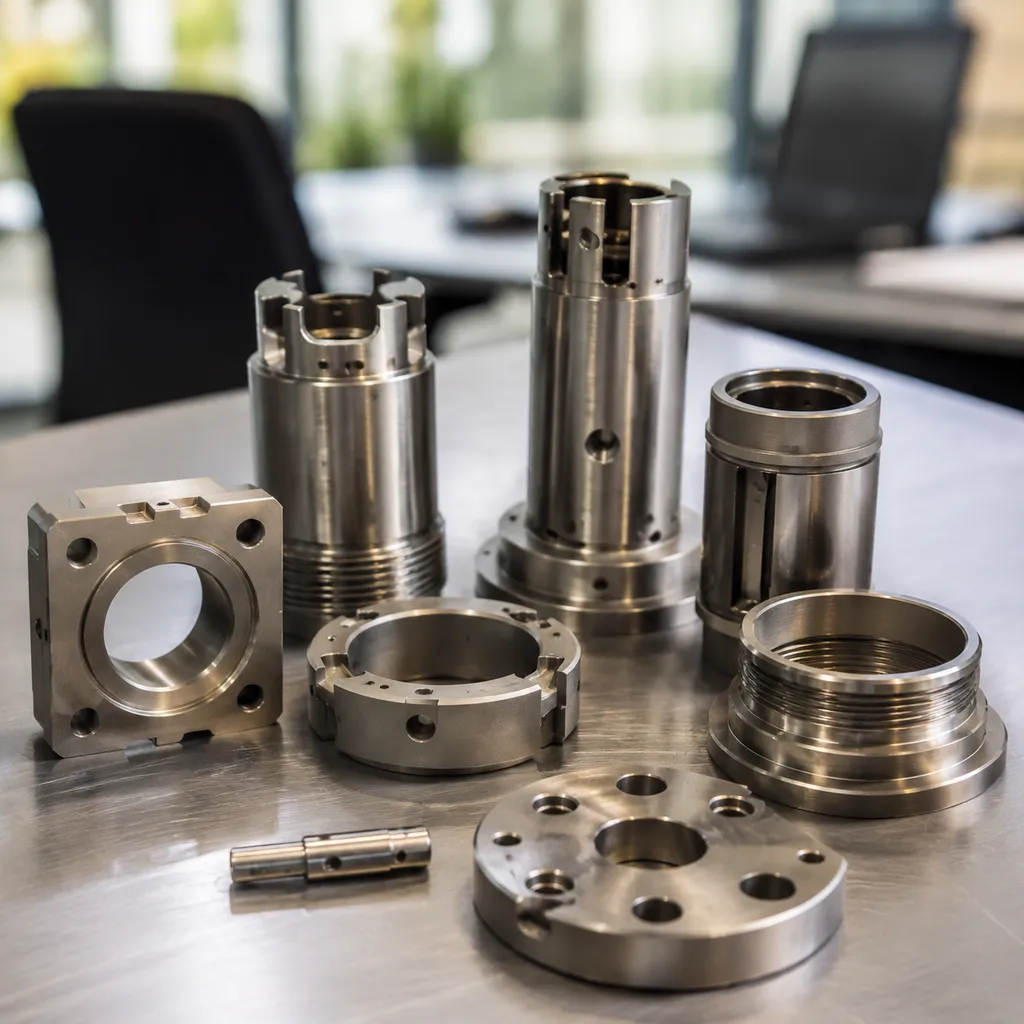
Titanium offers an exceptional strength-to-weight ratio and chemical resistance, making it an ideal material choice for demanding packaging automation. We manufacture custom titanium packaging machine parts specifically engineered for high-stress, high-speed, or severe-duty equipment applications.
Corrosive and Chemically Demanding Operating Environments
Packaging lines handling liquid fill products, aggressive cleaning agents, or acidic foods quickly degrade standard metals. Titanium forms a stable, protective oxide layer that resists harsh washdown protocols, chlorine exposure, and active chemical solutions.
Liquid Filling Lines: Resists pitting and breakdown when exposed to concentrated acids, salts, or active ingredients.
Sanitization Protocols: Withstands repeated exposure to caustic CIP (clean-in-place) washdown chemicals without surface degradation.
Weight-Sensitive Moving Components
High-speed automated packaging machinery relies on rapid reciprocating motion. Swapping heavy stainless steel for titanium drastically reduces dynamic mass, lowering motor loads and minimizing mechanical strain across titanium guide components.
Reduced Inertia: Enables faster acceleration and deceleration in high-cycle indexing systems.
Extended Machine Life: Lower moving weight minimizes friction, vibration, and wear on surrounding drive mechanisms.
Applications Where the OEM Drawing Specifies Titanium
When original equipment manufacturers design high-performance machinery, material specs are non-negotiable. We strictly follow customer drawings and CAD models to produce exact replacement and batch components.
Exact Tolerances: We maintain tight dimensional precision to match original OEM print specifications.
Traceable Materials: Raw material certifications are provided to guarantee compliance with specified titanium grades.
Why Titanium Is Not Necessary for Every Packaging Machine Part
While titanium excels in extreme environments, it is not always required for standard machine components.
Targeted Application: Stationary mounting blocks, non-corrosive sections, and low-speed guides rarely benefit from titanium's high material and machining costs.
Material Alternatives: In standard wear applications where extreme weight reduction isn't critical, alternatives like custom 17-4PH change parts for packaging machinery or hard anodized 6061 aluminum parts for packaging machines often deliver the optimal balance of performance and cost.
Titanium Guide and Machine Components We CNC Machine
We produce a wide range of custom titanium CNC parts tailored specifically for demanding packaging operations. Utilizing advanced multi-axis machining, we deliver precision titanium packaging machinery components built to perform reliably under continuous production loads.
Custom Guide Blocks and Guide Components
We manufacture high-precision titanium guide components and custom guide blocks engineered for high-speed material handling. Through precision titanium milling, we create smooth, tight-tolerance guide channels and wear surfaces that endure continuous friction and frequent chemical washdowns without degrading.
Shafts, Pins and Rod-Type Components
Using specialized titanium turning and live-tool machining, we craft dynamic rod-type components, including:
Drive and Pivot Shafts: Designed to handle torque while reducing rotational mass.
Locating Pins: Machined to exact dimensional tolerances for repeat positioning.
Actuator Rods: Lightweight rods engineered for fast cycle times in packaging equipment.
These custom packaging machine parts significantly lower inertial wear on driving motors and actuators.
Mounting, Alignment and Interface Components
Accurate setup and long-term positioning require high-rigidity structural parts. We machine custom brackets, sensor mounts, and precision interface plates that hold perfect alignment under heavy mechanical stress and thermal shifts. To streamline your component procurement, we offer complete support through our one-stop CNC sourcing for packaging machinery.
Custom Replacement Parts for Existing Packaging Equipment
When OEM components wear out or lead times are too long, we produce direct-fit titanium replacement parts made precisely to your engineering drawings or reverse-engineered samples. We recreate exact mounting locations, critical features, and surface specifications to get your packaging lines running quickly with zero retrofitting required.
Grade 5 Titanium for Custom Packaging Machine Parts
Ti-6Al-4V Strength-to-Weight Characteristics
Grade 5 titanium (Ti-6Al-4V) is the go-to alloy for high-performance titanium packaging machine parts. It provides ultimate tensile strength comparable to hardened stainless steel while cutting part weight by nearly 45%.
- High Yield Strength: Stands up to repetitive shock loading and dynamic stresses.
- Low Inertia: Reduces motor torque, vibration, and mechanical wear on rapid-indexing mechanisms.
When choosing materials, packaging designers frequently balance weight reduction against raw load capabilities. While we often help clients review when 17-4PH makes sense for high-load packaging parts, Grade 5 Ti-6Al-4V CNC machining remains the superior option whenever high speed and low mass are top priorities.
Corrosion Resistance Considerations
Titanium naturally creates an instantaneous oxide layer that shields components from chemical attack. This passive film prevents degradation in aggressive packaging environments.
- Caustic Chemical Resistance: Fully resists harsh washdown chemicals, chlorine solutions, and daily sterilizing agents.
- Product Compatibility: Non-reactive when in contact with acidic food products, dairy, brine, and pharmaceutical compounds.
- No Rust Flaking: Eliminates pitting and surface flaking, keeping cleanroom and hygienic production lines fully compliant.
Other Titanium Grades According to Customer Specifications
Although Grade 5 covers most mechanical applications, we process alternative titanium grades to match your exact OEM print specifications and operating requirements.
| Titanium Grade | Key Advantage | Common Packaging Machinery Use |
|---|---|---|
| Grade 5 (Ti-6Al-4V) | Exceptional strength-to-weight ratio | High-speed guide blocks, reciprocating arms, linkage pins |
| Grade 2 (Commercially Pure) | Superior ductility & chemical resistance | Static fluid-handling manifolds, drip trays, protective shields |
| Grade 23 (Ti-6Al-4V ELI) | Superior damage tolerance & purity | Low-temperature/cryogenic packaging components, precision guides |
CNC Machining Challenges in Titanium Components
Managing Heat at the Cutting Zone
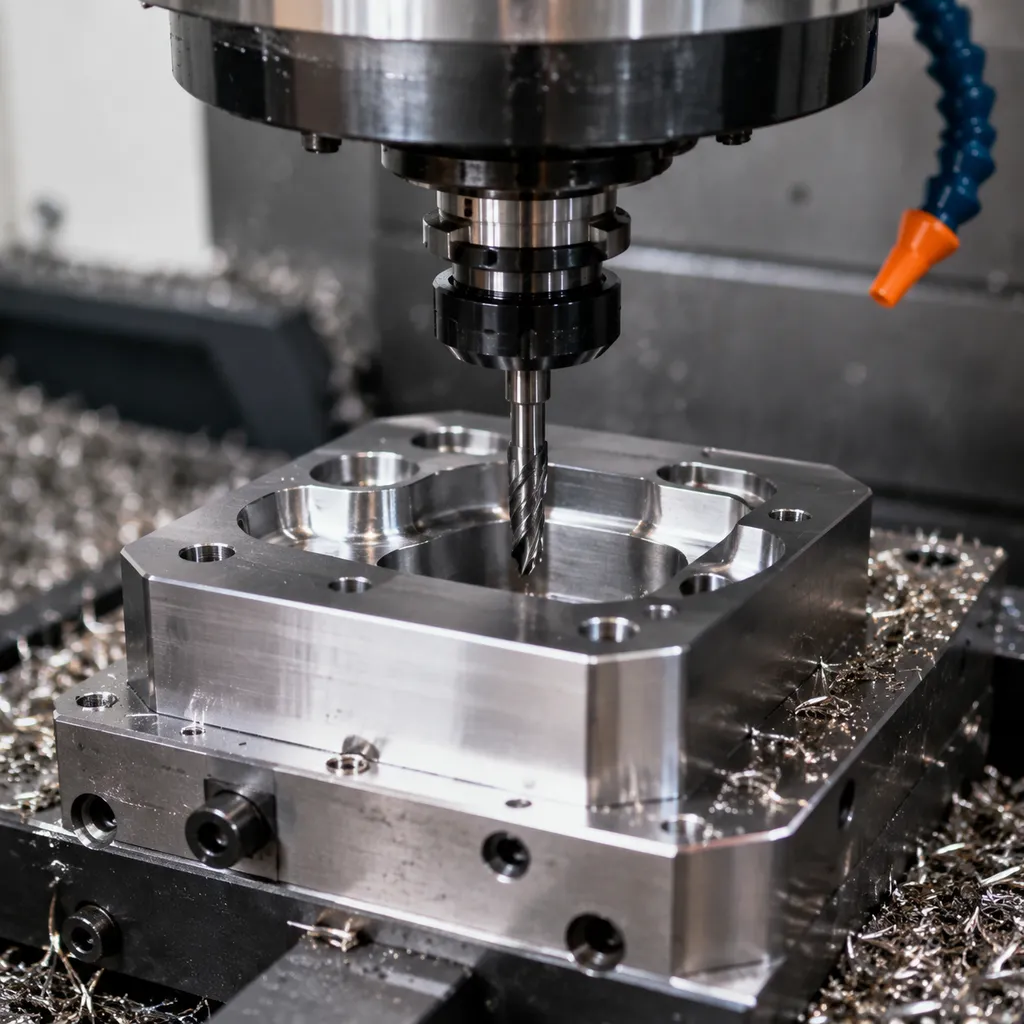
Titanium has notoriously low thermal conductivity. Instead of dissipating through the generated chips, up to 80% of the heat generated during cutting stays right at the tool edge.
- Localized Heat Buildup: Rapid temperature spikes can cause thermal expansion, compromising tight-tolerance features.
- Controlled Parameters: We precisely calibrate cutting speeds and feeds to prevent thermal distortion and ensure precision titanium milling for exact dimensioning.
Controlling Tool Wear During Titanium Machining
The combination of high heat, chemical reactivity, and material strength causes rapid tool degradation, such as cratering and notch wear.
- Specialized Cutters: We utilize high-grade solid carbide tooling featuring dedicated PVD coatings designed for high-temp alloys.
- Rigid Setups: Secure workholding and rigid spindle configurations eliminate micro-vibrations, ensuring repeatable tool performance during Grade 5 titanium CNC machining.
Maintaining Cutting Stability and Tool Engagement
Titanium's lower modulus of elasticity means parts can deflect under high cutting pressures, leading to chatter and surface finish defects.
- Constant Tool Engagement: We program dynamic toolpaths with light radial cuts and high axial depth to keep cutting forces consistent.
- Vibration Suppression: Optimizing dynamic motion control—much like our approach to high-precision cam profile machining—prevents tool chatter and guarantees smooth finishes across complex titanium guide components.
Coolant Delivery and Chip Evacuation
Efficient chip clearing is vital when working with titanium packaging machinery components to avoid re-cutting chips and causing premature tool failure.
- High-Pressure Coolant: We route high-pressure coolant streams straight to the tool-chip interface to blast heat away and clear chips instantly.
- Flute Geometry: Tool geometries with deep chip flutes are selected to keep chips moving smoothly out of deep slots and narrow pockets.
Critical Features in CNC-Machined Titanium Guide Parts
Precise feature control is critical when manufacturing custom titanium CNC parts for high-speed packaging equipment. We focus on maintaining strict geometric accuracy and clean surface finishes across every critical feature to guarantee drop-in performance.
Bores, Fits and Alignment Features
Internal bores and alignment holes determine how smoothly a titanium guide component integrates into your machinery. We utilize specialized tooling strategies to prevent material spring-back and maintain exact dimensional tolerances.
| Feature Type | Target Tolerance | Key Machining Focus |
|---|---|---|
| Bearing & Shaft Bores | H6 / H7 limits | Controlled tool deflection during precision titanium turning |
| Dowel Pin Holes | +0.005 / +0.012 mm | Thermal management to prevent hole shrinkage |
| Linear Guide Bores | Concentricity < 0.01 mm | Rigidity under continuous dynamic packaging loads |
Guide Surfaces and Mating Interfaces
Flatness and surface texture on sliding interfaces directly impact the service life of CNC machined titanium parts.
- Flatness & Parallelism: Machined within 0.01 mm over extended lengths to prevent bind-ups during operation.
- Surface Finish: Fine precision titanium milling achieves Ra 0.4–0.8 µm surface finishes on critical sliding contact zones.
- Edge Treatments: Deburred and chamfered edges eliminate micro-burrs that could snag packaging films or product lines.
Threads, Grooves and Mounting Features
Titanium tends to work-harden, making threaded and grooved features challenging to execute reliably without specialized machining approaches.
- Thread Milling: We utilize thread milling rather than standard tapping for deep or blind holes to ensure clean profiles and eliminate tap breakage.
- Grooves & O-Ring Seats: Precision-cut retention grooves retain strict radius profiles to minimize stress concentrations.
- Mounting Interfaces: Standardized slotting and counterbores deliver fast, accurate installation during routine maintenance or retrofits.
Datum Relationships and Geometric Requirements
Maintaining true geometric relationships across complex packaging machinery components requires a clear datum control scheme. Establishing a reliable multi-axis setup ensures that perpendicularity, parallelism, and true position match customer drawings exactly. Utilizing a structured 5-axis datum strategy guide allows us to lock in primary alignment features, ensuring tight tolerances are held across all secondary machining steps.
Friction and Galling Considerations for Titanium Guide Components
While titanium excels in strength and chemical resistance, managing friction on sliding guide interfaces requires clear engineering intent during manufacturing.
Why Titanium Is Not Automatically a High-Wear-Resistance Material
Despite its high strength, raw titanium has a high coefficient of friction and a strong tendency to gall under adhesive wear conditions. Uncoated titanium guide components sliding directly against steel or other titanium parts can experience localized micro-welding, surface tearing, and premature binding.
Mating Material and Contact Surface Considerations
To prevent galling on custom titanium CNC parts, proper material pairing is crucial. We frequently advise pairing titanium sliding elements with dissimilar contact surfaces:
Dissimilar Metals: Utilizing bronze or brass bushings at contact points.
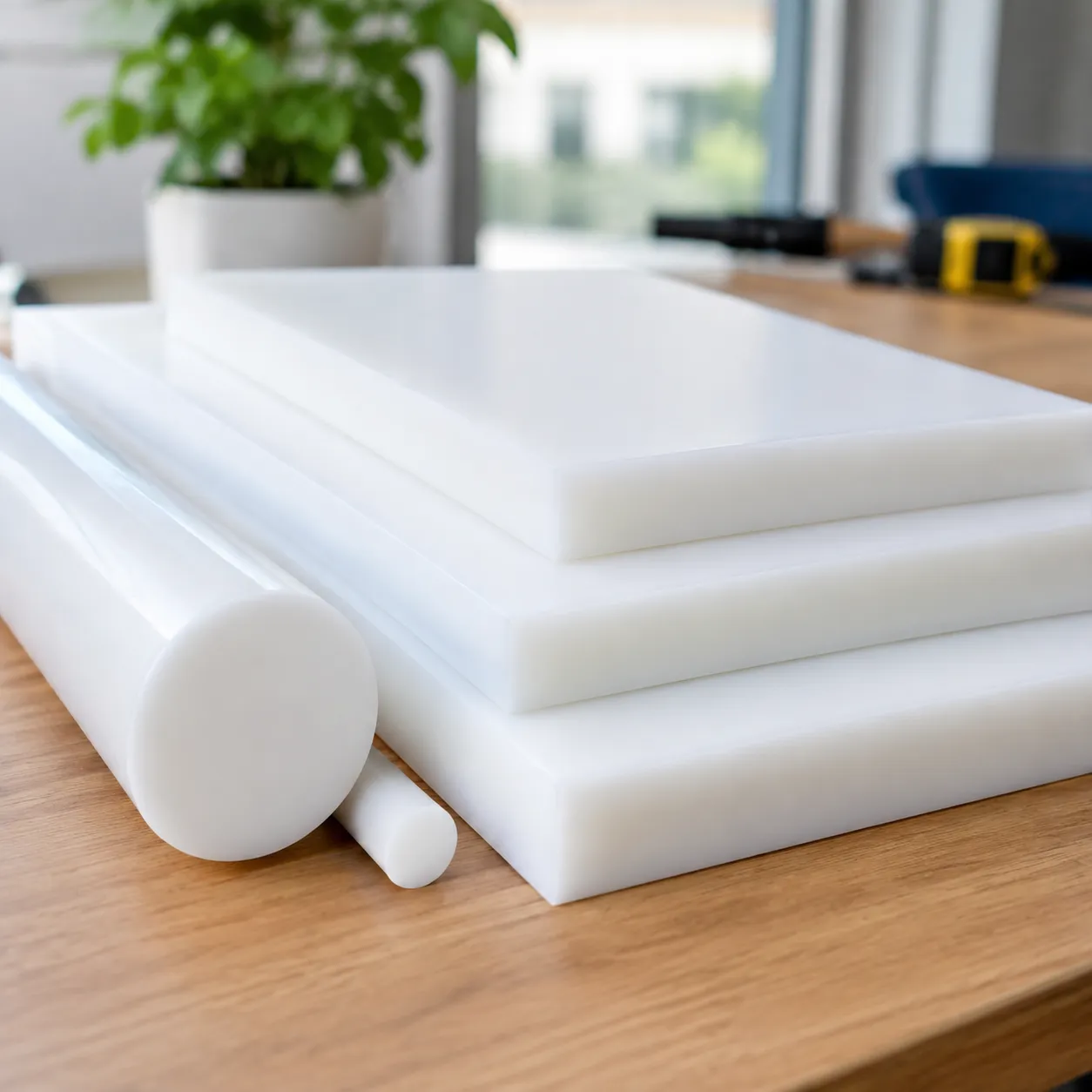
Engineered Polymers: Running titanium guide blocks against food-grade UHMW-PE guide rails and wear strips to minimize friction and eliminate metal-to-metal wear.
Hardened Surfaces: Mating with hardened tool steel components where heavy loads are present.
Lubrication and Surface Treatment When Specified
When OEM specifications require titanium-to-titanium contact or high-wear sliding operations, specific surface engineering methods are required:
Titanium Anodizing (Type II/III): Builds a durable oxide layer that reduces friction and prevents surface seizing.
Hard Coatings (PVD / DLC): Nitride or Diamond-Like Carbon coatings drastically boost surface hardness and lower sliding resistance.
Solid Lubricants: Dry-film coatings maintain continuous lubricity in sensitive food or medical packaging zones where wet lubricants are restricted.
Following the OEM Design for Sliding Interfaces
We manufacture custom packaging machine parts to exact OEM drawing specifications, prioritizing surface finish parameters (Ra values) and precision geometry. Adhering strictly to specified surface treatments and contact tolerances guarantees that your titanium packaging machinery components deliver smooth, repeatable linear motion without risking friction-induced failure.
Manufacturing and Finishing Titanium Packaging Machine Parts
Manufacturing high-precision titanium packaging machine parts requires strict process control, rigid setups, and optimized tooling strategies. We combine advanced machinery with tailored processing to produce custom titanium CNC parts that meet exact engineering specifications.
Precision CNC Milling and Turning
We utilize high-rigidity CNC equipment designed specifically to handle tough alloys like Grade 5 titanium.
- Precision Titanium Milling: High-pressure coolant systems and rigid toolholding maintain tight tolerances on complex guide blocks while controlling heat at the cutting edge.
- Titanium Turning: Specialized tooling ensures consistent diameter control, smooth surface finishes, and precise thread geometry on shafts and guide pins.
Multi-Axis Machining for Complex Geometry
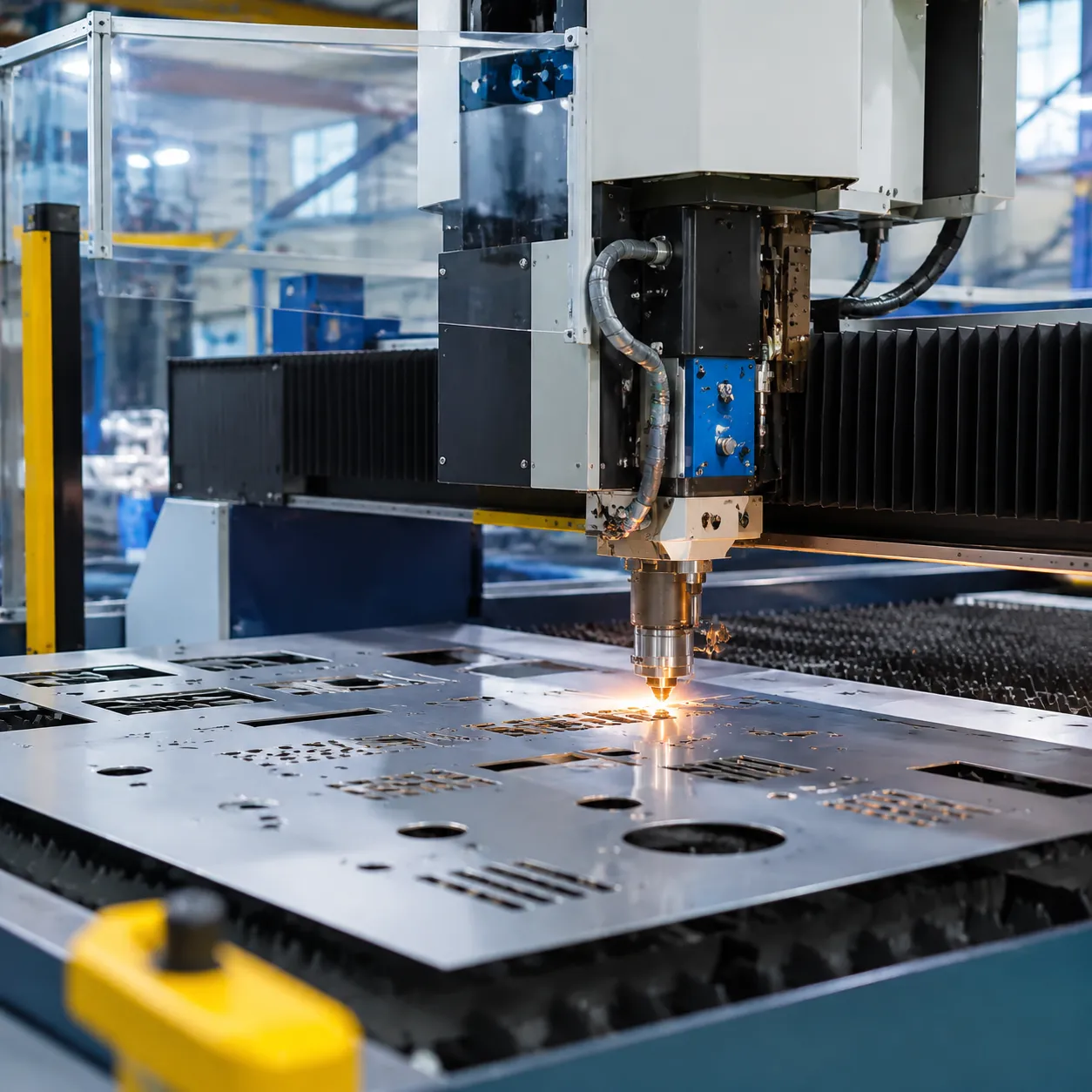
Packaging machinery components often feature angled mounting faces, curved sliding channels, and compound features that require high geometric accuracy. Utilizing advanced 5-axis machining technology allows us to complete complex titanium guide components in a single setup, eliminating repositioning errors and preserving strict datum relationships.
Secondary Machining and EDM When Required
When part features fall outside traditional cutting tool reach or radii tolerances, we leverage specialized secondary processes:
- Wire EDM: Cuts tight internal radii, sharp keyways, and narrow guide slots without imposing physical tool pressure on the workpiece.
- Sinker EDM: Accurately forms blind cavities, complex internal profiles, and square internal corners.
Customer-Specified Surface Finishing
Titanium naturally forms a protective oxide layer, but specific operating environments require custom post-processing. We execute all drawings to spec, providing customer-specified surface finishing options including:
- Titanium Anodizing: Color-coding for quick part identification or functional Type II anodizing.
- Bead Blasting & Polishing: Delivers uniform matte appearances or smooth, reduced-roughness contact surfaces.
- Passivation: Removes surface contaminants from cutting tools to maximize long-term corrosion resistance in washdown environments.
Inspection of Custom Titanium Components
Critical Dimensions, Bores and Fits
We inspect every titanium guide component using calibrated measuring equipment to ensure tight tolerances across all functional zones. Precision bores, sliding fits, and shaft interfaces are measured directly against print specifications to guarantee smooth mechanical assembly.
Datum and Geometric Feature Verification
Maintaining exact datum relationships keeps titanium packaging components aligned during continuous operation. Through automated quality inspection methods, we verify critical geometric tolerances—including perpendicularity, parallelism, and true position—to prevent premature wear or binding.
Material Documentation When Required
For full material traceability and compliance, we supply comprehensive documentation packages based on project requirements:
- Mill Test Reports (MTRs): Validates raw material chemical composition and mechanical properties.
- Certificate of Conformance (CoC): Confirms adherence to drawing specs and grade selections.
- Dimensional Inspection Reports: Provides measured values for all flagged critical dimensions.
Inspection to Customer Drawing Requirements
| Inspection Focus | Verified Parameters | Equipment & Methods |
|---|---|---|
| Critical Bores & Fits | Inner diameter, roundness, fit clearances | Plug gages, bore micrometers, CMM |
| Geometric Tolerances | Perpendicularity, parallelism, position | Coordinate Measuring Machine (CMM) |
| Sliding Surfaces | Surface finish roughness ($R_a$) | Optical profilometer, surface roughness tester |
| Threads & Fasteners | Thread pitch, engagement, class fits | Go/No-Go thread gages, optical comparator |
We cross-check every CNC machined titanium part against your strict engineering drawings before final packaging, ensuring total drop-in compatibility for your machinery.
Ordering Custom Titanium Packaging Machine Parts from ZSCNC
What to Include in Your RFQ
At ZSCNC, we streamline the quotation process for high-precision titanium packaging machine parts. To ensure an accurate quote and rapid production setup for your custom titanium CNC parts, providing complete technical data upfront allows our engineering team to evaluate machinability, tooling, and lead times immediately.
CAD Model, Drawing, Titanium Grade and Quantity
Providing comprehensive design files ensures your titanium guide components meet exact machine specifications. Please include the following details in your initial inquiry:
| Requirement | Preferred Format / Details | Purpose |
|---|---|---|
| 3D CAD Model | STEP, IGES, or Parasolid (.x_t) | Essential for multi-axis CNC toolpath generation |
| 2D Engineering Drawing | PDF (including geometric tolerances) | Defines critical dimensions, threads, and datum structures |
| Titanium Grade | Grade 5 (Ti-6Al-4V), Grade 2, or custom spec | Determines raw material sourcing and cutting strategies |
| Production Quantity | Prototypes, batch runs, or annual supply | Helps us optimize fixture setup and unit pricing |
Surface, Mating and Inspection Requirements
Custom packaging machinery components often demand strict surface treatments and quality controls to prevent friction, galling, or wear during operation. To ensure complete compliance with your operational environment, specify the following criteria in your request:
- Surface Finishing & Coatings: Detail required surface roughness (Ra values), bead blasting, anodizing, or specialty anti-wear coatings.
- Mating Surfaces & Fits: Highlight sliding interfaces, pin locations, bearing seats, or tight-tolerance press fits.
- Quality & Documentation: Specify required deliverables, such as CMM inspection reports, Material Test Reports (MTRs), or Certificates of Conformance (CoC).