Overview
Custom 17-4PH Change Parts for Packaging Machinery
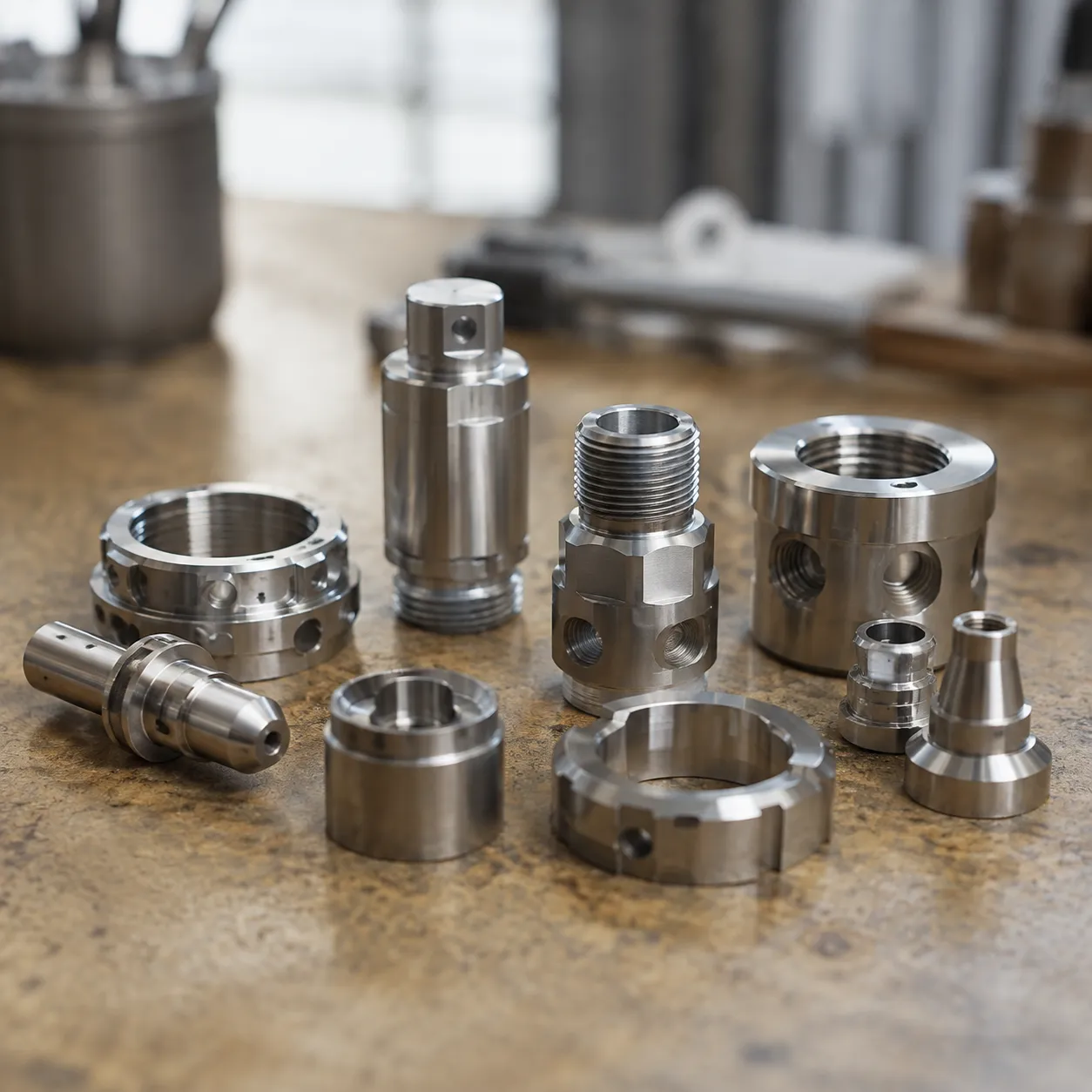
High-speed packaging equipment requires extreme wear resistance, high yield strength, and reliable corrosion protection. We manufacture custom 17-4PH change parts engineered to handle aggressive operating cycles, reduce line downtime, and optimize container handling across food, beverage, and pharmaceutical packaging environments.
Made to OEM Drawings and Existing Part Specifications
Our 17-4PH CNC machining capabilities ensure every replacement component matches or exceeds original equipment specifications. We work directly from customer-supplied CAD files or reverse-engineer worn physical samples to deliver exact-fit parts with tight geometric tolerances.
| Engineering Source | Production Capability | Technical Specification |
|---|---|---|
| OEM 2D/3D Models | Direct machining from STEP, IGES, and DXF files | Precision tolerances down to ±0.005 mm |
| Physical Samples | 3D scanning and laser CMM measurement | Complete material verification and drawing creation |
Replacement, Prototype and Batch Production Components
We support full-lifecycle component supply—delivering everything from single-unit emergency replacements to recurring production batches for equipment manufacturers and packaging facilities.
- Prototypes & Trial Tooling: Fast-turnaround low-volume runs of custom 17-4PH stainless steel parts for line modifications and tooling validation.
- Direct Replacement Parts: Plug-and-play packaging machine spare parts engineered to match factory dimensions for capping, labeling, and filling machine change parts.
- Batch Production Runs: Scalable, cost-effective manufacturing of wear-intensive custom packaging machine parts including drive pins, guide tracks, and gripper assemblies.
Why 17-4PH Stainless Steel Is Used for Packaging Machine Parts
Packaging lines run continuously at extreme cycle rates, making material selection crucial to avoiding unscheduled downtime. We frequently machine 17-4PH change parts for packaging machinery because this martensitic precipitation-hardening stainless steel offers an unmatched combination of high yield strength, surface hardness, and environmental resistance.
High Strength and Hardness After Precipitation Hardening
Standard stainless alloys often wear down quickly under repeated friction and high mechanical loads. Through controlled thermal processing, 17-4PH heat treated parts achieve high tensile strength and surface hardness levels up to 44 HRC.
- Wear Resistance: Ideal for mechanical interfaces, drive shafts, and load-bearing grippers that face constant sliding contact.
- Dimensional Stability: Minimizes distortion during thermal processing, ensuring precision tolerances remain tight across high-stress operational cycles.
- Fatigue Performance: Stands up to millions of repeated impacts in high-speed filling, capping, and wrapping operations.
Corrosion Resistance for Industrial Machine Components
Industrial packaging environments frequently require aggressive sanitization, chemical washdowns, and contact with corrosive liquids. 17-4PH stainless steel parts offer corrosion resistance comparable to 304 stainless steel in most standard operating conditions. This prevents rust, pitting, and surface degradation on critical replacement packaging machine parts, maintaining hygienic standards and structural integrity over years of continuous operation.
When 17-4PH Is Preferred Over Austenitic Stainless Steels
While 300-series austenitic stainless steels (like 304 and 316) offer excellent corrosion resistance, they lack the hardness required for heavy-wear drive mechanisms and tend to gall under load. Conversely, tool steels provide high hardness but rust quickly in washdown environments.
We recommend switching to 17-4PH packaging machine parts when your application demands:
- Higher Yield Strength: Eliminates shaft deflection, bending, and premature mechanical fatigue under high torque.
- Galling Resistance: Prevents thread seizing and wear on tight-tolerance sliding fits.
- Washdown Compatibility: Replaces carbon steels and lower-grade alloys in harsh food, beverage, and pharmaceutical environments.
While lightweight, low-stress tooling can often utilize hard anodized 6061 aluminum parts for packaging machines, high-load and wear-intensive positions depend on 17-4PH. For a broader overview of material strategies across your equipment lines, explore our one-stop CNC sourcing guide for packaging machinery.
Packaging Machine Components We Machine in 17-4PH
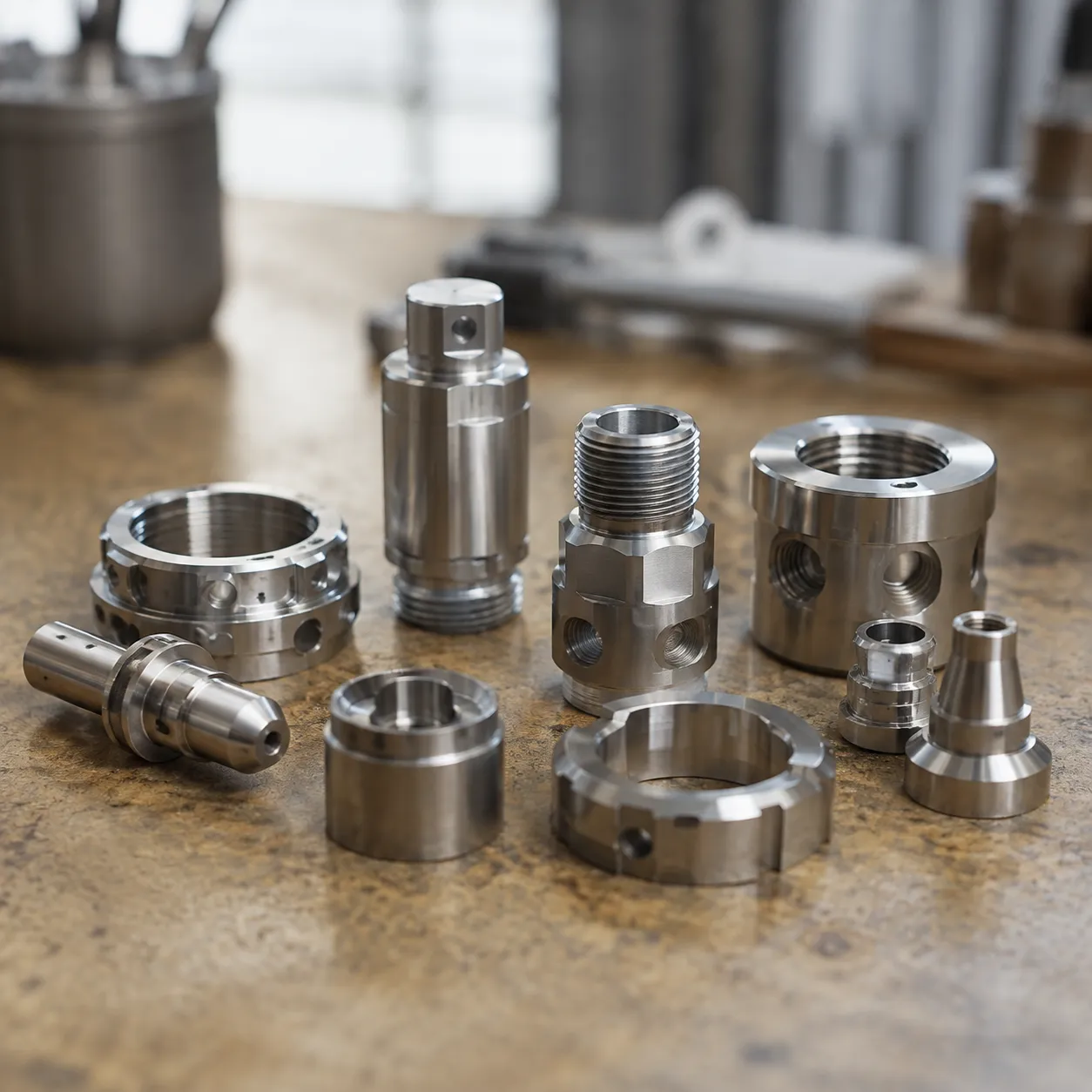
We manufacture custom 17-4PH change parts for packaging machinery designed to withstand continuous high-speed operation, heavy mechanical loads, and harsh washdown environments.
Shafts, Pins and Mechanical Drive Components
Drive trains and actuation systems rely on total mechanical integrity to prevent timing drift and shaft shear under heavy loading.
- Drive Shafts & Axles: Precision-turned to strict concentricity tolerances to eliminate vibration at high production speeds.
- Pivot & Alignment Pins: Heat-treated to handle extreme shear stresses while maintaining exact datum alignment.
- Linkages & Actuator Arms: Engineered for high cycle fatigue resistance in continuous reciprocating drive systems.
Grippers, Tooling and Change Parts
High-speed container handling and filling lines require lightweight, rugged tooling that will not deflect under pressure. We produce precise components engineered to maintain dimensional accuracy across millions of cycles.
- Gripper Arms & Jaws: High-rigidity pick-and-place interfaces designed for rapid, secure container handling.
- Filling Line Tooling: Durable filling machine change parts engineered to resist aggressive sanitizing chemicals and constant mechanical contact.
- Capping Chucks & Guides: Custom-machined for smooth torque transmission and reliable, zero-marring bottle alignment.
Wear-Loaded Mechanical Interfaces
Constant friction and high-frequency impact quickly ruin standard stainless alloys. Using heat-treated 17-4PH ensures your wear components maintain structural integrity far longer.
- Cam Followers & Guides: Superior surface hardness prevents galling, pitting, and premature track grooving.
- Wear Plates & Positioning Blocks: Built to resist severe friction while preserving smooth container flow along the line.
- Mounting Interfaces: High-strength bases designed to support heavy actuator loads without distortion.
Custom Replacement Parts Specified in 17-4PH
When OEM components fail or lead times threaten your production schedule, we deliver precise drop-in replacements. We manufacture high-performance custom machine parts directly from your CAD files, drawings, or worn physical samples to eliminate downtime and improve overall machine reliability.
Critical Features in CNC-Machined 17-4PH Parts
Machining 17-4PH change parts for packaging machinery demands strict adherence to dimensional tolerances and geometric controls. We precision-machine these components to guarantee flawless drop-in replacement and long-term operating reliability on high-speed packaging lines.
Bearing and Seal Journals
- Surface Finish: We execute tight surface finishes (Ra 0.4 µm or better) on bearing and seal journals to eliminate fluid bypass and prevent premature lip seal degradation.
- Seal Performance: Accurate ground tolerances stop shaft scoring under heavy dynamic loads. In high-hygiene operations, integrating precision journals with engineered drainage and seal lands in washdown bearing housings prevents fluid buildup and extends seal service life.
- Wear Resistance: Precision-machined journals leverage the material hardness of 17-4PH to resist fretting corrosion at the bearing seat.
Bores, Fits and Alignment Features
| Feature Type | Target Tolerance | Key Application Focus |
|---|---|---|
| Locating Bores | ±0.005 mm (±0.0002") | Maintains precise axial alignment with main drive shafts and indexing turrets |
| Dowel Pin Fits | H7 press/transition fit | Ensures zero-backlash positioning during rapid packaging line changeovers |
| Interference Fits | Per print specifications | Prevents slippage on driven sprockets, gears, and sleeve interfaces |
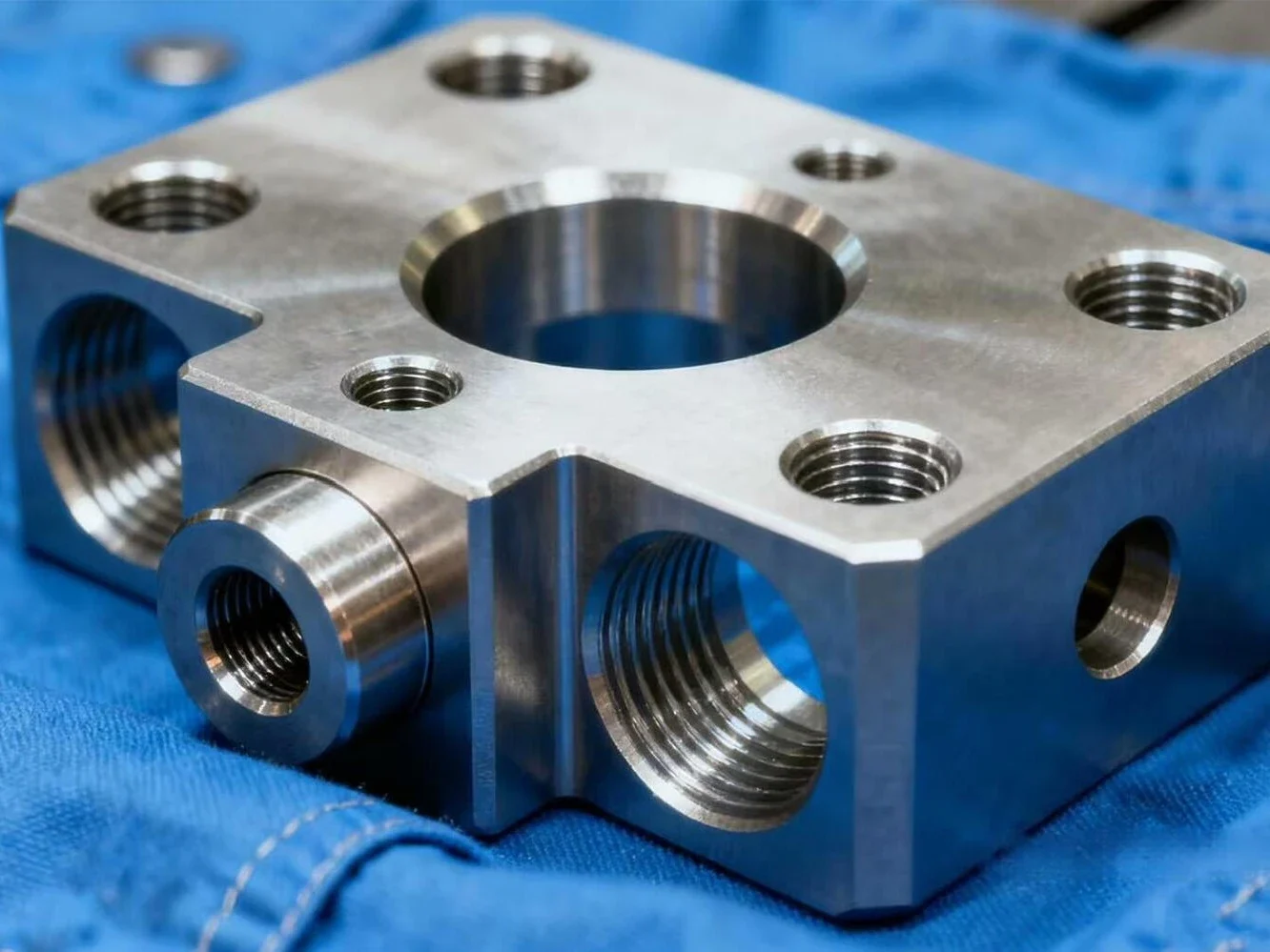
Threads, Keyways, Grooves and Mounting Interfaces
- Keyways and Drive Splines: Precision-milled keyways handle heavy torque cycles without developing backlash or premature wall wear.
- Retaining Ring Grooves: Sharp, burr-free groove geometry ensures retention ring seating to withstand dynamic thrust loads.
- Threaded Fasteners: Cleanly tapped threads prevent galling during assembly and maintain clamped preload under continuous machine vibration.
Datum Relationships and Geometric Requirements
- Runout Control: Strict concentricity and total runout controls keep high-speed rotating shafts balanced, eliminating destructive machine vibration.
- Perpendicularity and Parallelism: Square mounting faces ensure change parts sit perfectly flush against machine frames without binding.
- GD&T Verification: Every feature is checked against primary, secondary, and tertiary datums on our CMMs during 17-4PH CNC machining to ensure 100% drawing compliance.
17-4PH Heat Treatment for Packaging Machine Components
Precipitation hardening allows us to tailor the mechanical properties of 17-4PH stainless steel parts to your exact operational demands, balancing extreme tensile strength with surface wear resistance.
Common H900, H1025, H1075 and H1150 Conditions
Selecting the correct aging treatment determines the final hardness and ductility of your 17-4PH heat treated parts:
| Heat-Treatment Condition | Aging Temperature | Typical Hardness | Core Performance Characteristics | Best Application Fit |
|---|---|---|---|---|
| H900 | 900°F (482°C) | 40–47 HRC | Maximum yield strength & surface hardness | High-wear 17-4PH change parts, cams, & grippers |
| H1025 | 1025°F (552°C) | 35–42 HRC | Balanced high strength with improved toughness | High-cycle drive shafts & alignment pins |
| H1075 | 1075°F (579°C) | 31–38 HRC | Superior impact resistance & fracture toughness | Heavy-load mechanical interfaces |
| H1150 | 1150°F (621°C) | 28–37 HRC | Maximum ductility & stress-corrosion resistance | Dynamic components in washdown packaging lines |
Why Heat-Treatment Condition Must Follow the Drawing
Deviating from specified drawing conditions compromises component lifespan. A part engineered for H900 will lack necessary surface hardness if processed at H1150, causing rapid wear under abrasive conditions. Conversely, substituting H900 for H1075 on dynamic drive components introduces excess brittleness, increasing fatigue failure under high-cycle packaging loads. We heat-treat strictly to specified drawing callouts to match OEM mechanical requirements.
Managing Dimensional Requirements Before and After Heat Treatment
17-4PH stainless steel experiences predictable volumetric shrinkage (roughly 0.04% to 0.06%) during aging. To guarantee precision tolerances on critical bores and bearing journals, we schedule machining operations directly around the thermal cycle:
- Pre-Heat Treatment Machining: Rough machine components while in Condition A (solution annealed) to maximize material removal rates and extend tool life.
- Dimensional Allowance: Leave precision stock (typically 0.25 mm to 0.50 mm) on tight-tolerance features to account for thermal transformation.
- Post-Heat Treatment Finishing: Perform final precision grinding, finish milling, or hard turning after precipitation hardening to lock in exact geometric tolerances and zero-runout specs for high-speed 17-4PH packaging machine parts.
CNC Manufacturing of 17-4PH Packaging Machine Parts
We deliver end-to-end CNC machining for 17-4PH packaging machine change parts, maintaining precise mechanical tolerances despite the material's high strength and tough work-hardening traits.
Turning and Milling 17-4PH Stainless Steel
Machining 17-4PH stainless steel requires rigid setups, optimized tool paths, and consistent coolant delivery. We utilize high-performance tooling to turn and mill components cleanly, preventing surface work-hardening and controlling heat build-up. Whether cutting concentric cylindrical features or machining complex profiles like 5-axis packaging machine cams, our strategies eliminate tool chatter and maintain tight dimensional control.
Machining Strategy for Hardened or Heat-Treated Components
We tailor the production sequence based on your required material condition and tolerance stack-up:
| Machining Strategy | Target Application | Primary Benefit |
|---|---|---|
| Machining in Condition A (Annealed) | Heavy stock removal, complex pocketing, deep features | Maximizes material removal rates and extends tool life prior to hardening. |
| Hard Machining Post-Heat Treatment | High-precision parts sensitive to distortion | Eliminates dimensional changes caused by thermal heat-treatment cycles. |
Finish Machining and Grinding When Specified
When specifications call for tight tolerances or fine surface finishes, rough machining is followed by precision cylindrical grinding, surface grinding, or hard milling. This approach ensures components such as hardened conveyor drive shafts achieve critical bearing journal runout standards, smooth seal surfaces, and exact shaft-to-bore fits.
Passivation and Other Customer-Specified Finishing
To maximize corrosion performance in demanding production environments, post-machining surface treatments are applied per drawing requirements:
- Chemical Passivation: Performed to ASTM A967 standards (citric or nitric acid) to remove free iron contaminants and restore the natural chromium oxide passive layer.
- Secondary Finishing: Electropolishing, bead blasting, or specialty surface coatings executed strictly according to customer specifications.
baseline datums.
Critical Dimensions, Fits and Datum Inspection
We verify every tight-tolerance feature against your OEM drawings or CAD models before parts leave our facility.
- Shaft Journals & Bores: Precision micrometers and bore gauges verify press fits and bearing seats.
- Datum Integrity: All key locations are measured directly from your specified primary datums to prevent tolerance stack-up.
- Interface Tolerances: Mounting points and alignment pins are checked to ensure seamless assembly with existing filling machine change parts.
We maintain high precision through our documented quality inspection processes, catching micron-level deviations before final delivery.
Runout and Geometric Feature Verification
High-speed packaging machinery demands absolute geometric control to prevent premature wear, binding, or excessive vibration.
- Total Indicator Runout (TIR): Precision centers and dial indicators verify shafts, spindles, and rotating sleeves.
- Perpendicularity & Flatness: Mating faces and mounting flanges are inspected to guarantee flush seating against drive units.
- True Position: Multi-axis hole patterns and slot features are verified relative to functional reference planes using CMM technology.
Hardness Verification When Required
Proper heat treatment is essential to achieve the advertised mechanical properties of 17-4PH stainless steel parts. We perform non-destructive Rockwell C (HRC) hardness testing to confirm that the material treatment matches your drawing callout.
- Condition Checks: Verification of target hardness levels for H900, H1025, H1075, or H1150 states.
- Wear Surface Validation: Ensures critical contact areas, grippers, and cam tracks possess the required surface toughness before installation.
Material and Heat-Treatment Documentation
Complete material traceability keeps your quality management system audit-ready. Every order of custom packaging machine parts includes full documentation packages upon request.
- Mill Test Reports (MTRs): Proof of raw material chemical composition and original mechanical properties.
- Heat-Treat Certificates: Detailed furnace logs and batch certs confirming exact precipitation hardening cycles.
- Inspection Certificates: Dimensional CMM reports and certificate of conformance (CoC) shipped directly with your CNC machined 17-4PH parts.
Replacement 17-4PH Parts for Existing Packaging Equipment
We produce high-precision replacement 17-4PH parts designed to drop directly into existing packaging lines without field modification. High-speed packaging operations demand exact mechanical drop-ins to eliminate downtime and keep production schedules on track.
Manufacturing From OEM Drawings and CAD Models
We manufacture exact-fit components directly from your technical drawings, 2D blueprints, or 3D CAD models (STEP/IGES):
- Strict Spec Compliance: We replicate specified geometric tolerances, surface finishes, and datum references.
- Heat-Treatment Alignment: Every part matches your designated hardness parameters to maintain fatigue life and load capacity.
- Direct Interfacing: Guaranteed fitment with existing drive shafts, guide rails, and mounting interfaces.
Evaluating Existing Samples When Drawings Are Unavailable
When OEM drawings are missing or outdated, we reverse-engineer worn or damaged change parts to recreate original factory tolerances:
- Precision CMM Mapping: We capture exact physical geometry, bore alignments, and thread pitches from your sample.
- Material & Hardness Analysis: We verify baseline metallurgy to ensure your 17-4PH stainless steel parts deliver the required mechanical strength.
- Wear Pattern Correction: We analyze physical wear on used samples and adjust digital models to restore factory-new performance across specialized packaging lines, including custom cartoning machine components.
Repeat Production for Packaging Machine Spare Parts
We store digital part archives and CNC tooling parameters for every job to simplify ongoing spare parts management:
- Rapid Reorder Cycles: Secure CAD files and inspection records enable quick turnarounds on critical packaging machine spare parts.
- Lot-to-Lot Consistency: Standardized CNC programming ensures exact repeatability across initial production and future spare parts orders.
- Flexible Volume Support: We manufacture single-piece emergency replacements or scheduled batch orders to match your operational demands.
Ordering Custom 17-4PH Parts from ZSCNC
We make ordering custom 17-4PH change parts for packaging machinery straightforward. Whether you are replacing worn components or sourcing new tooling for high-speed equipment, we deliver high-precision parts manufactured exactly to your specifications.
What to Include in Your RFQ
To get an accurate quote and fast turnaround on your packaging machine spare parts, include the following details in your request for quote (RFQ):
- 2D & 3D CAD Files: STEP, IGES, DXF, or PDF prints detailing critical tolerances and fits.
- Order Quantities: Specify initial prototype needs, one-off replacements, or scheduled batch quantities.
- Application Details: Note special operational demands, such as high-wear tooling for flow wrappers or sealing assemblies for tray sealers.
- Delivery Timelines: State required delivery dates or expedited processing needs.
Drawing, Material Condition, Heat Treatment and Inspection Requirements
Clear technical specifications ensure your custom packaging machine parts meet your exact operational standards right out of the crate.
| Specification Category | Required Information to Provide |
|---|---|
| Material Condition | Specify solution-annealed (Condition A) or pre-heat-treated stock |
| Heat Treatment | Declare target hardness condition (H900, H1025, H1075, or H1150) |
| Inspection Level | Request CMM dimensional reports, runout checks, or Material Test Reports (MTRs) |
| Finishing & Passivation | Surface roughness targets (Ra), surface grinding specs, or ASTM passivation standards |
Prototype, Replacement and Batch Production
Our 17-4PH CNC machining capabilities cover every stage of your production lifecycles:
- Rapid Prototyping: Quick-turn components for design testing, tooling trials, or functional validation.
- Direct Replacement Parts: Reverse-engineered or drawing-matched replacement packaging machine parts designed to eliminate OEM lead times and reduce downtime.
- Batch Production: Scalable production runs with consistent unit-to-unit precision and documented quality control across every batch.