Understanding Material Options for Packaging Parts
Machining tolerance review: Typical machining tolerance is ±0.01 mm. Selected dimensions may achieve ±0.005 mm after technical review. Final tolerances depend on the drawing, material, part size, geometry, finishing and inspection requirements and must be confirmed before order acceptance.
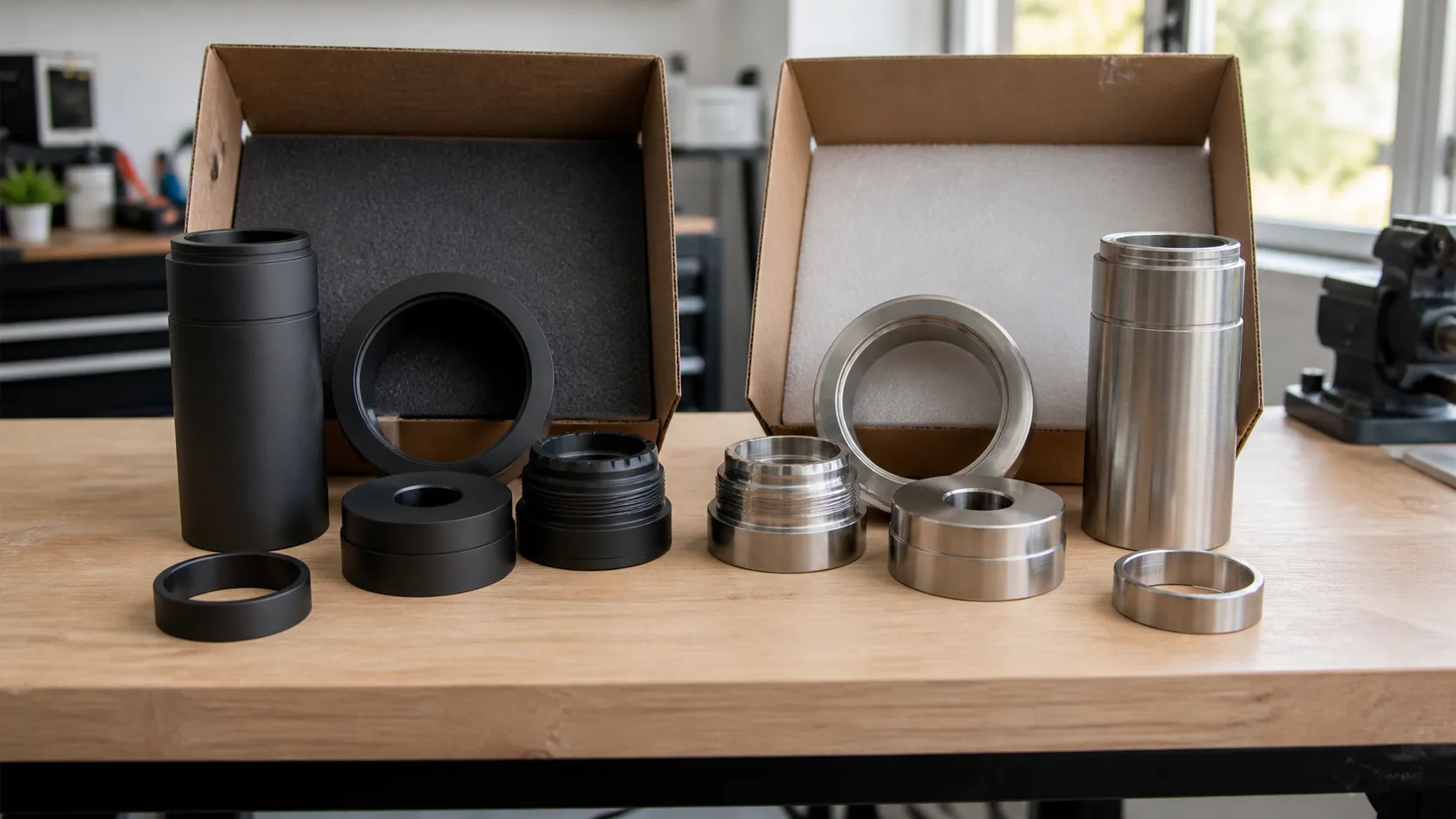
Material selection affects hygiene, precision, durability, and moving-part performance across food and packaging equipment. For Hard-Anodized Aluminum vs 316L Stainless Steel for Packaging Parts, the correct choice depends on whether the component is structural, high-speed, exposed to washdown, or used near food-contact areas.
What Is Hard-Anodized Aluminum?
Hard-anodized aluminum is aluminum treated with a controlled anodizing process that creates a durable protective oxide layer. It is widely used for lightweight structural parts where reduced mass and efficient motion matter.
- Suitable for brackets, mounts, cutter seats, and non-direct-contact housings
- Supports lower inertia in fast-moving packaging assemblies
- Structural anodizing improves surface wear and corrosion protection
- Well suited to precision CNC machining for custom OEM components
What Is 316L Stainless Steel?
316L stainless steel is a corrosion-resistant stainless material used in demanding sanitary environments. Its performance makes it suitable for equipment exposed to frequent washdown, moisture, and sanitation chemicals.
- Commonly used for beverage valve manifolds, sealing bases, and processing components
- Provides strong resistance to corrosion in harsh cleaning environments
- Appropriate for sanitary designs requiring smooth, cleanable surfaces
- Can be passivated or electropolished to support food-grade finishing requirements
| Material | Primary Advantage | Typical Packaging Use |
|---|---|---|
| Hard-anodized aluminum | Lightweight structural efficiency | Mounting brackets, housings, cutter seats |
| 316L stainless steel | Corrosion resistance and sanitary durability | Washdown components, valve manifolds, sealing modules |
Core Differences Between Hard-Anodized Aluminum and 316L Stainless Steel
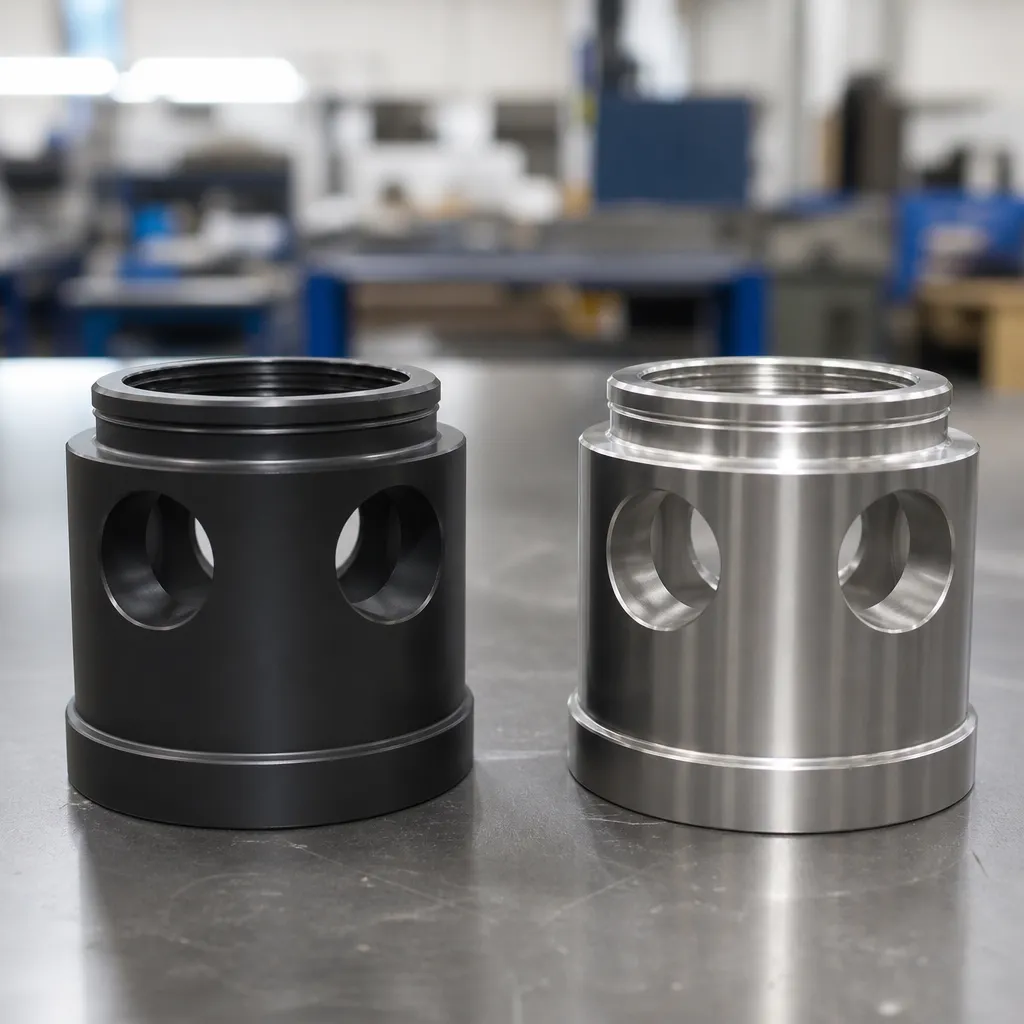
For Hard-Anodized Aluminum vs 316L Stainless Steel for Packaging Parts, the right choice depends on load, washdown conditions, moving speed, wear points, and heat control. We machine both materials for custom packaging equipment components with tolerances down to ±0.01 mm.
| Selection factor | Hard-anodized aluminum | 316L stainless steel |
|---|---|---|
| Weight | Lightweight | Heavier |
| Structural use | Strong for brackets and mounts | Robust for demanding assemblies |
| Chemical exposure | Suitable for moderate exposure | Strong resistance in aggressive washdown areas |
| Surface performance | Protective anodized oxide layer | Durable stainless surface; can be passivated or electropolished |
| Heat transfer | Higher thermal conductivity | Lower thermal conductivity |
Strength, Weight, and Structural Efficiency
Hard-anodized aluminum offers a high strength-to-weight balance for packaging parts that move quickly. Lower mass helps reduce inertia in robotic tooling, cutter seats, structural housings, and machine mounts.
316L stainless steel is heavier but provides a solid, durable base for parts exposed to sustained loads or frequent sanitation. It is often suited to fixed machine elements where weight is less critical than corrosion resistance and long-term stability.
For lightweight line structures, our hard-anodized 6061 aluminum packaging parts support precise mounting and motion-control applications.
Corrosion Resistance and Chemical Tolerance
316L stainless steel provides stronger corrosion resistance in wet, chemical-intensive environments. It is a practical material for equipment exposed to repeated washdown, cleaning agents, moisture, and chloride-related pitting corrosion risks.
Hard-anodized aluminum uses a hard oxide layer to improve surface protection. It performs well in controlled production environments and moderate exposure conditions, especially for non-direct-contact structural components. The anodized surface should be specified around the actual cleaning routine, chemical concentration, and service conditions.
Surface Hardness and Wear Resistance
Hard anodizing increases aluminum surface hardness and improves wear resistance. This makes it useful for guides, brackets, mounts, and moving assemblies where lower weight and surface protection are both required.
316L stainless steel delivers dependable durability for sanitary machinery parts. With suitable machining and finishing, including passivation or electropolishing, it supports smoother surfaces and reduced contamination-retention areas. For high-wear polymer contact points, material selection should also consider the mating component and operating load.
Thermal Conductivity and Heat Transfer
Aluminum transfers heat more efficiently than 316L stainless steel. This can benefit packaging components where rapid heat movement matters, including certain structural supports near temperature-controlled assemblies.
316L stainless steel transfers heat more slowly, but it remains a strong choice where sanitation, chemical tolerance, and stable performance are the primary requirements. For heat plates, sealing modules, and related parts, we evaluate the part geometry, finish, fitment, and operating temperature before machining.
Operational Performance in Packaging Equipment
Hygiene, Cleanability, and Washdown Resistance
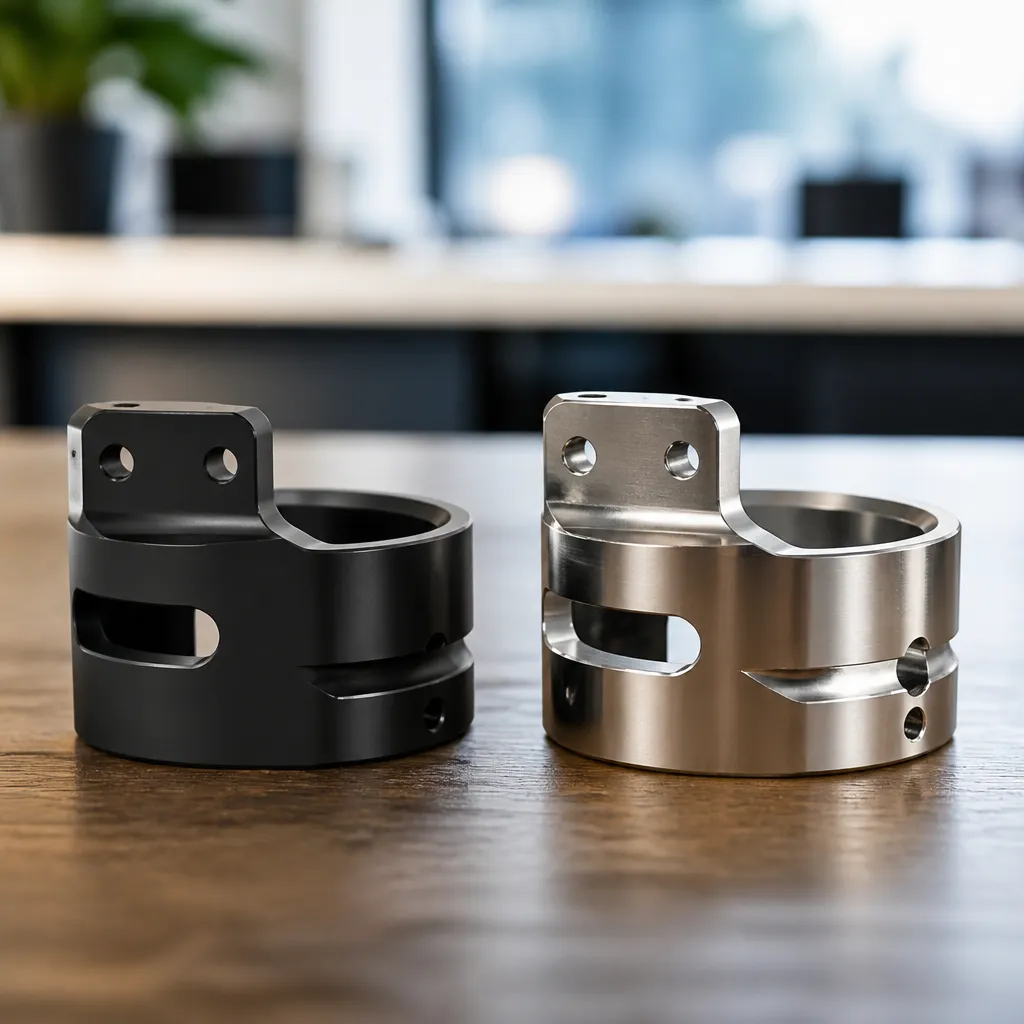
For hygiene-critical packaging equipment, 316L stainless steel is the stronger choice for frequent washdown, Clean-in-Place processes, and exposure to aggressive sanitation chemicals. Its corrosion resistance supports smooth, cleanable components in direct-contact and wet-process areas. We can machine 316L parts with sanitary finishing options such as passivation and electropolishing to help reduce surface defects and contamination-trapping crevices.
Hard-anodized aluminum is better suited to protected structural areas, brackets, housings, and moving assemblies with moderate washdown exposure. Its oxide layer improves surface protection and wear resistance, but it should be specified carefully where repeated chemical cleaning or constant moisture is expected.
Food Contact Safety and Regulatory Compliance
Food contact safety depends on the material, surface finish, application location, and traceable manufacturing controls. For direct food-contact zones and demanding sanitation conditions, 316L stainless steel provides a dependable material base for packaging and food-processing components.
At ZSCNC, we support material traceability, raw material certificates, IQC and OQC inspection, and dimensional CMM reports for custom packaging parts. Our CNC machining process is built for food-grade requirements, including tight tolerances down to ±0.01 mm where the component design requires it. For complex hygienic geometries, 5-axis CNC machining for food machinery components can improve access to critical surfaces and precision features.
Galvanic Corrosion Risk in Mixed Assemblies
Mixed-material assemblies require careful design. When hard-anodized aluminum and 316L stainless steel are joined in a wet environment, moisture or cleaning solution can create galvanic corrosion risk at the connection points. The anodized oxide layer offers protection, but damaged or worn areas can become more vulnerable.
Use practical isolation methods where needed:
- Specify non-conductive washers, bushings, or gaskets between dissimilar metals.
- Prevent standing water around fasteners, joints, and mounting faces.
- Keep drainage paths clear in washdown zones.
- Protect machined aluminum edges and avoid damaging the anodized finish during assembly.
- Review brackets, mounts, and fastener interfaces during DFM review.
For packaging OEMs sourcing multiple custom components, a coordinated one-stop CNC sourcing approach for packaging machinery helps keep material choices, finishes, and assembly interfaces consistent across the line.
Manufacturing, Cost, and Efficiency Factors
Material and Machining Cost Comparison
For Hard-Anodized Aluminum vs 316L Stainless Steel for Packaging Parts, the best value depends on part function, finish requirements, and production volume. We machine both materials to suit OEM packaging equipment requirements, with DFM review helping control unnecessary machining time and material use.
| Factor | Hard-Anodized Aluminum | 316L Stainless Steel |
|---|---|---|
| Material approach | Efficient for lightweight structural parts | Premium choice for demanding sanitary environments |
| CNC machining | Generally supports efficient machining of complex forms | Requires robust machining for durable precision components |
| Surface treatment | Structural anodizing adds wear and corrosion protection | Passivation and electropolishing support sanitary surfaces |
| Cost focus | Often suitable for cost-conscious structural assemblies | Suited to parts where washdown durability is the priority |
Material selection should consider the complete component cost, including machining, finishing, inspection, expected service conditions, and replacement risk. Our CNC machining materials capabilities cover aluminum and 316L stainless steel for custom packaging components.
Weight Savings and Dynamic Motion Efficiency
Hard-anodized aluminum is well suited to moving packaging assemblies where lower mass supports faster motion and reduced inertia. It is commonly used for structural brackets, cutter seats, mounts, housings, and other non-direct-contact components.
Aluminum can support:
- Lower moving weight in high-speed assemblies
- More efficient robotic or automated motion
- Practical structural performance for mounts and brackets
- Wear-protected surfaces after structural anodizing
316L stainless steel is heavier, but it remains the stronger choice when continuous washdown, direct-contact conditions, or robust corrosion resistance outweigh weight savings. For aluminum part selection and finish considerations, see our aluminum CNC machining material guidance.
Maintenance and Long-Term Service Life
Long-term performance depends on matching the material to the operating environment. Hard-anodized aluminum can provide durable service in protected structural locations, provided the oxide layer remains appropriate for the exposure level. Deep wear, impact damage, or aggressive chemical contact may require closer inspection.
316L stainless steel is better suited to demanding washdown zones and packaging parts exposed to repeated sanitation. Its corrosion resistance helps reduce maintenance concerns in food processing, beverage, dairy, meat, and poultry equipment.
| Service Condition | Preferred Material Direction |
|---|---|
| Lightweight moving structure | Hard-anodized aluminum |
| High-speed mounts and brackets | Hard-anodized aluminum |
| Frequent sanitation and wet operation | 316L stainless steel |
| Direct-contact or high-hygiene zones | 316L stainless steel |
| Continuous washdown exposure | 316L stainless steel |
We support first-article prototyping, dimensional CMM reporting, material traceability, and IQC/OQC inspection to help packaging OEMs maintain reliable fitment and service life.
Packaging Machinery Application Scenarios
When to Use Hard-Anodized Aluminum for Packaging Components
Hard-anodized aluminum is a practical choice for lightweight, fast-moving, and non-direct-contact packaging parts. Its low mass helps reduce inertia in automated assemblies while the anodized oxide layer improves surface protection.
| Suitable component | Why it fits |
|---|---|
| Structural mounting brackets | Delivers efficient support with less machine weight |
| Cutter seats and holders | Supports precise, lightweight moving assemblies |
| Robotic end-of-arm tooling | Helps reduce payload on high-speed equipment |
| Precision housings | Provides a stable structural option for protected areas |
| Packaging integrator mounts | Suits structural mounting applications with anodized protection |
At ZSCNC, we CNC machine aluminum mounts, brackets, and housings to tight requirements, with structural anodizing available for parts that need improved wear and corrosion resistance. Hard-anodized aluminum is best where speed, reduced moving mass, and cost-effective structural performance matter most.
When to Choose 316L Stainless Steel for Packaging Parts
316L stainless steel is the stronger material choice for direct-contact zones and demanding washdown conditions. Its corrosion resistance supports equipment exposed to moisture, sanitation chemicals, and continuous cleaning cycles.
| Suitable component | Why it fits |
|---|---|
| Beverage valve manifolds | Supports corrosion-resistant processing and fluid-handling assemblies |
| Sealing module base elements | Provides durable support in regularly cleaned equipment |
| Meat and poultry processing parts | Fits washdown-intensive production environments |
| Cutting and portioning components | Supports sanitary finishing and durable service |
| Food-contact assemblies | Suitable where cleanability and material traceability are priorities |
We use 316L for precision packaging and food-processing components that require sanitary surface treatment, passivation, or electropolishing. For cutting equipment exposed to demanding processing conditions, our guide to 440C and 316L for pet treat cutting blades provides a focused material comparison.
For Hard-Anodized Aluminum vs 316L Stainless Steel for Packaging Parts, aluminum generally serves lightweight structural and motion-focused roles, while 316L is the preferred option for washdown, food-contact, and corrosion-critical applications.
How to Select the Right Material for Your Packaging Line
For hard-anodized aluminum vs 316L stainless steel for packaging parts, the correct choice depends on washdown exposure, food-contact requirements, moving mass, and the required service life. We review the operating conditions, part function, material specification, surface finish, and dimensional requirements before CNC machining.
Evaluating Operating Environment and Washdown Intensity
316L stainless steel is generally the stronger choice for wet, corrosive, and direct-contact areas. Its corrosion resistance supports components exposed to frequent cleaning, moisture, and sanitation chemicals. A smooth, sanitary finish can also reduce areas where residue may collect.
Hard-anodized aluminum is well suited to structural parts with moderate environmental exposure. The anodized oxide layer improves wear resistance and provides added protection for brackets, housings, and mounts. It should be selected carefully where harsh chemical washdown or prolonged moisture exposure is expected.
| Operating condition | Recommended material | Typical component use |
|---|---|---|
| Frequent CIP or aggressive washdown | 316L stainless steel | Valve manifolds, sealing-module bases, washdown-zone parts |
| Direct food-contact or hygiene-critical areas | 316L stainless steel | Processing and packaging contact components |
| High-speed moving assemblies | Hard-anodized aluminum | Cutter seats, robotic tooling, lightweight mounts |
| Dry or moderate-exposure structural areas | Hard-anodized aluminum | Frames, brackets, precision housings |
For beverage equipment, 316L is commonly selected where corrosion resistance and sanitary construction are central to uptime. Our approach to 316L valve manifolds for beverage lines reflects the same focus on cleanability, material control, and precision fitment.
Balancing Speed Requirements with Sanitary Standards
Hard-anodized aluminum reduces part weight and inertia. This can support faster motion in flow wrappers, cartoners, robotic handling systems, and other automated packaging equipment. Its structural efficiency makes it practical for non-contact components where fast acceleration and repeatable positioning matter.
316L stainless steel adds mass, but it provides stronger protection in demanding sanitary zones. It is often the better long-term choice when washdown durability, chloride resistance, and food-contact safety outweigh weight savings.
| Selection priority | Preferred material | Reason |
|---|---|---|
| Lower moving mass | Hard-anodized aluminum | Supports efficient high-speed motion |
| Continuous washdown durability | 316L stainless steel | Better suited to corrosive cleaning environments |
| Wear-resistant structural surfaces | Hard-anodized aluminum | Hard oxide layer protects machined surfaces |
| Sanitary, corrosion-resistant process parts | 316L stainless steel | Supports smooth, cleanable component design |
We machine both materials for packaging equipment with tolerances down to ±0.005 mm (selected dimensions; subject to review), allowing structural and sanitary parts to maintain fit, alignment, and repeatable performance across production runs.
Looking for lightweight, high-strength components? Explore our