Standard stainless steels like 304 and 316L often buckle under extreme mechanical stress, leading to bent shafts, worn grippers, and costly downtime. Knowing when 17-4PH makes sense for high-load packaging components is the key to maintaining reliable, high-speed production without constant part failure. In this guide, you'll learn how 17-4PH precipitation-hardening stainless steel resists permanent deformation under heavy cyclic loads, how heat-treatment conditions like H900 and H1150 impact performance, and how to optimize material selection and CNC machining strategies for your machinery.
Why 17-4PH Is Used for High-Load Packaging Machine Parts
High-speed packaging machinery subjects drive components and structural elements to intense mechanical shock, continuous cyclic loads, and aggressive wear environments. Standard austenitic stainless steels often lack the mechanical strength required for these high-stress points, while alloy steels risk corrosion in washdown environments. 17-4PH stainless steel provides the ideal balance, combining exceptional mechanical strength with reliable corrosion resistance for critical high-load packaging machine parts.
What Is 17-4PH Precipitation-Hardening Stainless Steel?
17-4PH is a chromium-nickel-copper precipitation-hardening stainless steel known for its high tensile strength and solid toughness.
- Chemical Composition: Approximately 17% Chromium, 4% Nickel, and 4% Copper.
- Microstructure: Martensitic alloy capable of reaching high hardness through thermal treatment.
- Corrosion Resistance: Comparable to 304 stainless steel in most ambient and mildly corrosive industrial environments.
Understanding UNS S17400 and Precipitation Hardening
Identified in industrial standards as UNS S17400 (or Grade 630), this alloy gains its mechanical performance through precipitation hardening—a low-temperature thermal aging process.
- Solution Annealed (Condition A): The material is supplied in a manageable state, ideal for initial precision CNC machining.
- Thermal Aging: Subjecting the machined part to controlled temperatures between 900°F and 1150°F precipitates fine copper particles throughout the martensitic matrix.
- Tailored Properties: Adjusting the thermal cycle directly controls final yield strength, impact resistance, and surface hardness.
Why Strength and Hardness Matter in Certain Machine Components
Standard stainless grades like 304 or 316L often suffer from severe surface wear, galling, or permanent deformation when subjected to continuous dynamic loads and high contact forces. Specifying high-strength materials becomes non-negotiable for critical mechanical elements.
- Yield Strength: High yield limits prevent permanent bending or fatigue failure under high-cycle mechanical stresses.
- Surface Hardness: Achieving hardness levels up to 44 HRC drastically improves wear resistance at high-friction interfaces.
- Dimensional Control: The low-temperature hardening process minimizes part distortion, allowing components to maintain precise tolerances post-treatment.
When 17-4PH Makes Sense for Packaging Machine Components
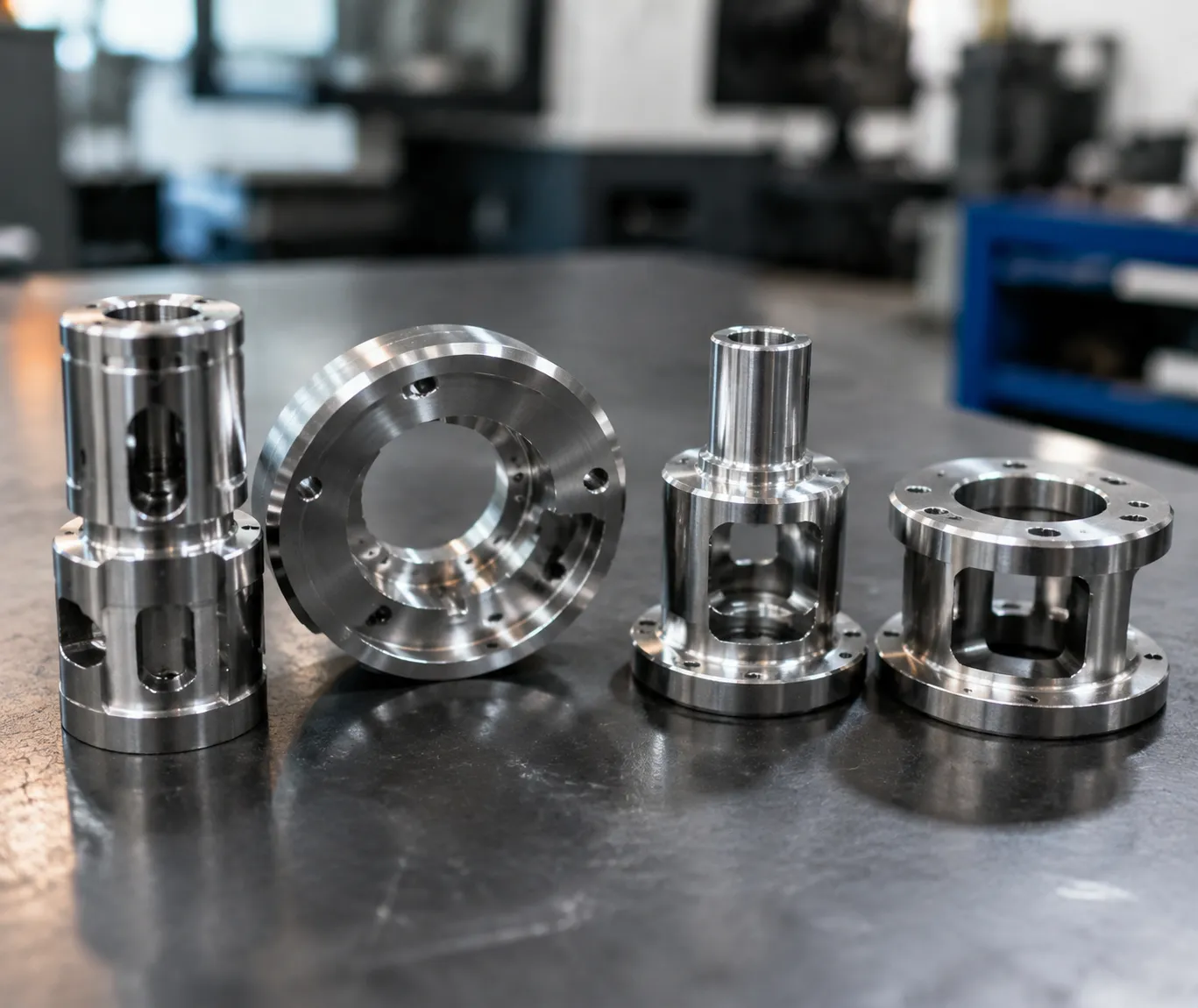
We evaluate material selection based on real-world mechanical demands, washdown environments, and long-term operating costs. Selecting 17-4PH precipitation-hardening stainless steel makes financial and engineering sense when high structural load and corrosion resistance must exist in the same component.
Mechanically Loaded Shafts, Pins and Drive Components
Drive systems in high-speed packaging lines transfer high torque and bending loads under continuous operation. Standard 300-series stainless steels often lack the yield strength required to handle these dynamic forces without flexing or micro-yielding over time.
- High-Torque Drive Shafts: Prevents keyway tear-out and rotational deflection during rapid acceleration cycles.
- Pivot Pins and Hinge Points: Maintains tight dimensional tolerances under heavy cantilevered loads.
- Agitator and Pump Shafts: High-stress mixing components demand strict straightness; for instance, managing dairy agitator shaft runout and balance performance becomes much simpler when using high-yield 17-4PH.
Grippers, Tooling and Repeated-Load Interfaces
High-frequency packaging machinery subjects grippers, clamps, and forming tools to millions of impact cycles. Under these conditions, lower-grade metals suffer fatigue failure or surface deformation at contact points.
- Pneumatic Gripper Arms: Resists flexing under high clamping forces, ensuring consistent package placement.
- Forming Tooling: Machining specialized 5-axis thermoforming tool inserts for packaging machines from 17-4PH provides the durability needed for high-pressure sealing and cutting interfaces.
- Cam Followers and Indexer Fingers: Withstands repeated impact loads without localized surface pitting.
Where Higher Strength Can Help Resist Permanent Deformation
When a packaging line experiences product jams or emergency stops, mechanical components absorb severe peak shock loads. 17-4PH offers a yield strength up to four times higher than 304 or 316L stainless steel, absorbing these brief overloads elastically rather than bending permanently.
| Material | Yield Strength (Approx. MPa) | Hardness (Typical) | Shock Load Deformation Risk |
|---|---|---|---|
| 304 Stainless | 200 – 300 | ~88 HRB | High (Bends easily under jam conditions) |
| 316L Stainless | 220 – 310 | ~85 HRB | High (Prone to permanent deflection) |
| 17-4PH (H900) | 1,100 – 1,250 | ~44 HRC | Low (Resists permanent distortion) |
Why 17-4PH Is Not Automatically the Best Choice for Every Part
While 17-4PH delivers superior mechanical properties, over-specifying it drives up raw material and manufacturing costs unnecessarily.
- Light-Duty Structural Frames: Static brackets and non-loaded guarding are far more economical in 304 or 316L.
- Extreme Chemical Environments: Highly acidic washdowns or prolonged exposure to aggressive chlorides may exceed the corrosion limits of 17-4PH.
- Cost Factor: Raw material and secondary heat-treatment processes make 17-4PH significantly more expensive to process than standard austenitic grades.
How Heat Treatment Changes 17-4PH Properties
We rely on precise thermal processing to tailor the mechanical capabilities of 17-4PH precipitation-hardening stainless steel to specific packaging machinery loads.
Condition A Before Precipitation Hardening
Condition A is the solution-annealed state supplied by raw material mills.
- State: Soft and ductile with a hardness of approximately 28 to 35 HRC.
- Purpose: Provides optimal machinability for rough cutting and feature creation before final hardening.
- Limitation: Yield strength remains relatively low; parts in Condition A should not be placed directly into high-load service.
H900 for Higher Strength and Hardness
The H900 process represents peak aging for 17-4PH heat treatment, heated to 900°F (482°C) and air-cooled.
- Hardness: Reaches 40 to 45 HRC.
- Strength: Yield strength exceeds 1,100 MPa (160 ksi).
- Application: Ideal for high static loads and high-wear contact surfaces where maximum resistance to surface indentation is critical.
H1025 and H1075 for Different Strength-Toughness Requirements
Over-aging at 1025°F or 1075°F slightly trades extreme hardness for significantly improved impact resistance and fatigue life.
- Balanced Performance: Reduces 17-4PH hardness to 33–38 HRC while drastically boosting fracture toughness.
- Impact Resistance: Absorbs repetitive mechanical shock without micro-cracking.
- Application: Ideal for high-cycle dynamic components, such as heavy-duty sanitary knife holders and cutter seats, where repeated load spikes occur.
H1150 and the Trade-Off Between Strength and Toughness
Condition H1150 aging occurs at 1150°F (621°C), producing the softest and toughest precipitation-hardened state.
| Heat-Treatment Condition | Aging Temperature | Hardness Range | Key Performance Characteristic |
|---|---|---|---|
| Condition A | Solution Annealed | ~30 HRC | Maximum machinability, low yield strength |
| H900 | 900°F (482°C) | 40–45 HRC | Peak 17-4PH strength & wear resistance |
| H1025 / H1075 | 1025°F–1075°F | 33–38 HRC | Optimal balance of strength and impact toughness |
| H1150 | 1150°F (621°C) | 28–33 HRC | Highest ductility and stress-corrosion resistance |
H1150 delivers maximum resistance to stress-corrosion cracking and impact failure, making it the preferred choice when packaging parts experience extreme vibration or aggressive washdown environments.
Why the Required Heat-Treatment Condition Must Follow the Drawing
Specifying "17-4PH" on an engineering print without defining the aging condition creates severe reliability risks.
- Dimensional Changes: Precipitation hardening causes slight predictable contraction (~0.0004 to 0.0006 in/in depending on condition).
- Mechanical Mismatch: Supplying an H900 part when H1150 was intended can cause premature brittle failure under impact loading.
- Process Flow: CNC machining strategies, grinding allowances, and final inspection setups must directly align with the exact condition designated on the OEM drawing.
17-4PH vs. 304 and 316L for Packaging Machine Parts
Choosing between 17-4PH precipitation-hardening stainless steel and standard austenitic alloys like 304 or 316L comes down to balancing mechanical loads against environmental exposure. While 304 and 316L are industry staples for sanitary machine hardware, dynamic high-stress components demand the elevated yield strength and fatigue resistance of UNS S17400.
Strength and Hardness Differences
17-4PH significantly outperforms 304 and 316L in load capacity and surface hardness. Through precipitation hardening, 17-4PH reaches tensile and yield strengths nearly three to four times higher than conventional stainless steels.
| Material Grade | Typical Yield Strength | Hardness Range | Primary Advantages |
|---|---|---|---|
| 17-4PH (H900) | ~1,170 MPa (170 ksi) | 40–45 HRC | Maximum strength, extreme wear/fatigue resistance |
| 17-4PH (H1150) | ~725 MPa (105 ksi) | 28–33 HRC | High toughness, improved ductility, stress-corrosion resistance |
| 304 Stainless | ~215 MPa (31 ksi) | 70–90 HRB | Cost-effective, good formability, general corrosion protection |
| 316L Stainless | ~220 MPa (32 ksi) | 75–95 HRB | Exceptional resistance to harsh chemical washdowns |
Corrosion Resistance Considerations
In mild operational environments, 17-4PH provides corrosion resistance comparable to 304 stainless steel. However, when equipment faces continuous caustic washdowns, acid exposure, or high-chloride cleaning agents, 316L is superior due to its added molybdenum content.
Before specifying high-strength alloys, we often compare overall environmental demands—similar to weighing hard anodized aluminum vs 316L stainless packaging parts for lighter structural assemblies. For specialized washdown components with lower mechanical stress, such as 316L capping cams for bottle packaging machines, 316L remains the ideal choice to prevent corrosion pitting.
Heat Treatment and Manufacturing Differences
- 304 / 316L Austenitic Alloys: Non-hardenable by heat treatment. Strengthening relies strictly on cold working, limiting their structural capacity for high-load precision parts.
- 17-4PH Precipitation Steel: Machined efficiently in soft Condition A, then thermal-aged (H900 to H1150) at moderate temperatures. This single-step low-temperature aging process minimizes distortion, scaling, and dimensional shifts during finish CNC machining.
Why Higher Strength Does Not Automatically Mean Better Material Selection
Selecting 17-4PH simply for its impressive strength metrics can lead to over-engineering:
- Production Costs: Higher raw material expenses and secondary heat-treatment cycles raise the overall cost per part.
- Tooling & Machining: Machining hardened 17-4PH requires specialized tooling, lower cutting speeds, and elevated machine power.
- Over-Specification: Static brackets, simple guards, or low-load guide rails gain zero performance benefits from 17-4PH, making 304 or 316L much more economical.
Wear Performance: What 17-4PH Can and Cannot Solve
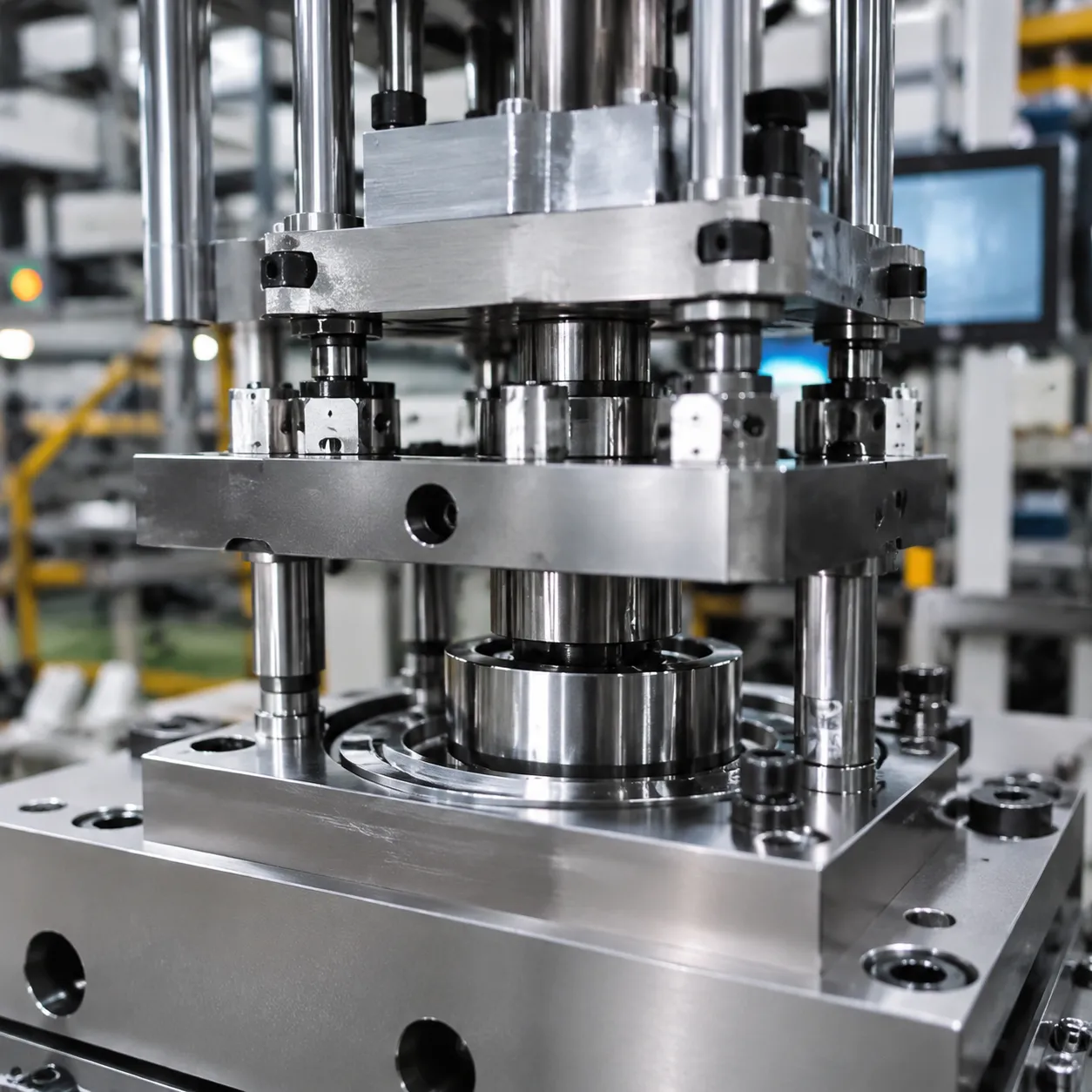
While 17-4PH precipitation-hardening stainless steel offers an impressive strength-to-weight ratio, treating high metal hardness as a universal fix for component wear is a common misconception in packaging machinery design.
How Hardness Can Influence Wear-Related Applications
Achieving higher 17-4PH hardness through heat treatment directly increases a component's yield strength and surface resistance to mechanical indentation. In fast-cycling packaging environments, this hardness profile changes how parts withstand friction and surface stress:
- Galling Prevention: Unlike 304 or 316 stainless steels, which frequently seize or gall under metal-on-metal sliding contact, heat-treated 17-4PH offers far superior resistance to adhesive wear.
- Deformation Resistance: High contact stresses from cams, rollers, or mechanical stops won't easily indent or flatten the surface.
- Edge Retention: In cutting, punching, or gripping applications, the elevated hardness preserves sharp features and tight tolerances longer.
The Role of Contact Load, Lubrication and Mating Surfaces
Hardness alone cannot eliminate abrasive wear or severe sliding friction. High contact loads combined with inadequate lubrication will degrade even hardened 17-4PH over time.
For continuous high-speed sliding applications, pairing 17-4PH with incompatible mating materials can accelerate wear on the softer component. When extreme sliding wear or high-friction environments threaten machine uptime, integrating specialized surface engineering—such as exploring pet food wear tracks and DLC-coated components—provides a far more effective wear barrier than relying on the raw alloy alone.
Why Material Selection Alone Does Not Determine Service Life
Switching to 17-4PH solves structural failure, bending, and galling, but maximizing the service life of high-load packaging machine wear parts requires a complete system perspective. Surface finish quality, precise mechanical alignment, operating lubrication, and mating material compatibility dictate long-term durability just as much as material choice. 17-4PH provides a robust foundation, but intelligent component design and proper heat treatment complete the equation.
How Heat Treatment Affects CNC Manufacturing Strategy
Thermal processing dictates every stage of our machining workflow for precipitation-hardening stainless steel. Heat treating 17-4PH alters its yield strength and machinability, requiring a structured approach to tool selection, sequence planning, and tolerance control.
Machining Before vs. After Precipitation Hardening
Roughing 17-4PH in Condition A (solution annealed) is far more efficient than cutting fully hardened material. In Condition A, the alloy presents lower initial hardness, extending cutting tool life and enabling higher material removal rates.
- Condition A (Pre-Heat Treatment): Ideal for heavy chip removal, deep pocketing, and complex geometries like 5-axis packaging machine cams. We leave 0.25 mm to 0.50 mm of stock allowance on critical dimensions.
- Hardened Condition (Post-Heat Treatment): Cutting 17-4PH after H900 or H1025 aging increases tool wear rapidly. We limit post-heat-treatment operations to light finishing cuts, thread cleaning, and precision bores.
Managing Dimensional Change Through the Process
Precipitation hardening causes predictable volumetric contraction during heat treatment. The alloy contracts uniformly as copper precipitates form in the matrix.
| Heat Treatment Condition | Approximate Hardness Range | Volumetric Shrinkage (Typical) |
|---|---|---|
| H900 | 40–47 HRC | ~0.0004 to 0.0006 in/in |
| H1025 | 35–42 HRC | ~0.0006 to 0.0008 in/in |
| H1150 | 28–37 HRC | ~0.0009 to 0.0011 in/in |
We program CAD/CAM offsets to compensate for this shrinkage before heat treating, preventing expensive rework or scrapped components.
Finish Machining and Grinding When Required
When part specifications demand tight tolerances below ±0.01 mm, heat treatment must occur before final sizing.
- Hard Turning & Hard Milling: High-rigidity CNC machine setups using coated carbide or CBN tooling handle post-aging finishing on hardened stock.
- Precision Grinding: Critical bearing journals and fit diameters on components like hardened conveyor drive shafts are ground after heat treatment to eliminate micro-distortion and achieve fine surface finishes.
Inspection After Heat Treatment
Quality control ensures heat treatment meets drawing specifications without compromising geometry:
- Hardness Testing: Benchtop Rockwell C (HRC) testing verifies that the material reached the specified heat-treat condition.
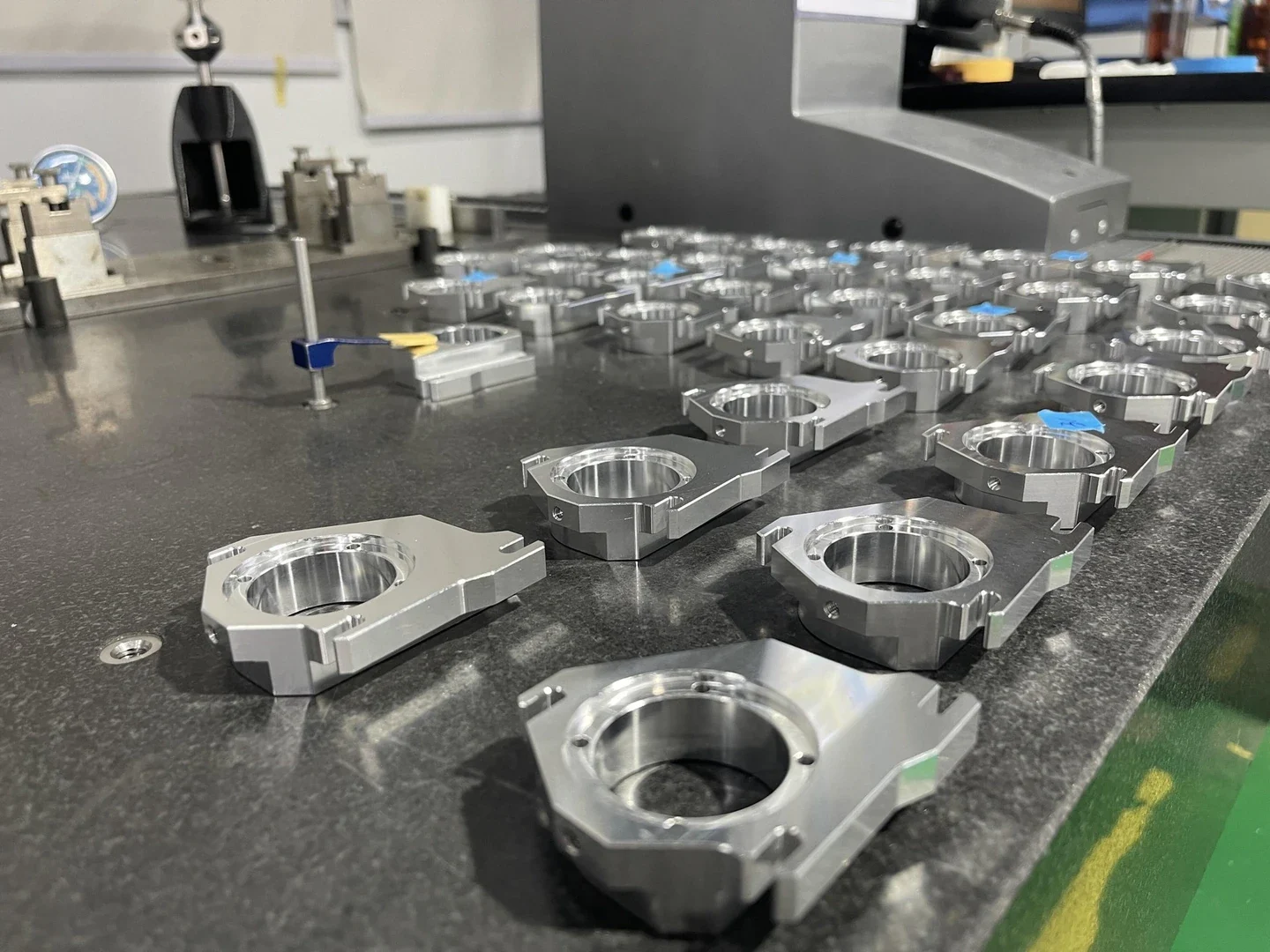
- Dimensional CMM Verification: Coordinate measuring machines check datum features, hole centers, and mating faces for thermal warping.
- Surface Integrity Checks: Liquid penetrant inspection verifies that high-load transition zones remain free of micro-cracks before final assembly.
When Should a Packaging Machine Part Be Specified in 17-4PH?
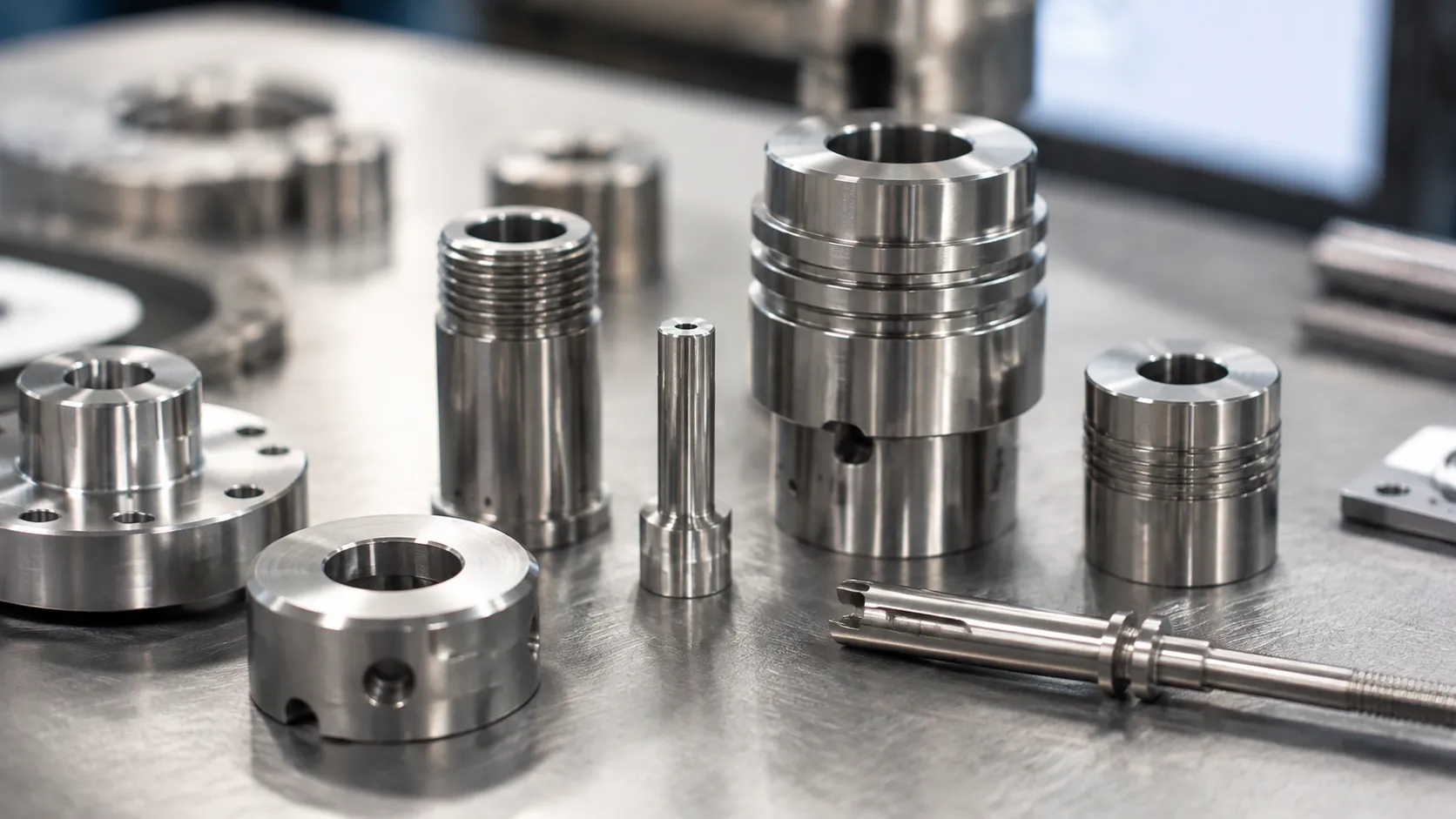
Specifying 17-4PH precipitation-hardening stainless steel makes economic and structural sense when standard austenitic grades fail to provide the mechanical endurance required by high-speed production lines.
Start With Load, Wear, Corrosion and Functional Requirements
We evaluate specific operating conditions before selecting UNS S17400. If a component faces high mechanical stress, cycle fatigue, or localized surface friction, standard stainless steels may bend, gall, or wear prematurely.
| Application Demand | Standard Grades (304/316L) | 17-4PH Stainless Steel |
|---|---|---|
| Yield Strength | Moderate (~200–300 MPa) | High to Very High (up to ~1100+ MPa) |
| Hardness Range | Low (~150–200 HB) | Adjustable (up to 40+ HRC depending on heat treatment) |
| Fatigue Resistance | Baseline | Superior under repeated cyclic loads |
| Corrosion Resistance | Excellent in washdown/acidic zones | Moderate to Good (comparable to 304 in most environments) |
When managing 17-4PH high-load machine parts, matching the material's mechanical capabilities directly to working loads prevents unexpected failures and reduces downtime.
Follow the OEM Drawing and Engineering Specification
When manufacturing replacement packaging machine wear parts, strictly adhering to the original engineering prints is non-negotiable. OEM drawings specify the exact precipitation hardening state—such as H900, H1025, or H1150—which directly defines the final tensile strength and impact toughness.
As part of our one-stop CNC sourcing for packaging machinery guide, we ensure that critical dimensions, geometric tolerances, and heat-treatment callouts are strictly maintained during precision 17-4PH CNC machining. Modifying material callouts without engineering sign-off risks altered tolerances or component brittle failure.
Avoid Over-Specifying 17-4PH Where 304 or 316L Is Sufficient
While 17-4PH delivers exceptional 17-4PH strength, specifying it for non-critical or low-stress components increases material and machining costs unnecessarily. Standard austenitic grades like 304 or 316L are easier to machine, cost less, and offer superior resistance in aggressively corrosive environments.
For instance, when evaluating 316L vs 304 for acidic beverage auger screws, corrosion resistance and washdown compatibility take priority over ultra-high yield strength. We recommend reserving 17-4PH exclusively for components that demand high fatigue strength, high 17-4PH hardness, or deformation resistance under load.
Replacing Existing 17-4PH Packaging Machine Parts
Replacing worn 17-4PH high-load machine parts requires matching the original material state and tolerances to prevent unexpected machine downtime. When we fabricate replacement components, we focus on heat-treatment verification, accurate datum reconstruction, and tight-tolerance manufacturing.
Identify the Original Material and Heat-Treatment Condition
Before producing a replacement part, we verify whether the original component is precipitation-hardening stainless steel (UNS S17400) and confirm its specific heat-treatment condition. Using the wrong condition drastically alters tensile strength and impact resistance.
| Condition | Hardness (HRC) | Primary Trait |
|---|---|---|
| Condition A | ~30 HRC | Solution-annealed base state; ideal for main roughing |
| H900 | 40–47 HRC | Highest tensile strength and surface hardness |
| H1025 | 35–42 HRC | Balanced strength, fatigue resistance, and toughness |
| H1150 | 28–37 HRC | Maximum toughness and impact resistance |
Check Critical Fits, Datums and Worn Features
Failed or worn parts usually exhibit localized dimensional loss. We inspect core reference features to restore original operating geometry:
- Shaft Journals & Bearing Seats: Check for surface fretting, scoring, or out-of-round condition.
- Keyways & Splines: Measure rotational play and wall deformation caused by peak torque.
- Mounting Datums: Verify plane flatness and hole centerlines relative to primary motion axes.
For high-duty drive shafts and linkages used in cartoning machines, precise datum recovery eliminates unwanted play and extends overall assembly service life.
Manufacturing Replacement Parts From OEM Drawings and CAD Models
We manufacture custom replacement parts directly from OEM drawings or accurate 3D CAD models to maintain mechanical performance.
- Two-Step CNC Strategy: We perform bulk 17-4PH CNC machining in Condition A to optimize tool life and cut complex features efficiently.
- Precipitation Hardening: Parts are heat-treated to the designated spec (such as H900 or H1025) to achieve final target hardness.
- Finish Grinding: Precision grinding is applied post-heat treatment on critical wear zones and mating interfaces—such as drive pins or crimping shafts for flow wrappers—to eliminate thermal distortion and guarantee exact fit.