zscncpack.com
SKU-1787279547

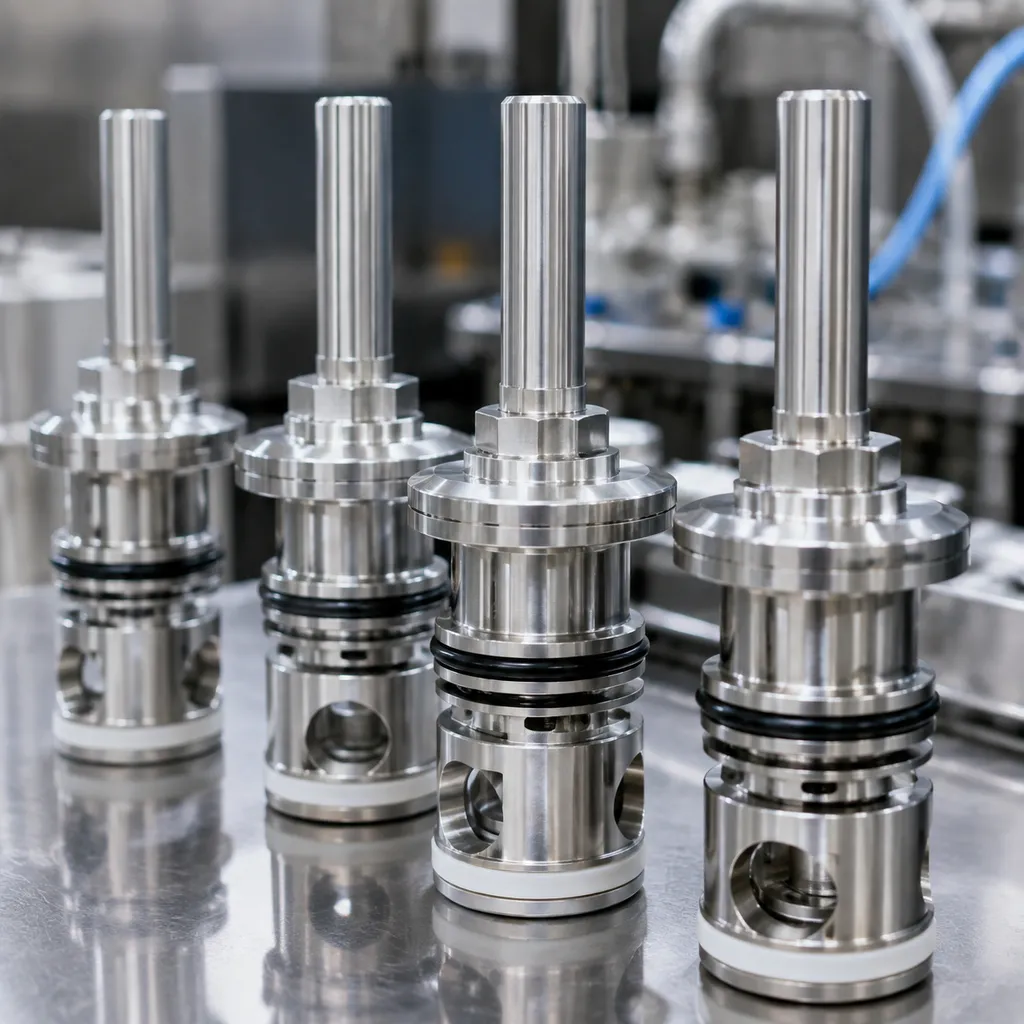
Custom 316L Piston Assemblies for Yogurt Filling Machines

316L Piston Assemblies for Yogurt Filling Machines custom made to OEM drawings with precise fit finish and corrosion resistance

Stock
In stock

Custom 316L Piston Assemblies for Yogurt Filling Machines

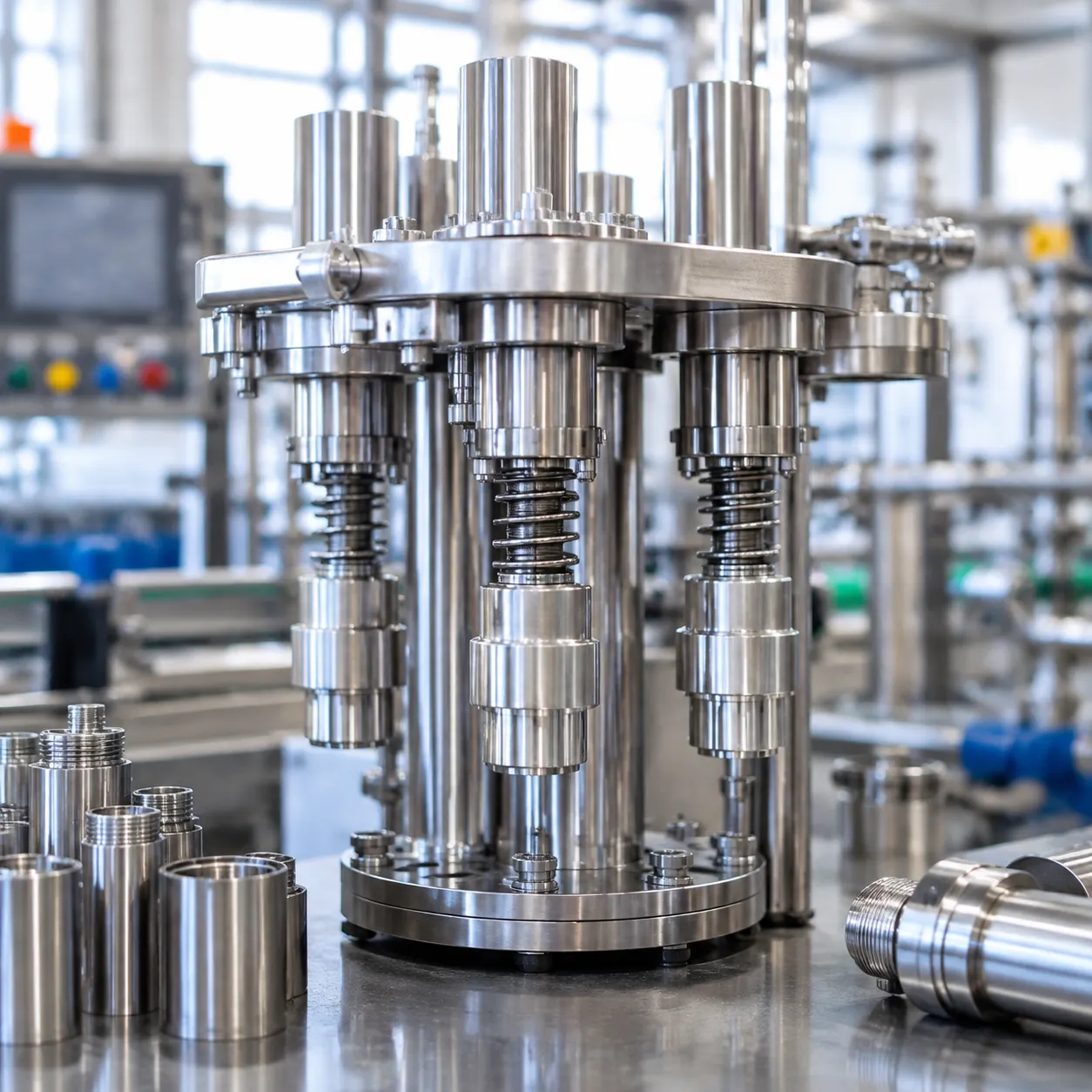
We manufacture high-precision 316L filling piston assemblies engineered specifically for automated yogurt filling lines and viscous dairy packaging systems. Our custom components deliver exceptional corrosion resistance, strict hygiene compliance, and long-term operating durability in high-cycle dairy processing environments.

Made to OEM Drawings and Existing Filler Specifications

We machine yogurt filling pistons strictly according to your original equipment drawings, CAD models, or physical sample parts. Every sanitary filling piston is produced to match your machine's precise dimensional tolerances, sealing interface specifications, and mechanical integration requirements.

Feature / ParameterStandard Capabilities
Primary MaterialCertified AISI 316L / DIN 1.4404 Stainless Steel
Machining ProcessMulti-axis CNC machined filling piston fabrication
Tolerance PrecisionCritical features held to ±0.005 mm
Surface FinishMechanical polish to Ra < 0.4 µm (Electropolishing available)
System CompatibilityLinear, rotary, and inline volumetric filler piston equipment

Replacement, Prototype and Production Components

Whether you require immediate replacement parts to eliminate factory downtime or production runs for new filling systems, we provide scalable manufacturing solutions tailored to your operational needs.

    • Replacement Pistons: Direct drop-in parts engineered to fit existing OEM dairy filling machine parts without equipment modification.
    • Prototype Units: R&D samples and custom geometry iterations for new viscous product filling components.
    • Production Runs: High-volume batch manufacturing maintaining strict repeatability, material certification, and batch traceability.

Why 316L Stainless Steel for Dairy Filling Pistons?

We manufacture 316L filling piston assemblies specifically engineered to withstand the demanding conditions of automated yogurt and dairy filling lines. Selecting low-carbon 316L grade stainless steel prevents premature wear and maintains strict hygienic compliance across continuous operating cycles.

Corrosion Resistance in Dairy Processing Environments

Yogurt and cultured dairy products contain active lactic acids that aggressively target standard metals. Over time, lower-grade stainless steels develop pitting and crevice corrosion under constant contact with acidic fats and salty whey.

    • Molybdenum Shielding: 316L contains 2–3% molybdenum, which dramatically boosts resistance to organic acid pitting and chloride corrosion.
    • Product Purity: Resists chemical reactions with dairy cultures, preventing metallic off-flavors and product contamination.
    • Structural Stability: Low carbon content eliminates intergranular corrosion, preserving structural strength during high-pressure volumetric dosing.

Material Considerations for Repeated Cleaning Cycles

Sanitary dairy plants rely on daily Clean-in-Place (CIP) and Steam-in-Place (SIP) routines. We craft our sanitary filling pistons to endure high-temperature chemical washdowns without surface degradation or seal land warping.

Washdown CycleOperating Environment316L Material Advantage
Caustic Wash (NaOH)High pH organic removalPrevents chemical pitting and surface dulling
Acid Rinse (HNO₃/H₃PO₄)Milkstone & scale removalMaintains passive oxide layer stability
High-Temp Steam (SIP)Thermal expansion cyclingRetains exact cylinder seal clearances

Using robust 316L dairy filling machine parts alongside components like custom 316L CIP spray balls for dairy tanks ensures long-term system integrity across your entire sanitary processing loop.

Surface Finish Requirements for Product-Contact Components

Viscous foods stick to surface micro-roughness, creating sanitization bottlenecks. We machine every 316L filling piston to precise surface finish standards, eliminating microscopic harboring sites for bacteria.

    • Precision Smoothness: Machined and polished to Ra ≤ 0.4 µm (16 µin) on all product-contact areas to stop viscous buildup.
    • Electropolishing: Optional passivation removes free iron from the surface, creating an ultra-smooth, corrosion-resistant chromium oxide layer.
    • Contoured Geometry: Smooth radii on transition steps ensure maximum CIP fluid contact and fast inline flush times.

Critical Features We Machine on Filling Piston Assemblies

When we build custom 316L filling piston assemblies for dairy dosing systems, precision machining is non-negotiable. Viscous products like yogurt require tight tolerances to prevent blow-by, extend seal life, and maintain strict volumetric accuracy.

Piston Outside Diameter and Cylinder Fit

We hold tight diameter tolerances on every volumetric filler piston to guarantee an exact fit inside your metering cylinder.

    • Micron-Level Tolerances: We machine the outer diameter (OD) within tight limits to balance sealing efficiency with frictionless movement.
    • Anti-Galling Design: Smooth contact surfaces prevent scoring on expensive cylinder bores during high-speed production runs.
    • Consistent Dosing: Uniform clearance prevents product slip, delivering repeatable shot volumes on every stroke.

Seal Grooves, Seal Lands and Retaining Features

Sanitary sealing relies entirely on groove geometry. We precision-turn seal pockets to eliminate food traps and prevent O-ring nibbling under high pressure.

    • Burr-Free Finishes: Smooth transitions prevent seal degradation during repeated maintenance and washdown cycles.
    • Optimized Compression: Accurate land depths keep elastomeric and PTFE seals firmly locked without over-compressing.
    • Sanitary Radii: We incorporate smooth inner radii across specialized seal lands and retaining features to ensure total clean-in-place (CIP) fluid coverage.

Shaft, Thread and Connection Interfaces

Our CNC machined filling piston shafts feature rugged connection points engineered for quick teardowns and continuous mechanical cycling.

    • Precision Threads: Mating threads are clean and smooth to prevent galling during disassembly.
    • Drive Linkage Alignment: Custom wrench flats, pin holes, and quick-disconnect hubs align effortlessly with filler drive actuators.
    • Stress Reduction: Generous shaft fillets absorb repetitive axial loading without fatigue or flexing.

Concentricity, Runout and Alignment Features

Misalignment causes premature seal failure and uneven wall wear. We maintain strict coaxiality across the entire piston assembly to keep your dosing equipment running without interruption.

Critical FeatureMachining FocusOperational Benefit
ConcentricityHeld within tight total indicator reading (TIR)Prevents uneven seal pressure and cylinder wall scoring
Shaft RunoutPrecision-ground to minimal deviationEliminates side-loading on drive linkage and glands
Face PerpendicularityTrue 90° reference facesEnsures uniform force distribution during high-viscosity strokes

Piston and Seal Geometry for Viscous Product Filling

Dosing heavy, non-Newtonian liquids like cultured dairy requires exact mechanical geometry. Standard tolerances do not cut it when handling thick fluids under pressure; seal fit and wall clearances directly impact fill accuracy and sanitation.

Why Piston-to-Cylinder Clearance Matters

Tight wall clearance balance is critical when running a yogurt filling piston:

    • Too tight: Causes excessive friction, thermal expansion binding, and premature cylinder wall wear.
    • Too loose: Triggers product bypass, blow-by around seal lands, and severe dosage inaccuracies.

We machine custom 316L filling piston assemblies to precise micro-inch clearances, maintaining consistent backpressure and repeatable volumetric dosing stroke after stroke.

Controlling Seal Groove Dimensions

Seals depend entirely on the geometry of the groove holding them. We strictly control groove depth, width, and root radii to ensure correct elastomeric compression:

FeatureTarget ControlImpact on Operation
Groove Depth±0.0005 in (±0.012 mm)Prevents over-compression or seal play
Groove WidthPrecise spec matchStops seal twisting and dynamic roll
Corner RadiiMicro-radiused rootsEliminates stress concentration points

Edge Finishing Around Seal Contact Areas

Sharp burrs or rigid corners cut soft elastomeric seals during installation or high-speed stroke cycles:

    • Micro-chamfering on all entry angles prevents seal nicking during assembly.
    • Polished contact surfaces ensure smooth seal transitions across port openings.
    • Deburred seal lands extend the working lifespan of every sanitary filling piston.

Machining Components for Customer-Specified Seal Designs

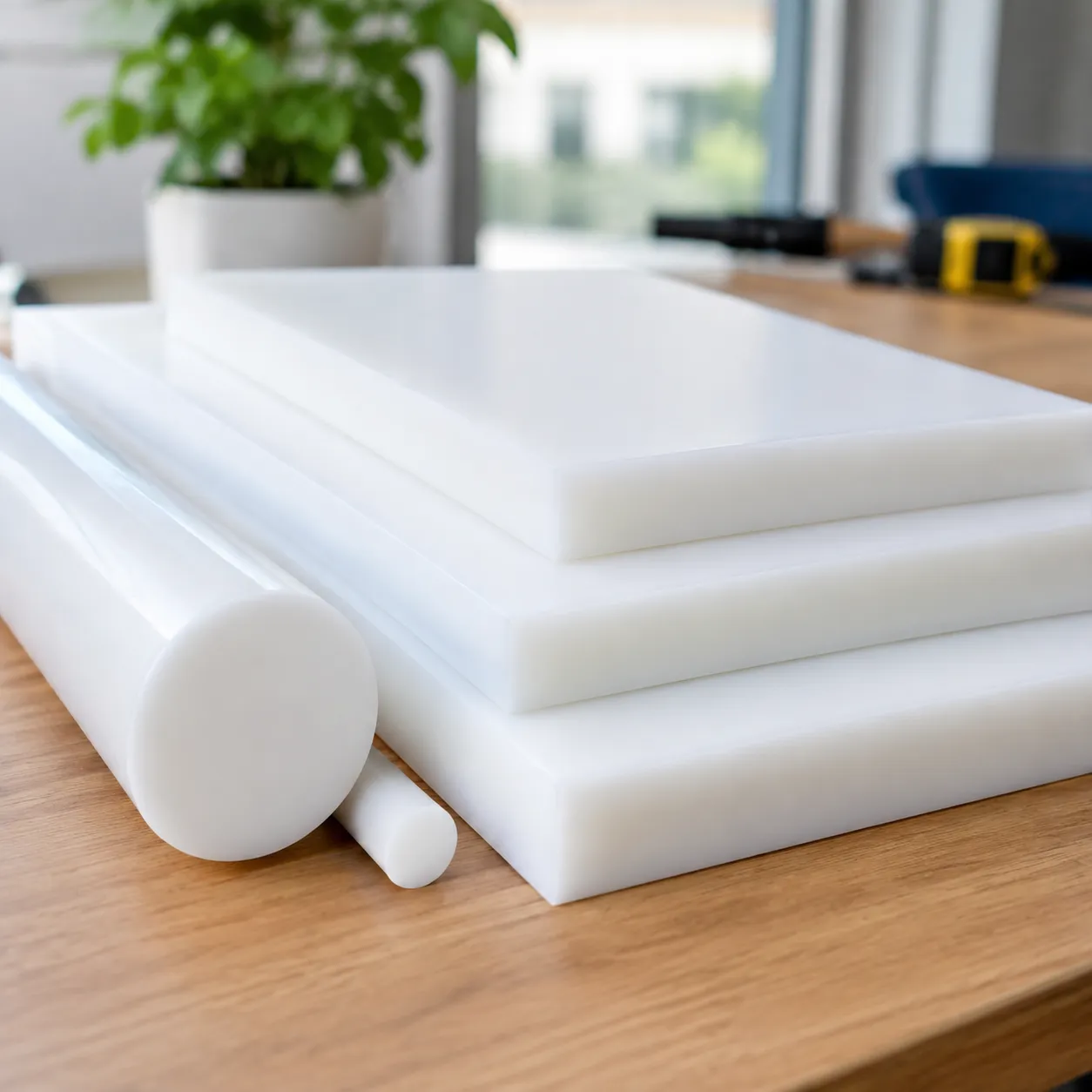
Whether your filling heads utilize food-grade O-rings, quad-rings, energized PTFE lip seals, or custom sanitary profiles, we manufacture each volumetric filler piston to match your exact OEM drawings. Integrating robust piston filler components alongside downstream line parts like POM bottle neck guides for filling lines keeps your entire production running without unexpected downtime. We craft high-performance viscous product filling components built for continuous, rigorous washdown cycles.

CNC Manufacturing of 316L Filling Piston Components

316L Piston Assemblies for Yogurt Filling Machines

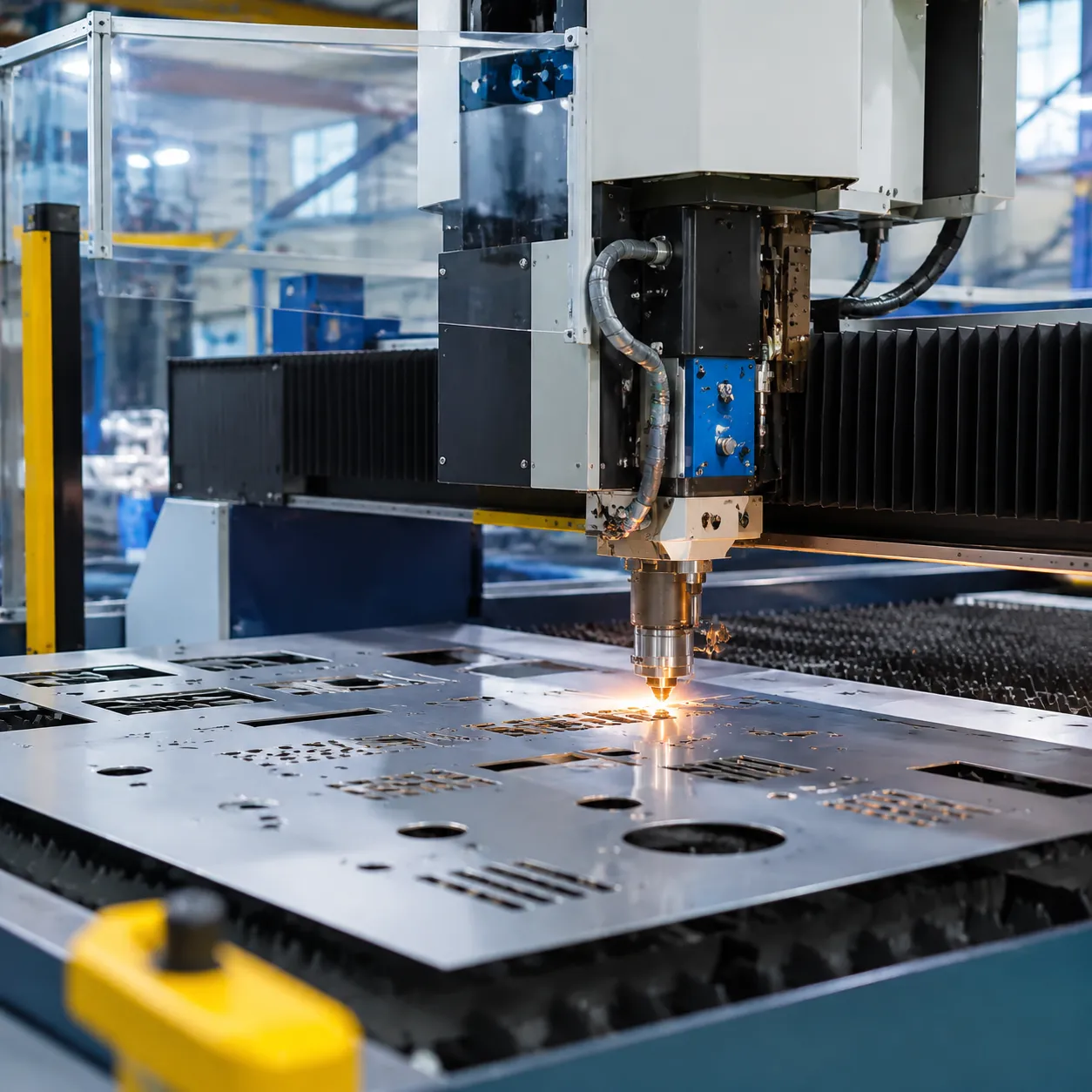
We engineer 316L piston assemblies for yogurt filling machines using multi-axis CNC machining technology. Processing austenitic 316L stainless steel requires controlled cutting strategies to prevent work hardening while maintaining tight tolerances across all critical sealing faces, drive shafts, and mounting features.

Machining ProcessTargeted FeaturesQuality & Finish Standard
CNC TurningMain piston body, shaft OD, sealing facesTight concentricity & diameter tolerances
CNC MillingSeal grooves, drive flats, locking portsBurr-free edges, precise groove depth
Cylindrical GrindingHigh-precision piston outer diametersUltra-smooth finish (Ra < 0.4 µm)
Post-ProcessingCitric/Nitric passivation, electropolishingASTM A967 compliant, enhanced corrosion resistance

Precision Turning of Piston and Shaft Features

Our CNC turning centers produce core cylindrical features in single-setup operations to guarantee perfect alignment. We maintain rigid tooling setups to turn extended shafts and piston heads without taper or chatter, ensuring your volumetric filler piston maintains smooth, repeatable strokes inside the cylinder.

Milling Grooves, Flats and Connection Features

We machine exact seal lands, retaining grooves, and drive connection threads tailored to your existing machine specs. For intricate sanitary geometries with multi-angled ports, knowing when to choose 5-axis CNC for food machinery components helps ensure full geometric precision and seamless assembly fit.

Grinding and Finishing When Specified

When close-tolerance fitment is mandatory, we utilize precision cylindrical grinding on the piston outer diameter. This process removes microscopic tool marks, preventing premature O-ring wear and maintaining reliable seal integrity in yogurt filling machine parts.

Passivation or Electropolishing When Required

Every CNC machined filling piston undergoes chemical passivation to remove free iron contaminants from the surface. For high-hygiene dairy operations, we offer electropolishing to produce an ultra-clean finish that limits product adhesion and withstands daily CIP chemical cycles.

Inspection of Custom Filling Pistons

316L Yogurt Filling Machine Piston Inspection

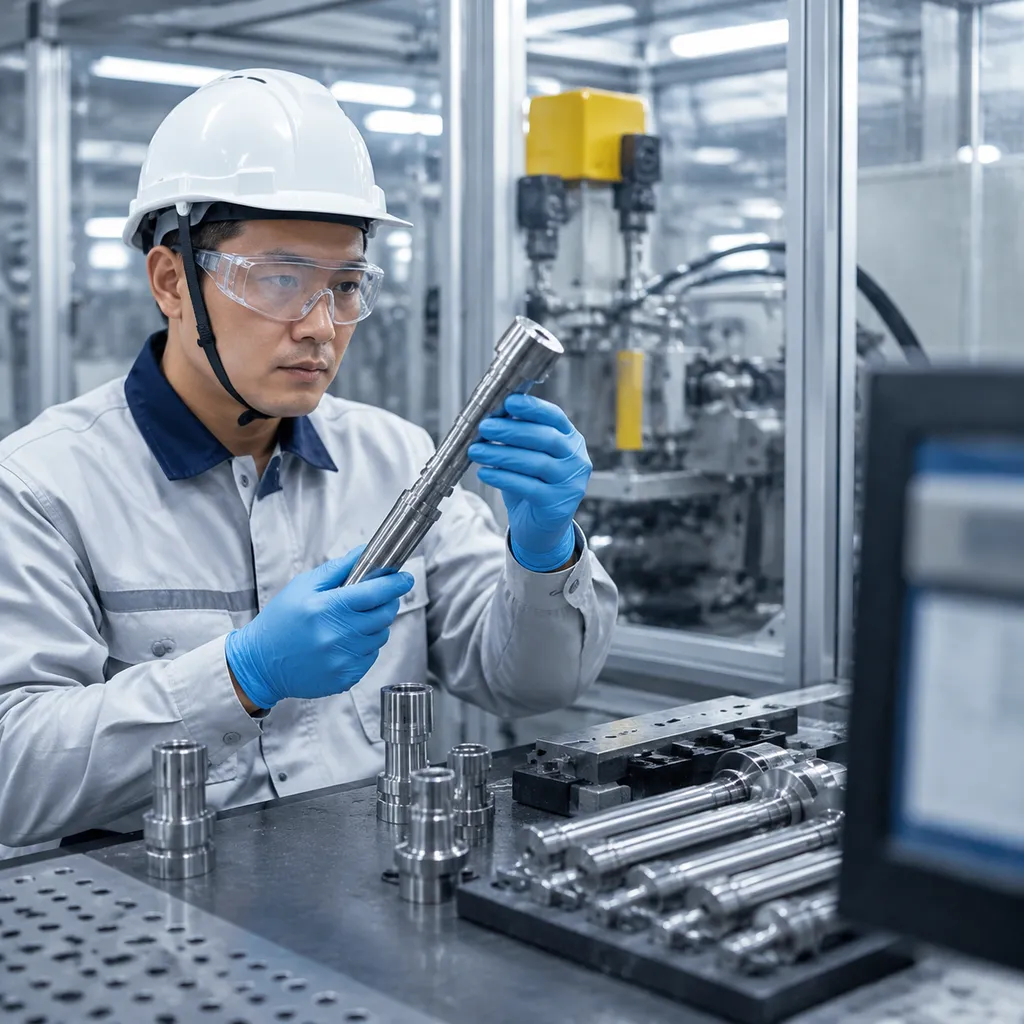
Quality control is critical for sanitary 316L filling piston assemblies. We run every component through dimensional and metallurgical checks to guarantee leak-free dosing and flawless machine operation.

Piston Diameter and Cylindricity Inspection

    • Precision sizing: We verify the outer diameter (OD) and cylindricity using calibrated micro-inch CMMs and precision air gages.
    • Eliminate bypass: Precise geometry ensures uniform clearance against the metering cylinder walls, stopping product bypass on your yogurt filling machine parts.

Seal Groove and Critical Feature Measurement

    • Profile verification: Groove depth, width, and seal land radiuses are checked under optical comparators and digital depth gages.
    • Proper seal compression: Accurate groove specs prevent seal twisting, pinching, or premature wear in demanding viscous product filling components.

Runout and Concentricity Verification

    • TIR inspection: We inspect shaft-to-piston head alignment between centers to confirm minimal Total Indicator Runout (TIR).
    • Smooth stroke action: Concentric components eliminate shaft binding, lower drive motor strain, and increase the lifespan of your volumetric filler piston.

Surface Finish and Material Documentation

    • Sanitary profiling: Profilometers verify surface roughness ($Ra$) across product-contact zones, utilizing optimized surface finishing processes to reach finishes down to Ra 0.4 µm (16 µin).
    • Traceable quality: Each order ships with 3.1 Material Test Reports (MTRs), CMM dimensional reports, and passivation certificates to satisfy FDA and 3-A dairy compliance standards.

Applications in Dairy and Viscous Product Filling Equipment

316L Piston Assembly Yogurt Filling Machine

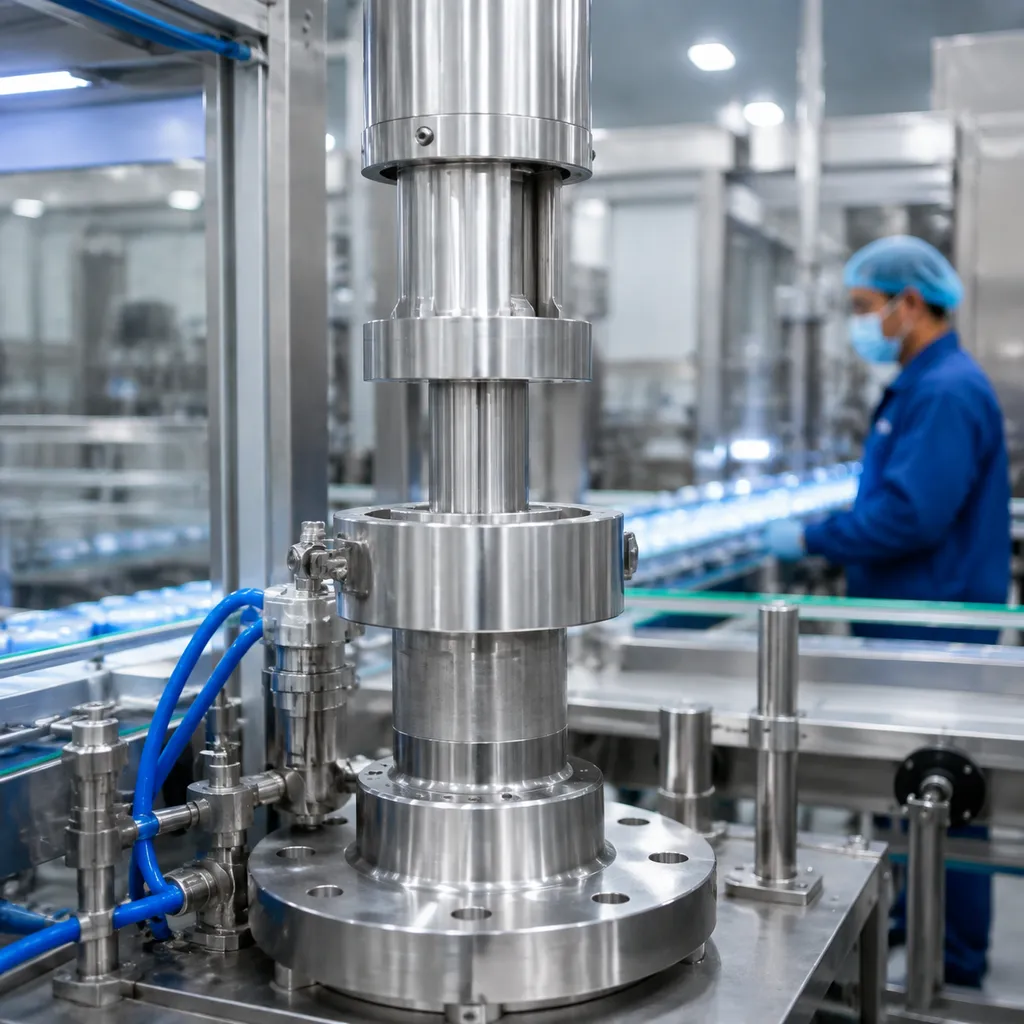
We manufacture high-precision 316L filling piston assemblies built to perform consistently across demanding food and dairy packaging environments. Whether you operate high-speed rotary lines or linear dosing systems, our components handle heavy, abrasive, or sensitive liquid formulations without sacrificing fill accuracy.

Yogurt Filling Machines

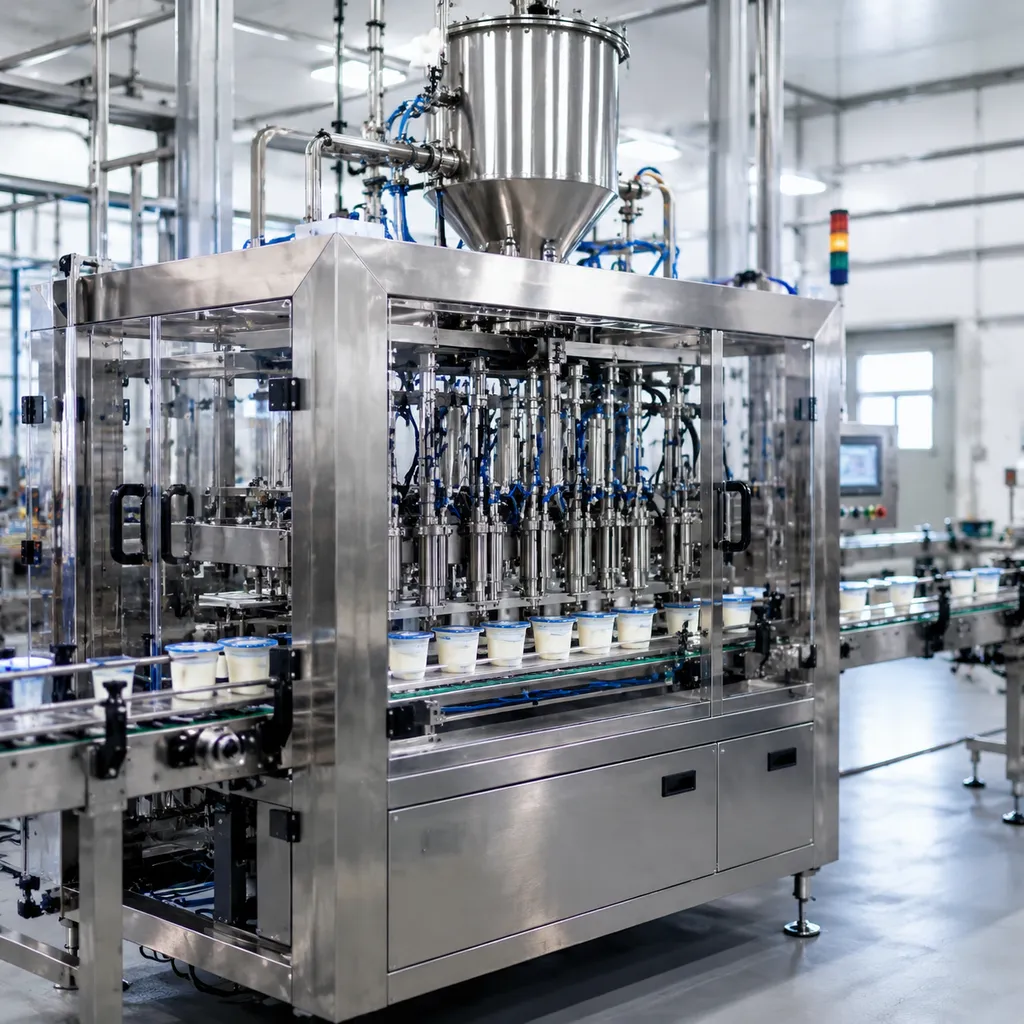
Yogurt processing requires exact volumetric control to prevent product shearing and maintain the integrity of active cultures or fruit preparations. Our yogurt filling piston designs feature smooth surface finishes and tight cylinder tolerances to deliver clean cut-offs and eliminate drippage. We produce precision yogurt filling machine parts designed for seamless, drop-in replacement on your production line.

Cream and Dairy Product Fillers

Heavy creams, sour cream, and soft cheese spreads put heavy demands on piston filler components, requiring materials that withstand daily CIP (Clean-in-Place) washdowns and organic acid exposure.

    • Acid Resistance: Premium 316L stainless steel prevents surface pitting from lactic acids and caustic cleaning chemical cycles.
    • Accurate Metering: Tight dimensional control ensures repeatable displacement in every volumetric filler piston stroke.
    • Hygienic Profile: Optimized seal lands prevent seal roll-over and stop bacteria harborage before it starts.

Other Viscous Food Filling Equipment

Our custom filling piston assemblies are widely used beyond dairy applications for high-viscosity food and personal care products:

    • Food Processing: Jams, fruit pastes, peanut butter, condiments, and heavy sauces.
    • Personal Care & Pharma: Creams, ointments, lotions, and cosmetic gels.

Equipping your production lines with rugged filling machine parts lowers maintenance overhead, reduces downtime, and keeps your facility running at peak efficiency.

Ordering Custom 316L Filling Pistons from ZSCNC

What to Include in Your RFQ

We make ordering custom 316L piston assemblies for yogurt filling machines straightforward and fast. Providing complete technical details upfront allows us to evaluate tolerances, optimize tool paths, and deliver an accurate quote quickly.

    • 2D & 3D Drawings: STEP, IGES, or detailed PDF files showing critical dimensional tolerances.
    • Batch Size: Specify whether you need quick-turn prototypes, emergency line replacements, or scheduled batch runs.
    • Target Timeline: Include required delivery dates or production outage windows.

Drawing, Fit, Seal, Material and Surface Requirements

Every volumetric dairy filler demands exact fits to prevent seal bypass and premature wear. Specifying your exact operational demands ensures our custom-machined 316L stainless packaging parts drop directly into your existing machine housing without modification.

Requirement CategoryEssential Details to Provide
Material Verification316L grade confirmation, mill test reports (MTRs), or specific material origins
Fits & TolerancesPiston OD clearance, cylinder bore specs, concentricity, and shaft thread details
Seal ConfigurationGroove dimensions, lip seal profile, O-ring series, or custom engineered PTFE seats
Surface FinishMechanical polishing (Ra values), passivation, or electropolishing specifications

Prototype, Replacement and Batch Production

Whether keeping an operational line running or scaling a new filler design, our facility accommodates flexible production scales:

    • Prototypes & Line Replacements: Rapid CNC machining for worn out components or custom test pistons to minimize equipment downtime.
    • High-Volume Production: Repeatable precision machining for complete OEM assemblies, supported by strict CMM inspection reports and full material traceability.
Scroll to Top