Overview
What Are POM Bottle Neck Guides for Filling Lines?
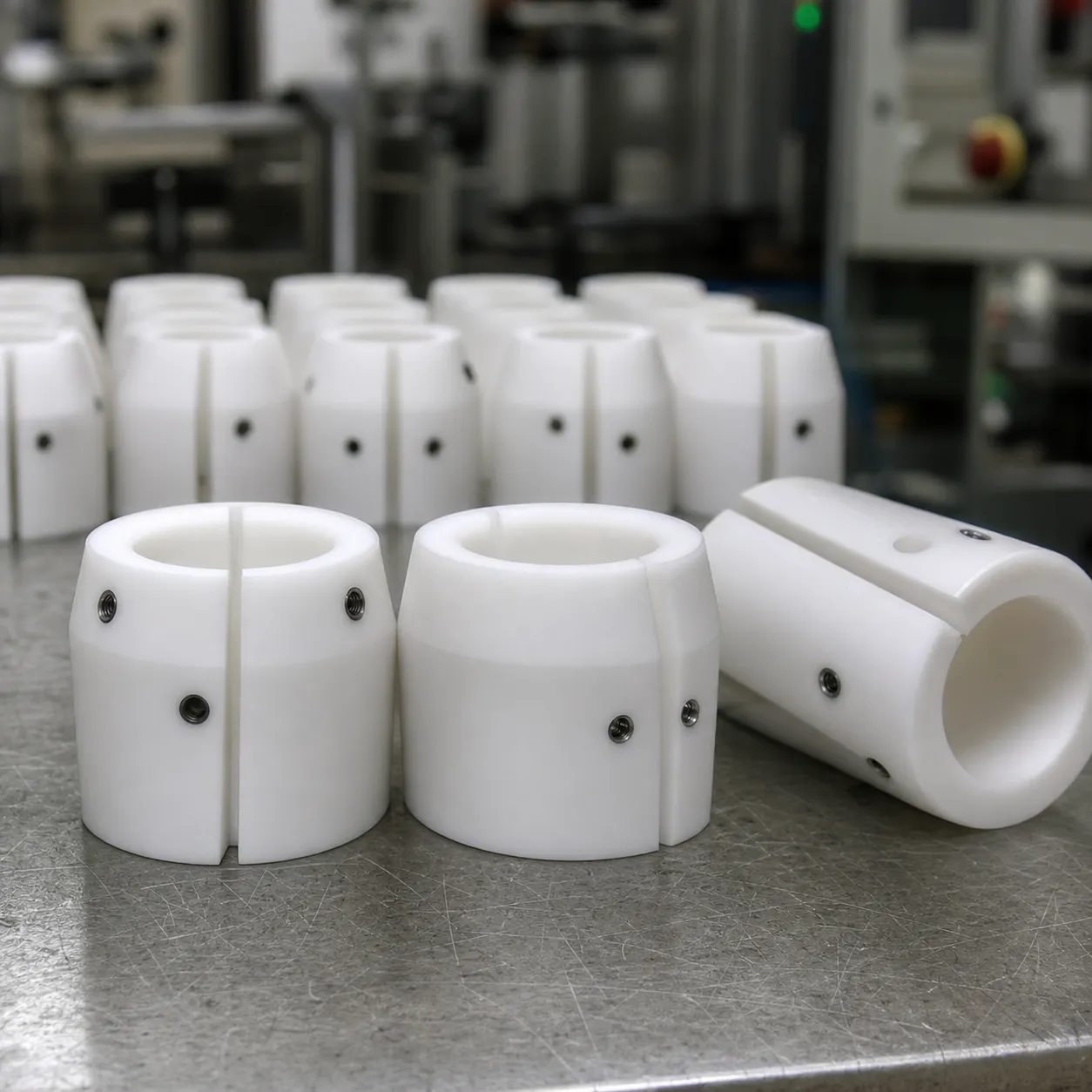
ZSCNC machines custom POM bottle neck guides, guide segments and related container-handling parts to approved OEM drawings. Our Wuxi machining base focuses on CNC milling and turning. Send the bottle profile, guide drawing, material grade and quantities for a part-specific batch quotation.
Definition and Role in Bottling Conveyor Systems
Neck guides locate or support bottles at a defined neck or support-ring surface during conveying and transfer. The drawing must identify whether a component carries the bottle load, provides lateral guidance or forms part of a transfer assembly. The contact profile and clearance depend on the container and equipment design.
Provide the machine station, straight or curved path, entry and exit interfaces, and mounting arrangement. Installed tracking, timing and handling performance require validation in the complete line.
Material Grade and Documentation
Specify the approved POM grade, including copolymer or homopolymer, colour and any additives. A generic description such as “white acetal” is insufficient when a particular material specification or food-contact document is required. Request supplier documents and traceability before quotation so availability can be checked for the selected stock. A material name alone does not establish regulatory compliance.
Key Benefits of Using POM Material for Bottle Neck Guides
Sliding Contact and Wear Requirements
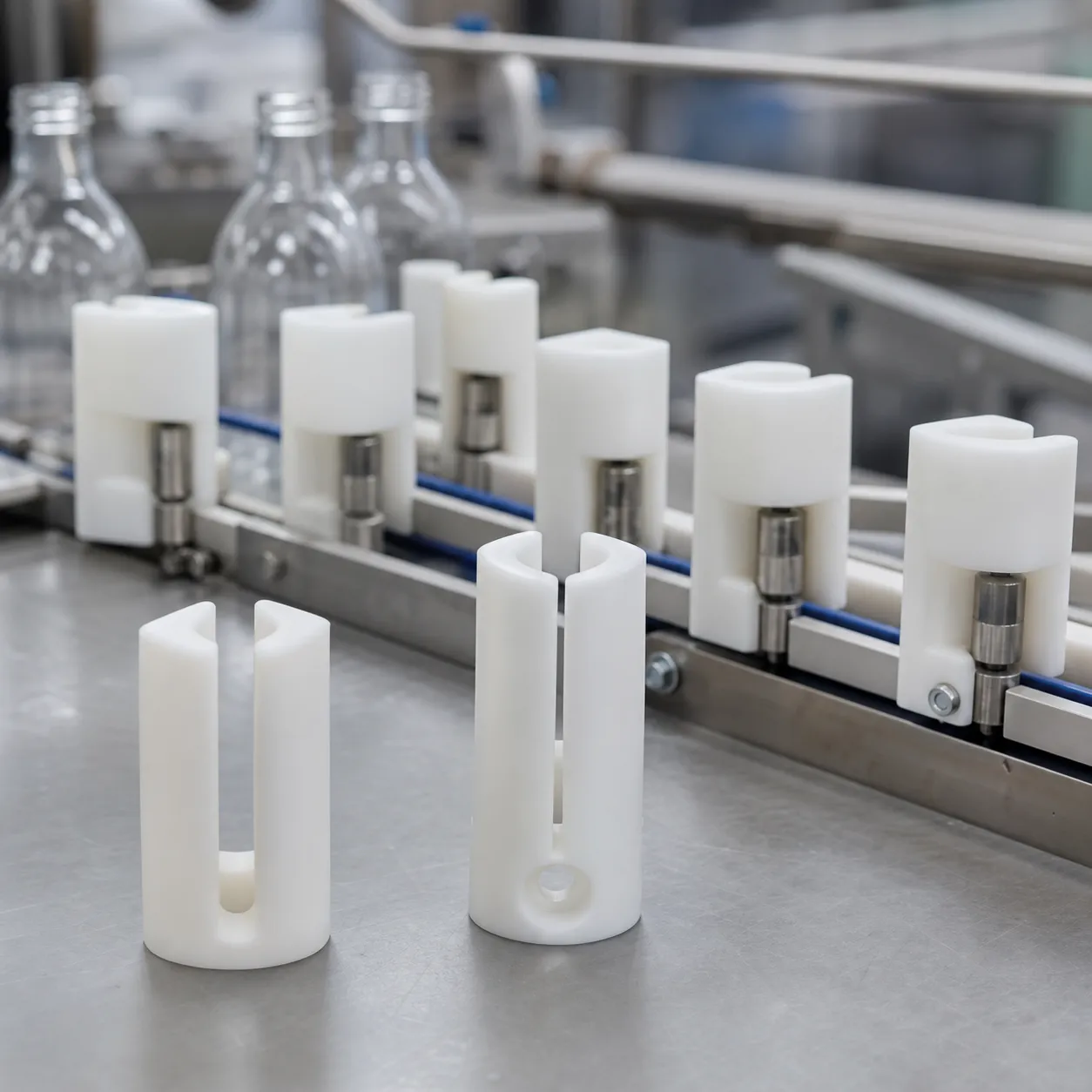
POM is considered for guide components because suitable grades offer useful wear properties, machinability and dimensional stability. Performance depends on the selected grade, bottle surface, load, speed, contamination and cleaning exposure. Specify the working contact surfaces and acceptance criteria rather than assume a friction coefficient or service life for every application.
For related material-selection topics, see UHMW-PE, POM and PEEK for food conveyors. The equipment designer approves the grade for the operating conditions.
Alignment, Clearance and Bottle Scuffing
Define the guide profile relative to its mounting datums. Include the container dimensional range, required running clearance, transition geometry and edge breaks. A worn sample may show contact areas but cannot establish the original nominal profile by itself.
| Feature to specify | Information for machining and inspection |
|---|---|
| Neck and support-ring contact | Profile, contact height, dimensional range and clearance |
| Guide path and transitions | Curve geometry, entry/exit interfaces and mating segments |
| Mounting interfaces | Hole positions, slots, locating features and datum references |
| Bottle-contact edges | Edge breaks, surface-texture requirements and burr criteria |
| Paired guide components | Left/right identification, installed gap and quantities per set |
Achievable tolerances and measurement methods are reviewed for the material and geometry. Critical tolerances must be specified and confirmed for the drawing. Machining to the drawing supports the approved design; line trials establish bottle tracking, scuffing, noise and jam behaviour.
Cleaning Conditions and Application Suitability
Provide the cleaning agent, concentration, temperature, exposure duration and frequency, including any hot-water or steam treatment. Confirm compatibility against the specific material supplier's guidance and the equipment owner's sanitation procedure. POM is not automatically suitable for every aggressive cleaning cycle.
Identify any direct food-contact area and the documents required for the destination market. Material documentation, machined surface condition and equipment-level hygiene validation are separate requirements to agree before production.
Common Types and Custom Designs of POM Neck Guides
Adjustable Neck Guide Rails
For adjustable rails, show slot dimensions, fastener interfaces, supported length and the intended adjustment range. Provide the installed relationship between opposing guides. See related UHMW-PE guide rails and wear strips for another drawing-based component category.
Starwheels and Infeed Guide Segments
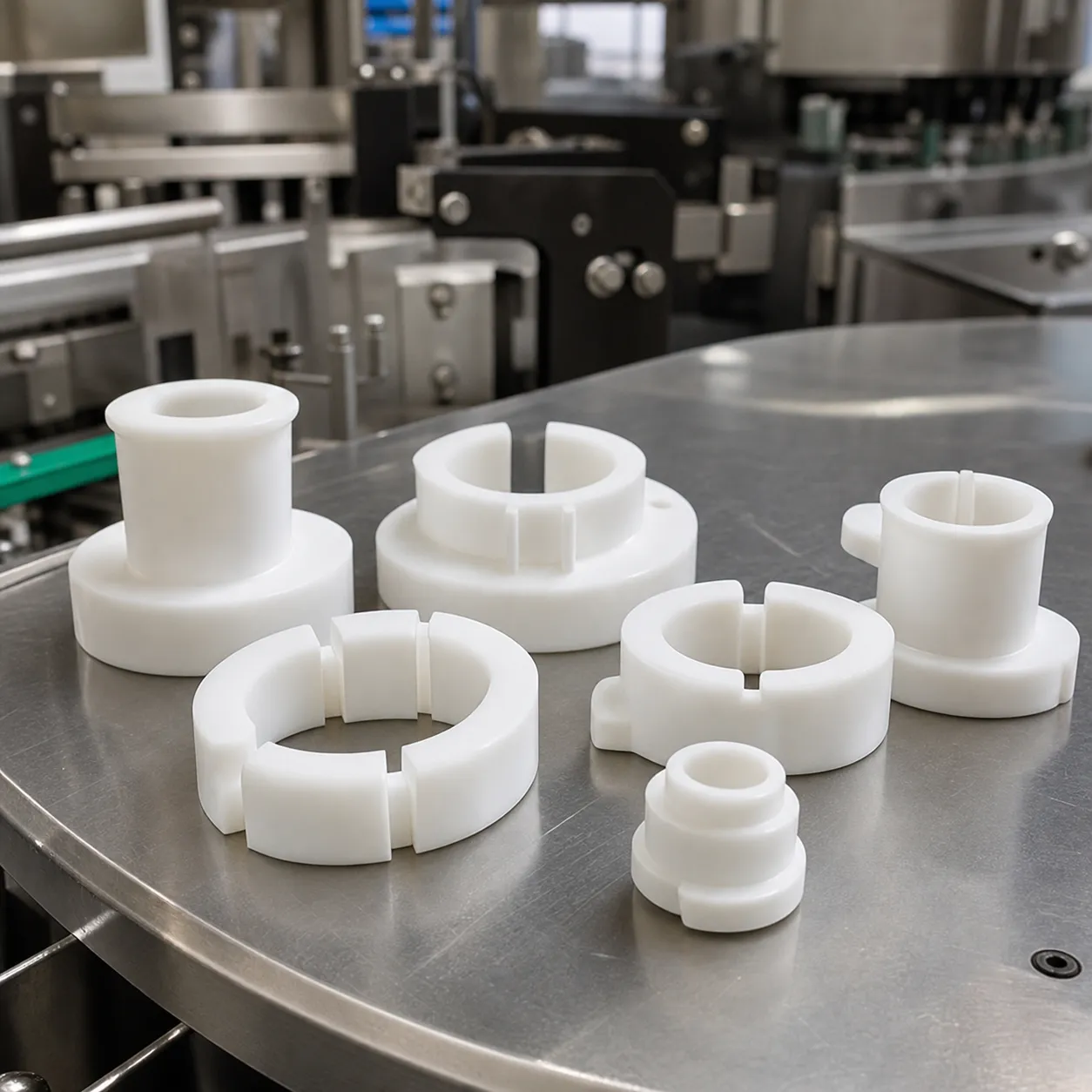
For pocket or transfer components, include the bottle envelope, pocket profile, pitch, mounting axis and locating details. Specify the entry and exit relationship to adjoining parts. Tool access and setup planning are reviewed before acceptance. Our base has no in-house five-axis, EDM or wire-cutting equipment; any additional process requires separate confirmation.
Neck-Hanging Guides for PET Lines
Where the bottle hangs from its support ring, identify the load-bearing contact surface, ring geometry, bottle variation and guide spacing. Supply the OEM's required transitions and assembly clearances. Speed and bottle stability are application-validation inputs, not a machining performance guarantee.
Applications Across Bottling and Packaging Industries
Drawing-based RFQs may cover beverage and edible-oil filling lines, health-product packaging, cosmetics or household-product bottling. Each application needs its own container geometry, contact conditions, cleaning information and acceptance requirements. No pharmaceutical, food-contact or chemical compatibility certification is implied by this application list.
Explore related beverage equipment components, packaging machinery components and conveyor parts.
How to Select the Right POM Bottle Neck Guides
Container Dimensions and Neck Finish
Send the bottle drawing with its revision and dimensional variation, not only the nominal bottle volume. Identify the neck finish, support ring, contact height and relevant ovality or mould variation. Samples and dimensioned photos can support review; reconstructed dimensions need customer approval before manufacture.
Drawing Revision and Replacement Fit
For replacements, provide the current approved guide drawing and mating interfaces. Flag changed bottle formats, machine modifications and features worn beyond their original shape. Agree any design changes before machining. ZSCNC's role is to manufacture the confirmed component, while the equipment owner approves the installed fit and operation.
Samples, Batch Releases and Repeat Orders
List each part number and revision, sample quantity, quantity per production release and estimated annual demand. Identify left/right versions, matched pairs and quantities per complete format set. State whether a sample must be approved before the batch is released and which characteristics need recorded inspection.
Agree set identification, packaging and revision control for reorders. Material substitutions and changes to geometry or finish require customer approval. Minimum quantity, price and lead time are confirmed for the specific part and order.
Maintenance and Care for POM Bottling Components
Wear and Alignment Checks
Follow the equipment owner's maintenance and safe-isolation procedures. Inspect contact surfaces for grooves, cracks or deformation, and check mounting security, guide position and bottle marks. Compare critical dimensions with the approved drawing and the OEM's wear limits.
Cleaning and Replacement Decisions
Use the validated sanitation procedure for the selected material and assembly. Avoid abrasive practices that damage contact surfaces. Cracks, excessive wear, damaged mounts or repeated handling problems call for an equipment-level review; replacing a guide alone may not resolve timing or alignment faults.
Request a Batch Quote for POM Bottle Neck Guides
- Approved 2D drawing and 3D model with part number and revision.
- Bottle neck/support-ring drawing and relevant dimensional variation.
- Machine station, mounting datums, mating parts and guide arrangement.
- POM grade, colour, contact conditions and required material documents.
- Critical dimensions, surface/edge criteria and inspection-record requirements.
- Sample quantity, release quantity, annual demand and parts per complete set.
- Cleaning conditions, delivery destination and required date.
Upload POM neck-guide drawings for a batch quotation. The current upload form accepts PDF, STEP and DWG up to 5 MB per file. For other formats or larger files, email info@zscncpack.com to agree a transfer method. Feasibility, inspection scope, price and schedule follow technical review.
Material Reference
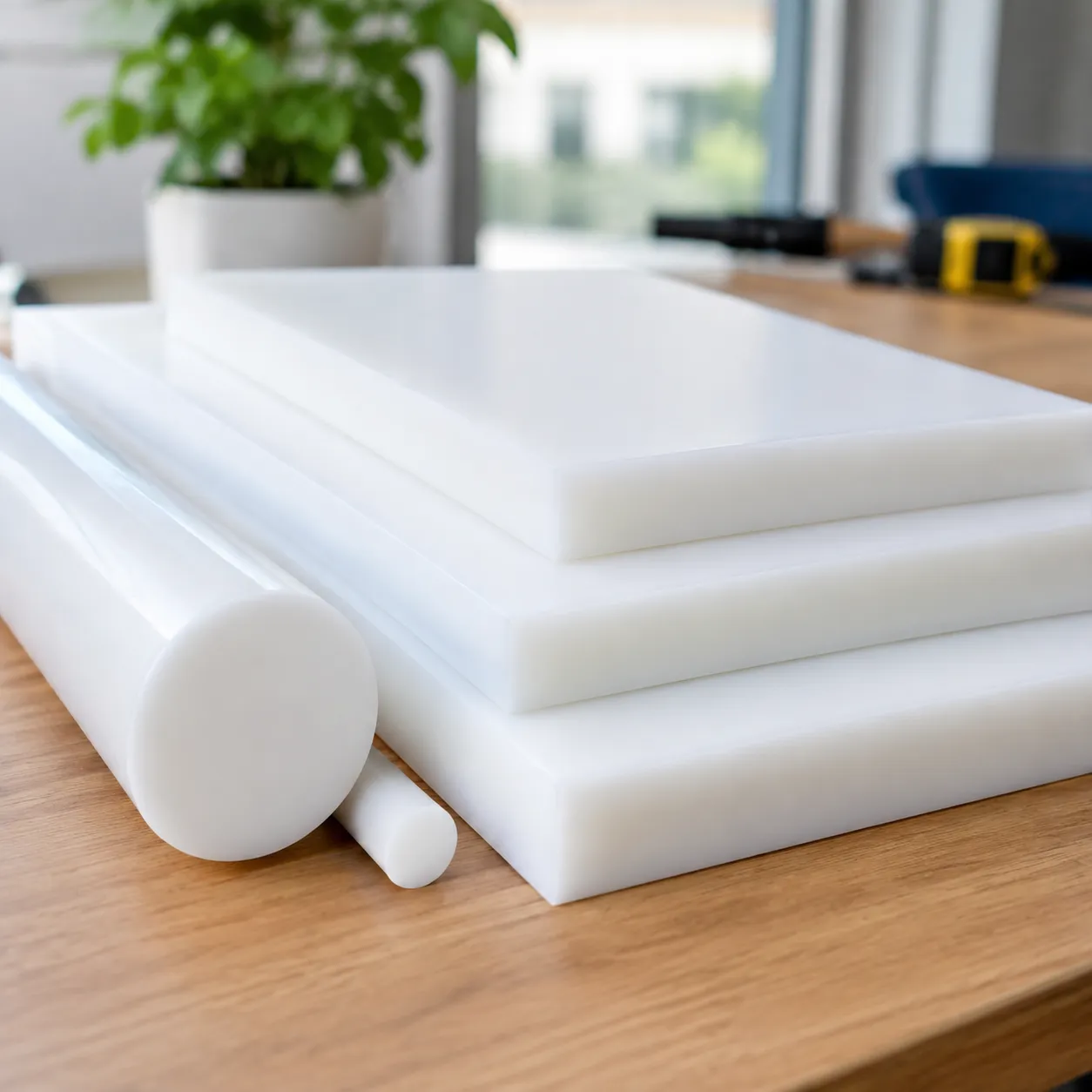
Ensinger TECAFORM AH natural: an example of unfilled POM-C stock. This reference describes one supplier grade; the order must confirm the actual stock, applicable data and requested documents. It does not imply that every ZSCNC order uses this brand.