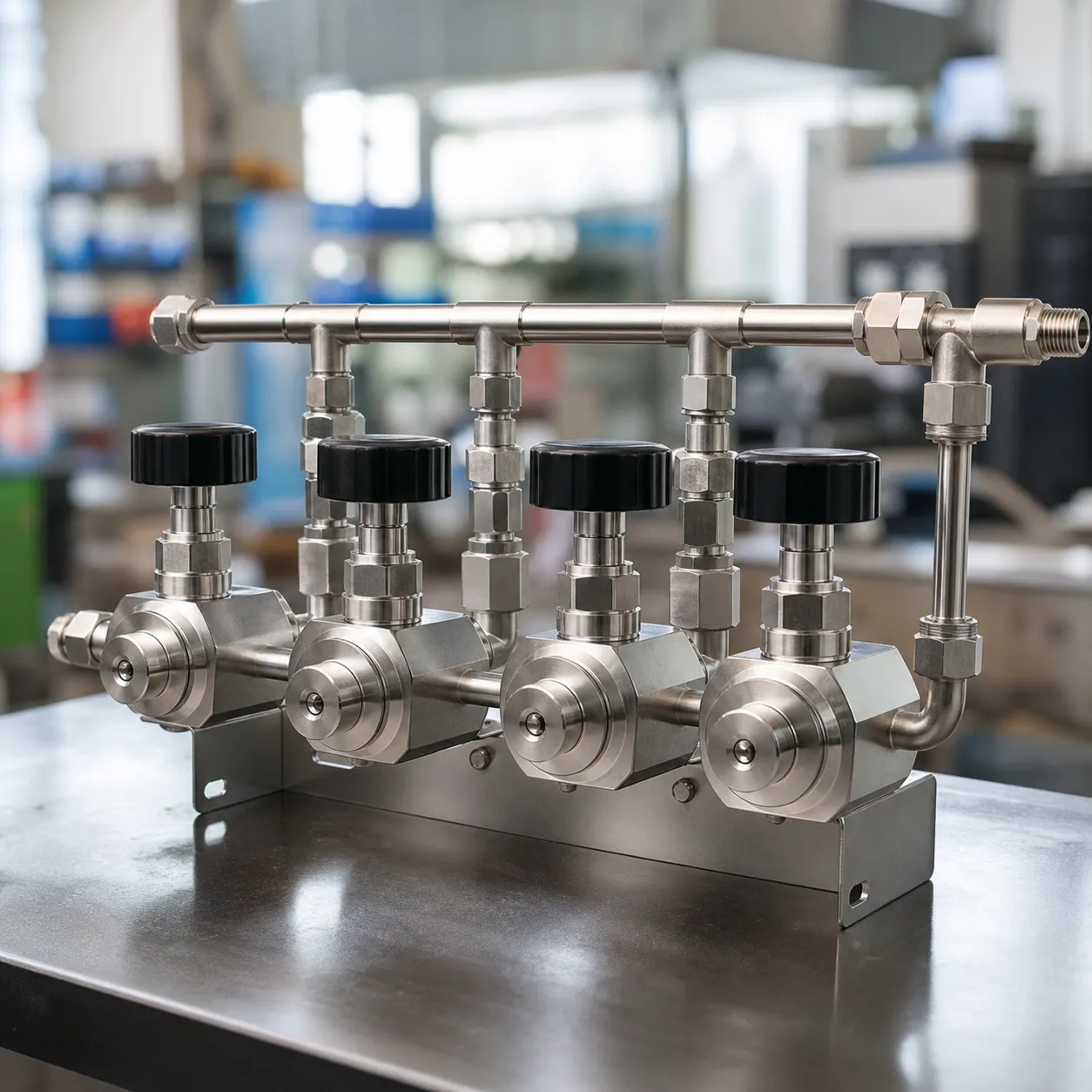
Overview
What is a Beverage Valve Manifold 316L?
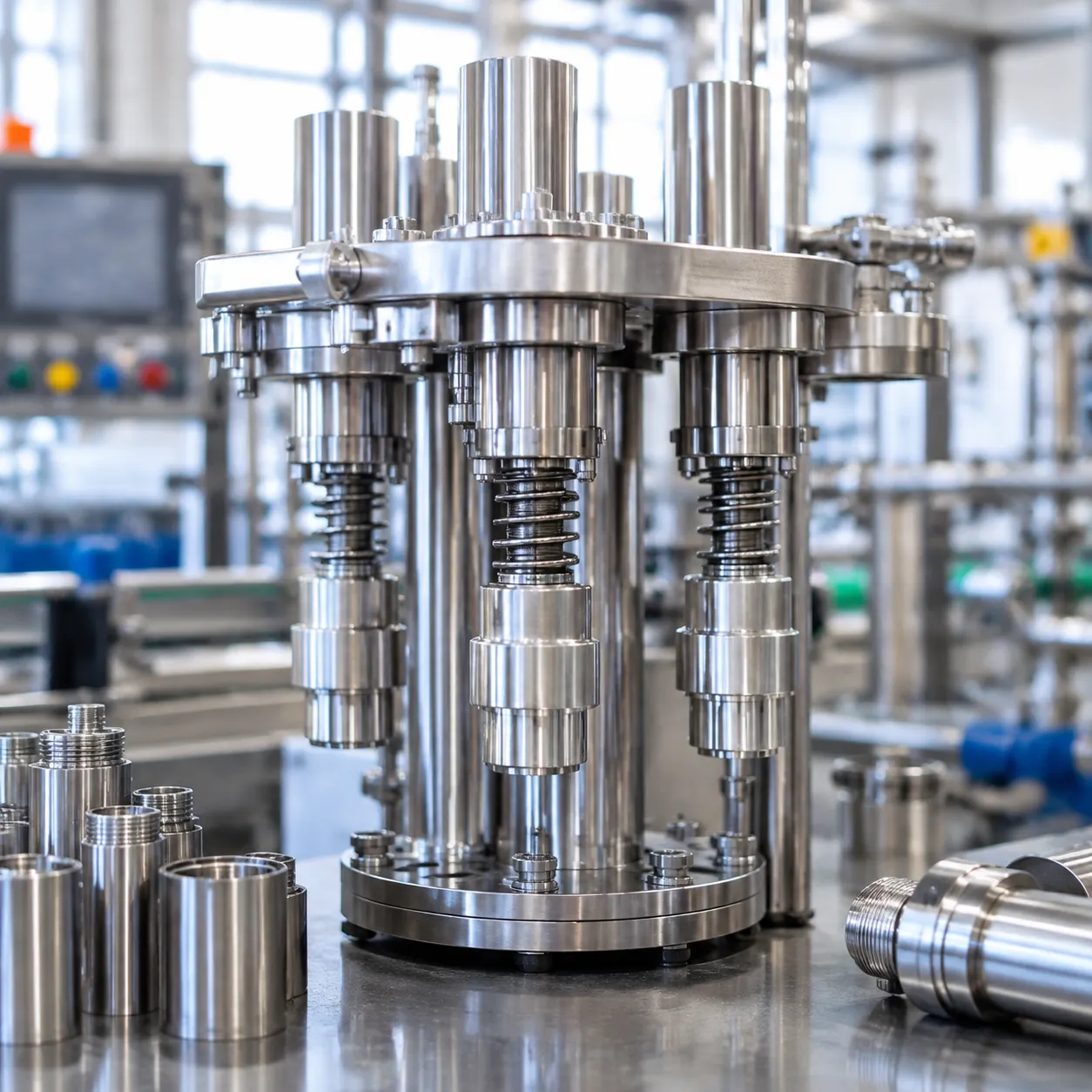
A Beverage Valve Manifold 316L is an advanced fluid distribution hub engineered for high-purity liquid processing lines. Manufactured from premium, low-carbon 316L stainless steel, this sanitary valve manifold acts as the central traffic controller for beverage facilities. It seamlessly routes raw ingredients, processed drinks, and cleaning chemicals across multiple storage tanks, pasteurizers, and filling units without manual intervention.
Operating Principle of Sanitary Valve Manifolds
Sanitary valve manifolds function through a matrix of interconnected mixproof valves operated by pneumatic actuators and automated control tops.
- Simultaneous Fluid Isolation: Dual-seal technology allows product media and cleaning solutions to flow through adjacent valve chambers at the same time without cross-contamination.
- Active Leak Detection: Built-in leakage channels immediately direct fluid outward if a seal fails, preventing contamination before it reaches the product stream.
- Automated Flow Control: Integrated sensors transmit real-time valve positions to a central PLC, dynamically re-routing liquids according to recipe specifications.
Core Components and Structural Design
Built to withstand aggressive processing environments, our 316L stainless steel manifold systems feature a fully welded, modular construction for maximum durability.
| Component | Function & Design Highlight |
|---|---|
| 316L Stainless Steel Pipework | Low-carbon alloy with mirror-polished internal surfaces (Ra ≤ 0.4 µm) to prevent bacterial adhesion. |
| Double-Seat Mixproof Valves | Provides absolute separation between distinct beverage streams and CIP fluids. |
| Pneumatic Actuators | Delivers rapid, precise valve movement powered by plant compressed air. |
| Intelligent Control Tops | Features IO-Link or AS-i communication for continuous feedback and fault diagnostics. |
| Integrated Drain & Flush Ports | Facilitates automatic sanitation of valve leakage chambers during cleaning cycles. |
Importance in Automated Hygienic Processing
Automated valve matrices form the backbone of modern, high-throughput beverage production by replacing manual swing elbows and flexible hose connections.
- Guaranteed Product Safety: Eliminates human error and cross-contamination during product transfer and concurrent cleaning cycles.
- Maximized Yield: Precision manifold routing reduces dead legs, minimizing product hold-up and ingredient loss during line switchovers.
- Continuous Operation: Enables non-stop processing where continuous flow control keeps production lines running while adjacent tanks undergo cleaning.
Key Advantages of 316L Stainless Steel Valve Manifolds
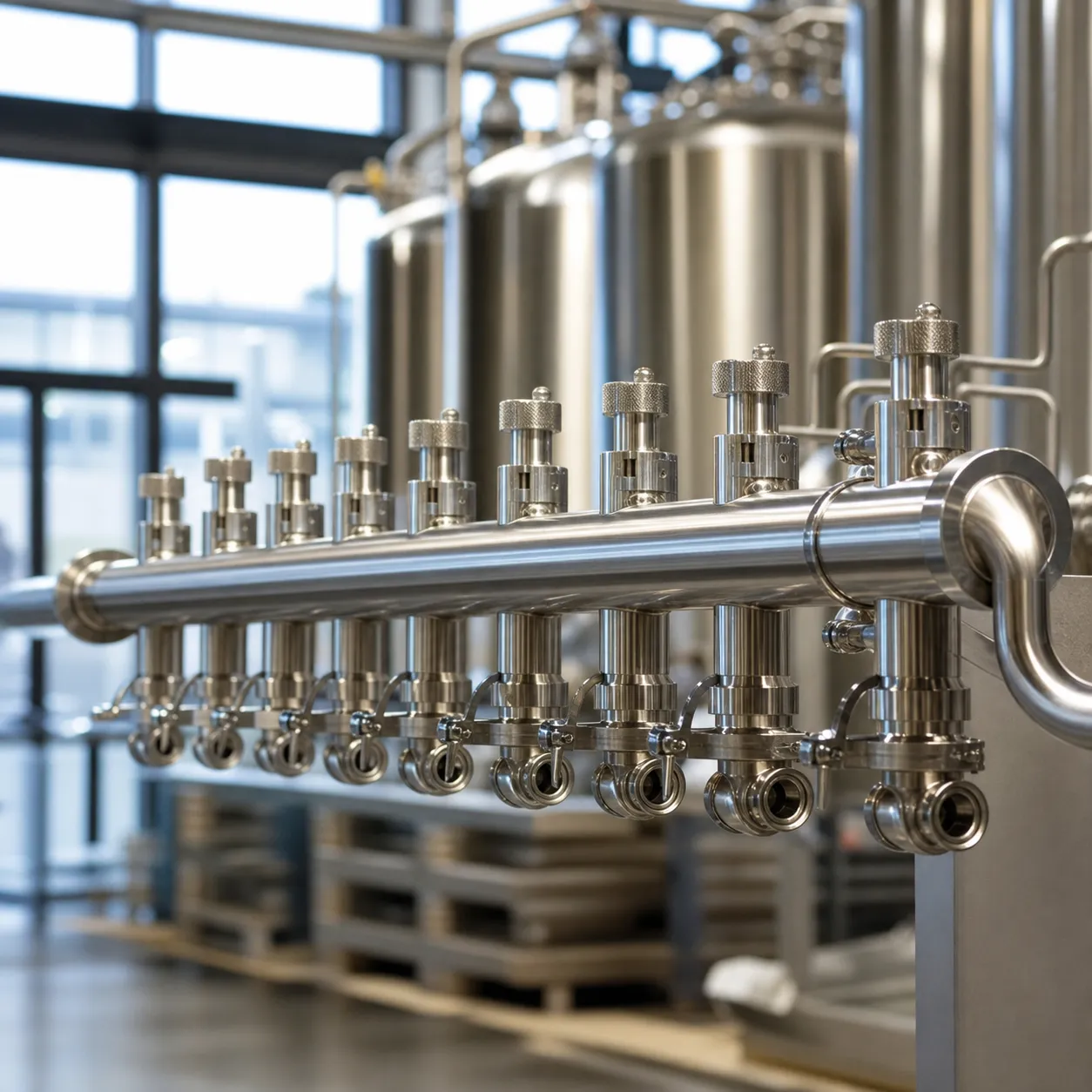
When routing liquid food and beverage products, material choice dictates your uptime and product safety. We build every sanitary valve manifold from premium 316L stainless steel because it delivers the ideal balance of chemical resistance, mechanical strength, and strict hygienic compliance.
Superior Corrosion Resistance and Chemical Composition
Standard stainless alloys crumble under the dual pressure of acidic fluids and aggressive cleaning regimes. By using low-carbon 316L stainless steel enriched with molybdenum, our manifolds offer targeted protection against line degradation:
- Pitting and Crevice Corrosion: Prevents pitting caused by chlorides, organic acids, and carbonated liquids like beer, cider, and fruit juices.
- Chemical Resilience: Withstands daily exposure to hot caustic soda (NaOH) and nitric acid solutions used during automated washdown cycles.
- Weld Zone Protection: The low carbon content (<0.03%) prevents carbide precipitation during fabrication, ensuring long-term strength across all welded manifolds.
Sanitary Standards and CIP/SIP Cleanability
Hygiene is non-negotiable in liquid processing. We precision-polish all internal fluid pathways (Ra ≤ 0.4 µm) to eliminate micro-crevices where bacteria and biofilm form.
- Self-Draining Design: Engineered without dead legs, ensuring complete fluid recovery and efficient draining.
- CIP/SIP Integration: Fully compatible with high-velocity Clean-in-Place and high-temperature Sterilization-in-Place cycles without requiring manual disassembly.
- Contamination Barrier: Easily integrates with mixproof valve configurations to safely separate active product lines from CIP cleaning channels.
- Field-Tested Performance: Learn how these designs streamline beverage operations in our beverage valve manifold 316L case studies.
Mechanical Properties and Temperature Resistance
Beverage production lines experience frequent thermal shock—shifting from chilled liquids near freezing to pressurized steam within seconds. 316L stainless steel manifold systems provide the mechanical stamina required for continuous duty.
| Operating Parameter | 316L Specification | Processing Advantage |
|---|---|---|
| Temperature Tolerance | -30°C to +140°C (-22°F to +284°F) | Handles sub-zero liquid cooling and high-heat steam sterilization (SIP) without seal distortion. |
| Pressure Handling | Up to 10 bar (145 psi) standard | Withstands line surges and pressure spikes during rapid automated valve switching. |
| Mechanical Toughness | High yield and tensile strength | Absorbs line vibration from high-volume flow control pumps without cracking joints. |
- Common Types and Configurations of 316L Manifold Valves
Every beverage line has unique routing requirements. We design our beverage valve manifold 316L setups in several standard and custom configurations to give you precise flow control and complete operational flexibility.
- Common Types and Configurations of 316L Manifold Valves
2-Way Valve Manifolds
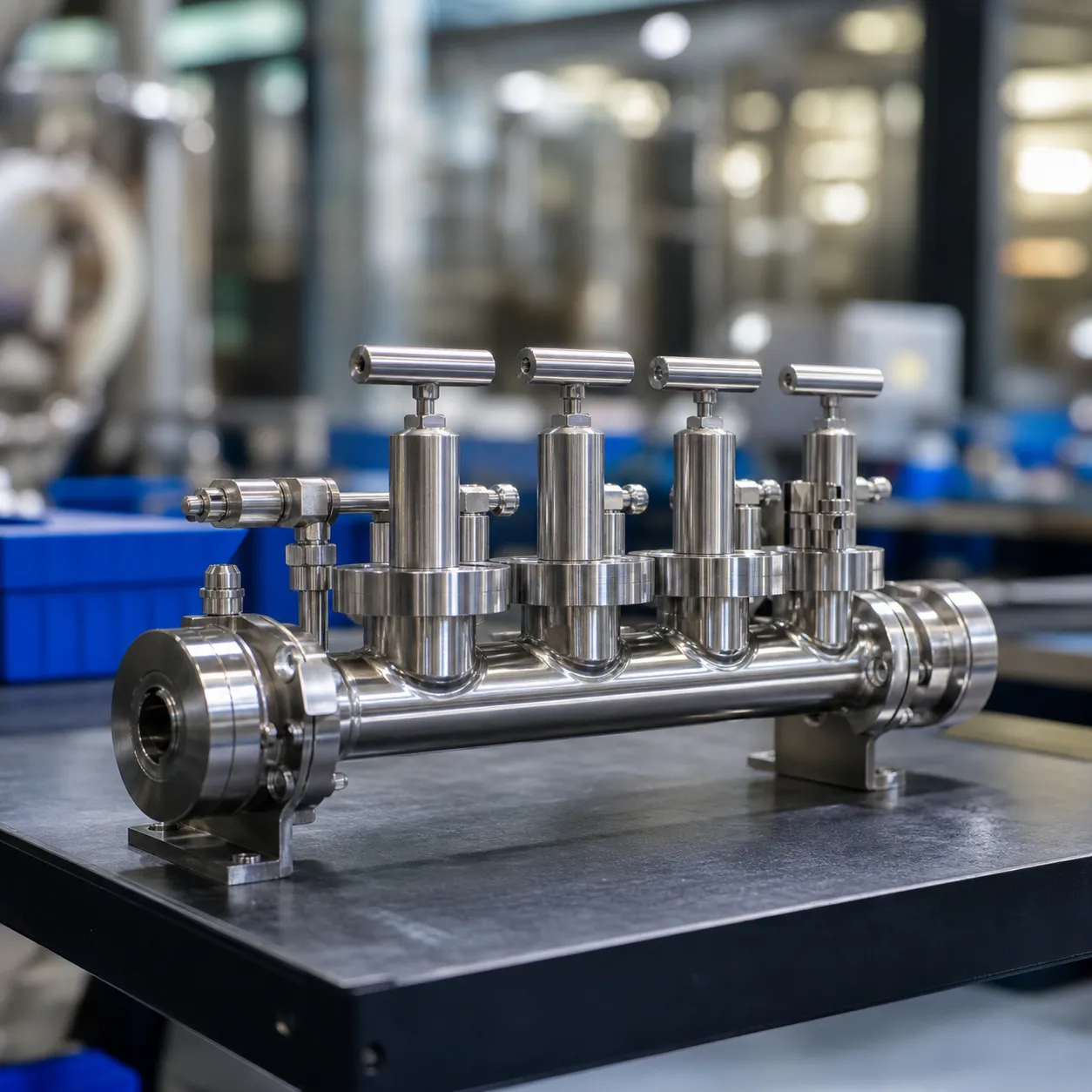
The 2-way valve manifold is the foundation for simple liquid isolation and direct line switching.
- Primary Function: On/off isolation in single-direction fluid transfers.
- Key Benefit: Compact stainless steel manifold footprint that minimizes dead space and lowers pressure drops.
- Best Applications: Water feeds, standard utility connections, and simple batch delivery loops.
3-Way Valve Manifolds
When you need to divert or blend liquid streams on the fly, a 3-way manifold valve manages the job without interrupting overall line flow.
- Primary Function: Diverting flow from one source to two destinations, or combining two incoming streams into one.
- Key Benefit: Replaces multiple individual valves, significantly cutting down on installation footprint and potential seal failure points.
- Best Applications: Switching between active product streams and automated CIP rinse loops.
5-Way Valve Manifolds
For high-purity processing that demands maximum security, a 5-way manifold valve delivers full isolation, venting, and pressure testing capabilities.
- Primary Function: Multi-port fluid management with integrated block-and-bleed functionality.
- Key Benefit: Allows safe inline instrumentation testing, calibration, and zero-leakage line separation without stopping adjacent operations.
- Best Applications: High-value beverage dosing, sterile product lines, and sensitive process crossovers.
Custom Matrix and U-Bend Manifold Systems
Large-scale beverage facilities require fully centralized processing hubs. We build engineered matrix panels and U-bend flow plates customized to your specific plant layout.
- Mixproof Integration: Integrates double-seat mixproof valve technology so you can transfer product through one pipe array while running CIP cycles on an adjacent line with zero contamination risk.
- U-Bend Swing Panels: Uses physical sanitary valve manifold jump connections to give operators visual confirmation of line isolation.
- Automated Scalability: Plugs directly into automated PLC controls for real-time routing and status feedback.
For comprehensive technical specifications and design guides, feel free to review our centralized process resources.
Key Applications in Beverage Processing Industries
In the modern beverage processing industry, maintaining absolute product purity while maximizing uptime requires robust fluid control. We design each Beverage Valve Manifold 316L to handle continuous production cycles, complex recipe changes, and rigorous cleaning protocols without risking contamination.
Brewing and Distillery Operations
Breweries and distilleries rely on custom sanitary valve manifold setups to manage complex fluid routing from the brewhouse to cellaring.
- Fermentation & Wort Routing: Seamlessly direct wort, yeast, and finished beer between fermenters and bright tanks.
- Mixproof Security: Utilize mixproof valve technology to clean one branch while actively transferring product through another.
- Flavor Isolation: Prevent hop oil and batch cross-contamination during quick brand switchovers.
Dairy and Liquid Food Processing
Dairy products and liquid foods are highly sensitive to bacteria and temperature shifts, demanding superior hygienic standards.
- Hygienic Safety: Strict 316L material standards eliminate crevice corrosion in high-risk food processing industry plants.
- Thermal Resilience: Withstands high-temperature pasteurization loops and aggressive chemical CIP washes.
- Raw & Pasteurized Separation: Ensures complete physical separation between raw milk streams and pasteurized finished products.
Soft Drink, Juice, and Water Bottling
High-speed bottling lines require continuous flow and instant recipe changes to stay profitable.
- Syrup & Flavor Blending: Precision flow control delivers exact syrup dosing and rapid flushing between soda flavors.
- Constant Filler Supply: Maintains steady line pressure to keep bottling heads running at peak capacity.
- Zero-Downtime CIP: Isolate specific concentrate lines for cleaning while keeping adjacent bottling lines active.
- Selection Guide: Choosing the Right 316L Beverage Valve Manifold
Choosing the right Beverage Valve Manifold 316L requires a clear evaluation of your process parameters, fluid properties, and system setup. We design and specify manifold systems that minimize downtime, prevent cross-contamination, and maximize overall operational efficiency.
Flow Rate, Pressure, and Temperature Requirements
Before specifying a sanitary valve manifold, evaluate your peak hydraulic load and thermal processing cycles. Beverage processing demands seamless performance under strict operating windows:
- Operating Pressure: Ensure the manifold housing withstands line surges and pressure spikes, typically rated up to 10 bar (145 psi).
- Thermal Thresholds: Select seal materials (EPDM, FKM, or PTFE) capable of withstanding steam sterilization (SIP) up to 140°C (284°F).
- Flow Dynamics: Match tube inner diameters to prevent product shear, turbulence, or unwanted pressure drops across the matrix.
| Parameter | Typical Standard | Selection Impact |
|---|---|---|
| Design Pressure | 0 to 10 bar | Prevents hydraulic shock during valve switching |
| Temperature Range | -10°C to 140°C | Dictates elastomer selection and thermal resistance |
| Flow Rate Target | Line-specific | Determines pipe diameter and manifold port layout |
Connection Types and Sizing Options
Proper sizing and sanitary connection methods ensure leak-free operation and rapid maintenance. We recommend matching port sizes directly to existing line capacity to eliminate dead legs:
- Tri-Clamp Connections: The global standard for quick assembly, rapid disassembly, and easy routine maintenance.
- DIN / SMS Union Ends: Ideal for specialized European and international process layouts.
- Weld-In Ports: Offers permanent, crevice-free integration for high-pressure or permanent pipe networks.
Whether you need a compact 2" assembly or an extensive multi-port matrix, utilizing our specialized manufacturing capabilities ensures every port, bend, and connection meets strict hygienic standards.
Automation and Actuation Capabilities
Modern beverage processing relies on automated flow control to manage batch production and CIP cycles simultaneously:
- Pneumatic Actuators: Deliver fast, repeatable switching for single-seat and mixproof valve configurations.
- Smart Control Heads: Integrated position sensors and IO-Link/AS-Interface communications feed real-time status data directly to your central PLC.
- Fail-Safe Configurations: Select spring-return actuators (Normally Closed or Normally Open) to secure process lines and prevent product loss during air or power failures.