What Is a 316L Valve Manifold in Beverage Processing?
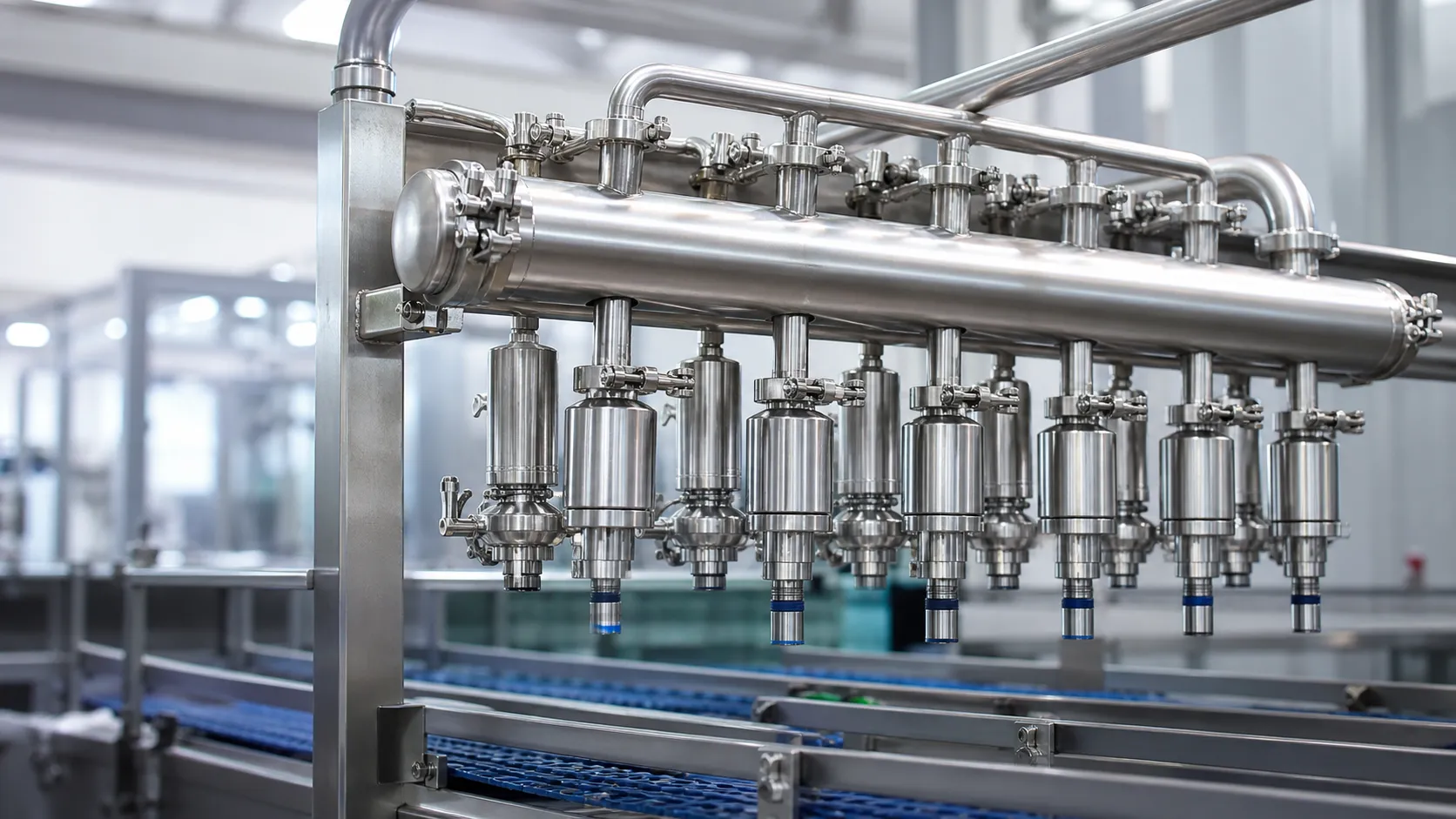
A 316L valve manifold is a centralized fluid control matrix designed to route, mix, and isolate liquid flows across automated beverage filling lines. Engineered to strict sanitary design standards, these manifolds manage complex process pathways to ensure optimal operational efficiency and uncompromised product purity.
Understanding 316L Stainless Steel Material Properties
316L stainless steel is the premier food grade stainless steel for critical beverage processing equipment:
- Low Carbon Content: The "L" grade limits carbon to under 0.03%, eliminating carbide precipitation during welding to preserve structural integrity.
- Molybdenum Alloy Fortification: Provides superior corrosion resistance against aggressive beverage acids, washdown solutions, and chlorides.
- Sanitary Surface Finish: Delivers a smooth, non-porous contact surface that resists bio-film formation and material buildup.
The Role of Valve Manifolds in Beverage Filling Lines
As essential beverage filling line components, valve manifolds act as the central nervous system for fluid distribution:
- Automated Fluid Routing: Directs raw liquid from holding tanks to filler heads with minimal pressure loss.
- Contamination Isolation: Utilizes mix-proof valve technology to safely segregate incompatible fluids, such as product and cleaning solutions.
- Maximum Uptime: Enables simultaneous processing and line cleaning on parallel loops, minimizing operational downtime.
Aseptic and Hygienic Processing System Integration
Maintaining aseptic processing conditions requires seamless integration with automated clean-in-place (CIP) and sterilization protocols. 316L valve manifolds feature crevice-free interiors and dead-leg-free geometries that allow cleaning solutions to flush every contact surface thoroughly. Their thermal durability withstands high-temperature steam-in-place (SIP) cycles, guaranteeing zero microbiological contamination during high-speed packaging.
Key Reasons 316L Valve Manifolds Are Critical for Beverage Filling Lines
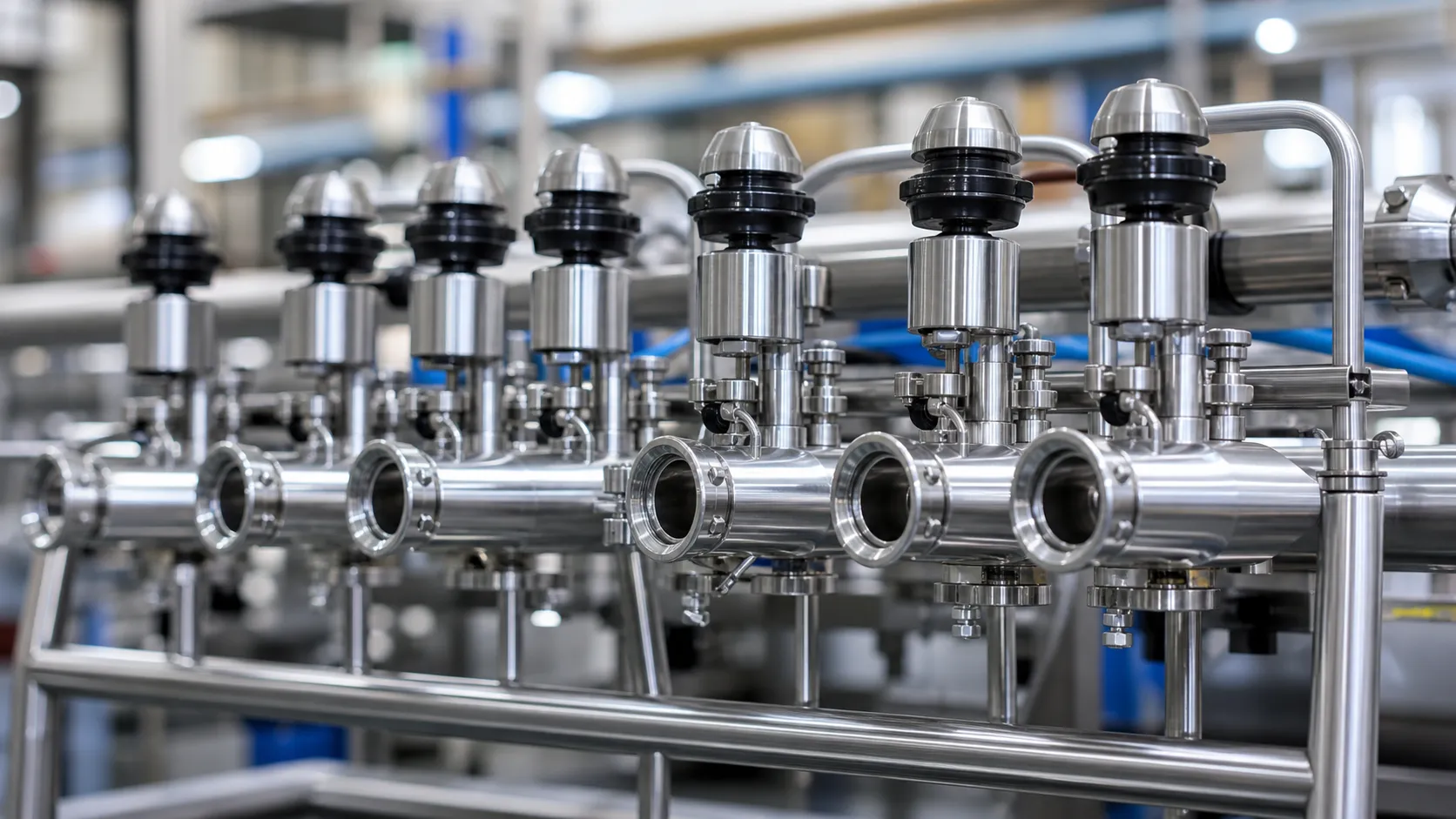
In modern liquid packaging, 316L valve manifolds serve as the central brain directing product flow, cleaning solutions, and sterile air. Keeping these liquid pathways clean and reliable directly impacts product safety and overall uptime on continuous beverage filling machines. Here is why this material grade is essential for demanding bottling operations.
Superior Resistance to Acidic Beverages and CIP Chemicals
Beverage lines handle aggressive fluids daily, ranging from high-acid fruit juices and carbonated drinks to hot caustic wash solutions.
Molybdenum alloy protection: 316L contains 2% to 3% molybdenum, significantly improving corrosion resistance against chlorides and organic acids compared to standard 304 steel.
CIP durability: Withstands intense Clean-in-Place (CIP) wash cycles containing nitric acid, phosphoric acid, and sodium hydroxide without pitting or localized corrosion.
Flavor integrity: Prevents metallic leaching, preserving the authentic taste and shelf life of delicate beverages.
Low Carbon Content Prevents Carbide Precipitation During Welding
The "L" in 316L stands for low carbon (maximum 0.03%). This specific chemical composition is critical when fabricating sanitary valve manifolds.
Eliminates intergranular corrosion: Standard stainless steel forms chromium carbides in the heat-affected zone (HAZ) during welding, depleting chromium and creating corrosion-prone weak spots.
Superior weld integrity: Low carbon content prevents carbide precipitation, maintaining full corrosion resistance across all welded manifold joints without needing post-weld heat treatment.
Ultra-Smooth Surface Finish Prevents Bacterial Adhesion
Sanitary valve manifolds require precise surface treatments to eliminate microscopic harbors for bacteria and biofilms.
Low Ra values: High-grade manifolds undergo specialized surface finishing processes, such as electropolishing, to achieve internal surface roughness values below 0.4 μm R_a.
Biofilm prevention: Extremely smooth internal walls eliminate crevices where product residues or microbes can anchor.
Faster washouts: Reduces rinse water and chemical usage during flavor changeovers, cutting overall cleaning cycle times.
High Temperature and Pressure Tolerance During SIP Sterilization
Sterilization-in-Place (SIP) routines expose fluid distribution manifolds to extreme thermal and mechanical stresses.
Steam resistance: Operates reliably under continuous exposure to pure saturated steam at temperatures reaching 121 °C to 135 °C.
Thermal stability: Maintains dimensional accuracy and seal alignment despite rapid heating and cooling cycles.
Pressure handling: Holds structural integrity under high dynamic pressure spikes without valve seat deformation or cross-contamination risks.
Core Applications of 316L Valve Manifolds Across Beverage Industries
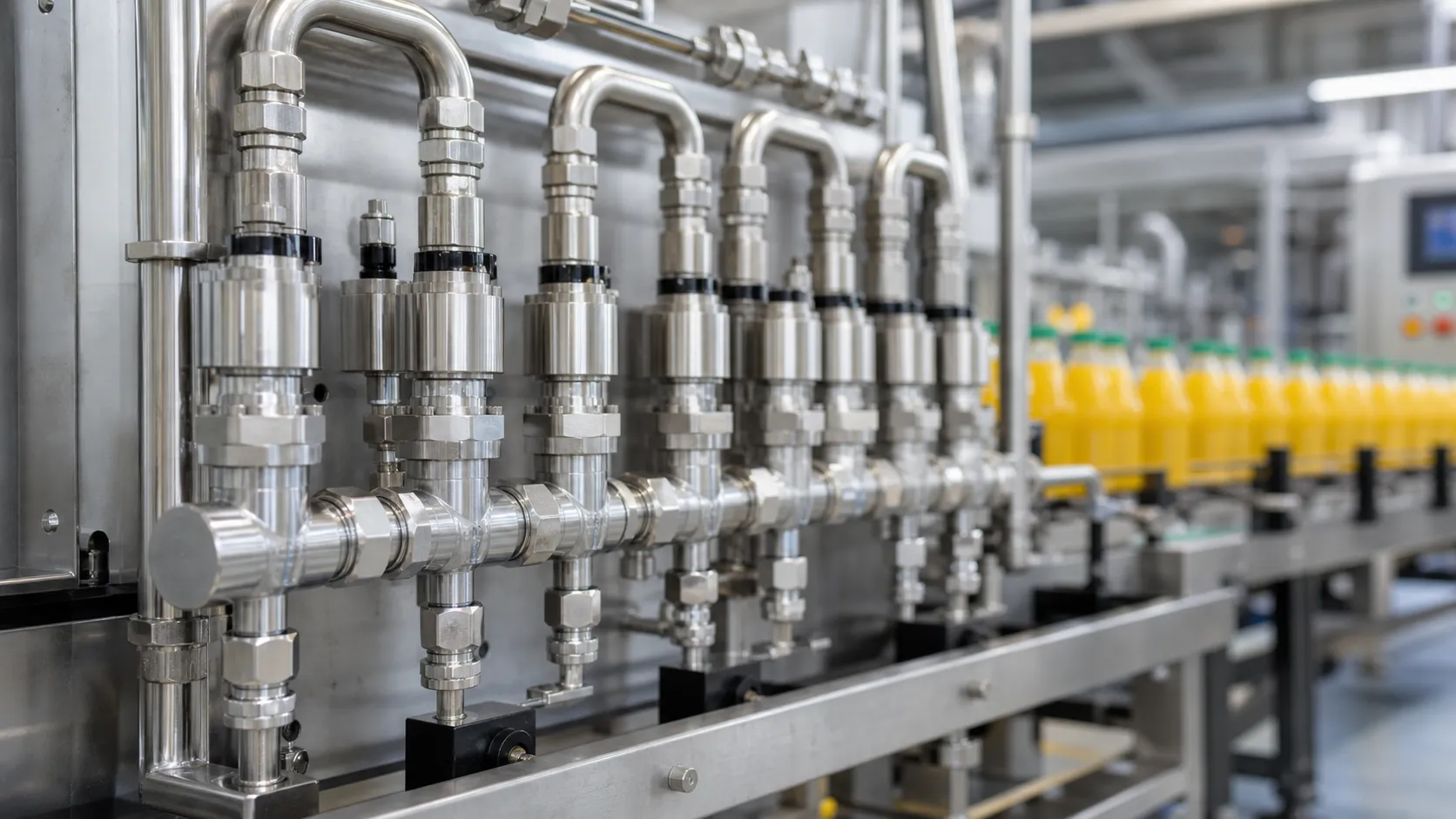
We design 316L valve manifolds to serve as the ultimate control center for sanitary liquid routing. Their superior hygienic design ensures uncompromised product purity and maximum operational efficiency across critical beverage processing sectors.
Dairy and Milk Product Packaging Systems
Dairy processing leaves zero room for thermal or biological risk. Milk and cream are exceptionally sensitive to spoilage from lingering bacteria or dead-leg stagnation.
- Aseptic routing: Manifolds safely direct fresh milk through pasteurization, separator loops, and filling units without batch cross-contamination.
- Sanitary reliability: In the broader food processing industry, 316L valve manifolds provide the non-reactive, food grade stainless steel surface required to meet stringent global health and safety standards.
Fruit Juice and High-Acid Beverage Filling Lines
Citrus juices, concentrates, and pulp-laden drinks pose a constant threat of localized chemical wear and pitting corrosion.
- Acid resistance: The molybdenum alloy content in 316L stainless steel prevents degradation caused by natural citric, malic, and ascorbic acids.
- Thermal integrity: Handles extreme temperature shifts effortlessly during hot-fill or aseptic packaging routines without structural stress or seal failure.
Brewery and Fermentation Transfer Operations
Industrial and craft breweries depend on absolute flavor purity during yeast management, wort cooling, and bright beer transfers.
- Flavor preservation: 316L construction completely eliminates metallic leaching, preserving delicate hop aromas and taste profiles.
- Effective sanitization: Ultra-smooth flow paths allow automated clean-in-place (CIP) and steam-in-place (SIP) cycles to purge organic buildup rapidly between batch runs.
Carbonated Soft Drink and Bottled Water Processing
High-volume carbonated soft drink (CSD) and bottled water processing demand high-pressure stability and rapid switching during flavor changeovers.
- Pressure tolerance: Heavy-duty manifold blocks handle continuous pressure fluctuations during carbonation without risk of valve seat leakage.
- High-speed integration: Vital for modern beverage filling line components across the packaging industry, reducing downtime during automated line cleaning and fluid redirection.
Material Comparison: 316L vs. Other Stainless Steel Grades
Choosing the right alloy for your beverage filling line components is essential to balance performance, sanitary design, and long-term operating budget. While several metals exist, 316L stands out as the ultimate benchmark for sanitary valve manifolds in high-speed liquid packaging lines. We work extensively with specialized food grade stainless steel materials to ensure long-term durability, structural integrity, and full hygienic compliance.
316L vs. 304 Stainless Steel in Hygienic Environments
While 304 stainless steel is common in basic food equipment, it lacks the protection required for high-acid beverages and aggressive clean-in-place chemicals. The core difference lies in the addition of 2% to 3% molybdenum alloy in 316L, which vastly boosts corrosion resistance against chlorides, fruit acids, and sanitizers.
| Feature / Property | 304 Stainless Steel | 316L Stainless Steel |
|---|---|---|
| Molybdenum Content | 0% | 2.0% – 3.0% |
| Acid & Chloride Resistance | Moderate (susceptible to pitting) | Exceptional (resists citrus, CSDs, CIP salts) |
| Sanitary Durability | Standard | High-performance / Aseptic |
| Primary Usage | Structural frames, general utility | Direct beverage contact, manifold blocks |
316L vs. Standard 316: Weldability and Integrity Differences
The key distinction between standard 316 and 316L is carbon content. Standard 316 contains up to 0.08% carbon, whereas 316L maintains a restricted low carbon content of 0.03% or less.
- Prevents Carbide Precipitation: High welding temperatures cause carbon in standard 316 to bind with chromium, creating chromium carbide along heat-affected zones. This depletes corrosion resistance near the weld.
- Flawless Orbital Welds: The low carbon level in 316L eliminates weld decay, preserving strong, uniform joints during manifold fabrication.
- Seamless Flow Paths: Clean welds remove microscopic pits and crevices, leaving no hidden pockets for bacteria or product buildup.
Long-Term ROI and Contamination Risk Mitigation
Upgrading to 316L valve manifolds delivers a fast return on investment across the lifecycle of your filling equipment:
- Zero Batch Contamination: Prevents chemical leaching and rust particles from entering sensitive beverage products.
- Extended Service Life: Withstands continuous daily CIP/SIP cycles without pitting or surface degradation.
- Lower Operational Costs: Eliminates unscheduled maintenance downtime and premature manifold replacement.
Key Design Criteria for Hygienic 316L Valve Manifolds
Designing a valve manifold for modern beverage filling lines requires strict attention to detail. When we build these units, we focus on engineering standards that eliminate contamination risks and maximize operational uptime.
Surface Roughness (Ra) and Electropolishing Standards
The interior surface finish of a valve manifold directly impacts product safety. Standard mechanical polishing isn't enough for high-risk beverage processing.
- Target Roughness: We enforce a surface roughness of Ra ≤ 0.4 µm (16 µin) on all contact surfaces.
- Electropolishing: This electrochemical process smooths microscopic peaks, creates a mirror-like finish, and strengthens the protective chromium oxide layer.
- Bacterial Defense: A smooth surface prevents micro-trapping of food particles and stops biofilm formation in its tracks.
Orbital Welding Quality, Passivation, and Dead-Leg Elimination
Welding integrity determines whether your processing line stays sterile or suffers recurring contamination issues.
| Feature | Design Standard | Operational Benefit |
|---|---|---|
| Orbital Welding | Automated, full-penetration welds | Eliminates manual pits, cracks, and uneven joints |
| Passivation Treatment | Chemical bath post-welding | Restores corrosion resistance along heat-affected zones |
| Dead-Leg Reduction | Strict adherence to the 1.5D or 3D rule | Removes stagnant pockets where fluid could pool |
Every component undergoes thorough quality inspection to ensure seam integrity and strict sanitary design standards before installation.
Flow Dynamics and Automated CIP/SIP Routing Efficiency
A well-engineered 316L valve manifold keeps fluids moving cleanly while simplifying cleaning cycles.
- Optimized Pathways: Sweeping bends and smooth valve ports reduce shear forces, preserving beverage texture and quality.
- Automated CIP/SIP Cycles: The manifold routes cleaning chemicals and steam dynamically, ensuring complete coverage without requiring manual teardowns.
- Resource Savings: Fast, efficient cleaning routes cut down on water, chemical, and steam consumption, lowering daily utility costs.
Best Practices for Maintaining 316L Valve Manifold Systems
Proper maintenance keeps your 316L valve manifold systems operating at peak efficiency, protecting product purity and preventing costly downtime on high-speed beverage filling lines. Even the best food grade stainless steel requires disciplined operational care to maintain its corrosion resistance and sanitary design over years of continuous operation.
Optimizing Clean-in-Place (CIP) and Sterilization Protocols
To get the best performance out of aseptic processing equipment, your clean-in-place (CIP) and sterilize-in-place (SIP) routines must be precisely tuned to the geometry of your manifold setup.
- Maintain Adequate Flow Velocity: Ensure CIP fluid velocity remains above 1.5–2.0 m/s. High turbulence creates the mechanical action needed to scour every inner valve seat and junction clean.
- Control Chemical Concentrations: Monitor caustic soda and acid rinse cycles carefully. Correct chemical dosing prevents surface mineral buildup while safeguarding soft elastomeric seals.
- Optimize Steam Sterilization: Regulate SIP steam temperature and cycle times. Proper thermal management guarantees total microbial control without subjecting internal components to excessive thermal shocks.
Routine Seal Replacement, Inspection, and Re-passivation
While 316L stainless steel provides unmatched durability, seal wear and surface degradation can still occur over prolonged production cycles if left unmonitored.
- Scheduled Seal Maintenance: Regularly inspect and replace worn gaskets, diaphragms, and specialized sealing modules before micro-cracks form and trap organic residue.
- Borescope Visual Audits: Conduct periodic borescope inspections inside internal valve bodies and orbital welds to identify early signs of pitting or chemical discoloration.
- Chemical Re-passivation: Treat internal fluid paths with citric or nitric acid solutions following major mechanical maintenance. Re-passivation re-establishes the protective chromium oxide layer, ensuring long-term surface integrity across your facility.
Explore our technical resources for additional maintenance schedules and sanitary hardware guides.