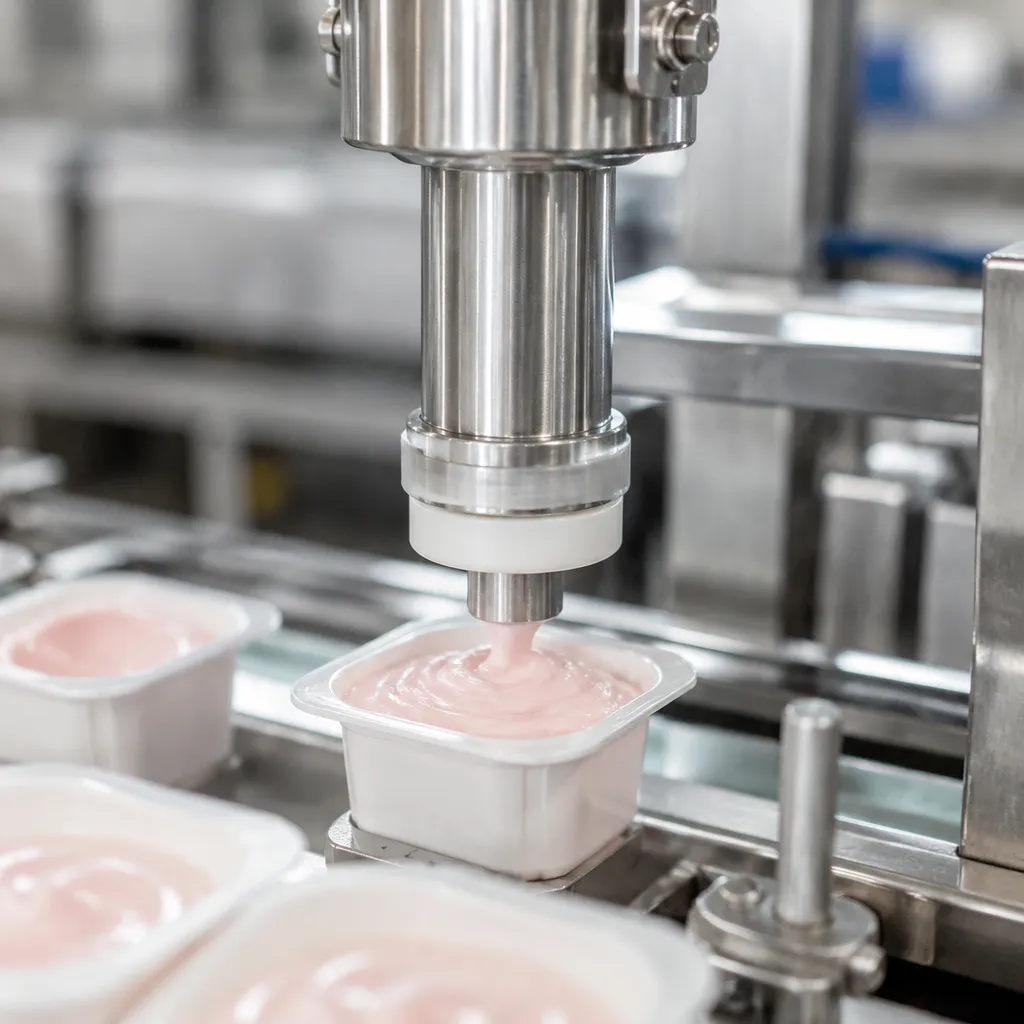
Are you dealing with unexplained weight fluctuations on your dairy packaging line?
As an equipment specialist, I know how frustrating it is when minor mechanical shifts ruin an entire production run. When your piston seal clearance is even slightly off, high-pressure fluid bypass and vacuum loss inevitably follow—causing erratic yogurt fill volume consistency and costly product giveaway.
In this guide, you’ll discover exactly how mechanical seal wear, product viscosity shifts, and thermal expansion disrupt your volumetric accuracy, along with the exact troubleshooting steps to keep your piston filler operating at peak precision.
Let's dive right in.
Fluid Dynamics: How Seal Clearance Compromises Volumetric Accuracy
Machining tolerance review: Typical machining tolerance is ±0.01 mm. Selected dimensions may achieve ±0.005 mm after technical review. Final tolerances depend on the drawing, material, part size, geometry, finishing and inspection requirements and must be confirmed before order acceptance.
In high-speed volumetric positive displacement packaging lines, tight control over piston seal clearance is the baseline for maintaining yogurt fill volume consistency. When seal gaps expand beyond micron-level tolerances, the internal fluid dynamics of the cylinder destabilize, directly degrading volumetric filling accuracy.
Fluid Bypass During the Discharge Stroke
During the discharge stroke, mechanical pressure pushes viscous product through the filling nozzle. Expanded piston seal clearance creates a path of least resistance under pressure, triggering severe internal leakage.
- Backpressure Slip: Discharge pressure forces non-Newtonian, shear-thinning fluid backward across the oversized seal gap.
- Direct Volume Loss: Metered product leaks behind the piston head rather than exiting the nozzle, causing immediate under-filling.
- Speed Sensitivity: Higher pump speeds elevate pressure, exponentially increasing fluid bypass rates and ruining fill volume consistency.
Vacuum Decay During Suction Intake
Full cylinder charging requires maintaining a tight vacuum seal during the intake phase. Excess clearance compromises suction pressure, leading to density fluctuations in the cylinder.
- Suction Loss: Pressure loss prevents complete cylinder charging, particularly with thick, high-viscosity yogurts.
- Air Entrainment: Atmospheric air is pulled across degraded seal boundaries, entraining micro-bubbles into the product.
- Cavitation and Voids: Incomplete cylinder priming creates physical voids, producing unpredictable shot-to-shot weight variations.
Shear Stress and Rheology Breakdown
Forcing yogurt at high velocities through narrow, degraded seal gaps introduces severe local shear rates. Because yogurt structure is shear-sensitive, this internal backflow permanently alters product viscosity midway through production batches.
| Stroke Phase | Seal Clearance Defect | Fluid Dynamic Mechanics | Packaging Impact |
|---|---|---|---|
| Discharge Stroke | Oversized clearance gap | High-pressure fluid bypass (blow-by) | Uncontrolled fill weight reduction |
| Suction Intake | Degraded seal contact | Suction intake vacuum loss | Aeration, voids, and density shifts |
| Reciprocation | High-velocity gap flow | Extreme shear-induced rheology shift | Viscosity breakdown and variable flow |
Root Causes of Clearance Instability in Yogurt Packaging Lines
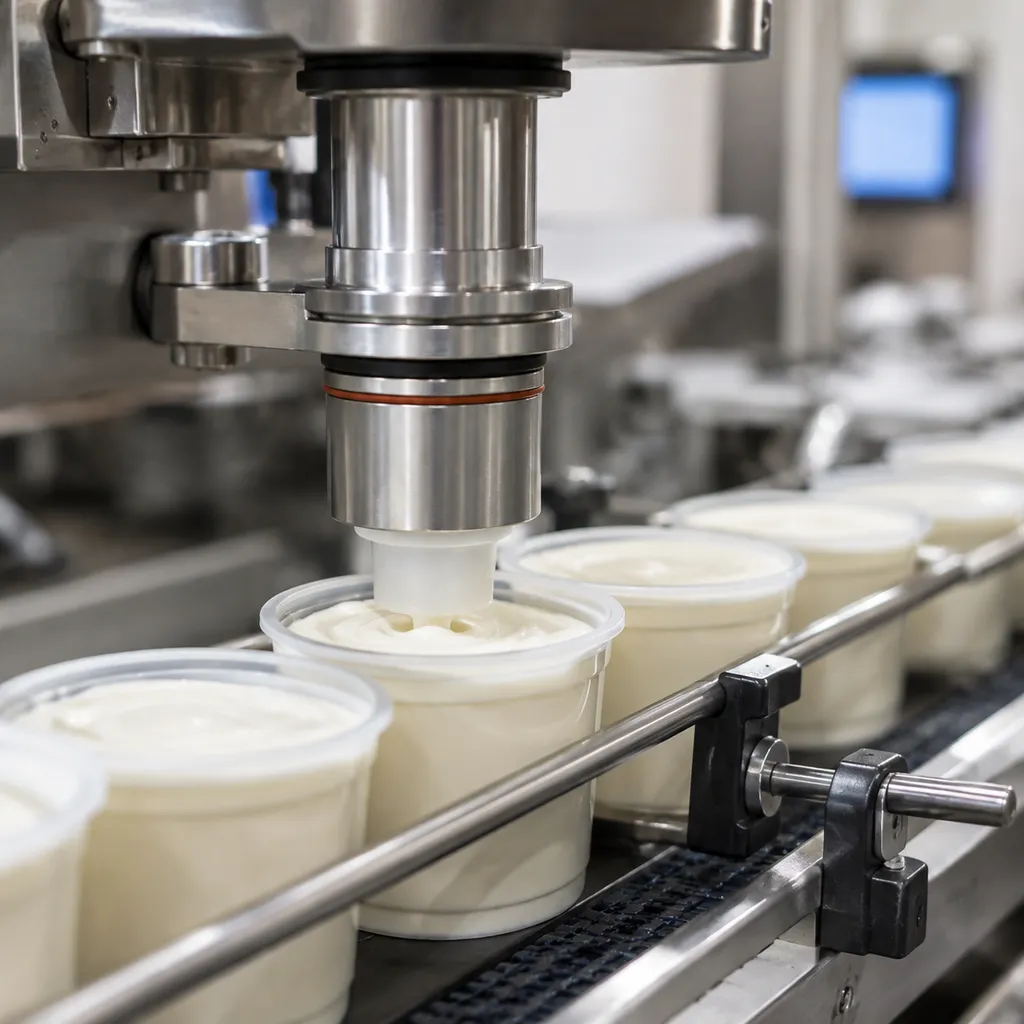
In our engineering experience with viscous dairy fillers, maintaining proper seal fit is a constant challenge. When we analyze fill volume variance across high-speed packaging lines, we consistently trace the problem back to three primary drivers that alter piston seal clearance.
Mechanical Wear and Friction Dynamics
Continuous reciprocating motion between soft polymer seals (PTFE or UHMW-PE) and rigid cylinder walls creates relentless friction. Over millions of strokes, abrasive wear thins the seal lips, opening up the gap between the piston head and the cylinder wall. This enlarged space lets non-Newtonian yogurt bypass the piston during discharge, leading directly to fill weight variation.
Thermal Expansion and CIP Degradation
Yogurt lines endure extreme temperature swings every day:
Cold Filling: Yogurt dosing at 4°C.
Hot Washdowns: CIP (Clean-In-Place) steam and chemical cycles reaching 85°C+.
Synthetic seals expand much faster than metal housings. This differential thermal expansion forces the soft seal material into tiny gaps, causing permanent deformation (cold flow). When the line cools back to production temperature, the seal contracts, leaving an enlarged gap. Designing resilient seal interfaces alongside drainage and seal lands in washdown bearing housings helps prevent these thermal failures from compromising sanitary performance.
Cumulative Machining Tolerance Stack-Up
Clearance instability often starts long before a seal wears out. When off-the-shelf spare parts or loose machining tolerances on mounting brackets, seal grooves, and sanitary cutter seats accumulate, they cause angular misalignment.
| Failure Mode | Mechanism | Impact on Volumetric Consistency |
|---|---|---|
| Mechanical Friction | Reciprocating seal motion thins polymer material. | Opens clearance gap; causes fluid bypass under discharge pressure. |
| CIP Thermal Cycling | 4°C to 85°C expansion deforms synthetic seals. | Causes permanent seal shrinkage upon cooling, ruining intake vacuum. |
| Tolerance Stack-Up | Stacked manufacturing variances on grooves and mounts. | Creates uneven radial seal pressure and localized premature wear. |
Uneven seal pressure concentrates wear on one side of the cylinder wall. This asymmetry destroys uniform sealing, directly showing how piston seal clearance affects yogurt fill volume consistency over time.
Engineering Strategies: Minimizing Clearance Variance for Consistent Fills
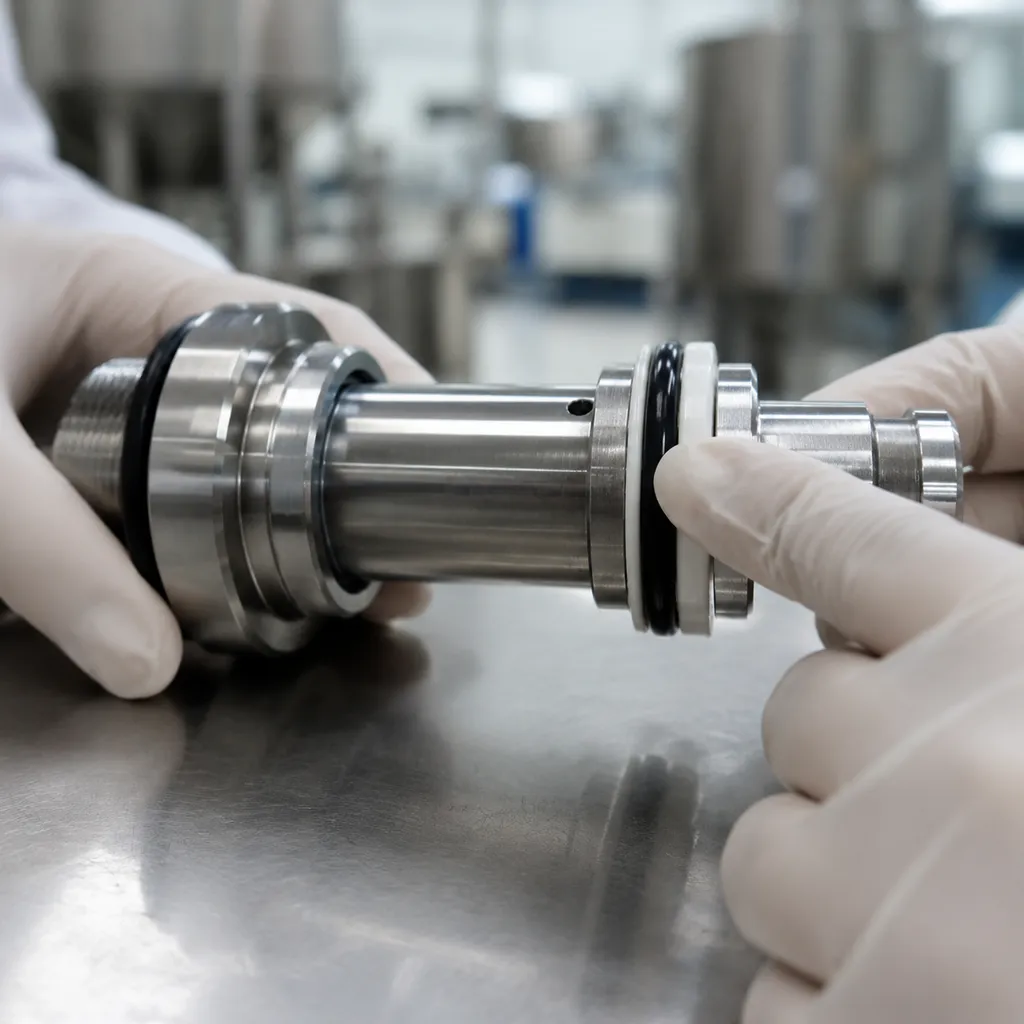
To maintain strict yogurt fill volume consistency on high-speed packaging lines, we eliminate physical variance directly at the piston-cylinder interface. Controlling piston seal clearance requires ultra-precise machining, sanitary surface treatments, and application-specific material selection.
Ultra-Tight Machining Tolerances
Standard commercial machining tolerances fail when metering shear-thinning dairy products. A dimensional variance of just ±0.05 mm allows fluid bypass during the stroke, driving severe weight fluctuations.
- Micron-Level Precision: We machine seal housing grooves and cylinder bores to tight tolerances down to ±0.005 mm (selected dimensions; subject to review).
- Locked Volumetric Accuracy: Eliminating dimension variations stabilizes backpressure slip, ensuring every stroke delivers an exact volume without leakage.
Sanitary Surface Finishes to Reduce Friction and Wear
Excessive cylinder wall surface roughness acts like fine sandpaper against flexible seals. Microscopic peaks accelerate seal wear, expanding the clearance gap over continuous production runs.
- Electropolishing & Passivation: We electropolish stainless steel cylinders to achieve an ultra-smooth finish (Ra < 0.4 µm).
- Friction & Wear Reduction: Smooth cylinder walls minimize seal abrasion, extend seal operating life, and eliminate microscopic harborages where bacteria can hide.
Advanced Material Selection for Dairy Processing
Pairing 316L stainless steel cylinders with high-performance, food-grade plastics prevents mechanical binding and thermal deformation during aggressive Clean-In-Place (CIP) washdowns.
| Material | Key Engineering Properties | Primary Application |
|---|---|---|
| 316L Stainless Steel | Superior corrosion resistance, ultra-smooth finish | High-durability cylinder housing |
| PEEK, POM, UHMW-PE | Low coefficient of friction, high wear resistance | FDA/USDA compliant piston seals |
Selecting the right balance between machined UHMW-PE, POM, and PEEK components allows us to minimize friction, resist harsh CIP chemicals up to 85°C+, and lock in precise piston seal clearance across millions of filling cycles.
Quality Control & Diagnostic Protocols for Filling Machine OEMs
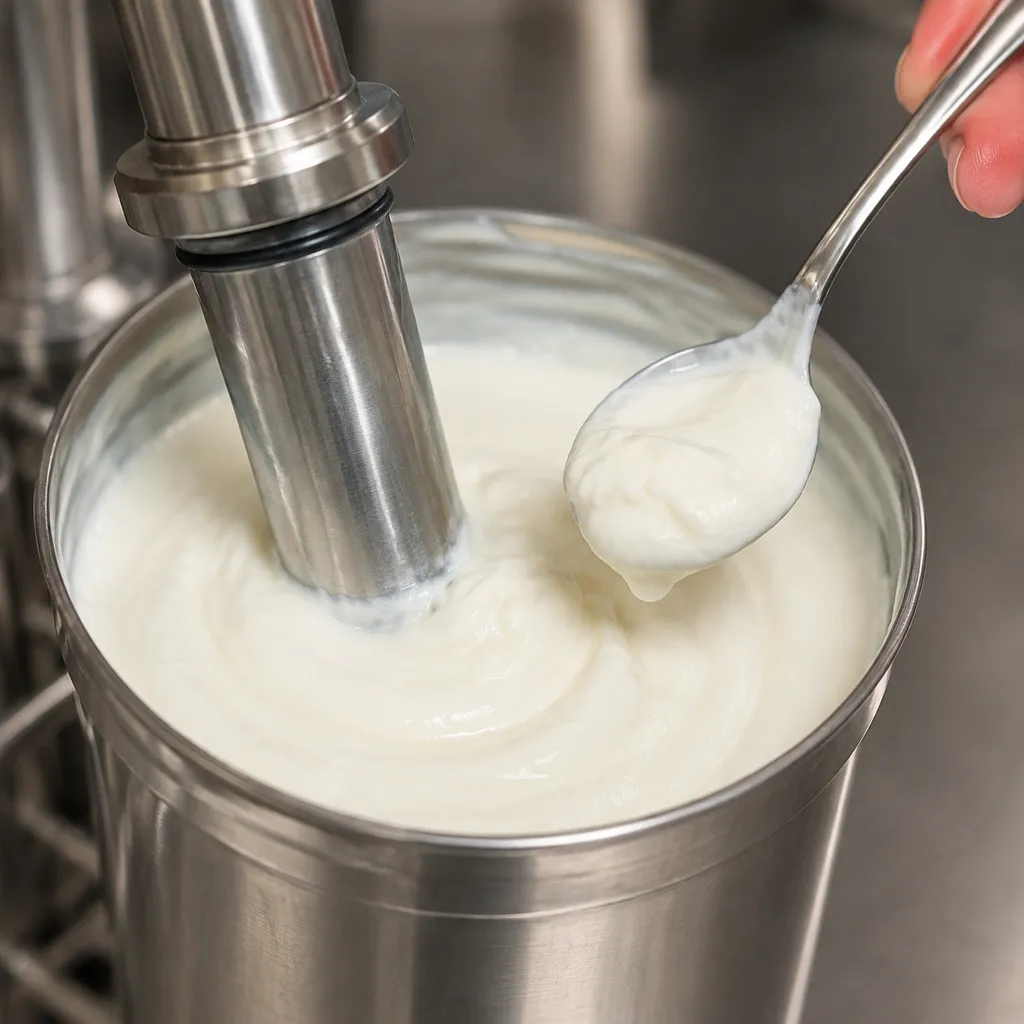
Preventive Wear Monitoring
We do not wait for batch rejections to identify piston seal wear. Monitoring key mechanical and volumetric performance metrics allows OEMs and plant operators to detect internal leakage before it compromises fill volume consistency.
- Stroke-to-Weight Drift: A continuous drop in net fill weight while stroke settings remain unchanged indicates progressive fluid bypass across the clearance gap.
- Drip Tray Accumulation: Yogurt leaking into the drip tray behind the cylinder block signals severe seal bypass pressure during the discharge stroke.
- Air Entrainment: Air bubbles trapped in the product stream point directly to suction intake vacuum loss caused by damaged or oversized seal tolerances.
Dimensional Inspection & Verification
Eliminating fill volume variance requires absolute dimensional precision on every replacement part. We enforce strict diagnostic and auditing standards across all components to ensure exact seal fitment.
| Verification Step | Diagnostic Method | Target Outcome |
|---|---|---|
| Housing & Piston Head Audit | Coordinate Measuring Machine (CMM) inspection | Verifies seal groove concentricity and depth within ±0.005 mm (selected dimensions; subject to review). |
| Material Verification | Raw material mill certifications (316L & polymers) | Ensures compliance with FDA/USDA standards and chemical resistance to CIP washdowns. |
| Surface Roughness Testing | Contact profilometer inspection | Confirms electropolished surface finishes meet Ra targets to minimize abrasive seal wear. |
Integrating precision-built components like custom 316L piston assemblies for yogurt filling machines eliminates machining tolerance stack-up, securing long-term volumetric filling accuracy across high-speed packaging operations.
Custom CNC Engineering Solutions for Dairy Equipment
When OEM replacement parts take months to arrive or fail to hold drawing-specific dimensional tolerances, piston seal clearance expands, driving up fill volume variance across high-speed filling lines. We eliminate these operational bottlenecks by precision-machining drop-in custom components engineered specifically to maintain strict yogurt fill volume consistency.
Overcoming OEM Spare Part Lead Times and Fitment Errors
Off-the-shelf replacement components frequently exhibit micro-variations that compromise volumetric filling accuracy. Custom CNC manufacturing restores exact mechanical integrity without typical factory lead times:
- Eliminating Supply Bottlenecks: Standard OEM lead times can extend up to 16 weeks. We reverse-engineer and machine high-precision piston heads, cylinder liners, and seal retainers to restore your line swiftly.
- Preventing Dimensional Drift: Standard commercial spares suffer from tolerance stack-up. We lock seal groove dimensions down to ±0.005 mm (selected dimensions; subject to review), with seal performance and dosing results validated in the equipment.
- Supporting Complete Drive Alignment: Beyond piston assemblies, we machine critical drive-line hardware like custom 316L washdown bearing housings for food conveyors to eliminate mechanical play and maintain true cylinder alignment.
DFM Reviews for Optimal Seal Housing Geometry
We evaluate your native 2D and 3D CAD models (STEP, IGES, DWG) through a comprehensive Design for Manufacturability (DFM) review to optimize piston seal clearance and structural longevity:
- CAD Geometry Audits: We analyze model files to eliminate sharp internal transitions that cause shear breakdown in delicate, non-Newtonian dairy products.
- Thermal Relief Expansion Grooves: We engineer dedicated relief channels into seal seats, giving synthetic seals room to expand during 85°C CIP cycles without crushing or distorting.
- Surface Finish Controls: We specify electropolished surface finishes down to Ra < 0.5µm to minimize abrasive friction on PEEK and UHMW-PE seals.
| Engineering Parameter | Standard OEM Replacement | Custom Precision CNC Solution | Direct Impact on Filling Operations |
|---|---|---|---|
| Housing Clearance Tolerance | ±0.025 mm | ±0.005 mm (selected dimensions; subject to review) | Requires seal and dosing validation |
| Surface Finish (Ra) | ~0.8 µm (Standard Machined) | < 0.5 µm (Electropolished) | Minimizes seal abrasion and maintains vacuum integrity |
| Thermal Expansion Management | Generic Groove Seats | Engineered Relief Channels | Prevents seal deformation during hot CIP washdowns |
Frequently Asked Questions
What is the acceptable piston seal clearance tolerance for high-speed yogurt filling machines?
For high-viscosity dairy applications, standard industrial machining tolerances fall short. We target an ultra-tight piston seal clearance tolerance between ±0.005 mm (selected dimensions; subject to review) and ±0.008 mm. Maintaining high-precision filling machine part tolerance prevents non-Newtonian, shear-thinning yogurt from leaking backward across the piston head during high-pressure discharge strokes, securing repeatable fill volume consistency.
How do CIP thermal expansion cycles cause fill volume drift in volumetric fillers?
Clean-In-Place (CIP) regimes switch rapidly between cold product runs (4°C) and hot washdowns (85°C+). Synthetic seals (like PTFE and UHMW-PE) expand and contract much faster than 316L stainless steel cylinders. This differential thermal expansion deforms the polymer matrix, relaxing radial tension and changing the gap geometry, which leads to unpredictable volume drift once cold production resumes. We engineer custom filling machine components with thermal relief channels to eliminate this variance.
What are the early indicators of fluid bypass caused by piston seal wear?
Catching seal failure before a full batch fails requires monitoring a few specific operating signals:
- Stroke-to-Weight Drift: Gradual drops in container fill weights despite identical stroke settings.
- Drip Tray Accumulation: Product buildup behind the primary piston seal head into back-end wash channels.
- Air Entrainment: Micro-bubbles in packaged yogurt caused by suction loss and vacuum decay during the intake phase.
- Rheological Shifts: Visible shearing or watery texture changes caused by high-velocity fluid bypass through worn seal gaps.