Understanding Steel Hardening Methods for Extruder Shafts
Machining tolerance review: Typical machining tolerance is ±0.01 mm. Selected dimensions may achieve ±0.005 mm after technical review. Final tolerances depend on the drawing, material, part size, geometry, finishing and inspection requirements and must be confirmed before order acceptance.
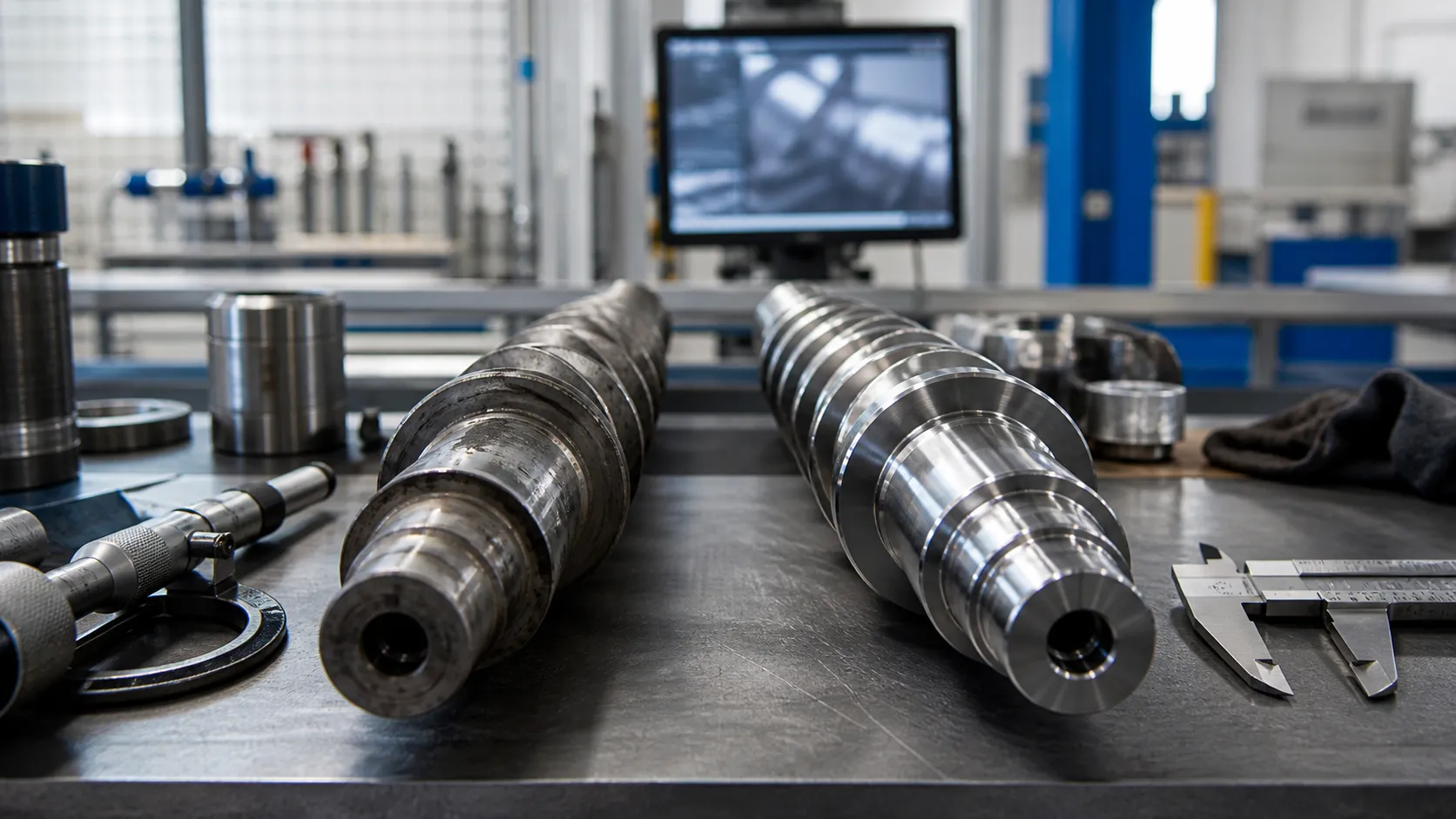
Extruder shafts operate under demanding combinations of torque, friction, abrasive product contact, thermal cycling, and washdown exposure. The choice between case hardening and through hardening determines how the shaft handles surface wear, impact loads, and structural stress throughout its service life.
For OEM food, beverage, and packaging equipment, the heat-treatment strategy must be evaluated alongside shaft geometry, base material, machining requirements, sanitary finishing, and final tolerance control.
What Is Case Hardening?
Case hardening creates a hard, wear-resistant outer layer while retaining a comparatively tougher and more ductile core. This surface-hardening approach is commonly selected where the shaft faces repeated abrasion, contact wear, scoring, or galling.
The hardened case protects working surfaces, while the inner section helps absorb shock and resist brittle failure under variable loads. Case-hardened shafts can be suitable for extrusion environments involving abrasive materials, wet slurries, or frequent mechanical contact.
Key characteristics include:
- Hard outer surface for improved wear resistance
- Tougher core for shock absorption and impact resistance
- Surface-focused protection for shaft areas exposed to friction and abrasive media
- Heat-treatment requirements that must be coordinated with final CNC finishing and dimensional inspection
What Is Through Hardening?
Through hardening produces a more uniform hardness profile across the shaft cross-section. Rather than concentrating hardness near the surface, this method strengthens the full diameter of the component.
For extruder shafts subject to sustained torsional loads, through hardening can support consistent mechanical strength through the shaft body. It is often considered for heavy-duty designs where structural stress is distributed across the entire section.
Key characteristics include:
- Uniform hardness through the shaft diameter
- Increased resistance to high torsional loading across the full cross-section
- A strong option for shafts operating under consistent structural stress
- Final machining and tolerance verification required after heat treatment to maintain fitment accuracy
In through vs case hardening for extruder shafts, the practical decision is whether the application demands maximum surface wear protection with core toughness or more uniform strength throughout the shaft.
Key Differences Between Case Hardening and Through Hardening
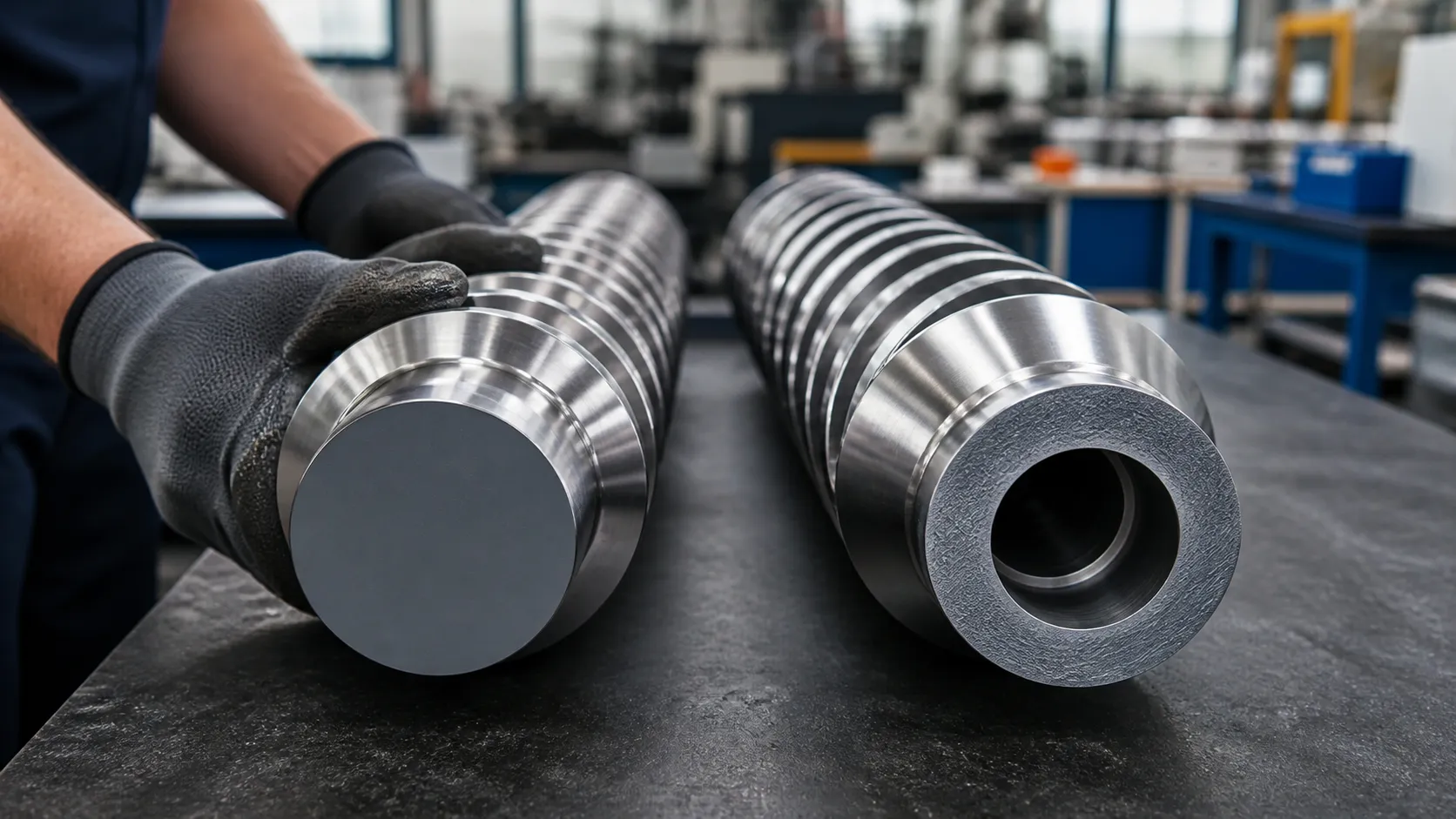
Case hardening and through hardening create different hardness profiles. We assess the shaft’s load, wear conditions, material, and required finishing before selecting a process.
Hardness Depth and Profile
| Factor | Case Hardening | Through Hardening |
|---|---|---|
| Hardness location | Hard outer layer with a more ductile core | Hardness extends through the shaft section |
| Main advantage | Surface wear resistance and core shock absorption | Consistent strength across the shaft diameter |
| Typical fit | Shafts exposed to abrasive materials | Shafts exposed to high, uniform torsional loads |
Case hardening is generally suited to surface wear concerns, while through hardening supports structural strength across the complete cross-section.
Core Toughness and Ductility
A case-hardened shaft combines a wear-resistant surface with a tougher, more ductile core. This structure can help manage impact loads while protecting the working surface.
A through-hardened shaft has a more uniform hardness profile. It can provide consistent resistance to torsional stress, but the final balance between hardness and toughness depends on the material and heat-treatment specification.
Material Selection and Compatibility
Material selection must match the required shaft performance and sanitary application. We review options such as:
- Stainless Steel 304
- Stainless Steel 316L
- Alloy steels where specified by the design
- Other verified materials based on the application
The chosen hardening method should be evaluated together with carbon content, alloy composition, section thickness, and required surface treatment. For food and packaging equipment, passivation, electropolishing, or specialised food-grade polishing may also be required.
For abrasive applications such as pet food processing, the shaft design can be reviewed alongside pet food wear tracks and DLC-coated components to support a complete wear-control approach.
Process Complexity and Cost
Case hardening typically requires closer control of the hardened layer and core properties. Through hardening requires consistent treatment across the full shaft section. In both cases, distortion and dimensional change must be considered before final CNC machining.
We use DFM evaluation to align the hardening method with:
- Shaft geometry and section thickness
- Required tolerance and concentricity
- Material certification
- Post-treatment machining needs
- Sanitary finishing requirements
Final cost depends on the material, geometry, quantity, heat-treatment requirements, and inspection scope. A drawing-based review provides the most reliable basis for production planning and quotation.
Importance of Heat Treatment in Extruder Shaft Applications
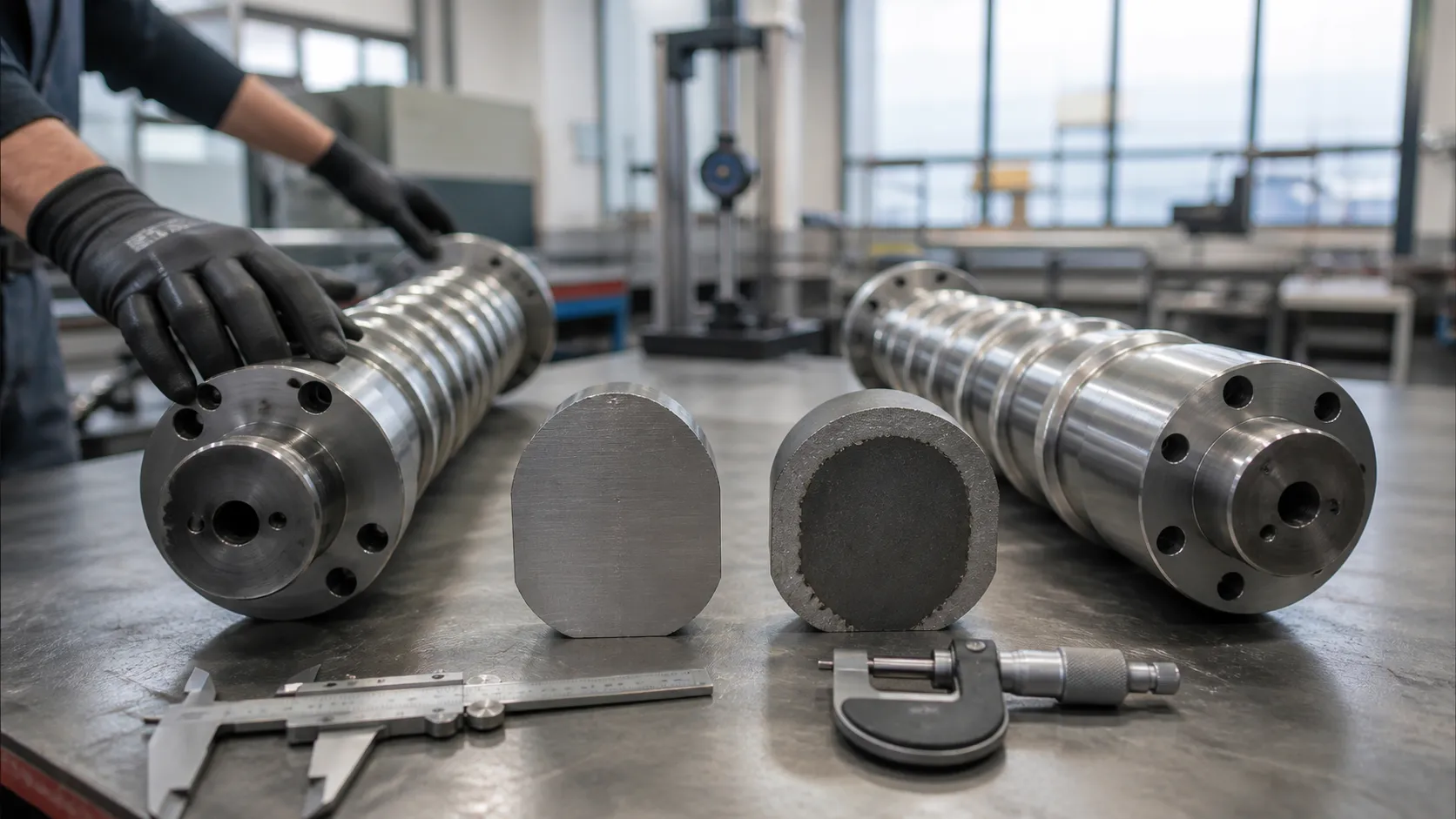
Heat treatment is a core engineering decision for extruder shafts used in food, pet food, beverage, and packaging systems. The right method helps the shaft manage abrasive contact, repeated torque, thermal cycling, and washdown exposure while maintaining the fit required by connected components. In through vs case hardening for extruder shafts, the priority is to match the hardness profile to real operating loads rather than applying a one-size-fits-all process.
Resistance to Wear and Abrasion
Extruder shafts can face continuous friction from processed materials, mating parts, and abrasive media. A properly selected heat treatment improves wear resistance where it is needed most, reducing surface scoring, galling, and premature wear in high-contact areas.
For shafts exposed to abrasive pet food ingredients or wet slurries, a case-hardened surface can provide a durable outer layer while retaining a more ductile core. This approach can be considered alongside purpose-built hardened extruder shafts for pet food equipment when evaluating wear performance and shaft service conditions.
After heat treatment, we use precision CNC turning and 5-axis machining to finish critical dimensions, followed by sanitary surface finishing where required. This supports smooth surfaces that are easier to clean and better suited to demanding washdown environments.
Torsional Strength and Fatigue Resistance
Extruder shafts transfer sustained rotational force, often under changing loads. Heat treatment affects how the shaft responds to twisting, shock loads, and long-term cyclic stress. A through-hardened shaft develops more uniform hardness across its section, supporting high strength throughout the shaft diameter in heavy-duty torque applications.
Case hardening provides a different balance: a hard outer surface for contact wear and a tougher inner core that can help absorb impact. The preferred method depends on shaft geometry, section thickness, base material, and the operating duty cycle.
We review these factors during DFM evaluation and verify finished dimensions through CMM inspection and documented quality controls. For shafts and related components subject to continuous contact and friction, our CNC-machined wear parts are produced to support reliable fit, controlled tolerances, and traceable material handling.
Through vs. Case Hardening Performance in Extruder Shafts
Hardening method directly affects how an extruder shaft handles wear, torque, impact, and repeated washdown exposure. In through vs. case hardening for extruder shafts, the correct choice depends on whether the shaft’s primary risk is surface damage or stress across its full section.
Performance Characteristics of Case-Hardened Shafts
Case-hardened shafts combine a hard outer layer with a tougher inner core. This structure is well suited to shafts where abrasive product contact, surface scoring, and galling are major concerns.
Key performance benefits include:
- High wear resistance at journals, splines, keyways, and other contact areas
- Better resistance to abrasion from demanding media, including wet slurries and pet food products
- A ductile core that helps absorb impact and reduces brittle failure risk
- Strong fit for high-wear applications where the surface sees repeated friction
Case hardening can help preserve shaft surfaces while maintaining core toughness under shock loads. Final machining and sanitary finishing remain important after heat treatment, especially where precise fits and cleanable surfaces are required. Our experience with pet food wear-track machining applications reflects the importance of matching wear protection to abrasive processing conditions.
Performance Characteristics of Through-Hardened Shafts
Through-hardened shafts have a more uniform hardness profile across the complete shaft diameter. They are typically selected when the shaft must carry high torsional loads and structural stress throughout its section thickness.
Key performance benefits include:
- Consistent strength through the full cross-section
- Higher resistance to torsional deformation in high-torque drives
- Reliable fatigue strength where loading is repeated over long production cycles
- Suitable performance for heavy-duty shafts exposed to broadly distributed mechanical stress
For through-hardened extruder shafts, heat treatment must be coordinated with alloy composition, shaft geometry, and final tolerance requirements. We use CNC turning, 5-axis machining, and CMM inspection to support finished dimensions down to ±0.01 mm, including critical shaft features that require close concentricity and fitment control.
How to Select the Right Hardening Method for Extruder Shafts
Selecting between through hardening and case hardening for extruder shafts starts with the actual load, wear conditions, material requirements, and finishing needs. We review these factors during DFM evaluation so the heat treatment approach supports both service performance and final CNC-machined tolerances.
Evaluating Operating Torque and Load
Through hardening is generally suited to shafts exposed to high, consistent torsional loads across the full diameter. Its uniform hardness profile can support strength throughout the section, helping the shaft resist deformation under demanding drive conditions.
Case hardening is often a better fit when impact loading and surface contact occur together. The hardened outer layer resists contact damage, while the tougher core can help absorb shock. Shaft diameter, section thickness, keyways, splines, and other stress-concentrating features should all be reviewed before selecting the heat treatment route.
Analyzing Processing Environment and Material Wear
The processing environment has a direct effect on hardening selection. Abrasive ingredients, wet slurries, repeated product contact, and washdown exposure can increase the need for surface wear resistance. Case-hardened shafts may be appropriate where the outside surface faces frequent abrasion or galling.
For pet food and other abrasive extrusion duties, shaft design should also be considered alongside screw geometry and material selection. Our guide to designing metering screws for abrasive kibble outlines key wear factors in these applications.
Where food-grade requirements apply, the selected material and finishing process must remain compatible with sanitary use. We work with verified materials including Stainless Steel 304, Stainless Steel 316L, aluminum, PEEK, POM, and UHMW-PE, with finishing options such as passivation, electropolishing, and food-grade polishing where applicable.
Balancing Component Lifespan and Manufacturing Cost
The right choice is not simply the hardest shaft. A durable extruder shaft needs the correct balance of surface hardness, core toughness, fatigue strength, machining requirements, and production cost.
- Choose through hardening when full-section strength and resistance to sustained torque are the main priorities.
- Choose case hardening when surface abrasion resistance and impact-tolerant core properties are more important.
- Plan post-heat-treatment machining when critical fits, concentricity, or complex shaft features require precision finishing.
- Confirm inspection requirements early to align heat treatment, final machining, and CMM reporting.
Our CNC turning and 5-axis machining processes support precision finishing to tolerances down to ±0.01 mm. For shafts with complex geometry, 5-axis CNC machining for food machinery components can help maintain accurate feature relationships after heat treatment.
Related Sources
- https://www.researchgate.net/publication/324868857_Modelling_of_induction_hardening_in_low_alloy_steels
- https://fractory.com/case-hardening-explained/
- https://www.researchgate.net/publication/356153107_Heat_Treatment_of_Gears_A_Practical_Guide_for_Engineers
- https://www.researchgate.net/publication/3
- https://www.researchgate.net/publication/391421909_Tool_wear_analysis_in_hobbing_high_torque_splined_shafts