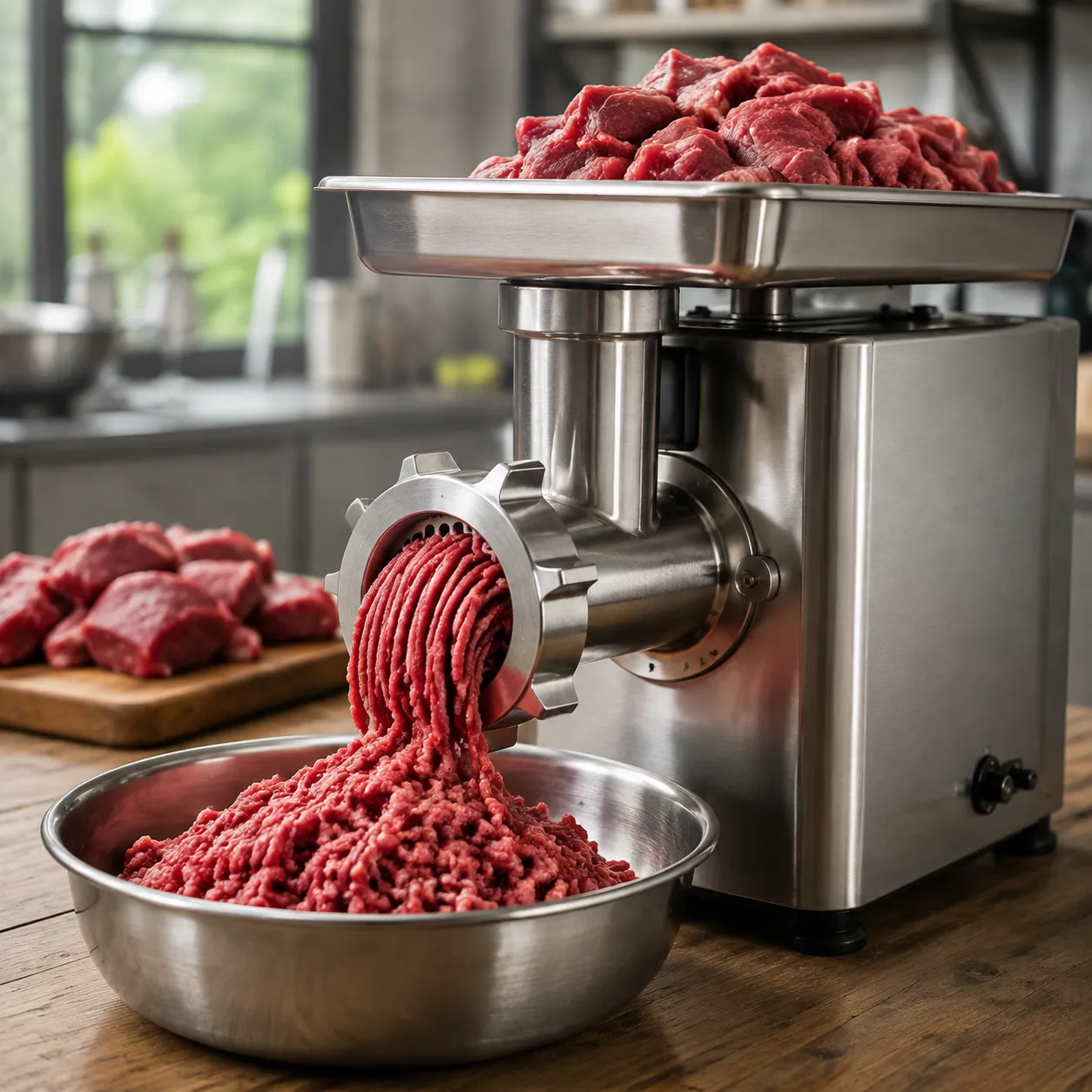
Are you losing meat grinder throughput even though the motor, knife, and plate are in good condition? The problem may be hidden in the small gap between the auger flight and the barrel wall.
In this guide, you’ll learn exactly how auger flight clearance affects material slip, forward pressure, friction, temperature, and pounds-per-hour output. You’ll also discover how excessive clearance can cause backflow, fat smearing, and inconsistent grinding quality.
Let’s break down the mechanics so you can identify wear, protect product quality, and keep your grinder performing at its best.
Understanding Auger Flight Clearance in Meat Grinders
Machining tolerance review: Typical machining tolerance is ±0.01 mm. Selected dimensions may achieve ±0.005 mm after technical review. Final tolerances depend on the drawing, material, part size, geometry, finishing and inspection requirements and must be confirmed before order acceptance.
Auger Flight Clearance
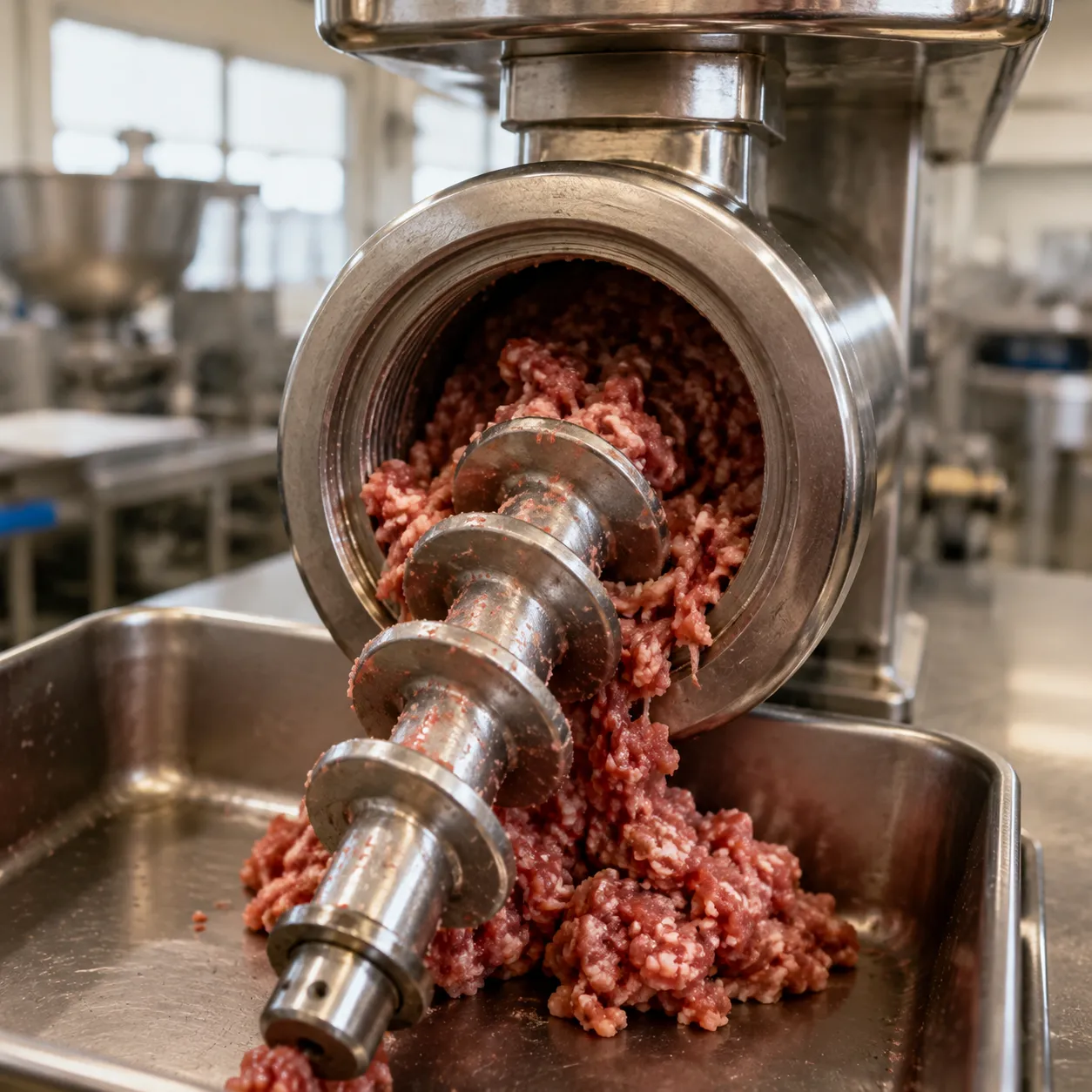
Auger flight clearance is the gap between the rotating edge of the feed screw flight and the inner wall of the grinder barrel. This feed screw barrel gap is measured along the working length of the auger, where the rotating flight moves meat forward through the barrel.
The Feed Screw’s Role
The meat grinder auger performs two connected tasks: it conveys product towards the cutting area and builds the pressure needed for consistent processing. When the auger barrel clearance is controlled, the screw can maintain a stable feed rate and reduce unnecessary product slip between the flight and barrel wall.
Why Tolerance Matters
Even small dimensional variations can change how effectively the auger transfers meat through the grinder. Excessive clearance can reduce forward pressure, while insufficient clearance may increase contact and friction. For custom meat processing components, I use precision CNC machining, including multi-axis turning and 5-axis milling, with tolerances down to ±0.01 mm where the design requires it. CMM inspection and full dimensional reports help verify the finished geometry before production use.
How Auger Clearance Directly Impacts Meat Grinder Throughput
Optimal Clearance and Forward Meat Pressure
I treat auger flight clearance as a direct control on meat grinder throughput. A controlled gap between the rotating flight and the grinder barrel helps the feed screw maintain forward pressure and move product steadily toward the cutting area. Consistent machining is essential because uneven clearance can create unstable flow and reduce volumetric efficiency. High-precision CNC machining, with tolerances down to ±0.01 mm, helps maintain accurate component fit and repeatable operation.
Excessive Clearance Causes Backflow
When the gap becomes too large, meat can slip between the auger flight and barrel wall instead of moving forward. This backflow reduces effective feed pressure and lowers processing yield over time. Product may pass through the grinder more slowly, increasing the risk of inconsistent output. For replacement or custom components, our 440C grinder augers for meat processing equipment can be evaluated against the required equipment dimensions and operating conditions.
Too Tight Clearance Increases Friction
Clearance that is too small can create unwanted contact between the auger and barrel. This increases friction, heat generation, and motor drag, which can interrupt stable processing. The goal is not simply the smallest possible gap. The goal is a precise, repeatable fit that supports forward product movement while avoiding unnecessary mechanical resistance. CNC dimensional inspection, including CMM verification, helps confirm that machined parts meet the required design dimensions.
Recognizing Symptoms of Poor Flight Clearance
When I assess a meat grinder with poor auger flight clearance, I look for a clear group of operating symptoms:
- Lower hourly yield: Reduced forward pressure can cause meat to slip or move backward, lowering processing output.
- Meat smearing: Excessive contact or unstable feeding may produce squashed meat and weaker particle definition.
- Barrel overheating: Too much friction can raise heat inside the grinding chamber and affect product condition.
- Higher motor load: Increased drag may raise energy consumption and place additional strain on the drive system.
These signs can indicate an incorrect feed screw barrel gap, auger tip wear, or another mechanical alignment issue. Consistent dimensional inspection helps identify the source before throughput and product quality decline further.
Root Causes of Auger Flight Clearance Degradation
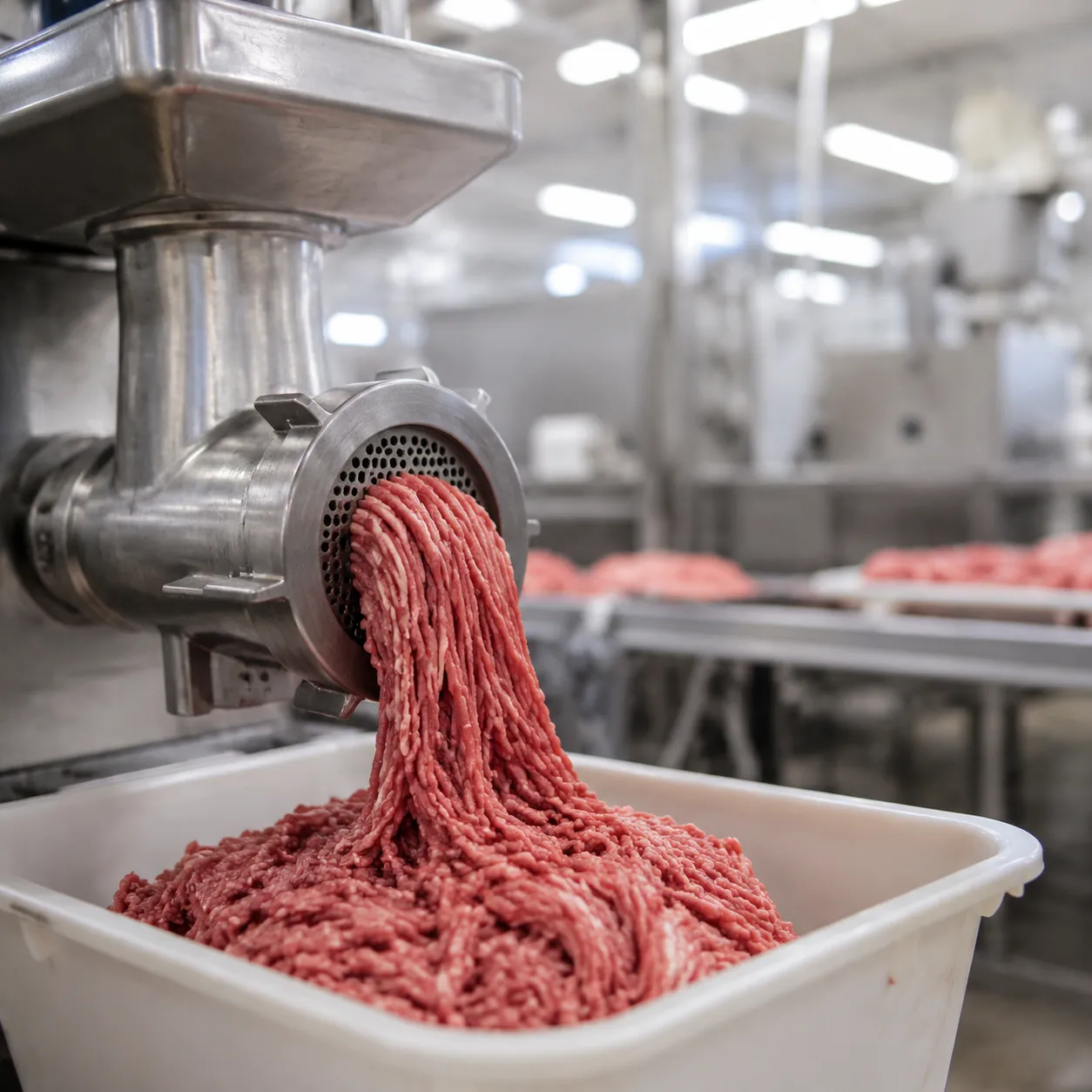
Auger flight clearance changes as operating loads gradually wear the grinder’s working surfaces. I typically see three main causes:
- Abrasive wear: Continuous contact with meat, particles, and cleaning cycles can wear the flight tips and barrel lining. As the gap grows, more product can slip backward, reducing meat grinder throughput.
- Frozen or hard product loads: Dense, frozen, or unusually hard material places greater stress on the auger and cutting system. Repeated overloads can accelerate auger tip wear and deform critical surfaces.
- Drive system movement: Drive shaft misalignment or worn thrust bearings can make the auger run off-centre. This creates uneven barrel friction, localised wear, and inconsistent feed pressure.
For replacement or re-machined components, I use suitable stainless steel or engineering materials and verify critical dimensions through controlled CNC machining and inspection. This helps restore consistent auger barrel clearance and reliable processing performance.
Measuring and Correcting Auger Flight Clearance
Accurate auger flight clearance starts with a clean, correctly aligned grinder assembly. I recommend checking the feed screw and barrel together, because wear, shaft movement, or poor alignment can change the gap from one section to another.
Check the Feed Screw Barrel Gap
Use this basic inspection sequence:
- Stop and isolate the grinder before inspection.
- Clean the auger flights, barrel wall, and cutting area to remove meat residue and debris.
- Check shaft alignment and confirm that the auger is properly seated.
- Rotate the auger slowly by hand and check the gap at several positions along the flight.
- Use a suitable feeler gauge for a preliminary gap check, recording the results at the top, bottom, and sides of the barrel.
- Compare the readings with the approved equipment drawing, sample, or maintenance specification.
- Use dimensional inspection, such as CMM verification, when precise re-machining or replacement decisions are required.
There is no single clearance value for every grinder size. The correct meat grinder auger clearance depends on the grinder design, auger geometry, barrel condition, processed product, and required operating performance. A larger machine does not automatically use the same proportional gap as a smaller one. For custom or replacement parts, I use the original drawing, a physical sample, or dimensioned field photos as the manufacturing reference.
Rebuild, Re-Machine, or Replace
A worn auger should be evaluated according to the condition of both the flight and the barrel:
- Rebuild: Suitable when wear is limited and the main body remains dimensionally stable.
- Re-machine: Appropriate when the part can be restored to the required geometry without weakening the flight or changing its fit.
- Replace: Necessary when flight wear, shaft damage, distortion, or barrel deterioration prevents reliable clearance control.
For food-processing applications, material and surface condition also matter. Stainless steel 304 and 316L are available for hygienic equipment components, while passivation and electropolishing can support smoother, easier-to-clean surfaces. Material selection for auger screws should reflect the product and cleaning environment, as outlined in this guide to 316L versus 304 for acidic beverage auger screws.
ZSCNC supports custom CNC machining, 5-axis precision machining, CMM inspection, IQC/OQC, and dimensional reporting. With tolerances down to ±0.01 mm, the final part can be checked against the required design rather than relying only on visual inspection or a general clearance estimate.
Proactive Maintenance for Maximum Throughput
I treat auger flight clearance as a critical maintenance point for stable meat grinder throughput. Regular inspections help identify wear, clearance changes, and alignment issues before they reduce processing yield or increase product slippage.
- Check the flight-to-barrel gap at planned maintenance intervals using suitable dimensional inspection methods.
- Inspect flight tips, barrel contact areas, and drive components for visible wear or damage.
- Keep the drive line properly maintained according to the equipment manufacturer’s requirements to support consistent rotation and feed pressure.
- Select an auger flight pitch that matches the grinder design and the meat application, then verify the finished component through dimensional inspection.
- Use CMM verification and full dimensional reports when producing custom or replacement augers to help maintain repeatable clearance and throughput.
Frequently Asked Questions About Auger Flight Clearance
How much clearance should be between the auger and the barrel?
There is no single clearance value for every meat grinder. The correct auger flight clearance depends on the grinder design, barrel condition, product load, and manufacturer’s specifications. I recommend checking the feed screw barrel gap against the original drawing or approved maintenance standard. Excessive clearance can increase meat slip and backflow, while insufficient clearance can raise friction, heat, and motor load.
Does improper auger clearance affect final meat quality and texture?
Yes. Excessive auger clearance can reduce forward pressure and allow meat to move backwards inside the barrel. This may contribute to uneven feeding, smearing, squishing, and reduced particle definition. For broader equipment and component considerations, I also review the requirements outlined for the meat processing industry.
Can a worn auger cause long-term motor damage?
A worn auger can increase operating strain when the grinder struggles to maintain feed pressure. A clearance that is too tight may also create excessive friction and heat, increasing motor load. I treat repeated overloads, unusual noise, and rising operating temperature as reasons to inspect the auger, barrel, shaft alignment, and thrust bearings.
How do I know if low throughput is caused by the auger or the cutting plate?
I compare several symptoms before replacing parts:
- Auger or barrel issue: reduced feed pressure, backflow, visible flight-tip wear, inconsistent product movement, or an enlarged barrel gap.
- Cutting plate issue: poor particle definition, uneven cutting, increased smearing, or visible wear at the plate and knife interface.
- System issue: low throughput combined with shaft misalignment, worn bearings, product temperature variation, or abnormal motor load.
A dimensional inspection helps separate clearance problems from cutting-plate problems. For custom replacement components, I can assess 2D or 3D CAD files, physical samples, or dimensioned field photos and provide an itemised DFM review and quotation within 24–48 hours.