Overview
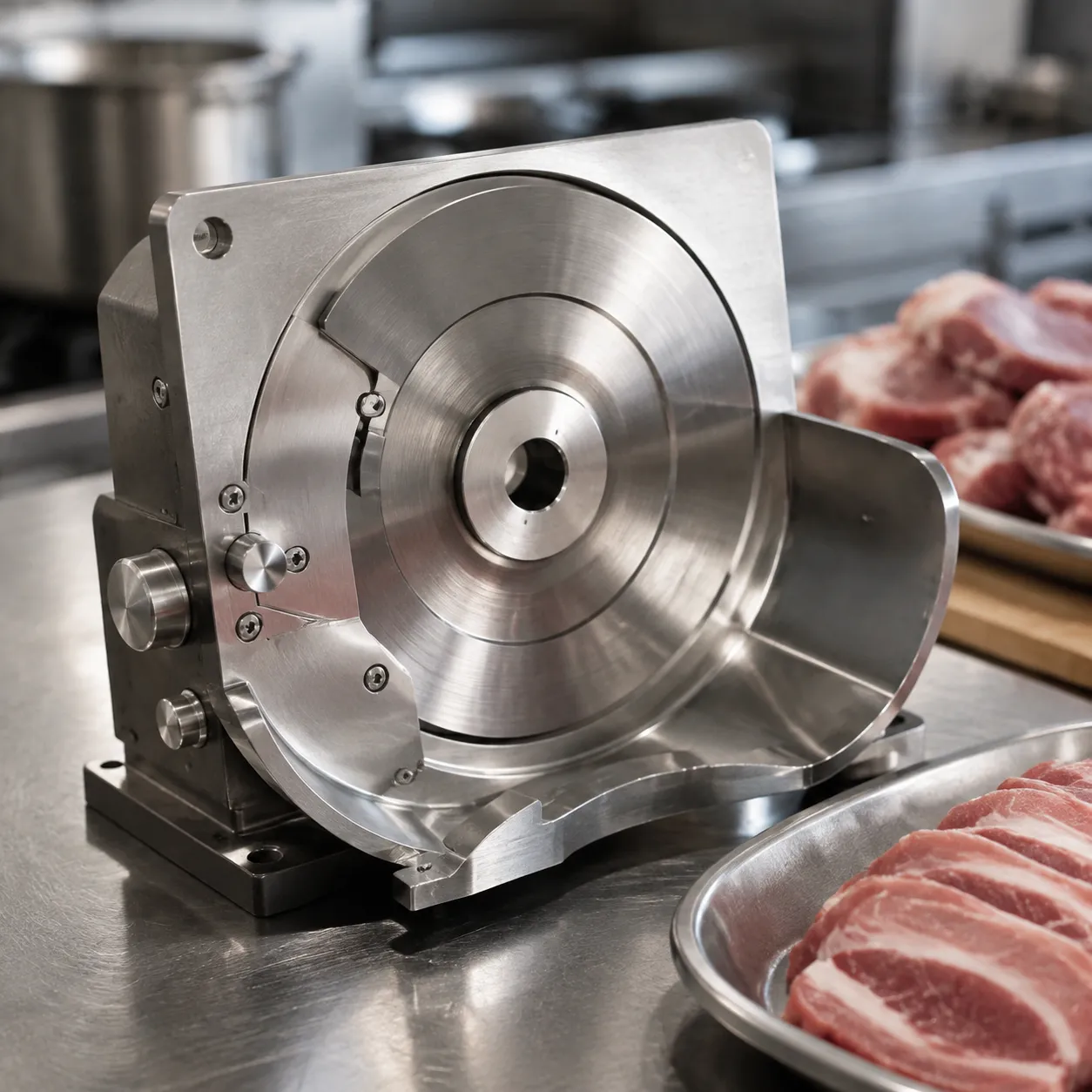
Overview of 316L Slicer Blade Blocks for Meat Processing
High-efficiency industrial meat processing requires tooling that delivers surgical precision and reliable hygiene. 316L slicer blade blocks for meat processing represent the gold standard in commercial cutting components, engineered specifically to handle continuous, high-volume production under demanding processing environments.
What Are 316L Stainless Steel Meat Slicer Blades?
316L stainless steel meat slicer blades are precision-engineered cutting assemblies fabricated from low-carbon, food-grade stainless steel. These specialized blade blocks host multi-blade arrays designed for rapid slicing, dicing, portioning, and stripping.
- Food-Grade Safety: Fully compliant with global sanitary regulations (FDA, EHEDG, EU 1935/2004).
- Low-Carbon Alloy: The "L" grade minimizes carbide precipitation, ensuring maximum structural integrity and corrosion resistance.
- Precision Engineering: Built for seamless integration into high-speed automated processing equipment.
Key Material Specifications and Properties
The metallurgical properties of 316L stainless steel provide distinct performance advantages over standard alloys like 304 stainless steel.
| Material Property | 316L Stainless Steel Specification | Advantage in Meat Processing |
|---|---|---|
| Chemical Composition | 16–18% Cr, 10–14% Ni, 2–3% Mo | Superior resistance to organic fats, blood, and saline solutions |
| Carbon Content | ≤ 0.03% (Low Carbon) | Eliminates intergranular corrosion at weld and joint stress points |
| Pitting Resistance | High PREN (~23–25) | Prevents micro-pitting caused by harsh daily chemical sanitation |
| Durability & Wear | High Tensile & Yield Strength | Maintains sharpness through extended high-volume production shifts |
Role in Commercial Food Processing Equipment
In modern meat manufacturing, blade blocks serve as the operational core for primary and secondary processing machinery. 316L slicer blade blocks integrate directly into high-output industrial setups, including:
- High-Speed Circular Slicers: Delivering consistent slice thickness and accurate portion weights.
- Industrial Dicing Machines: Providing multi-axis cut consistency for uniform meat cubes and strips.
- Continuous Processing Lines: Operating reliably without structural warping, thermal degradation, or blade chatter.
By maintaining high cutting accuracy and withstanding rigorous washdown cycles, 316L blade blocks prevent product contamination, minimize maintenance downtime, and maximize throughput for commercial meat processors.
- Key Features and Advantages of 316L Blade Blocks
When we engineered our 316L slicer blade blocks for meat processing, our goal was simple: build a rock-solid cutting assembly that solves the biggest headaches in high-volume processing plants—corrosion, edge dulling, and costly downtime.
- Superior Corrosion Resistance and Hygiene Standards
Meat processing environments are exceptionally harsh on machinery. Constant exposure to salty brines, fatty acids, animal blood, and aggressive daily washdown chemicals will quickly degrade standard alloys.
By utilizing low-carbon food-grade stainless steel, our 316L blade blocks deliver unmatched corrosion resistance. They resist chloride pitting and crevice corrosion, ensuring smooth surfaces that prevent bacterial harborages and easily satisfy global sanitation requirements. For complete cutting setup integration, explore our line of sanitary knife holders and cutter seats designed for high-hygiene food processing lines.
- Exceptional Sharpness and Precision Cut Quality
Maintaining precise blade geometry across long operational shifts is critical for consistent yield and clean product presentation.
- Clean Cuts: Prevents tearing, smearing, and crushing of delicate protein fibers.
- Reduced Yield Loss: Ensures accurate target weights during high-speed portioning, minimizing costly product giveaway.
- Versatile Performance: Delivers smooth cutting performance when integrated into high-speed slicers, deboning lines, and industrial dicing machines.
- Extended Service Life and Heavy-Duty Durability
Unexpected equipment failure ruins production schedules. The addition of molybdenum in 316L stainless steel boosts structural toughness under continuous heavy mechanical loads.
| Feature | Standard Stainless Steel Blocks | Our 316L Slicer Blade Blocks |
|---|---|---|
| Chemical Resistance | Moderate (Risk of pitting from salts) | Maximum (Resists harsh washdown chemicals) |
| Operational Lifespan | Standard replacement cycles | Extended service life (Up to 40% longer operation) |
| Hygiene Standards | Micro-pits can trap bacteria | Smooth, non-porous finish for fast sanitation |
| Maintenance Need | Frequent realignment and repair | Low maintenance with excellent structural rigidity |
Common Types and Profiles of Meat Slicer Blades
We design 316L slicer blade blocks for meat processing to handle diverse cutting, stripping, and portioning demands across commercial production lines. Selecting the right blade geometry directly impacts your product yield, cut appearance, and overall throughput.
Straight and Circular Slicer Blades
Different processing setups demand specific blade movements to achieve clean cuts without tearing meat fibers:
- Straight Blades: Ideal for high-speed guillotine cutters, skinning blades, and derinding machines. They deliver rapid, decisive cuts across uniform slabs of fresh or chilled product.
- Circular Slicers: Essential for continuous, high-volume portioning and slicing. Rotating circular blades maintain consistent thickness on everything from deli meats to large primal cuts.
When evaluating 440C vs 316L for cutting blades, 316L stainless steel provides superior resistance against salt brine, fatty acids, and aggressive washdown chemicals, making it the preferred choice for complete blade block housing assemblies.
Serrated and Scalloped Edge Profiles
The edge profile determines how the blade engages with different meat textures:
- Serrated Edges: Feature sharp teeth designed to puncture tough outer skins, frozen blocks, or heavy cartilage without slipping.
- Scalloped Edges: Utilize smooth, hollowed arches to gently slice through delicate poultry or fresh pork without shredding or smearing fat.
- Plain Straight Edges: Offer maximum precision for paper-thin slicing and clean portion control on boneless cuts.
Multi-Blade Assembly Blocks and Tenderizer Sets
For complex dicing machines, gang-slicers, and meat tenderizer systems, we manufacture specialized multi-blade blocks:
- Gang Assembly Blocks: Mount multiple parallel blades into a rigid 316L block to execute simultaneous multi-strip slicing.
- Tenderizer Blade Sets: Feature interlocking star-shaped or tooth-style blades designed to pierce muscle fibers cleanly.
- Custom Spacing: Precision-machined spacers ensure exact slice thickness across every channel.
Our 316L multi-blade blocks adhere to core criteria for hygienic knife holders in meat processing, eliminating crevice points where bacteria or organic residue can build up during production runs.
- Applications in Meat and Food Processing Industries
We engineer our 316L slicer blade blocks for meat processing to withstand the demanding environments of high-volume production lines. From cold storage processing facilities to continuous conveyor setups, these blade blocks provide unmatched structural stability and superior corrosion resistance across the global meat processing industry.
Fresh and Frozen Meat Slicing
Slicing frozen subprimals or delicate fresh cuts requires extreme edge retention and rigid block alignment. Our food-grade 316L stainless steel blade blocks integrate seamlessly into industrial dicing machines and circular slicers, preventing blade deflection even when processing sub-zero products.
- Frozen Block Slicing: Delivers clean cuts through frozen beef, pork, and mutton blocks without micro-chipping or bending.
- Fresh Cut Accuracy: Eliminates meat tearing on soft fresh cuts, ensuring consistent thickness and clean product presentation.
Poultry and Seafood Processing
High-saline environments in seafood processing and aggressive washdown chemicals in poultry plants quickly degrade standard tool metals. Applying 316L stainless steel guarantees maximum resistance to salt brine, fatty acids, and chemical sanitizers commonly used in the poultry processing industry.
- Deboning & Skinning: Maintains precise tolerances for automated deboning, derinding blades, and specialized skinning blades to maximize yield.
- Corrosion Protection: Resists pitting and rust during frequent high-pressure sanitation cycles.
Commercial Meat Stripping and Portioning
Consistency directly impacts yield and profit margins in commercial portioning. Our blade block assemblies deliver exact, repeatable spacing for automated high-throughput lines.
- Target-Weight Portioning: Locks blades into fixed positions to ensure consistent portioning and accurate target weights for retail trays.
- Texturizing & Tenderizing: Houses heavy-duty meat tenderizer blade sets for uniform tenderizing without loose components or misalignments.
Custom Manufacturing and Replacement Capabilities
We engineer and manufacture premium 316L slicer blade blocks for meat processing tailored directly to your plant's operational demands. Standard off-the-shelf tooling often falls short when handling unique cuts, high-speed lines, or strict food safety mandates. Our custom engineering and fast-turnaround replacement services ensure your meat processing machinery operates at peak efficiency with minimal downtime.
Custom Blade Block Engineering and Dimensions
Every processing line has distinct requirements, which is why we build custom 316L blade blocks to exact operational specs:
- Precision Spacing & Pitch: Custom blade spacing tailored for accurate portioning, dicing machines, and high-speed stripping equipment.
- Tailored Edge Profiles: Optimized bevel angles designed for smooth slicing through fresh, chilled, or frozen meat products.
- Rigid Block Metallurgy: Fully machined from 316L food-grade stainless steel to deliver maximum corrosion resistance against aggressive sanitation chemicals and saline solutions.
Alongside specialized slicer assemblies, our facility manufactures complementary custom food-contact components, including precision pet food extruder die plates built for heavy-duty food production equipment.
OEM Compatibility and Replacement Blade Blocks
We provide direct drop-in replacement blade blocks designed to fit leading OEM processing machinery, eliminating long factory lead times and high replacement costs.
| Specification | Our 316L Replacement Blocks | Standard OEM Parts |
|---|---|---|
| Material Build | Premium 316L Stainless Steel | Standard 304 Stainless Steel |
| Corrosion Resistance | Superior against organic acids & brines | Moderate |
| Fit & Alignment | 100% Direct Drop-in OEM Fit | Factory Standard |
| Customization | Custom pitch, thickness & edge profiles | Fixed Factory Specs |
Whether you are upgrading worn multi-blade blocks, meat tenderizer sets, skinning components, or derinding blades, our custom replacement blocks deliver exact fitment, extended edge life, and reliable continuous operation.
How to Select and Maintain Meat Processing Blade Blocks
Choosing the right 316L slicer blade blocks for meat processing keeps your production lines running fast, precise, and fully compliant with global food safety standards. Proper selection combined with a disciplined maintenance routine prevents unscheduled downtime and maximizes operational efficiency.
Factors to Consider When Choosing Blade Blocks
Selecting the right blade block assembly requires evaluating your specific processing conditions and yield targets:
- Product Temperature and State: Fresh, tempered, and frozen meats require distinct edge geometries and bevel angles to avoid tissue tearing.
- Processing Environment: High-salinity, acidic marinades, or chemical washdowns demand premium food-grade stainless steel for maximum corrosion resistance.
- Processing Application: Match the block profile directly to your primary task—whether portioning, dicing, skinning, or tenderizing.
- Machine Compatibility: Ensure exact dimensional tolerances to fit seamless integrations across circular slicers, dicing machines, and automated cut lines.
Blade Maintenance, Sharpening, and Care Guidelines
Proper upkeep protects both cutting accuracy and overall equipment life. Follow these practical care guidelines:
- Daily Edge Inspection: Check cutting edges before every production shift for chips, burrs, or physical alignment issues.
- Safe Cleaning Protocols: Wash blade blocks immediately after production using neutral, non-abrasive sanitizers to maintain the metal's passive surface coating.
- Precision Resharpening: Use dedicated grinding jigs to restore bevel angles without introducing thermal stress to the metal.
- Protected Storage: Store cleaned and dried blade blocks in dedicated holding racks to prevent accidental contact damage between blades.
Similar to best practices used to extend extruder die plate service life, consistent daily maintenance of your cutting assemblies significantly lowers replacement costs and keeps cut quality uniform shift after shift.