Understanding Electropolishing for Welded Stainless Steel Conveyor Brackets
What Is Electropolishing in Stainless Steel Fabrication?
Electropolishing is an advanced electrochemical surface treatment often described as "reverse electroplating." In high-precision stainless steel fabrication, this process uses a controlled electrical current and an acid electrolyte bath to strip away a microscopic outer layer of metal.
- Micro-smoothing: Dissolves surface peaks faster than valleys, leaving a mirror-smooth finish.
- Enhanced passivation: Removes free iron from the surface, significantly raising the chromium-to-iron ratio.
- Featureless finish: Delivers a bright, ultra-clean surface free of directional lines or micro-burrs.
How Welding Affects Stainless Steel Conveyor Brackets
While welding provides structural strength for heavy-duty conveyor brackets, extreme heat damages the protective properties of stainless steel:
- Heat Tint & Oxide Scale: Thermal oxidation forms heavy weld discoloration and scale, destroying the material's natural protective layer.
- Chromium Depletion: Thermal stress pulls chromium away from the surface zone, leaving bare stainless steel exposed to rapid corrosion.
- Surface Roughness: Weld seams create microscopic crevices that readily trap moisture, organic matter, and aggressive chlorides.
Importance of Food-Grade Surface Finishing in Seafood Processing
Seafood processing facilities operate in extreme processing environments filled with saltwater, brine, high humidity, and raw organic debris. Achieving a certified food-grade finish on all conveyor hardware is crucial for maintaining daily operations and food safety:
- Maximum Cleanability: Smooth, non-porous surfaces prevent fish oils and tissue from adhering to brackets.
- Corrosion Resistance: Restored surface chemistry stops pitting caused by constant sodium chloride exposure.
- Bacterial Prevention: Eliminates micro-cracks where pathogens harbor and form resilient biofilms during production cycles.
Why Seafood Conveyor Brackets Need Electropolishing After Welding
Removal of Weld Heat Tint, Scale, and Discoloration
Welding generates extreme heat that leaves behind prominent weld discoloration, heat tint, and surface oxide scale. This process pulls chromium out of the stainless steel substrate, leaving chromium-depleted zones right along the weld seam. If left untreated, these discolored areas become immediate focal points for localized pitting and rust in harsh seafood environments. Electropolishing electrochemically strips this depleted outer layer, removing heat tint entirely to reveal uniform, pristine metal beneath.
Elimination of Micro-Burrs and Surface Roughness
Mechanical grinding or manual deburring after welding often leaves microscopic peaks, valleys, and sharp metal tears. Electropolishing operates as an electrochemical reverse-plating process that targets high points on the bracket surface:
- Levels surface peaks: Drastically reduces overall surface roughness (Ra) for a mirror-smooth food grade finish.
- Removes micro-burrs: Eliminates razor-thin metal slivers before they can break off into production streams.
- Smooths weld seams: Blends complex bracket joints into seamless, continuous contours.
Restoration of the Passive Oxide Layer for Maximum Corrosion Resistance
Saltwater, brine, and high humidity constantly threaten structural hardware in seafood facilities. While welding destroys the protective surface barrier, electropolishing selectively dissolves free iron from the surface while concentrating chromium. This reaction accelerates deep passivation, rebuilding an ultra-durable chromium oxide film that delivers maximum corrosion resistance. Just as we prioritize material integrity in sanitary processing equipment hardware, achieving this continuous passive layer is essential to prevent premature bracket failure under harsh marine exposure.
Prevention of Bacterial Adhesion and Biofilm Build-Up
Microscopic surface pits and rough weld profiles act as safe harbors for organic matter, oils, and persistent bacteria like Listeria. By removing these microscopic microscopic crevices, electropolishing eliminates the anchor points bacteria need to form biofilms. The result is superior surface cleanability, ensuring full compliance with stringent food safety regulations while drastically reducing the time and chemical volume required for daily plant washdowns.
Key Scenarios: When Is Electropolishing Necessary for Conveyor Brackets?
Determining when stainless steel seafood conveyor brackets need electropolishing after welding comes down to operational environment, regulatory demands, and bracket geometry. We recommend post-weld electropolishing whenever standard mechanical finishing falls short of strict sanitation and anti-corrosion requirements.
Exposure to High-Salinity Seafood Processing Environments
Seafood facilities handle heavy concentrations of saltwater, brine solution, and high-humidity ambient air. Welding disrupts the natural passive layer of stainless steel, leaving heat-affected zones vulnerable to rapid chloride pitting. Electropolishing strips away iron contaminants, restoring maximum corrosion resistance to withstand constant saltwater exposure without rusting.
Strict Compliance with Food Safety and Hygiene Standards
Global food safety regulations require non-porous, highly cleanable surfaces across all processing line hardware. Standard welded seams contain microscopic pits and crevices where organic seafood material can accumulate. Electropolishing levels surface roughness to a microscopic finish, preventing bacterial colonization and helping plants clear strict food hygiene audits.
Complex Weld Geometries and Hard-to-Clean Bracket Surfaces
Brackets featuring tight angles, internal welds, gussets, or mounting channels are nearly impossible to polish uniformly by hand. While complex food machinery components offer high structural performance, manual post-weld grinding often misses tight joints. Electropolishing uses an electrochemical bath to reach deep into complex bracket geometries, treating 100% of the surface area evenly.
High-Frequency Chemical Washdown and Sanitation Routines
Daily sanitation routines rely on harsh alkaline foams, acid rinses, and high-pressure steam washdowns. Untreated weld heat tint and oxide scale break down under these aggressive chemical attacks, leading to structural fatigue. Electropolishing creates a uniform, highly passive surface layer that resists chemical degradation and eliminates weld discoloration over thousands of washdown cycles.
2 Core Benefits of Electropolishing Conveyor Brackets
We know firsthand how demanding seafood processing environments are on stainless steel hardware. Electropolishing welded brackets isn't just a cosmetic touch—it's a critical step to ensure peak performance, strict food safety, and long-term equipment reliability.
| Benefit Feature | Standard Welded Bracket | Electropolished Bracket |
|---|---|---|
| Surface Micro-finish | Rough, porous surface | Mirror-smooth, microscopic polish |
| Corrosion Resistance | Prone to pitting from salt mist | Maximized passive oxide layer |
| Sanitation Time | High chemical and labor cost | Fast, low-effort washdowns |
| Biofilm Risk | High (bacteria traps in micro-cracks) | Extremely low (non-stick surface) |
3 Superior Resistance to Saltwater Corrosion and Pitting
Welding stainless steel destroys its protective surface coating, leaving heat tint and vulnerable zones for rust. Electropolishing removes these damaged outer layers while accelerating natural passivation. For high-stress mounting brackets, this treatment creates high corrosion resistance against aggressive saltwater brine and harsh chloride pitting.
3 Enhanced Cleanability and Reduced Cleaning Time
In seafood plants, fast and effective washdown routines keep production lines moving safely. Electropolishing strips away surface micro-burrs and microscopic roughness left behind by welding.
- Eliminates Traps: Removes microscopic pits where fish proteins, oils, and bacteria hide.
- Delivers Food-Grade Finish: Creates a sleek surface that resists chemical scaling and biofilm build-up.
- Cuts Maintenance Costs: Requires significantly less water, scrubbing, and aggressive chemical cleaners during sanitation cycles.
3 Extended Component Lifespan and Operational Reliability
By stripping away post-weld micro-fissures and stress points, electropolishing preserves the structural strength of hardware installed on wet conveyors. Brackets maintain their load-bearing integrity under constant vibration, preventing premature fatigue failure, unscheduled downtime, and frequent part replacements.
- Comparing Post-Weld Finishing Methods for Food Processing Equipment
Choosing the right post-weld surface treatment determines how well stainless steel hardware withstands corrosive seafood processing environments. While several methods handle weld discoloration and oxide scale, they deliver drastically different levels of surface smoothness and long-term protection.
Electropolishing vs. Chemical Pickling and Passivation
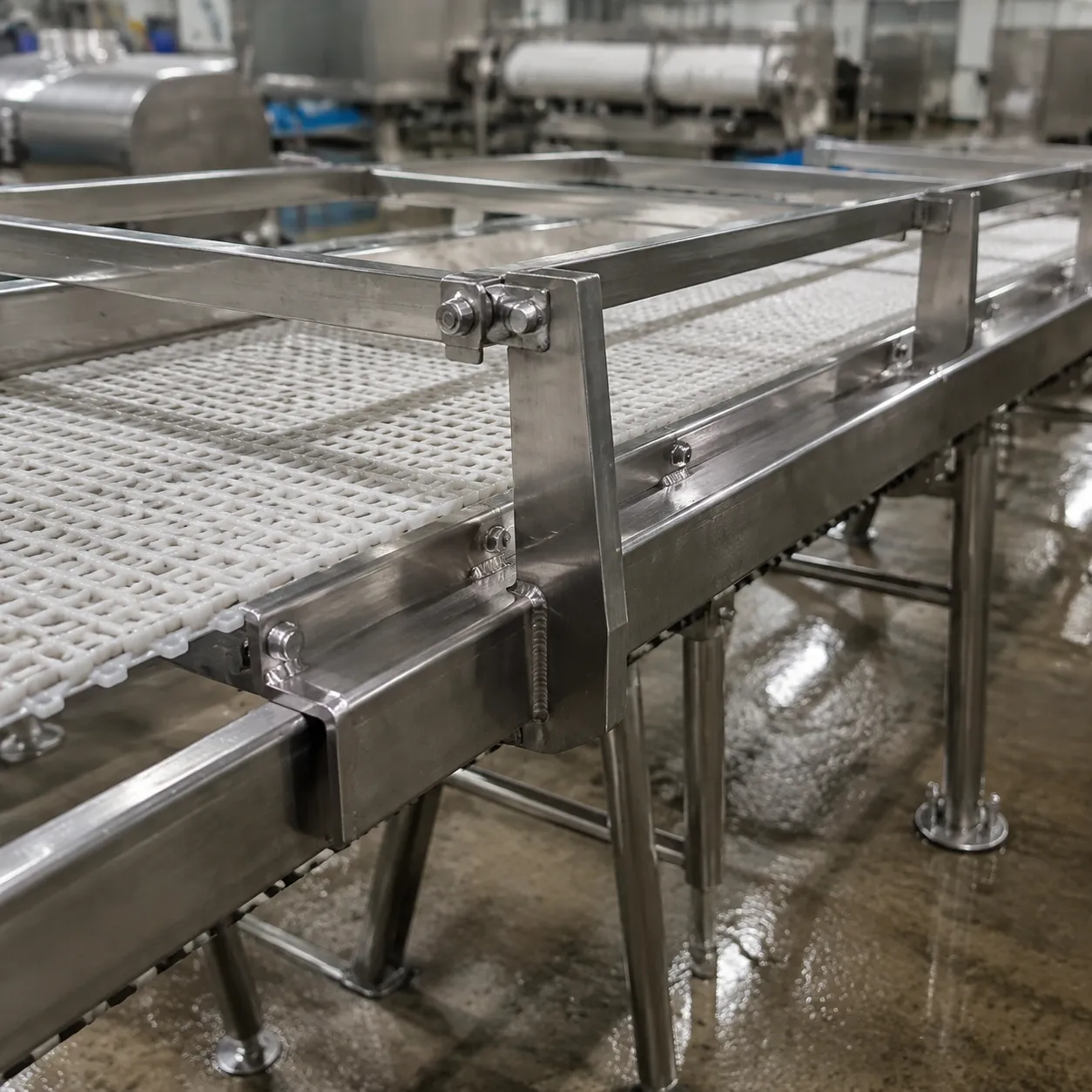
Chemical pickling removes oxide scale and heat tint using aggressive acid solutions, while passivation restores the protective chromium oxide layer. However, neither process alters the physical surface profile.
- Chemical Pickling & Passivation: Removes weld discoloration and restores the passive layer, but leaves underlying micro-roughness, microscopic pits, and rough weld seams untouched.
- Electropolishing: Combines surface cleaning with an electrochemical reaction that dissolves micro-peaks on the metal surface. It removes heat tint, passivates the alloy, and significantly reduces surface roughness in a single step.
| Finishing Feature | Chemical Pickling & Passivation | Electropolishing |
|---|---|---|
| Heat Tint & Scale Removal | Yes | Yes |
| Micro-Surface Smoothing | No | Yes (Reduces Ra up to 50%) |
| Saltwater Corrosion Resistance | Moderate | Maximum |
| Biofilm & Bacteria Prevention | Moderate | Superior |
Electropolishing vs. Mechanical Grinding and Polishing
Mechanical grinding relies on abrasive wheels to smooth down welded bracket joints. While it makes surfaces look smooth to the naked eye, it introduces hidden surface flaws.
- Mechanical Polishing: Leaves microscopic directional scratches where salt water, organic matter, and bacteria get trapped. It can also embed abrasive grain particles into the metal matrix, triggering localized pitting corrosion.
- Electropolishing: Eliminates metal uniformly without mechanical stress or directional scratches. It creates a featureless, mirror-like finish—even on intricate bracket shapes that grinding wheels cannot reach.
Selecting the Best Finishing Process for Conveyor Hardware
Evaluating when seafood conveyor brackets need electropolishing after welding comes down to environment, hardware geometry, and sanitation demands. While chemical pickling or mechanical grinding might work for basic dry packaging lines, harsh saltwater washdown zones demand a higher standard.
We always recommend electropolishing when conveyor hardware features complex weld joins, tight crevices, or continuous brine exposure. Just like meeting strict standards for hygienic knife holders in meat processing, achieving a non-porous, food-grade finish on bracket surfaces eliminates bacterial harborage points, slashes sanitation times, and maximizes operational lifespan.
Best Practices for Specifying Electropolishing Services
Specifying post-weld finishing for seafood conveyor brackets requires clear standards to ensure maximum hygiene and corrosion resistance. By establishing precise surface metrics and preparation steps, we ensure every bracket meets high-performance food safety expectations.
Defining Surface Finish Requirements (Ra Standards)
Targeting the correct roughness average (Ra) is critical when specifying electropolishing for stainless steel conveyor hardware. Electropolishing typically reduces initial surface roughness by up to 50%, leveling out microscopic peaks where bacteria hide.
| Finish Level | Typical Ra Value (µin / µm) | Best Suited For |
|---|---|---|
| As-Welded / Raw | > 63 µin (1.6 µm) | Non-sanitary structural frames |
| Mechanical Grind | 32 µin (0.8 µm) | Standard industrial conveyor components |
| Electropolished | < 15 µin (0.4 µm) | Direct food-contact and high-salinity splash zones |
For high-risk seafood processing zones, we always specify a post-polish surface finish of 15 µin Ra or smoother using custom surface finishing capabilities.
Quality Inspection and Post-Weld Preparation Guidelines
Electropolishing enhances a stainless steel surface, but it cannot fix poor weld quality or severe structural voids. Proper prep work and thorough verification are mandatory before immersion in the electrolyte bath.
- Remove Weld Slag: Mechanically remove heavy oxide scale, spatter, and slag prior to chemical treatment.
- Degrease Completely: Eliminate all oils, lubricants, and shop grime so the acid bath contacts raw steel uniformly.
- Eliminate Micro-Pores: Ensure continuous, non-porous welds to prevent acid entrapment during the process.
- Verify Passivation: Audit passive layer depth and surface quality using strict quality inspection guidelines to guarantee corrosion resistance.
Partnering with Specialized Electropolishing Manufacturers
Working with an experienced finishing partner ensures long-term component reliability in harsh processing environments. When selecting a manufacturer for seafood conveyor brackets, look for these key capabilities:
- Food-Safety Expertise: Proven experience with global hygienic design criteria for washdown environments.
- Strict Chemistry Control: Controlled electrolyte bath chemistry to avoid surface pitting or uneven metal removal on complex bracket geometries.
- Certification & Traceability: Detailed documentation confirming final Ra values and passivation testing for safety audits.