Are you struggling with erratic fill levels, excessive line foaming, or inconsistent fizz in your beverage production?
Getting your product's carbonation right isn't just about turning up the gas—it's an exact science. And it all boils down to one critical factor: how CO2 pressure affects carbonation valve precision.
Even a minor pressure shift can throw off your counter-pressure flow control, causing sudden pressure differentials that derail valve actuation speed and injection accuracy. The result? Pricey product waste, over-carbonation, and frustrating operational delays.
In this guide, you're going to learn the exact physics behind gas solubility, how temperature dynamics impact system stability, and why high-precision equipment—like isobaric counter-pressure filling valves and spunding valves—is essential for seamless flow control.
If you're ready to eliminate foaming, protect product quality, and dial in peak line efficiency, you're in the right place.
Let's dive right in!
Understanding the Science of CO2 Pressure and Carbonation
Precision carbonation requires strict control over gas-liquid dynamics. Achieving the perfect level of effervescence in commercial beverage production depends entirely on how CO2 pressure interacts with liquid matrices during processing and packaging.
The Relationship Between Gas Pressure and Carbonation Solubility
Carbonation relies on fundamental gas physics, governed primarily by Henry's Law. This principle dictates that the amount of dissolved gas in a liquid is directly proportional to the partial pressure of that gas above the liquid.
- Higher Pressure Drives Dissolution: Increasing headspace CO2 pressure forces gas molecules into the liquid phase, accelerating gas dissolution.
- Equilibrium Maintenance: Maintaining consistent gas pressure prevents dissolved carbon dioxide from escaping back into the headspace.
- Diffusion Efficiency: Carbonation stone performance depends on a stable pressure differential to force micro-bubbles into solution uniformly.
The Role of Temperature in CO2 Pressure Dynamics
Temperature acts as the primary variable in CO2 pressure management. Gas solubility increases as liquid temperature drops, making thermal stability critical for precise pressure calibration.
| Liquid State | Temperature Range | CO2 Pressure Requirement | Dissolution Dynamics |
|---|---|---|---|
| Chilled Product | 0°C – 3°C (32°F – 37°F) | Lower Pressure Required | High CO2 absorption stability; minimal off-gassing. |
| Ambient Product | > 8°C (46°F) | Higher Pressure Required | Accelerated gas breakout; demands strict pressure control. |
- Thermal Spikes: Even a minor temperature rise reduces gas solubility, causing CO2 to expand and break out of solution.
- Dynamic Compensation: Pressure regulation systems must immediately adjust line pressure to offset real-time product temperature shifts.
Why Pressure Stability Matters in Beverage Production
Uncontrolled pressure variances destabilize the entire carbonation process, causing operational inefficiencies and product inconsistency.
- Flow Consistency: Stable inline pressure guarantees uniform volumetric flow during high-speed beverage filling.
- Targeted Volumes: Eliminates batch-to-batch flavor and mouthfeel discrepancies by locking in exact CO2 volume targets.
- Loss Prevention: Prevents excessive product foaming, breakout, and fill-level variation at the packaging stage.
How CO2 Pressure Directly Affects Carbonation Valve Precision
In high-speed beverage production, CO2 pressure isn't just a static variable—it actively dictates how fast, smooth, and accurate your valves operate. Understanding how CO2 pressure affects carbonation valve precision allows us to eliminate product loss, prevent foaming, and maintain exact dissolved gas levels across every batch.
Maintaining Stable Counter-Pressure for Accurate Flow Control
Counter-pressure keeps volatile liquids from off-gassing during beverage filling and carbonation phases. When head pressure in the tank drops below optimal levels, the liquid expands violently, causing rapid foaming and inaccurate fill volumes. Conversely, excessive pressure slows liquid intake, straining valve seals and creating erratic dosing.
Integrating reliable precision 316L carbonation valve bodies helps maintain exact mechanical alignment under changing line pressure, preserving strict flow consistency.
| CO2 Pressure Level | Impact on Valve Seat | Flow Control Result | Product Quality |
|---|---|---|---|
| Below Target | Insufficient seal resistance | Early off-gassing, turbulent flow | Heavy foaming, under-carbonation |
| Optimal Target | Balanced seat force | Smooth laminar flow, exact dosing | Consistent volume & carbonation |
| Above Target | Excessive seal friction | Slow valve opening, restricted flow | Fill volume drift, high wear |
Pressure Differential Impacts on Valve Actuation Speed
The opening and closing speeds of pneumatic carbonation valves depend heavily on the pressure differential between the supply gas line and the product channel. Any sudden pressure spike changes the physical force required to move the valve stem.
- High Pressure Differentials: Force valve stems to work against higher resistance, causing milliseconds of response delay during actuation.
- Low Pressure Differentials: Lead to incomplete valve seating, allowing minor gas or liquid weeping between cycles.
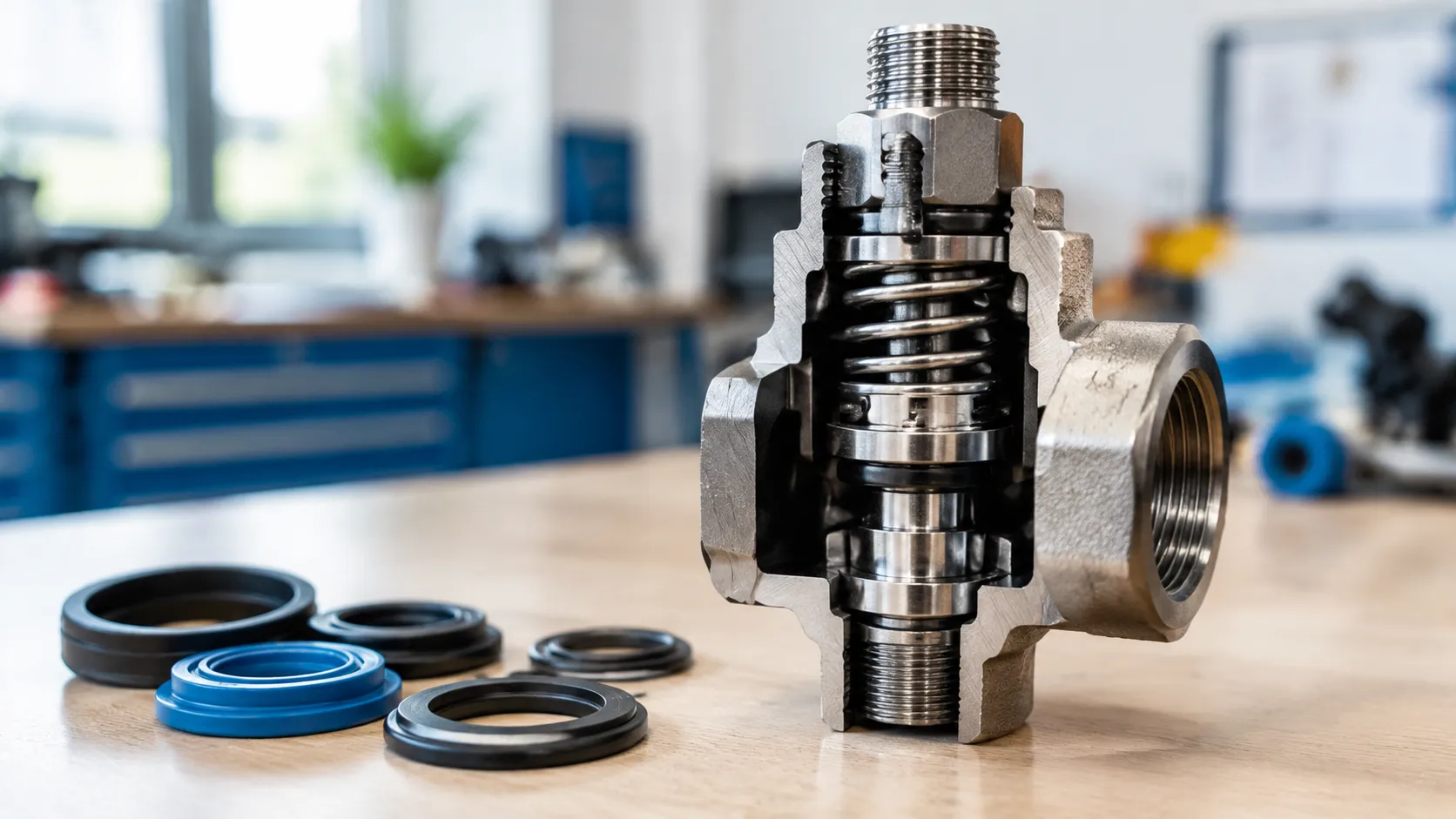
- Cycling Fatigue: Unstable pressure forces the valve spring and diaphragm to flex unevenly, shortening component lifespans.
Maintaining strict pressure control across robust 316L valve manifolds eliminates these millisecond delays, ensuring the valve actuates at the exact programmed time every single cycle.
CO2 Mixing Precision and Injection Accuracy
For direct inline carbonation, gas pressure must stay precisely calibrated above the liquid line pressure to force gas through the carbonation stone. If gas pressure drops too close to liquid line pressure, gas dissolution stops immediately, and liquid can backflow into the gas line.
- Micro-Bubble Creation: Stable pressure forces CO2 through tiny sintered pores, generating microscopic bubbles that dissolve rapidly into the liquid stream.
- Flow Consistency: Controlled pressure prevents gas surges, ensuring continuous, uniform gas-to-liquid ratios without pockets of unabsorbed gas.
- Backflow Prevention: A consistent positive pressure differential keeps liquid out of the CO2 supply line, protecting upstream equipment from cross-contamination.
Format standard Markdown for the response:
Core Types of Valves Used in CO2 Pressure Control
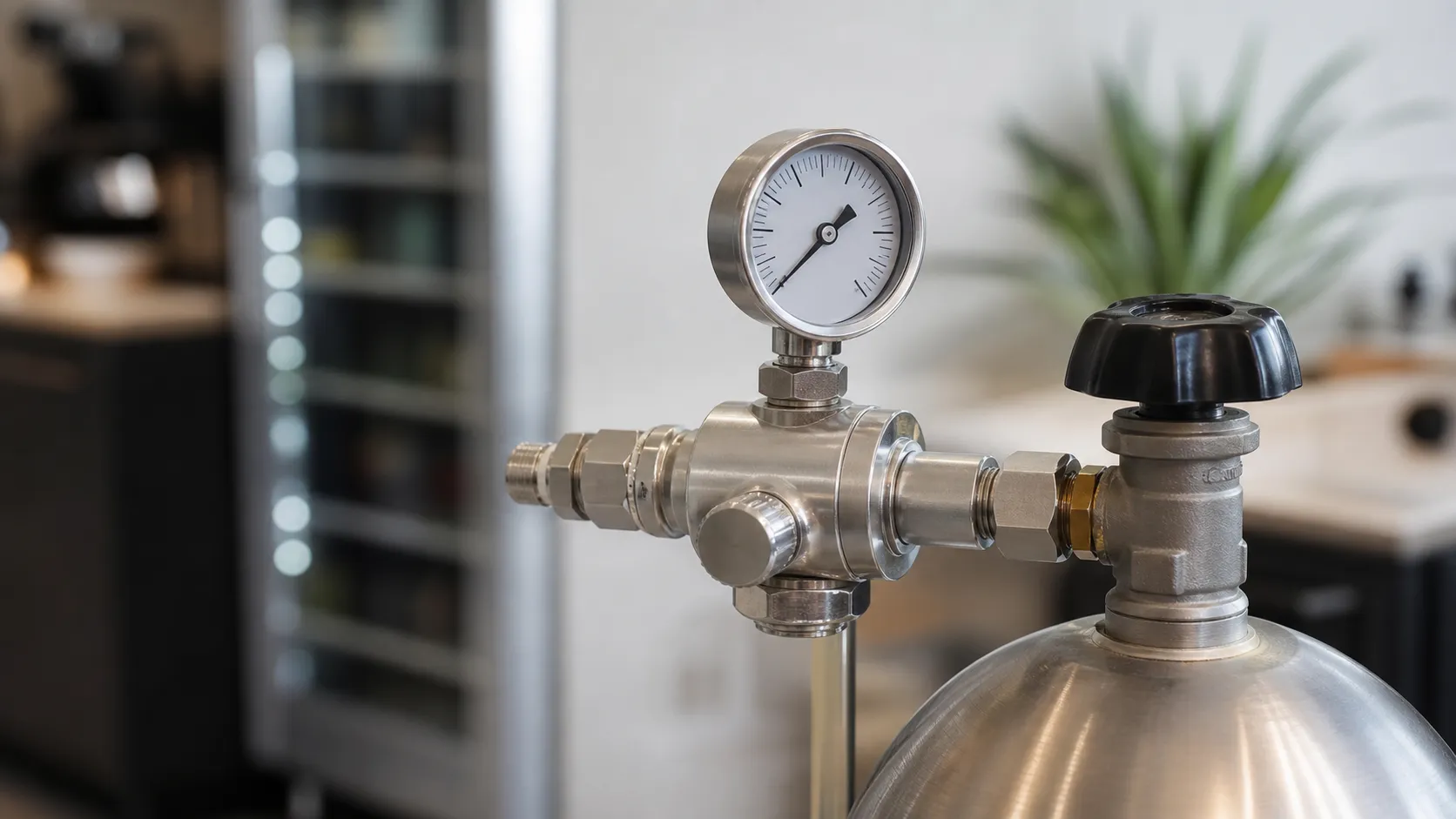
Choosing the right valve design is essential to maintaining strict pressure control across bottling, canning, and kegging operations. Different points in the production process demand specific mechanical characteristics to handle CO2 stability without disrupting liquid velocity.
Isobaric Counter-Pressure Filling Valves
Isobaric valves maintain equal pressure between the storage tank and the receiving vessel prior to product transfer. By establishing identical counter-pressure before the seal opens, these components stop dissolved gas from breaking out of solution.
- Pressure Equalization: Pre-pressurizes the container to match tank levels, eliminating foam spikes.
- Flow Consistency: Ensures predictable fill speeds and high volumetric accuracy on modern filling machines.
- Laminar Flow: Pairing these valves with custom 316L filling nozzles for beverage lines keeps product flow smooth and prevents turbulence-induced off-gassing.
Sanitary Food-Grade Diaphragm Valves
Sanitary diaphragm valves deliver isolated flow control for gas dosing lines and liquid streams alike. The flexible diaphragm isolates mechanical actuation parts from the product channel, eliminating dead spaces where bacteria or unwanted pressure pockets form.
| Feature | Performance Benefit |
|---|---|
| Hermetic Sealing | Eliminates micro-leaks that drop inline CO2 pressure. |
| Clean-in-Place (CIP) | Smooth inner walls allow full chemical washdown with zero product buildup. |
| Throttling Accuracy | Enables minute adjustments to fine-tune gas injection rates. |
Spunding Valves for Natural Carbonation Pressure Control
Spunding valves function as specialized pressure relief valve systems during tank fermentation and conditioning. They automatically vent excess gas once the vessel hits a preset limit, enabling exact natural carbonation build-up in the liquid.
- Targeted Relief: Automatically vents excess pressure while holding the vessel at a precise setpoint.
- Optimal Gas Dissolution: Maximize CO2 absorption directly into the liquid phase during active fermentation.
- Process Safety: Acts as both a precise carbonation regulator and a safeguard against over-pressurization.
Key Environmental and System Factors Influencing Valve Precision
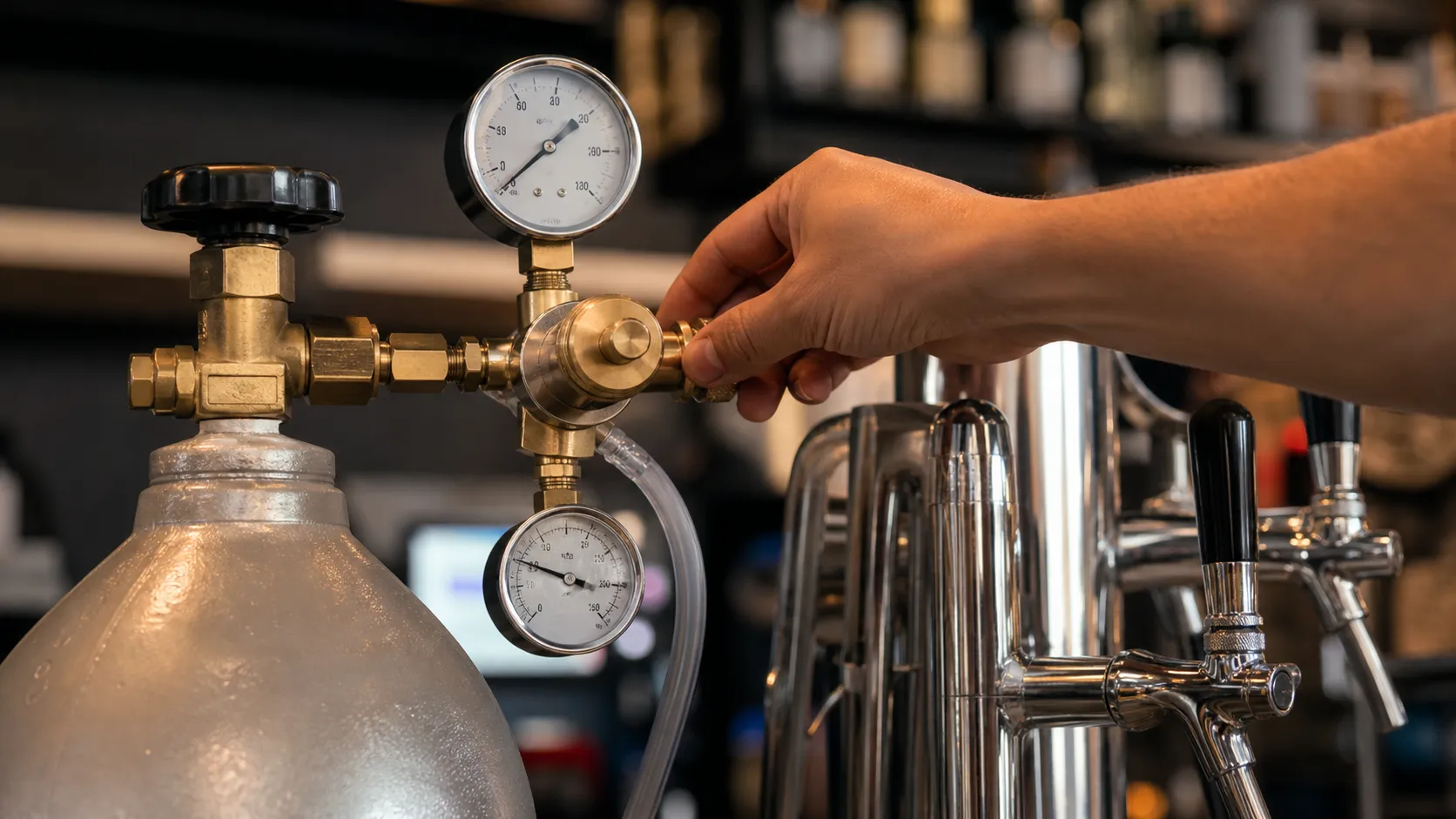
External operating conditions and gas delivery setups directly dictate how CO2 pressure affects carbonation valve precision across high-speed lines. Ignoring ambient environmental shifts and gas line fluctuations causes even high-precision equipment to lose dosing accuracy.
Impact of Atmospheric Pressure and Altitude Variations
Barometric pressure alters the absolute pressure equation within the filling process. Operating at higher elevations alters gas behavior based on Henry's law, forcing adjustments in line calibration:
- Gauge Pressure Offsets: Standard regulators measure gauge pressure, which shifts relative to altitude and distorts target carbonation levels.
- Gas Dissolution Shifts: Lower atmospheric pressure speeds up gas breakout, requiring higher counter-pressure to maintain proper gas dissolution.
- Relief Valve Drift: Mechanical engineers must re-calibrate the pressure relief valve on filling machines to account for local elevation changes and prevent inaccurate volumetric dosing.
Low-Pressure Bulk CO2 vs. High-Pressure Canister Systems
The gas delivery method determines how smoothly gas enters the carbonation manifold.
- Bulk CO2 Systems: Deliver steady, low-pressure vapor, ensuring consistent baseline pressure control for continuous beverage filling.
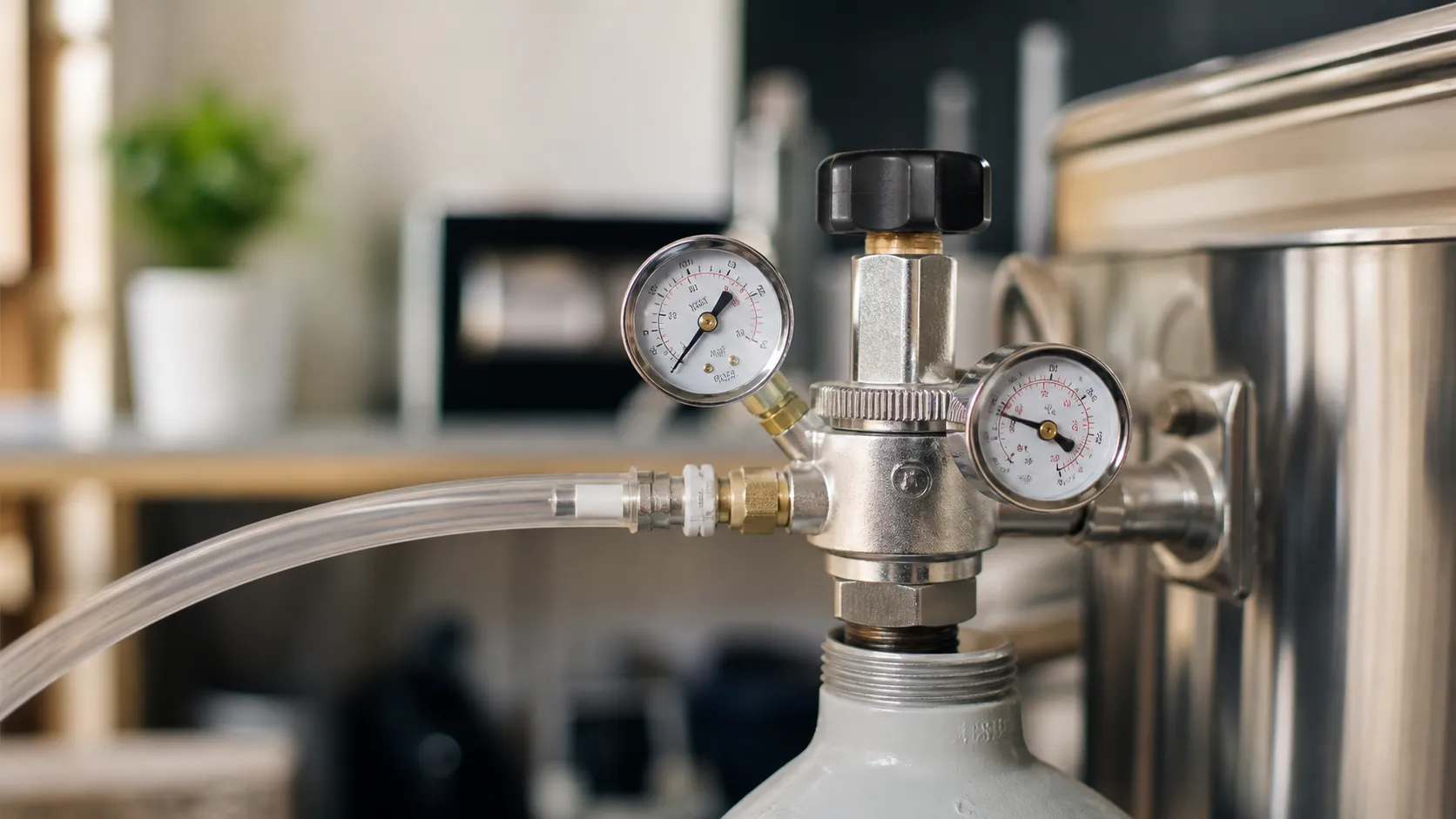
- High-Pressure Canisters: Suffer from pressure drops and regulator freezing as gas evacuates rapidly. These spikes force diaphragm valves to compensate constantly, leading to mechanical wear and uneven gas flow.
- Structural Support: Using reliable hardware like custom anodized mounts and brackets for OEM packaging stabilizes high-vibration gas manifolds, protecting valve alignment during sharp pressure swings.
The Effect of Liquid Deaeration and Temperature Fluctuations
Product liquid conditions inside the line heavily dictate valve performance during gas injection:
- Liquid Deaeration: Entrapped dissolved oxygen creates immediate nucleation sites. Un-deaerated liquid causes violent foaming the moment the valve opens, destroying flow consistency.
- Temperature Spikes: Warm liquid cannot hold dissolved gas. When product temperature rises, operators often over-pressurize the line to compensate, which stresses valve seals and leads to premature fatigue in beverage dispensing systems.
- Chilled Stability: Maintaining product temperatures near 0–2°C stabilizes gas absorption, allowing carbonation valves to operate at optimal, lower injection pressures.
Effects of Pressure Fluctuation on Product Quality and Operations
Unstable CO2 supply pressure directly degrades carbonation valve precision, causing ripple effects across your entire packaging line. When gas dissolution strays from target specifications, both beverage taste and operational efficiency take an immediate hit.
Quality Issues Caused by Over-Carbonation and Under-Carbonation
When CO2 pressure fluctuates, injection and counter-pressure valves fail to deliver a consistent gas volume to the liquid stream. This creates two major product quality defects:
- Over-Carbonation: Spikes in line pressure force excessive CO2 into the product. Consumers experience a harsh, overly acidic mouthfeel, container bulging, and severe gushing upon opening.
- Under-Carbonation: Drops in CO2 supply pressure starve the injection system. The liquid fails to retain sufficient gas, leaving the final beverage flat, dull, and out of spec.
Maintaining tight pressure control ensures your carbonation profile stays uniform from start to finish.
Product Waste, Excessive Foaming, and Filling Inconsistencies
Fluctuating CO2 pressure disrupts flow consistency within modern beverage filling machines. When gas pressure drops below the liquid saturation point during filling, dissolved CO2 rapidly breaks out of solution, causing severe foaming at the filling valve orifice.
| Pressure Issue | Operational Cause | Direct Operational Impact |
|---|---|---|
| Excessive Foaming (Fobbing) | Sudden CO2 pressure drop at the filling head | Liquid blowouts, neck-space foam, wasted product |
| Short Fills | Foam triggers optical fill-level sensors early | Under-filled containers, higher reject rates, line stoppage |
| Product Loss | Liquid overflow from erratic valve shut-off | Increased ingredient waste and elevated clean-in-place (CIP) cycles |
Workplace Safety Risks Related to High-Pressure Imbalance
Unregulated pressure spikes do more than ruin drink quality—they create hazardous shop-floor conditions.
- Container Rupture: Over-pressurized glass bottles or lightweight aluminum cans can shatter or burst during counter-pressure filling, creating flying debris.
- Seal and Diaphragm Blowouts: Uncontrolled pressure surges place extreme mechanical stress on valve diaphragms and dynamic seals, accelerating wear and causing sudden gas leaks.
- Pressure Relief Triggers: Sudden line spikes force automated pressure relief valve systems to exhaust gas unexpectedly, raising ambient noise and CO2 levels in tight work areas.
Rigorous maintenance and regular quality inspection of valve assemblies keep your high-pressure lines operating safely and predictably.
Best Practices for Optimizing Pressure Regulation and Valve Performance
To maintain rock-solid carbonation valve precision, smart pressure regulation requires a blend of automated monitoring, disciplined maintenance, and tight hardware standards. Here is how we keep line pressure rock-steady and beverage filling operations running at peak performance.
Implementing Real-Time CO2 Pressure Monitoring Systems
Manual pressure checks cannot keep up with high-speed production lines. Installing continuous, real-time CO2 pressure monitoring provides the immediate visibility needed to maintain proper gas dissolution.
- Digital pressure transducers: Placed directly upstream of the carbonation stone to detect micro-drops instantly.
- Automated closed-loop feedback: Continuously feeds data back to the pressure control system to adjust valve position in real time.
- Inline pressure logging: Captures pressure curve trends over time, helping operators spot regulator drift before it impacts flow consistency.
Proactive Maintenance and Leak Detection Routines
Even the most advanced valve cannot deliver accurate CO2 pressure if seals are degraded or lines are leaking. Systematic maintenance protects valve actuation speed and gas delivery accuracy.
- Inspect diaphragm valves and seals: High-pressure CO2 and harsh CIP chemicals break down elastomeric seals. Replace them on a strict schedules to prevent blow-by.
- Test pressure relief valves: Verify pop-off thresholds regularly to prevent sudden line over-pressurization.
- Perform ultrasonic leak detection: Locate microscopic pinhole leaks along gas lines and manifold connections that cause slow pressure drop-offs.
Standardizing Calibration for High-Efficiency Beverage Lines
In multi-head filling machines, every single valve must perform identically. Standardizing calibration routines eliminates baseline variance across your facility.
- Zero-point sensor calibration: Align all inline pressure sensors against a certified master gauge weekly.
- Actuation timing audits: Benchmark response times across all filling valves to ensure synchronized injection rates.
- Precision component sourcing: Relying on engineered replacement parts through a one-stop CNC sourcing guide for packaging machinery ensures tight machining tolerances, keeping valve seats aligned and flow control completely uniform.