Understanding the Importance of Brine Needle Hole Patterns
Precision fluid delivery lies at the heart of modern industrial meat processing. The geometry, size, and layout of fluid exit holes in injection needles directly determine how effectively marinades and curing solutions integrate into raw muscle tissue. Optimizing these patterns is critical for processors aiming to maximize yields, maintain product consistency, and streamline production efficiency.
What Is Brine Injection in Meat Processing?
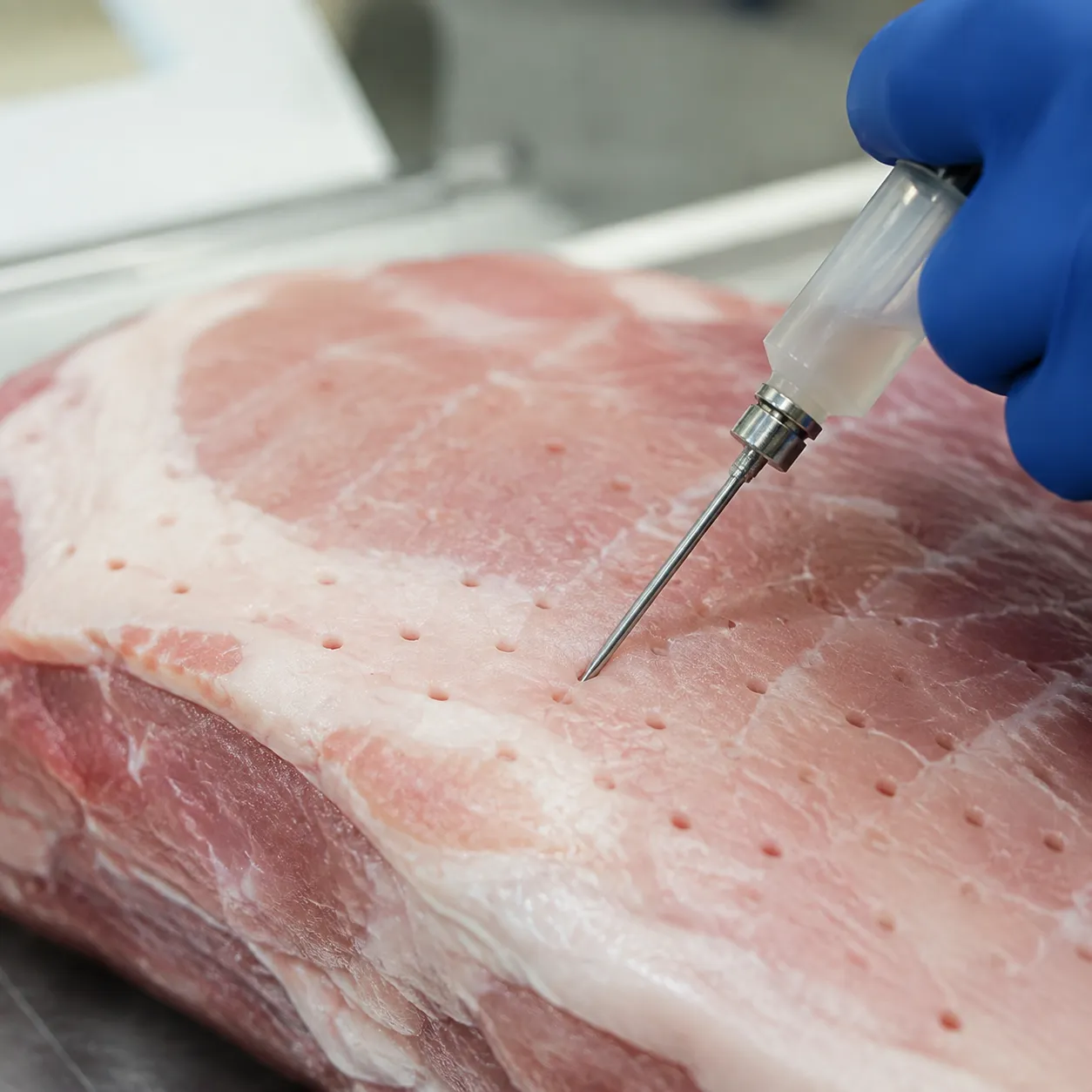
Brine injection is an automated process where specialized meat injection systems deliver aqueous solutions—containing salt, water, spices, and functional ingredients—directly into protein tissues.
- Primary Purpose: Significantly improves moisture retention, enhances product tenderness, and guarantees consistent flavor delivery throughout the entire muscle profile.
- Processing Role: Serves as a vital step in high-volume curing, marinating, and value-added meat processing for poultry, pork, beef, and seafood.
The Core Components of Needle Design
The physical construction of brine injector needles dictates how fluid behaves under hydraulic force. Key engineering factors include:
- Needle Gauge: Dictates needle rigidity, penetration resistance, and structural longevity during high-speed operations.
- Tip Geometry: Controls how smoothly the needle cuts or parts tissue without causing structural muscle integrity breakdown.
- Side Hole Design: Specifies the outlet port shape and angle, preventing tissue plugging and directing brine flow sideways into adjacent fibers.
- Fluid Passage Dimensions: Determines internal flow friction and optimal injection pressure parameters.
| Component Feature | Primary Function | Impact on Processing |
|---|---|---|
| Needle Gauge | Ensures structural rigidity | Prevents needle bending and misaligned injection |
| Side Hole Design | Directs fluid exit direction | Eliminates vertical channel blowouts |
| Tip Geometry | Pierces muscle tissue clean | Reduces tissue tearing and yield loss |
Why Hole Pattern and Spacing Dictate Injection Precision
Achieving absolute injection precision relies on the spatial distribution of needle outlet ports. The configuration of hole patterns dictates how evenly fluid disperse once inside the meat.
- Uniform Brine Distribution: Strategic needle spacing and staggered hole patterns allow brine to spread horizontally across muscle fibers rather than pooling in single channels.
- Tissue Preservation: Balanced fluid velocity through properly calibrated holes prevents internal tissue tearing and unsightly brine pockets.
- Targeted Pick-up Rates: Uniform coverage ensures exact target green weights and consistent brine absorption across every production batch.
How Needle Hole Patterns Affect Injection Performance
The structural layout of needle side holes directly controls fluid dynamics inside raw meat. Choosing the right configuration is critical to achieving repeatable gain, precise pickup rates, and maximum product consistency across high-speed processing lines.
Brine Distribution Uniformity and Yield Consistency
A well-engineered hole pattern delivers liquid evenly across the entire depth and width of the cut rather than dumping brine into localized channels. By deploying high-precision 316L brine injection needles with optimized lateral discharge points, fluid spreads uniformly along individual muscle fibers.
- Eliminates Dry Zones: Multi-angle side holes saturate dense inner core areas without leaving un-cured spots.
- Maximizes Green Weight: Staggered fluid release maximizes brine retention and minimizes purge loss during tumbling and packaging.
- Standardizes Target Gain: Controlled flow rates per needle prevent weight variation from piece to piece.
Product Texture, Tenderness, and Flavor Retention
Proper fluid dispersion enhances sensory qualities by allowing salts and functional proteins to react evenly throughout the meat matrix.
| Performance Factor | Effect of Optimal Hole Pattern | Risk of Poor Hole Pattern |
|---|---|---|
| Tenderness | Micro-perforations disrupt tough connective tissue gently. | Uneven needle pressure creates tough, un-marinated patches. |
| Moisture Retention | Bound water stays locked inside protein structures. | Liquid leaks out during cooking, drying out the end product. |
| Flavor Profile | Marinades penetrate uniformly for consistent bite. | Over-concentrated salt pockets in some areas, bland taste in others. |
Prevention of Brine Pockets and Muscle Tissue Damage
Improper needle hole spacing forces brine out under extreme pressure, causing severe structural defects in high-value whole-muscle cuts.
- Prevents Liquid Pockets: High-density, micro-hole layouts diffuse pump pressure, preventing large brine pools or "tiger stripes" inside the meat.
- Protects Muscle Integrity: Gentler fluid discharge prevents tearing of fragile protein strands in delicate poultry and tenderloins.
- Reduces Surface Bleed-Out: Balanced side-hole positioning ensures brine stays locked inside the meat core instead of pooling on the conveyor belt.
layout with your specific product line. Over the years, we’ve seen that how needle hole patterns affect injection performance comes down to fluid dynamics and muscle structure.
Multi-Hole Radial Layouts vs. In-Line Hole Patterns
- Multi-Hole Radial Layouts: Feature a side hole design angled at 360 degrees around the needle shaft. This creates a omnidirectional spray pattern, maximizing brine distribution across dense muscle fibers without tearing the meat tissue.
- In-Line Hole Patterns: Align holes along a single vertical axis. They work best for shallow penetration or uniform meat slabs where linear fluid paths prevent fluid pooling.
Hole Diameter and Density Configurations
The balance between needle gauge, hole diameter, and needle spacing dictates fluid velocity and flow rate:
| Configuration Feature | Impact on Injection | Best Used For |
|---|---|---|
| Small Hole Diameters (1.0–1.5 mm) | Higher exit velocity for deep penetration | Dense muscle matrixes & low-viscosity brine |
| Larger Hole Diameters (2.0 mm+) | Prevents clogging from suspensions | Viscous marinades & functional protein solutions |
| High-Density Spacing | Uniform fluid overlap without tissue blowout | Achieving exact yield targets and injection precision |
High-Volume vs. Fine-Precision Hole Patterns
- High-Volume Patterns: Designed with larger, closely spaced openings to move fluid rapidly into high-yield, fast-moving processing lines like bone-in hams and bacon.
- Fine-Precision Patterns: Utilize micro-drilled brine injector needles that deliver soft, controlled injection for delicate proteins, preserving natural appearance and eliminating visible stitch marks.
- Matching Hole Patterns to Meat Types and Brine Viscosity
Every protein behaves differently during processing. A single needle pattern cannot deliver optimal results across all muscle types and brine formulations. Matching your brine injector needles to specific tissue structures and liquid viscosities is essential for maximum yield, product texture, and high injection precision.
Dense Hole Configurations for Large Red Meat Cuts
Large red meat cuts—such as beef rounds, pork loins, and whole hams—require deep, uniform penetration through dense muscle fibers.
- High Hole Density: Multi-hole layouts distribute fluid evenly throughout thick muscle sections to prevent un-injected dry spots.
- Staggered Side Hole Design: An offset side hole design prevents brine from tunneling along muscle seams, guaranteeing balanced brine distribution.
- Optimal Needle Spacing: Precision needle spacing creates overlapping fluid zones, driving maximum moisture retention and consistent cook yields.
Gentle Hole Patterns for Delicate Poultry and Fish
Fragile proteins like chicken breasts, turkey fillets, and fish require a gentle touch to avoid fiber tearing, seam separation, or surface blowouts.
- Finer Needle Gauge: Smaller hole diameters reduce fluid exit velocity while maintaining structural muscle integrity.
- Wider Hole Spacing: Spreading the holes further apart prevents fluid overload in thin muscle beds, eliminating soft brine pockets.
- Low-Impact Flow: Gentle fluid dispersion allows sensitive proteins to absorb liquids naturally without pocketing under skin or membranes.
Handling High-Viscosity Brines and Marinades
Heavy marinades containing starches, gums, powders, or suspensions create unique flow challenges for standard meat injection systems.
| Injection Parameter | Standard Water/Salt Brine Pattern | High-Viscosity Marinade Pattern |
|---|---|---|
| Hole Diameter | Smaller (0.8 mm – 1.2 mm) | Larger (1.5 mm – 2.5 mm) |
| Hole Count | High density (4–8 holes per needle) | Reduced count (2–4 larger ports) |
| Fluid Velocity | High speed, fine spray pattern | Controlled, high-volume flow |
To handle thick formulations without line clogs, I always recommend larger radial hole openings paired with calibrated injection pressure. Keeping your liquid delivery consistent prevents costly downtime and maintains overall processing hygiene—much like integrating hygienic knife holders in meat processing ensures safe, clean operations downstream.
How to Optimize Needle Hole Configurations for Your Production Line
Setting up high-efficiency meat injection systems requires matching your machine's physical setup directly to your production goals. Understanding exactly how brine needle hole patterns affect injection allows us to maximize fluid uptake, eliminate waste, and keep output consistent stroke after stroke.
Balancing Injection Pressure with Hole Size and Layout
Fluid pressure and hole geometry must work in tandem. If your injection pressure is too high for a fine side hole design, you risk blowing out delicate muscle tissue and causing surface blowbacks. Conversely, oversized holes operating at low pressure lead to brine pooling rather than deep penetration.
| Parameter Match | Impact on Muscle Integrity | Moisture Retention Result |
|---|---|---|
| High Pressure + Small Side Holes | High risk of tissue tearing if unbalanced | Deep penetration, risk of pockets |
| Low Pressure + Large Side Holes | Minimal tissue disruption | Uneven gravity drainage |
| Balanced Pressure + Multi-Hole Pattern | Preserves muscle integrity | Maximum, uniform moisture retention |
To achieve true injection precision, we adjust pump pressure so brine flows evenly across every opening simultaneously, preventing fluid pockets from forming inside the meat.
Correlating Belt Speed, Stroke Rate, and Hole Distribution
Your conveyor belt speed and needle bridge stroke rate must stay fully synchronized with your needle spacing and hole layout. If belt speed outpaces your stroke rate, you leave un-injected gaps across the product bed.
- Needle Gauge & Spacing: Defines the physical grid density per drop.
- Stroke Rate: Controls how many times brine injector needles penetrate the product per minute.
- Belt Speed: Determines linear advancement to ensure full matrix coverage without double-injecting the same zone.
When these three factors align, the continuous brine distribution covers every square inch of the cut without over-saturating specific areas.
Best Practices for Needle Selection and Maintenance
Maintaining consistent performance across long production runs depends on strict maintenance and component selection protocols. Fluid distribution consistency across your entire needle bridge requires clean, unblocked lines, much like how high-hygiene setups rely on specialized fluid routing where 316L valve manifolds are critical for beverage lines and liquid processing systems.
- Inspect Side Holes Daily: Clear out salt buildup, protein residues, or particulate debris that restrict fluid discharge.
- Check Needle Gauge Uniformity: Replace bent or worn needles immediately; distorted needles throw off target needle spacing and compromise yield targets.
- Calibrate Manifold Delivery: Verify equal pressure delivery across all bridge positions to ensure outer cuts receive the exact same injection volume as center cuts.