Why Washdown Environments Are Difficult for Bearing Housings
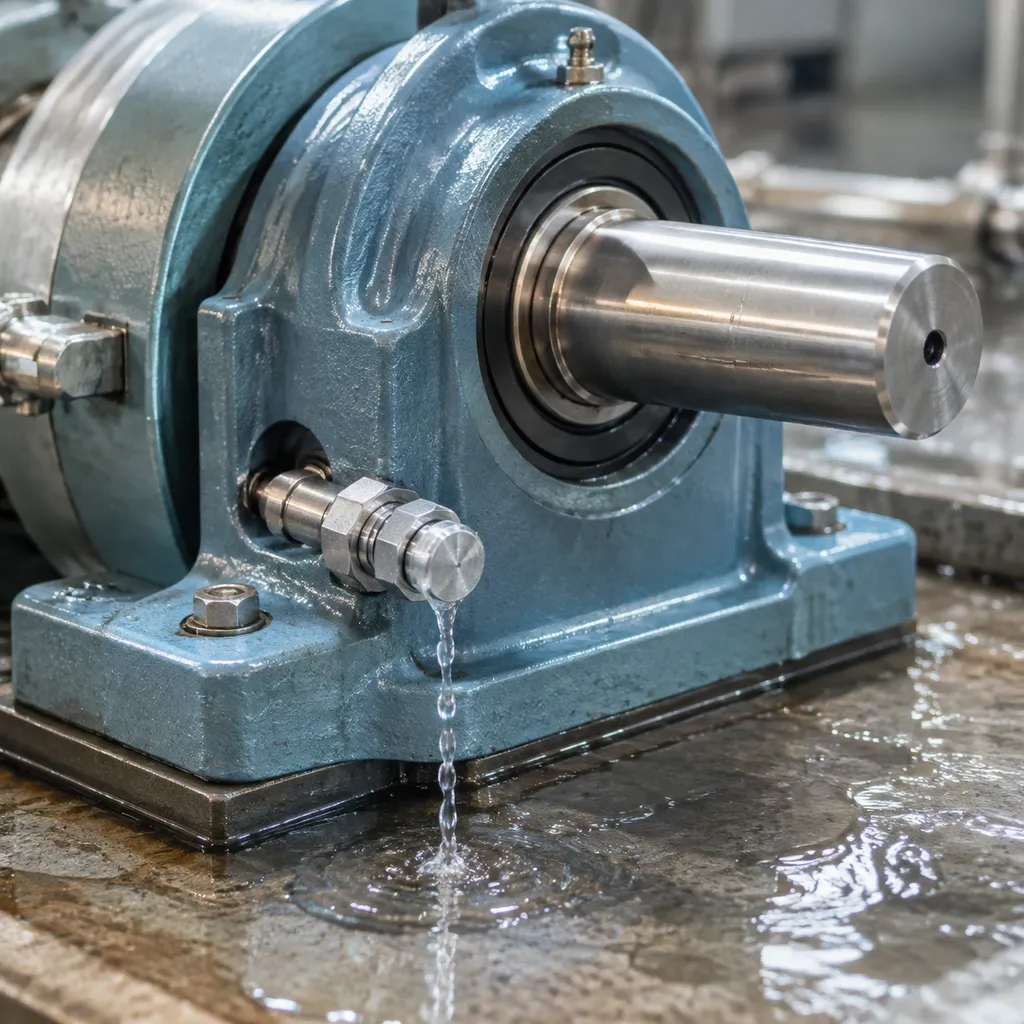
Washdown environments present some of the most aggressive operating conditions for mechanical components. Food processing, beverage, and pharmaceutical facilities demand strict hygiene, exposing equipment to unrelenting operational stress. Without specialized housing engineering, standard units experience rapid moisture ingress, premature bearing fatigue, and costly downtime.
High-Pressure Water, Cleaning Chemicals and Repeated Wetting
Sanitation routines rely on intense physical and chemical cleaning processes that aggressively attack mechanical seals:
- High-Pressure Spray: Water blasts often exceed 1,000 to 1,500 PSI, exerting force that easily bypasses basic mechanical barriers.
- Corrosive Cleaners: Caustic foams, acidic solutions, and chlorine sanitizers attack housing materials and degrade elastomer seals.
- Thermal Shock: Rapid cooling caused by cold washdown spray on hot housings creates an internal vacuum, drawing external water directly into the unit.
How Moisture Can Reach the Bearing and Lubricant
Liquid ingress follows paths of least resistance, systematically compromising internal components:
- Capillary Action: Fluid creeps through micro-gaps between the rotating shaft and the sealing element.
- Seal Lip Deflection: High-pressure fluid deforms flexible seal lips, creating direct pathways for contaminants.
- Grease Emulsification: Water mixing with grease destroys the lubricant's load-carrying capacity, leading to accelerated corrosion, severe friction, and catastrophic bearing failure.
Why Housing Geometry Matters Alongside the Seal
Seals are only as effective as the housing around them. Relying solely on internal lip seals without considering external housing geometry leads to premature system failure. Proper exterior design actively deflects water before it reaches critical sealing points, minimizing hydraulic pressure against seal lips and eliminating standing chemical pools that degrade components over time.
How Drainage Features Help Manage Washdown Water
Reducing Standing Water Around the Bearing Housing
Pooling water around a unit invites bacterial growth, shaft corrosion, and eventual moisture migration past critical seals. We manufacture custom 316L washdown bearing housings for food conveyors specifically to keep liquid moving away from vulnerable internal components immediately after high-pressure washdown procedures. Controlling water movement is the first line of defense in maintaining a hygienic bearing housing setup.
Sloped and Open Geometry for Faster Drainage
Effective bearing housing drainage relies on intentional geometry rather than secondary shields. Smooth, continuous angles ensure chemical wash fluids run off naturally under gravity.
| Geometry Type | Water Behavior | Hygiene & Maintenance Impact |
|---|---|---|
| Traditional Flat-Top Housing | Retains standing water and caustic cleaning agents | Increases seal degradation risk and bacterial harborages |
| Sloped Hygienic Geometry | Directs liquid downward instantly | Reduces drying time and prevents liquid pooling |
| Open Frame Foot Design | Eliminates undersurface water trapping | Allows 360-degree spray clearance during washdown |
Avoiding Pockets, Blind Cavities and Difficult-to-Clean Areas
Standard industrial castings often feature deep bolt recesses, unmachined ribs, and blind threaded holes that hold onto fluids. We eliminate these failure points by refining the exterior housing contours:
- Closed Fastener Interfaces: Through-hole mounting or cap-head seals prevent fluids from collecting in open bolt threads.
- Continuous Radii: Smooth, machined outer transitions remove sharp internal corners where food particles and grime settle.
- Self-Draining Reliefs: Machined undercut zones around shaft openings prevent liquid from pooling against seal lips.
What Is a Seal Land on a Bearing Housing?
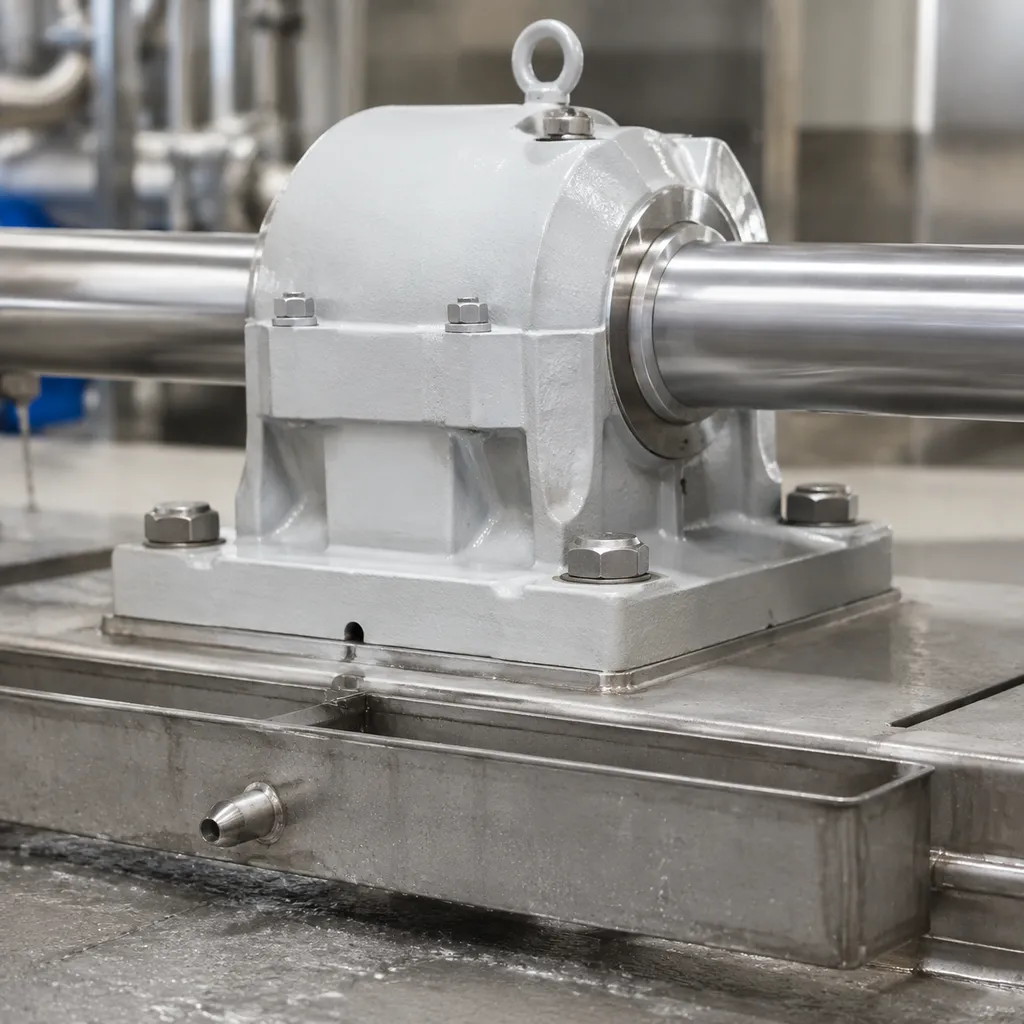
The Interface Between the Housing and Sealing Element
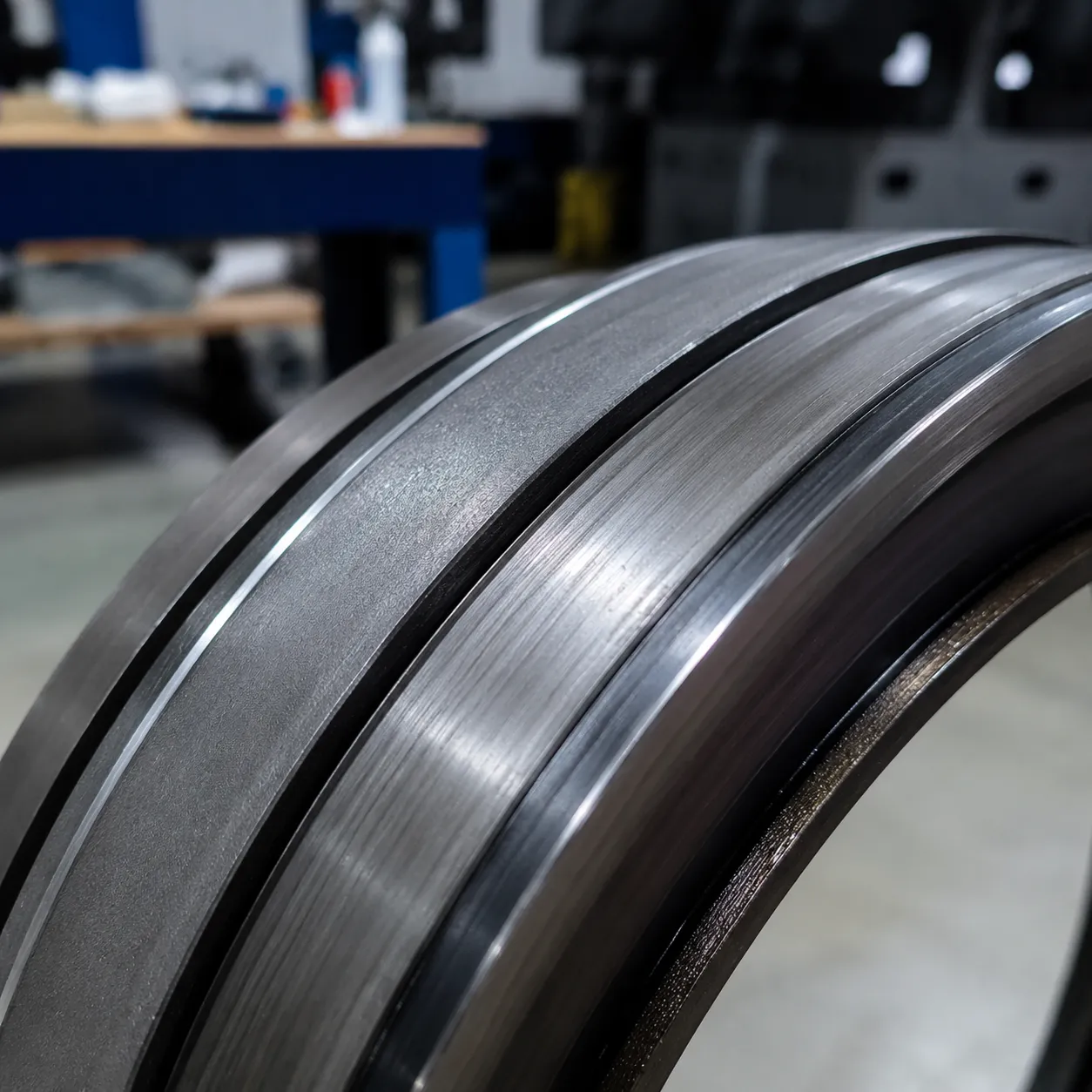
ZSCNC engineering team experience with hygienic equipment design, the bearing housing seal land is the precisely machined area on the housing where the sealing element seats. It serves as the primary physical barrier separating the aggressive external environment from the internal bearing cavity. On a washdown bearing housing, this land provides a smooth, continuous mating surface for radial lip seals, counterface rings, or end covers. Without a clean, accurate seal land, even top-tier seals fail to maintain a water-tight barrier under pressure.
Why Seal-Land Diameter, Concentricity and Surface Finish Matter
Proper seal land design relies on strict dimensional control to keep moisture out of the housing cavity. When machining housing components, I always pay close attention to three critical factors:
- Land Diameter: Ensures exact fit and radial tension so the seal lip seats with the ideal contact pressure.
- Concentricity: Prevents uneven seal squeeze, keeping continuous 360-degree contact around the rotating shaft.
- Surface Finish: Leveraging precise surface finishing eliminates microscopic machining tracks that act as leak paths for pressurized water.
How Damage, Runout or Poor Finish Can Affect the Seal Interface
Defects on the seal land destroy the integrity of the entire seal system. Excessive runout causes the seal lip to dynamic-flex and gap during operation, drawing in water and cleaning chemicals. Scratches, corrosion pits, or coarse machining marks quickly abrade soft seal materials, leading to early wear, lubricant contamination, and shaft failure on food conveyor bearing housing applications.
Drainage and Seal Lands Work as a System
We design so that drainage features and seal lands function as a single, coordinated defense. One feature cannot protect your equipment without the other.
Drainage Moves Water Away From Critical Seal Areas
Proper housing drainage acts as your first line of defense against bearing housing moisture ingress. By channeling fluid away from the shaft interface, effective drainage prevents washdown water from pooling directly against primary sealing elements.
- Prevents Static Head: Sloped housing geometry stops standing water from soaking the seal lip during machinery downtime.
- Relieves Dynamic Pressure: Open drainage paths dissipate fluid velocity from direct high-pressure washdown spray, especially in tight food conveyor bearing housing arrangements.
- Extends Component Life: Keeping fluid moving stops harsh chemicals and debris from settling against the bearing housing seal land.
Seal Lands Provide a Controlled Interface for the Sealing System
While drainage manages fluid volume, the bearing housing seal land provides the precision surface necessary for sealing components to function effectively. It creates a controlled bore diameter and smooth surface finish for the seal lip to ride on smoothly.
- Uniform Contact: Precise concentricity maintains uniform 360-degree contact pressure around the shaft.
- Surface Integrity: Ground, polished finishes eliminate micro-grooves that allow pressurized water to migrate past the seal.
- Corrosion Resistance: Specially finished seal lands prevent pitting and chemical degradation, maintaining sanitary standards in critical washdown processing environments—much like how using specialized 316L valve manifolds for beverage lines prevents corrosion and contamination in fluid delivery systems.
Why a Good Seal Cannot Fully Compensate for Poor Housing Geometry
Even the highest-rated seal will fail early if installed in a poorly designed housing. If bad geometry allows water to trap and pool around the seal, static fluid pressure will eventually force moisture past the sealing lip.
- Splash vs. Submergence: Standard seals handle splash and spray well, but they fail when submerged in stagnant cleaning solutions.
- Distortion from Misalignment: Housing runout forces the seal lip to flex unevenly, creating micro-gaps that invite bearing housing contamination.
- Complete System Synergy: Maximum reliability occurs only when open, sloped geometry moves fluid away, letting the seal land maintain a clean, controlled barrier. That's exactly how our are engineered — precision-machined seal lands, drainable contours, and full OEM drawing compliance.
Common Design and Manufacturing Problems
When we analyze failed washdown bearing housing assemblies, design oversights and poor machining practices are usually the primary culprits. These defects break down the housing seal land performance and compromise washdown bearing housing drainage.
Water-Trapping Pockets Around Mounting Features
- Deep Counterbores: Recessed bolt holes collect caustic cleaning fluids and water during high-pressure washdown.
- Flat Horizontal Surfaces: Housings lacking sloped tops allow liquid to sit, increasing the risk of bearing housing moisture ingress over time.
- Blind Cavities: Enclosed pockets trap debris and moisture, creating breeding grounds for contamination right next to seal paths.
Poor Seal-Land Concentricity or Runout
Excessive runout on the bearing housing seal land creates an uneven gap around the rotating shaft. As the shaft spins, the sealing lip compresses too tightly on one side while losing contact on the opposite side. Knowing how to manage tolerance stack up in drive shafts and housing bores helps prevent this uneven wear, which leads directly to early bearing housing water ingress.
Machining Marks and Surface Damage on Seal Interfaces
Coarse surface finishes and spiral tool marks act like micro-pumps that draw fluid past the sealing edge as the shaft rotates. Handling damage, scratches, or chatter marks on the seal contact surface disrupt the continuous oil film, creating direct leakage pathways for washdown chemicals.
Misalignment Between Bearing Bore, Shaft and Seal Features
Machining housing features across multiple manufacturing setups often introduces angular and parallel misalignments between the bore and seal interface.
| Alignment Defect | Operational Impact | Recommended Solution |
|---|---|---|
| Angular Bore Misalignment | Concentrates load on one side of the seal lip | Single-setup CNC boring operations |
| Off-Center Shaft Line | Creates uneven circumferential seal gap | Strict datum alignment relative to hardened conveyor drive shafts |
| Seal Land Offset | Causes dynamic seal distortion during operation | Concurrent turning of bore and seal land surfaces |
What to Inspect on a Washdown Bearing Housing
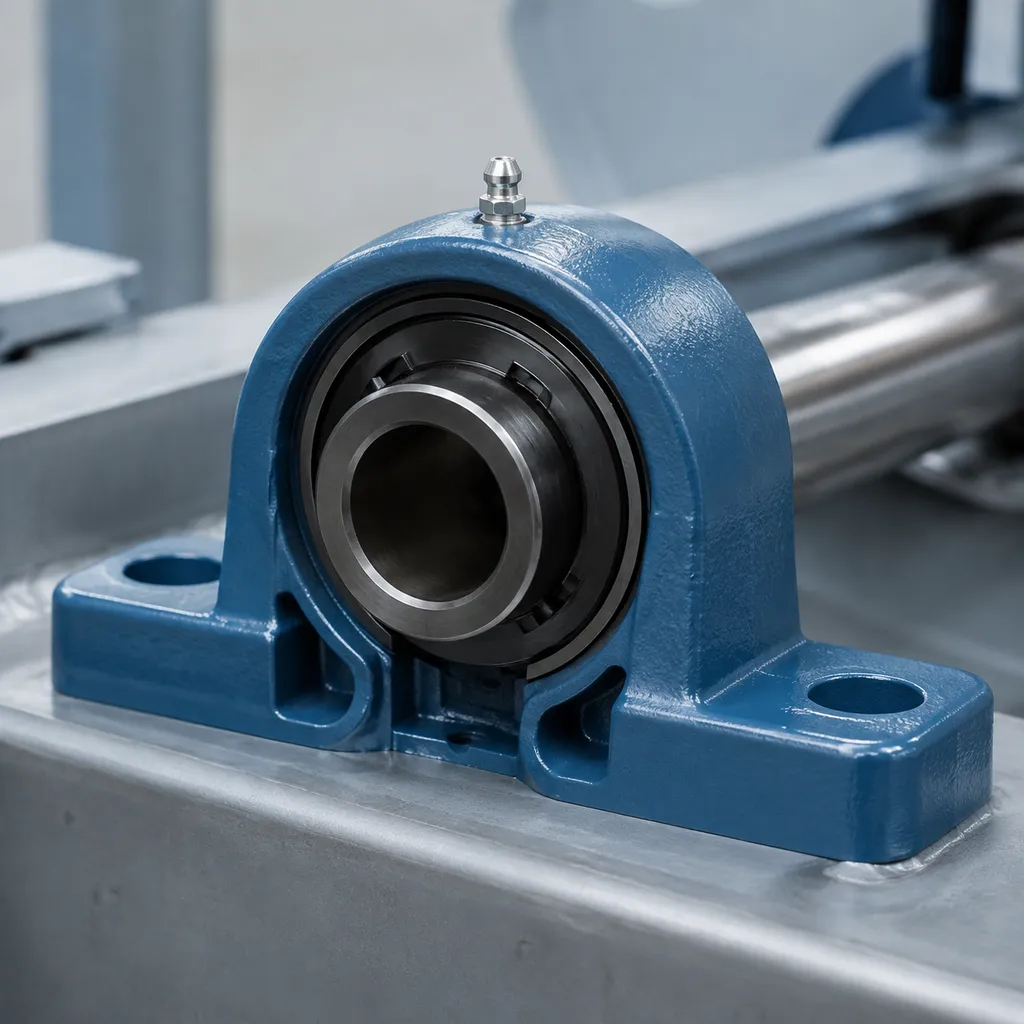
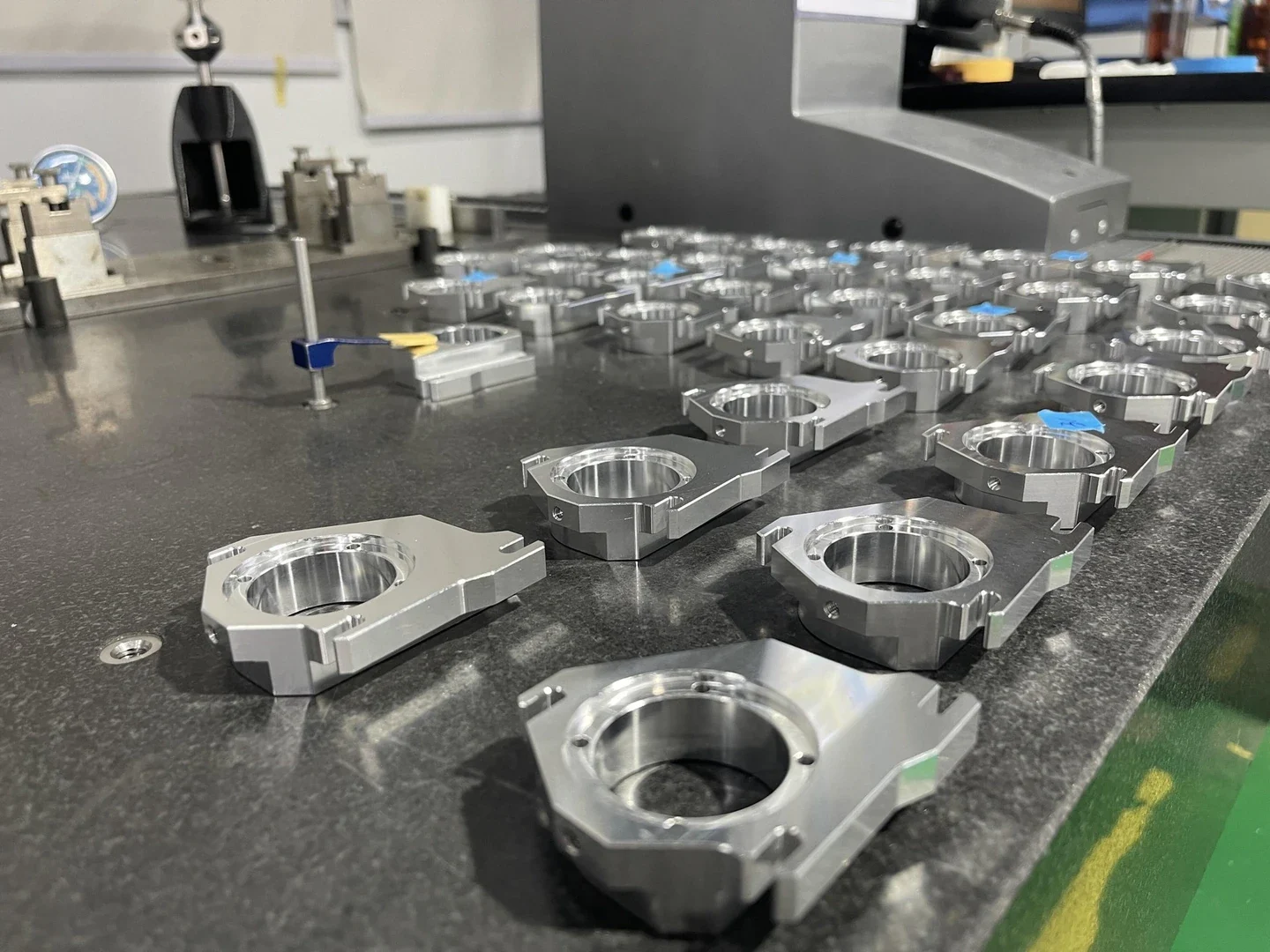
When we evaluate a washdown bearing housing, we perform a systematic physical check to prevent dynamic leaks and premature failure. Thorough quality inspection ensures every dimensional boundary meets strict tolerances before the unit goes into service.
Bearing Bore Size and Geometric Accuracy
- Bore Diameter Tolerances: Verify the inner diameter matches target tolerances (such as H7 or G6 fits) to stop outer-ring distortion or loose play.
- Roundness and Cylindricity: Ensure the bore retains true circularity across its depth, preventing uneven radial loads on the bearing assembly.
- Bore Finish: Check for smooth sidewalls that allow proper seating without high-spot wear.
Seal-Land Diameter, Runout and Surface Condition
A damaged bearing housing seal land compromises the seal lip immediately, inviting bearing housing moisture ingress during high-pressure washdown cycles.
| Inspection Parameter | Target Metric | Impact on Performance |
|---|---|---|
| Seal-Land Diameter | Precise match to seal lip specs | Prevents under-clamping or excessive lip friction |
| Radial Runout | Max 0.02 mm TIR | Eliminates dynamic seal gaps during shaft rotation |
| Surface Finish | Ra 0.4 to 0.8 µm | Prevents rapid abrasive wear on elastomeric seal lips |
Drainage Paths and Potential Water-Trapping Features
- Self-Draining Angles: Confirm all exterior surfaces slope downward to speed up washdown bearing housing drainage.
- Pocket Elimination: Inspect for blind cavities, unmachined recesses, or flat horizontal ledges where water and cleaning chemicals pool.
- Drain Channels: Verify bottom drainage channels are fully open, smooth, and free of machining burrs.
Mounting Alignment and Shaft Center Height
- Base Flatness: Check base mounting surfaces for coplanarity. A twisted base distorts the bore and misaligns the seal land design when torqued down.
- Shaft Center Height: Measure base-to-center dimensions precisely to ensure parallel shaft alignment and prevent uneven seal compression.
When a Custom Replacement Bearing Housing Makes Sense
Standard off-the-shelf units often fail in severe sanitation environments. When off-the-shelf parts fail, custom-machined solutions resolve underlying design flaws.
Repeated Moisture Ingress Around an Existing Housing
If grease turns milky or bearings fail prematurely despite frequent seal replacements, the housing itself is usually the culprit. Standard geometries often allow washdown water to pool near the seal interface.
- Flawed Drainage: Flat housing tops and tight pockets trap standing water.
- Pressure Ingress: Pooled water gets forced past the seal during thermal cooling cycles or high-pressure spray.
- The Solution: A custom washdown bearing housing built with aggressive drainage slopes keeps water moving away from critical sealing points.
Worn or Damaged Seal-Land Features
High-pressure spray, aggressive chemicals, and abrasive debris score and pit the seal land over time. Once this surface loses its finish or roundness, even brand-new seals leak.
- Grooved Interfaces: Shaft or housing wear prevents tight seal lip contact.
- Corrosion Pitting: Harsh sanitizers eat away at standard cast metals.
- Precision Machining: When producing specialized replacements, leveraging 5-axis CNC for food machinery components allows us to restore exact seal-land tolerances, smooth surface finishes, and optimal drainage angles in a single setup.
Replacing an Obsolete OEM Housing From a Drawing or Sample
Discontinued machinery and long OEM lead times cause costly downtime. Reverse engineering a custom replacement delivers an exact drop-in fit without modifying equipment frames.
| Trigger Factor | Standard Housing Limitation | Custom Solution Benefit |
|---|---|---|
| Chronic Ingress | Poor geometry traps washdown water | Built-in drainage slopes direct water away immediately |
| Damaged Seal Land | Scored seating surface destroys new seals | Precision-machined, corrosion-resistant replacement interface |
| Obsolete OEM Part | Long lead times, discontinued support | Direct drop-in fit machined from sample or drawing |