Understanding the Role of Die Plates in Kibble Extrusion
Machining tolerance review: Typical machining tolerance is ±0.01 mm. Selected dimensions may achieve ±0.005 mm after technical review. Final tolerances depend on the drawing, material, part size, geometry, finishing and inspection requirements and must be confirmed before order acceptance.
What Is an Extrusion Die Plate?
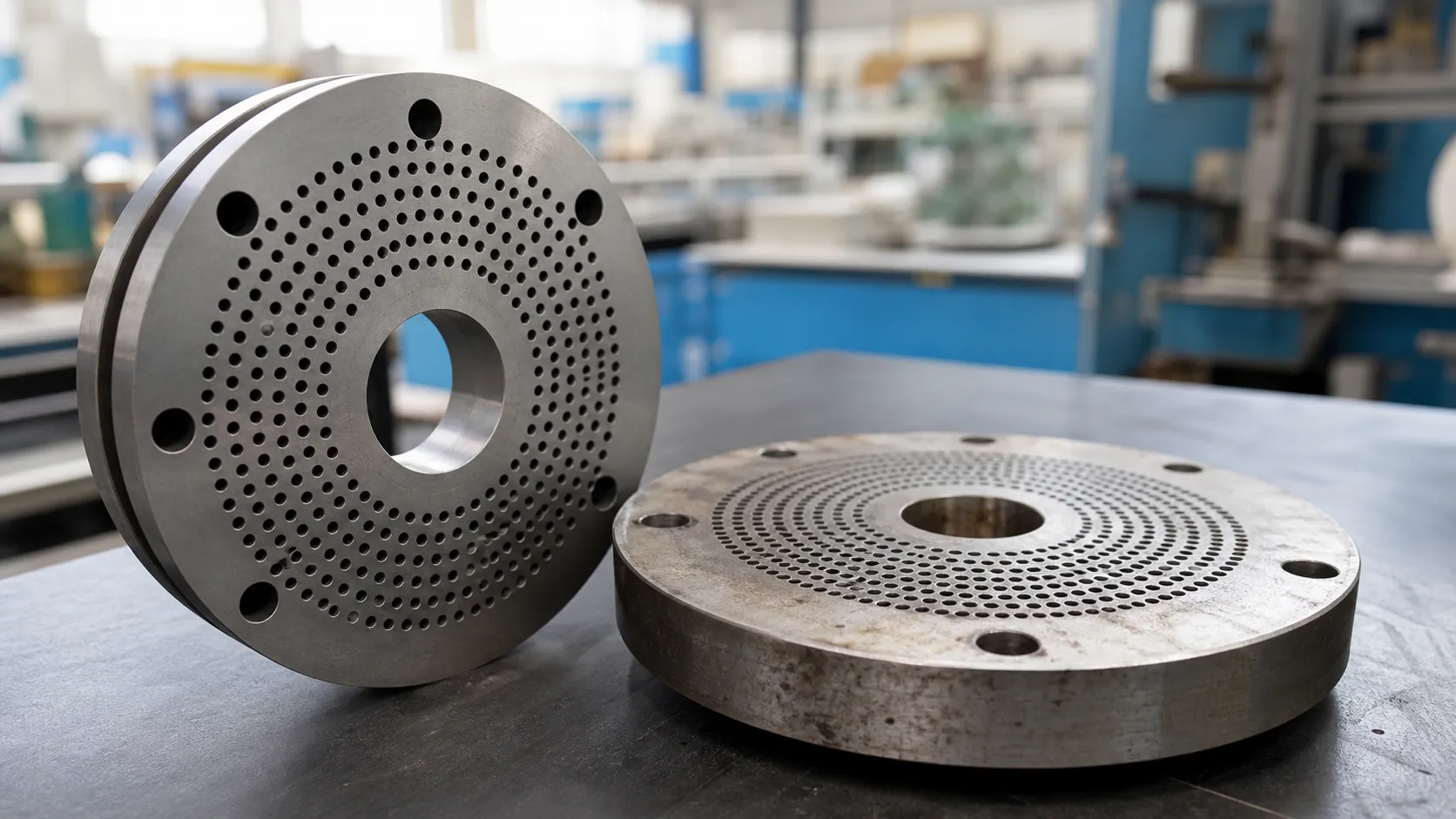
An extrusion die plate is a precision-machined component installed at the discharge end of a pet food extruder machine. It contains a controlled pattern of holes that directs cooked pet food dough into consistent strands before cutting.
Die plates operate under continuous pressure, heat, and abrasion. Their material condition, hole accuracy, and surface quality directly influence kibble size, production stability, and service life.
How Extrusion Dies Shape Pet Food
In pet food extrusion, the die design determines the cross-sectional form of each kibble piece as dough exits the machine. Round holes produce round strands, while shaped openings can form profiles such as discs, stars, bones, or other custom geometries.
A precisely manufactured die plate supports:
- Uniform product shape across the production run
- Consistent flow through each die opening
- Controlled expansion after the product exits the die
- Reliable cutting where the rotating knife meets the die face
- Reduced uneven wear on the die plate and cutter blade
Tight machining tolerances are especially important for multi-hole die plates. Small dimensional differences between holes can create uneven flow, inconsistent pressure, and irregular kibble appearance.
The Basic Extrusion Cooking Process
During the extrusion cooking process, mixed ingredients move through the extruder under mechanical energy, controlled moisture, and heat. Starch gelatinization develops as the dough is processed, creating a pressurized melt that is pushed through the die plate.
When the material leaves the die holes, the pressure drops rapidly. Moisture flashes off, and the product expands into its final kibble structure. A cutter blade then cuts the extruded strands to the required length.
For stable pet food manufacturing, the die plate must maintain clean, accurately formed openings. Smooth food-grade surface finishing can help reduce material adhesion, while precision inspection helps confirm that hole geometry remains suitable for consistent extrusion.
Key Components of Die Plate Hole Patterns
Hole Geometry and Cross-Sectional Profile
Hole geometry determines how material passes through the die plate. Consistent hole profiles support even flow and help maintain repeatable kibble dimensions. We use precision CNC machining to produce complex geometries and fit-critical components, with tolerances down to ±0.01 mm where specified.
Die Hole Layout and Surface Distribution
The hole layout should distribute extrusion load across the plate surface. Uneven spacing or inconsistent machining can contribute to irregular flow and variable kibble size. A detailed CAD or sample-based DFM review helps identify geometry concerns before production.
Die Land Length and Open Area
Die land length and total open area influence material resistance and flow through the plate. The design should match the equipment and processing requirements rather than rely on a standard pattern. Our custom CNC-machined pet food extruder die plates can be reviewed for material, dimensions, finish, and production volume.
How Hole Patterns Control Kibble Shape and Expansion
Regulating Melt Pressure and Flow Uniformity
I design die hole patterns to support even material flow across the plate. Balanced hole spacing and open area help distribute pressure more consistently, which supports uniform kibble size and reduces uneven loading on the die and cutter system. Poor flow distribution can lead to irregular shapes and inconsistent cutting.
Controlling Dough Swell and Starch Expansion
The die opening influences how the cooked dough expands as it exits the extruder. Hole geometry, land length, moisture, temperature, and formulation all affect the final expansion ratio. Stable processing conditions help maintain consistent starch gelatinization and produce more predictable kibble dimensions.
Interactions Between Die Exit and Cutter Blades
The die exit and rotating knife work as one cutting system. The number, spacing, and position of the holes must suit the cutter blade path and target kibble size. Correct alignment supports clean cuts and limits variation at high production speeds. For reliable cutter performance, the die system should be considered alongside sanitary knife holders and cutter seats, which help maintain accurate blade positioning and hygienic operation.
Common Kibble Shapes and Their Die Pattern Designs
Die pattern design directly affects kibble shape, size consistency, and how evenly product exits the extruder. We machine die plates for food and pet food equipment with precise hole geometry, controlled land lengths, and reliable surface finishing to support stable production runs.
Round and Disc Kibble Patterns
Round kibble uses circular die holes, while disc shapes typically use wider, flatter openings. These patterns are widely used because they are efficient to machine, clean, and maintain.
For consistent round or disc kibble, the die plate needs:
- Uniform hole diameter to control kibble size
- Even spacing to balance material flow across the plate
- Consistent die land geometry to help maintain stable back pressure
- Smooth hole surfaces to reduce buildup and uneven flow
Small dimensional differences between holes can cause inconsistent output across the die face. Precision CNC machining helps keep each opening aligned and repeatable, especially on high-output pet food extrusion lines.
Bone, Star, and Custom Shape Designs
Bone, star, flower, and other custom kibble shapes require more complex die design than standard round holes. Sharp internal corners, narrow sections, and uneven cross-sections can increase flow resistance and make certain areas wear faster.
We use multi-axis CNC machining for intricate die plate profiles where geometry accuracy matters. A practical custom shape design should balance visual appeal with manufacturability, cleanability, and long-term wear performance.
Key design points include:
- Avoiding excessively sharp internal corners where practical
- Keeping narrow flow sections consistent
- Maintaining smooth transitions through the die opening
- Matching the pattern to the product’s expected expansion behavior
- Allowing adequate clearance for the cutter blade at the die exit
For abrasive pet food formulations, wear protection can be important on high-contact surfaces. Our experience with DLC-coated pet food wear tracks supports component designs built for demanding friction and wear conditions.
Pillow and Hollow Kibble Geometry
Pillow and hollow kibble shapes depend on controlled die openings and stable material flow. Their appearance is influenced by the die profile, dough condition, pressure at the die exit, and the action of the rotating knife.
Pillow designs often use shaped openings that create a broader cross-section, while hollow products may require a die geometry that supports a central void. These designs need close control because uneven flow can cause collapsed centers, irregular walls, or inconsistent cut lengths.
For these applications, die plates should be manufactured with:
- Accurate hole profiles for repeatable outer shape
- Balanced flow paths across all openings
- Smooth, sanitary-finished surfaces that limit material adhesion
- Precise flatness and mounting features for stable installation
A properly machined die plate works with the complete extrusion system, including metering and feed components such as 316L kibble metering screws for pet food manufacturing, to support consistent product flow and shape control.
Operational Variables Affecting Kibble Shape Consistency
Dough Viscosity and Recipe Formulation
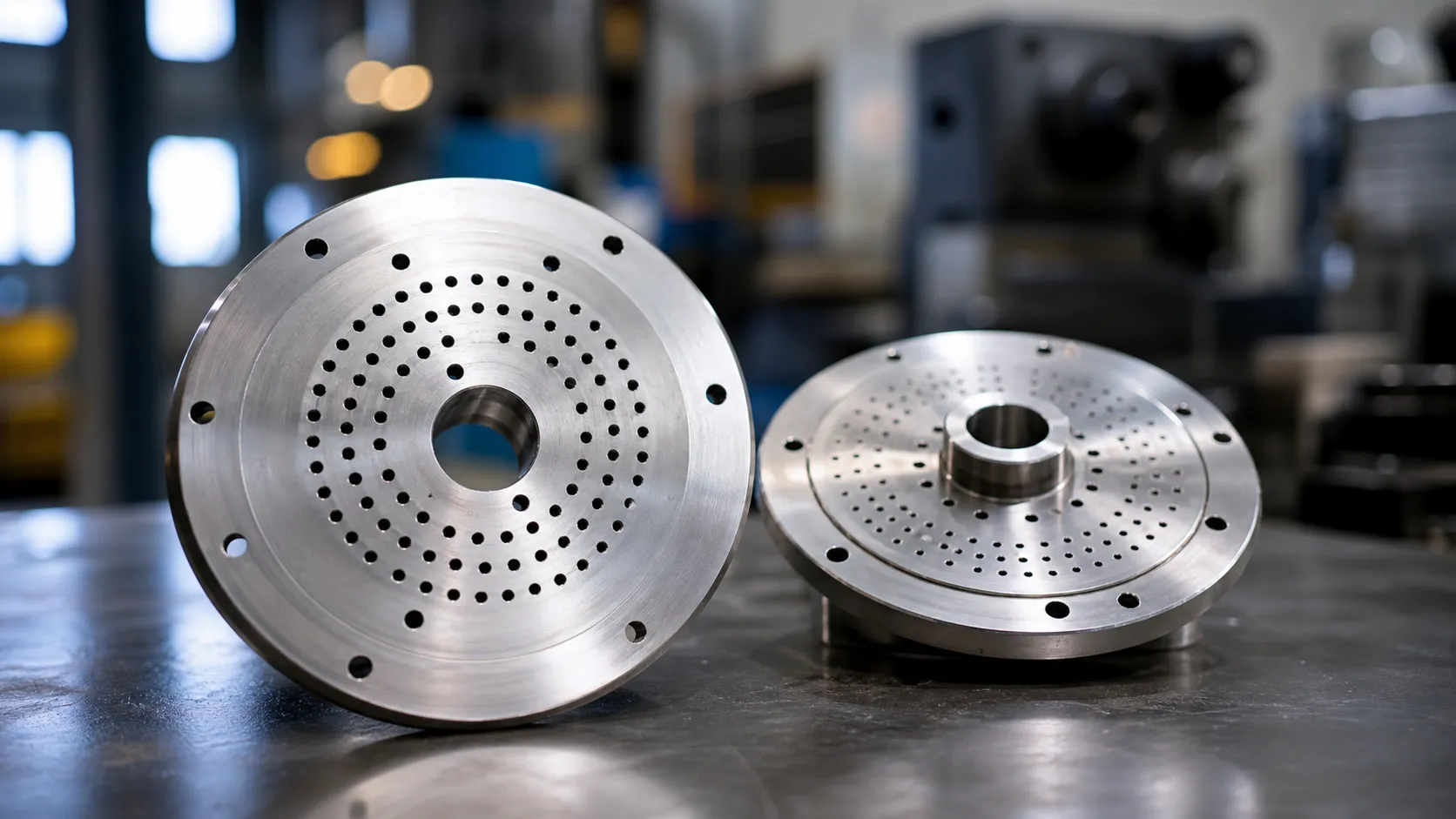
Dough viscosity affects how evenly the material moves through each die opening. Changes in recipe formulation can alter flow resistance, back pressure, and the final kibble size. Consistent mixing and stable material properties help maintain uniform flow across the die plate.
Extruder Moisture and Temperature Control
Moisture and temperature influence dough flow, starch gelatinization, and expansion during pet food extrusion. When these conditions vary, the material may leave the die with inconsistent density or shape. Stable operating control supports more repeatable extrusion results and reduces uneven loading across the die holes.
Cutter Knife Speed and Blade Distance
The rotating knife controls the length and final appearance of the extrudate after it exits the die. Knife speed, blade distance, and cutter alignment should remain consistent with the selected die pattern. A properly positioned cutter blade helps produce clean cuts and more uniform kibble shapes while limiting deformation at the die exit.
Best Practices for Die Plate Maintenance and Optimization
We extend the service life of extruder die plates by controlling flow balance, protecting hole geometry, and keeping food-contact surfaces clean. In pet food extrusion, small changes in open area, hole condition, or surface buildup can affect kibble size, shape consistency, and production stability.
Balancing Open Area for Consistent Extrusion
Open area is the combined flow area of all die holes. It must be balanced with the extruder’s operating conditions and the required output. An uneven or poorly matched open area can create unstable back pressure, inconsistent flow, and irregular expansion across the die plate.
Key controls include:
- Keeping hole sizes and land lengths consistent across the working surface
- Distributing holes evenly to avoid localized flow overload
- Inspecting for partially blocked holes that reduce effective open area
- Replacing or reworking plates when wear changes the intended flow balance
Precision-machined die plates help distribute material more evenly, reducing excessive stress on individual holes during continuous production.
Preventing Die Hole Wear and Deformation
Die holes experience constant friction from the product stream and contact from cutter blades at the die exit. Over time, this can enlarge hole openings, round critical edges, or create deformation that changes kibble shape and expansion ratio.
We recommend regular dimensional checks of high-wear areas, especially around die exits and cutter contact zones. CNC machining with tight tolerances supports accurate hole geometry and plate fitment, while 5-axis machining can be valuable for complex profiles and close-tolerance assemblies. Our approach to 5-axis CNC machining for food machinery components helps maintain precise features where standard machining access is limited.
For wear-prone parts around the extrusion line, material selection also matters. Stainless steel is commonly used where sanitation and corrosion resistance are required, while selected engineering plastics can support low-friction guide and wear applications. The differences among UHMW-PE, POM, and PEEK for food conveyor guides show why material choice should match friction, loading, and cleaning conditions.
Proper Cleaning Routines for Quality Shape Control
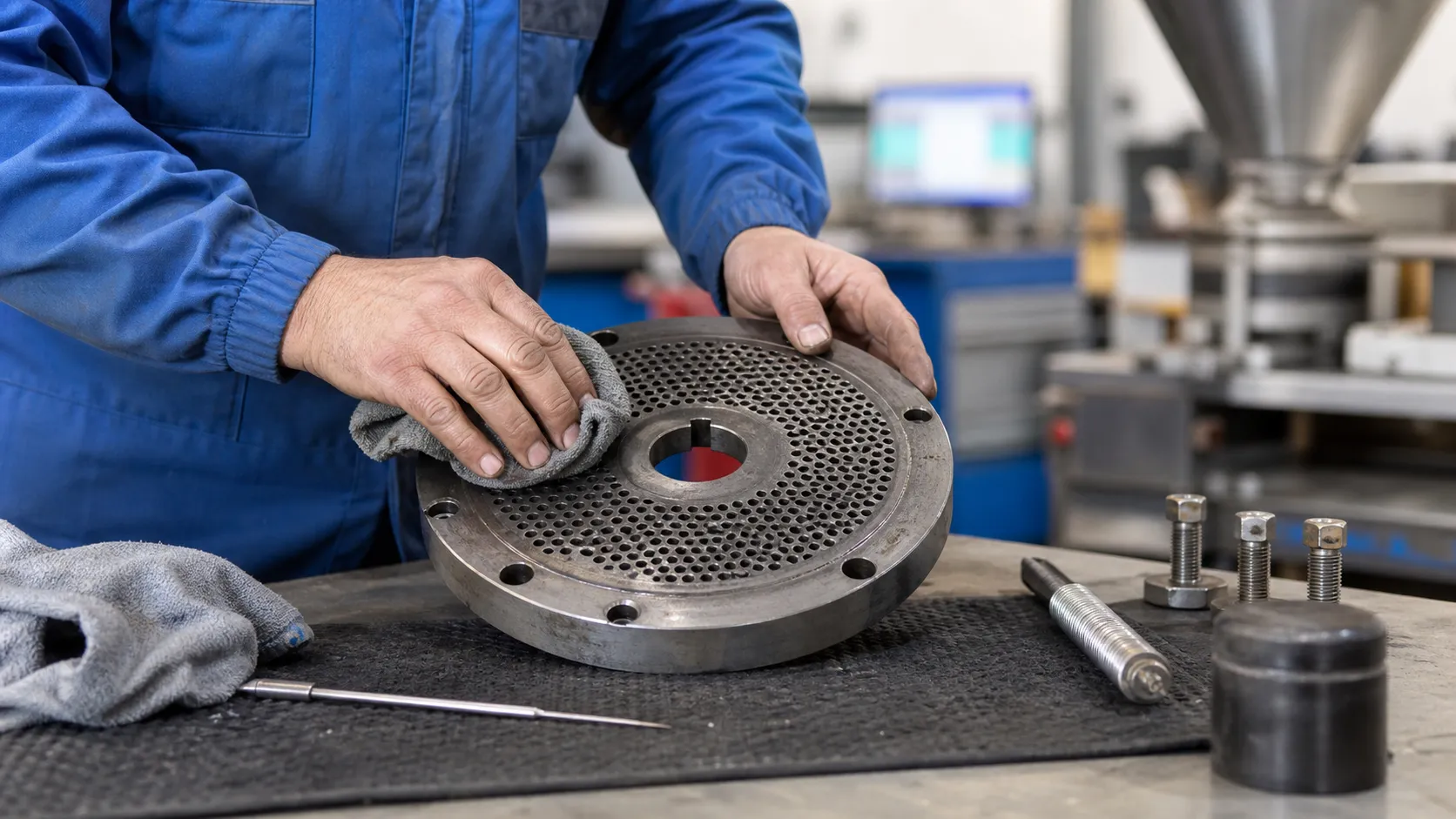
Product residue inside die holes can restrict flow, increase friction, and cause uneven kibble output. Cleaning should remove buildup without damaging the hole profile, die land, or polished food-contact surface.
Maintain a controlled routine:
- Clean die holes after production runs using tools that will not score the surface
- Remove residue before it hardens and creates partial blockages
- Inspect each hole for buildup, wear, or edge damage before reinstalling the plate
- Use suitable washdown and drying procedures to prevent corrosion and residue carryover
- Record recurring blockage or wear patterns to identify process-related causes
Food-grade polishing, passivation, and electropolishing can reduce microscopic crevices where material may collect. Combined with dimensional inspection and routine maintenance, these measures help preserve die plate geometry and support consistent pet food manufacturing output.
For high-wear-resistant die plates manufactured to your extruder specifications, explore our product page: Pet Food Extruder Die Plates.