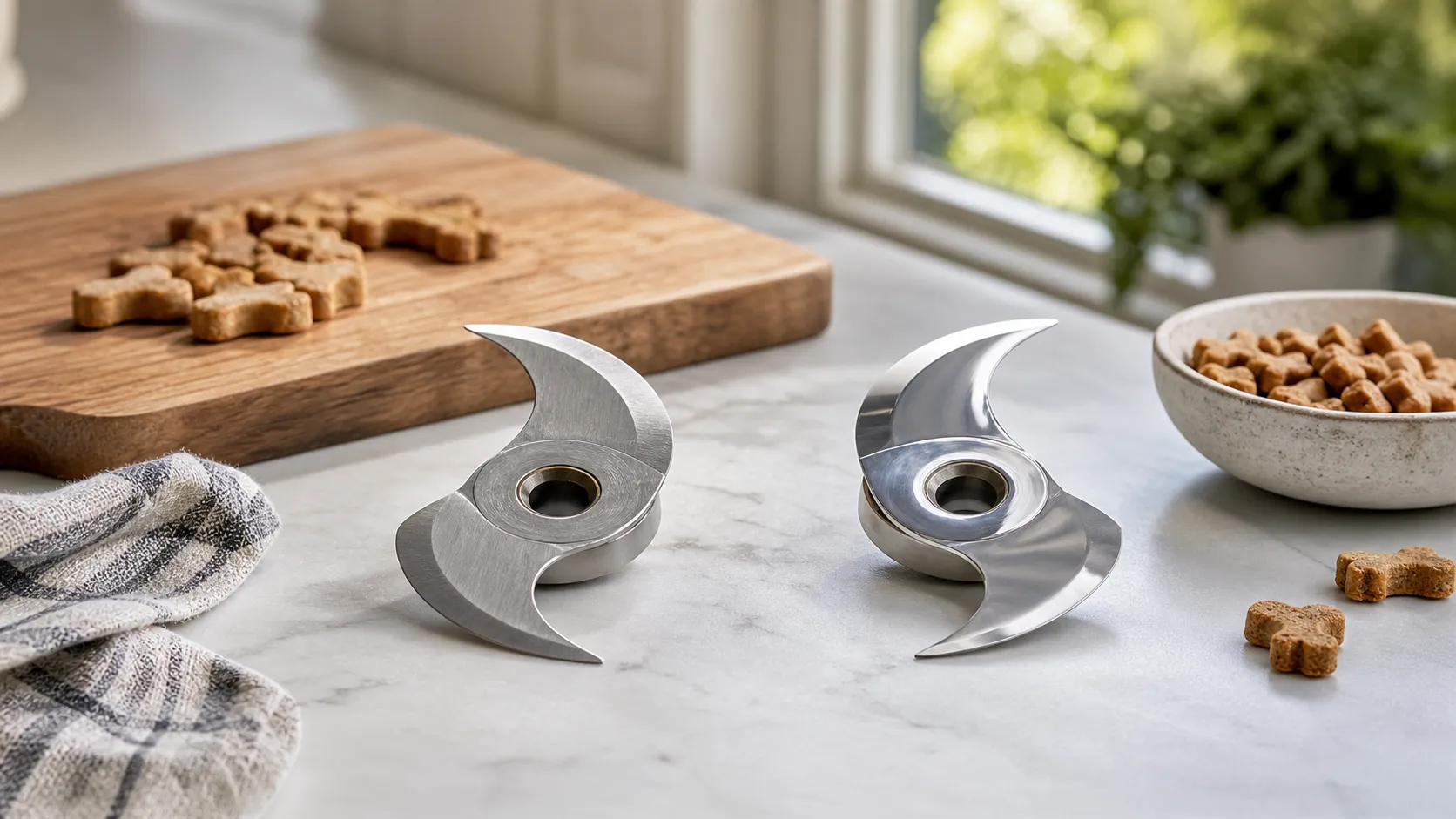
Choosing between 440C and 316L stainless steel can directly affect blade sharpness, washdown durability, and operating cost in pet treat production.
440C delivers high hardness and strong edge retention for dry, hard, or extruded treats. 316L marine-grade stainless steel offers superior resistance to animal fats, salts, moisture, and aggressive cleaning chemicals.
In this guide, you will learn how 440C vs 316L for pet treat cutting blades compares in hardness, corrosion resistance, food-grade hygiene, maintenance, and real manufacturing performance.
Understanding 440C vs 316L for Pet Treat Cutting Blades
Machining tolerance review: Typical machining tolerance is ±0.01 mm. Selected dimensions may achieve ±0.005 mm after technical review. Final tolerances depend on the drawing, material, part size, geometry, finishing and inspection requirements and must be confirmed before order acceptance.
Overview of 440C High-Carbon Stainless Steel
440C is a high-carbon stainless steel commonly evaluated when a cutting blade requires strong wear performance and edge-focused properties. At ZSCNC, 440C is not listed as a standard material offering, so its suitability for pet treat cutting blades requires a project-specific engineering review based on the blade design, production conditions, and sanitation requirements.
For custom blade projects, the material decision must account for the required cutting geometry, mounting accuracy, and maintenance approach. Precision machining of related blade holders, cutter seats, and mounting brackets helps maintain stable blade positioning during production.
Overview of 316L Marine-Grade Stainless Steel
316L is a listed stainless steel option for ZSCNC custom CNC machining projects. It is suited to food-processing components that operate in wet, hygienic environments and require dependable corrosion resistance. For pet food equipment, 316L can be machined into blade holders, cutter brackets, cutter seats, guide components, and other precision assemblies.
Its compatibility with sanitary surface finishing is a key advantage. Available finishing approaches include:
- Passivation for stainless steel surface protection
- Electropolishing to reduce microscopic surface irregularities
- Food-grade polishing for hygienic equipment applications
- Precision milling, turning, and 5-axis machining for complex cutter assemblies
Material mill certificates, dimensional inspection records, and controlled quality procedures support traceable sourcing for global OEM projects.
Importance of Material Selection in Pet Food Processing
Material selection directly affects hygiene, fitment, wear management, and production reliability in pet treat cutting systems. Cutting assemblies may be exposed to moisture, animal fats, salts, washdown procedures, and repeated mechanical contact. The selected stainless steel grade must match both the operating environment and the function of each component.
For 440C vs 316L for pet treat cutting blades, the central decision is often whether the application prioritizes custom blade wear requirements or corrosion-resistant sanitary construction. ZSCNC supports this evaluation through DFM engineering reviews, precision machining down to ±0.01 mm, sanitary finishing, and first-article validation for custom pet food machinery parts.
Chemical Composition and Material Properties Comparison
Carbon Content and Hardness Potential
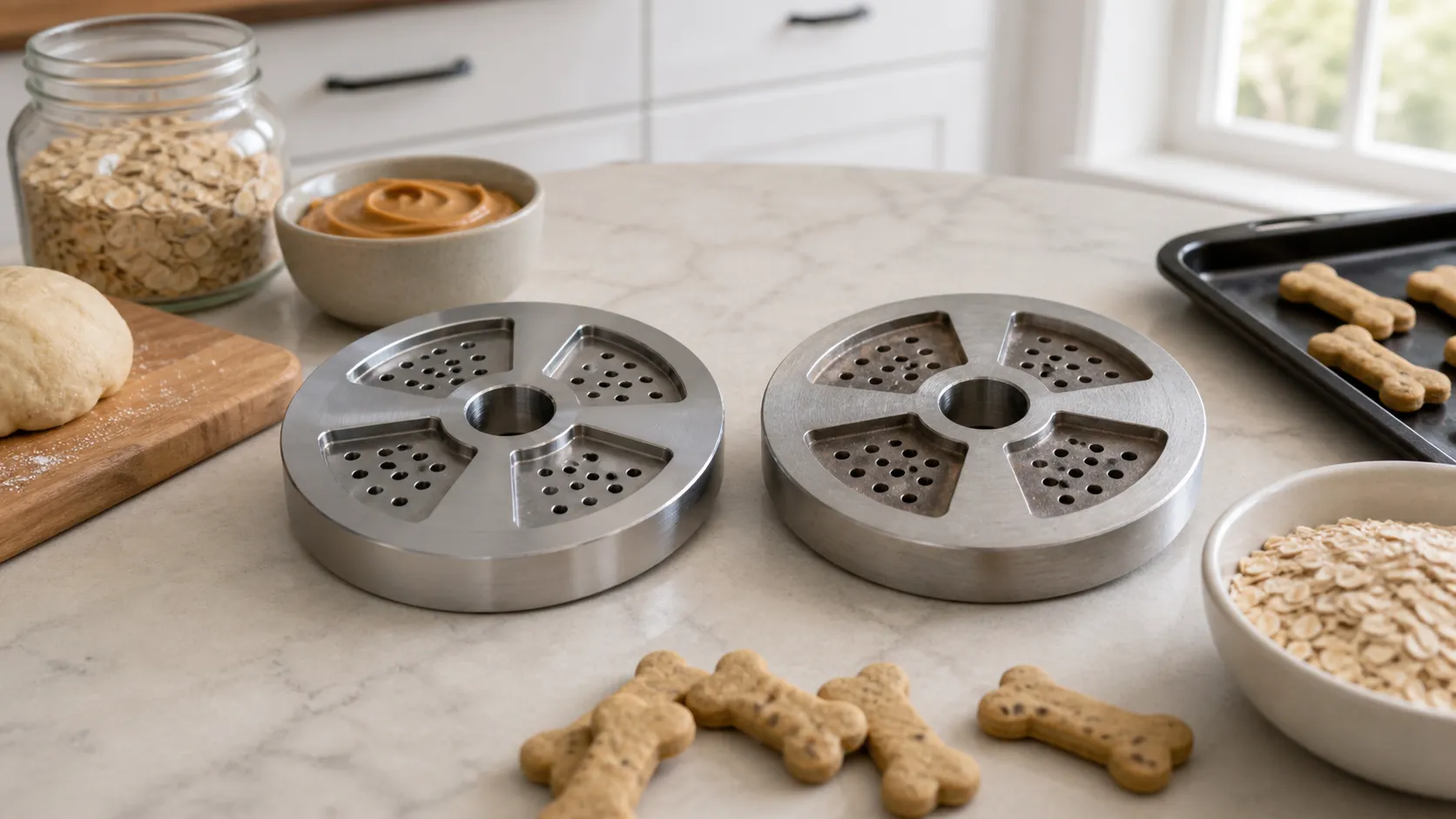
For 440C vs 316L for pet treat cutting blades, material verification must come first. We list 316L stainless steel as a supported material for sanitary CNC components. 440C is not listed as a standard material on our primary product range and requires a custom engineering review before approval.
| Material | Source Status | Hardness Evaluation |
|---|---|---|
| 316L stainless steel | Listed material | Reviewed against the drawing, cutting duty, and sanitary finish requirement |
| 440C stainless steel | Custom RFQ review required | Requires material, heat-treatment, and blade-use verification |
Chromium and Molybdenum Levels for Corrosion Resistance
316L is used where corrosion resistance, moisture exposure, and sanitary processing conditions matter. It is compatible with passivation, electropolishing, and food-grade polishing, helping reduce microscopic surface areas where contamination can collect.
For cutter seats, blade holders, and related tooling, we pair material selection with precision machining and finish requirements. Our sanitary knife holders and cutter seats are produced for hygienic equipment environments where cleanable geometry and controlled fitment are essential.
Wear Resistance and Edge Retention Capabilities
Wear resistance and edge retention should be assessed as an assembly requirement, not only as a steel-grade decision. Blade profile, mating surfaces, treat formulation, operating speed, and cleaning routines all affect service life.
| Evaluation Point | Manufacturing Control |
|---|---|
| Blade and holder fit | CNC machining tolerances down to ±0.01 mm |
| Surface condition | Passivation, electropolishing, food-grade polishing, or specified coating |
| Wear-critical components | DLC coating can be considered where validated for the application |
| Material control | Mill certificates, dimensional inspection, IQC, and OQC checks |
For pet food equipment, our DLC-coated pet food wear components show how surface treatment can support wear-focused designs alongside the selected base material.
Performance Analysis in Pet Treat Manufacturing
Cutting Sharpness and Edge Durability Under High Volume
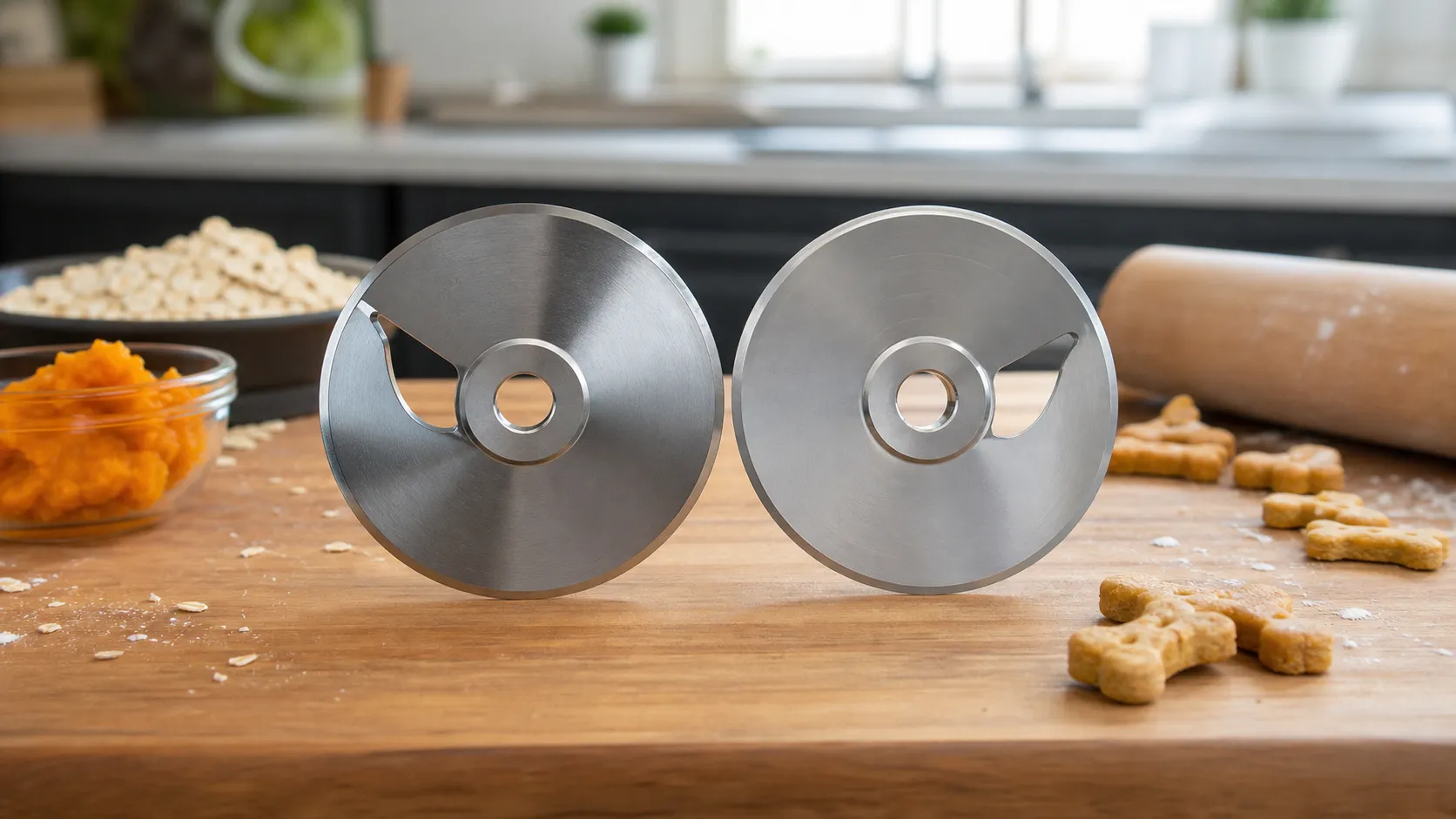
For high-volume pet treat production, blade performance depends on the selected material, geometry, heat treatment, and machining accuracy. 440C requires engineering validation for hardness, edge retention, and wear performance because this grade is not listed among ZSCNC’s standard materials. Custom requirements can be reviewed through the 440C pet treat cutting blade machining service.
316L is better suited to blade holders, cutter seats, and related components where corrosion resistance and sanitary finishing are the priority. ZSCNC supports precision CNC machining down to ±0.01 mm, helping maintain accurate blade fit and alignment during production.
Resistance to Animal Fats, Salts, and Washdown Chemicals
Pet food equipment may face moisture, product residue, fats, salts, and regular cleaning. 316L stainless steel is a practical option for hygienic, wet-processing environments because it offers corrosion resistance and can be finished with passivation or electropolishing.
The correct performance of 440C in a specific washdown and sanitation process should be confirmed during the RFQ and DFM review. Material selection should match the actual cleaning chemicals, exposure conditions, and required surface finish rather than relying on grade names alone.
Impact Toughness and Resistance to Blade Chipping
Blade chipping risk is influenced by cutting geometry, alignment, operating conditions, and the verified material condition. ZSCNC can assess these requirements through DFM engineering review, first-article prototyping, CMM inspection, and dimensional quality controls.
For a production-ready comparison between 440C and 316L, the design review should document the required edge behaviour, impact conditions, sanitation needs, and inspection criteria. This approach supports a balanced choice between cutting performance and hygienic service requirements.
Key Differences Between 440C and 316L Stainless Steel
Hardness vs Corrosion Resistance Trade-Off
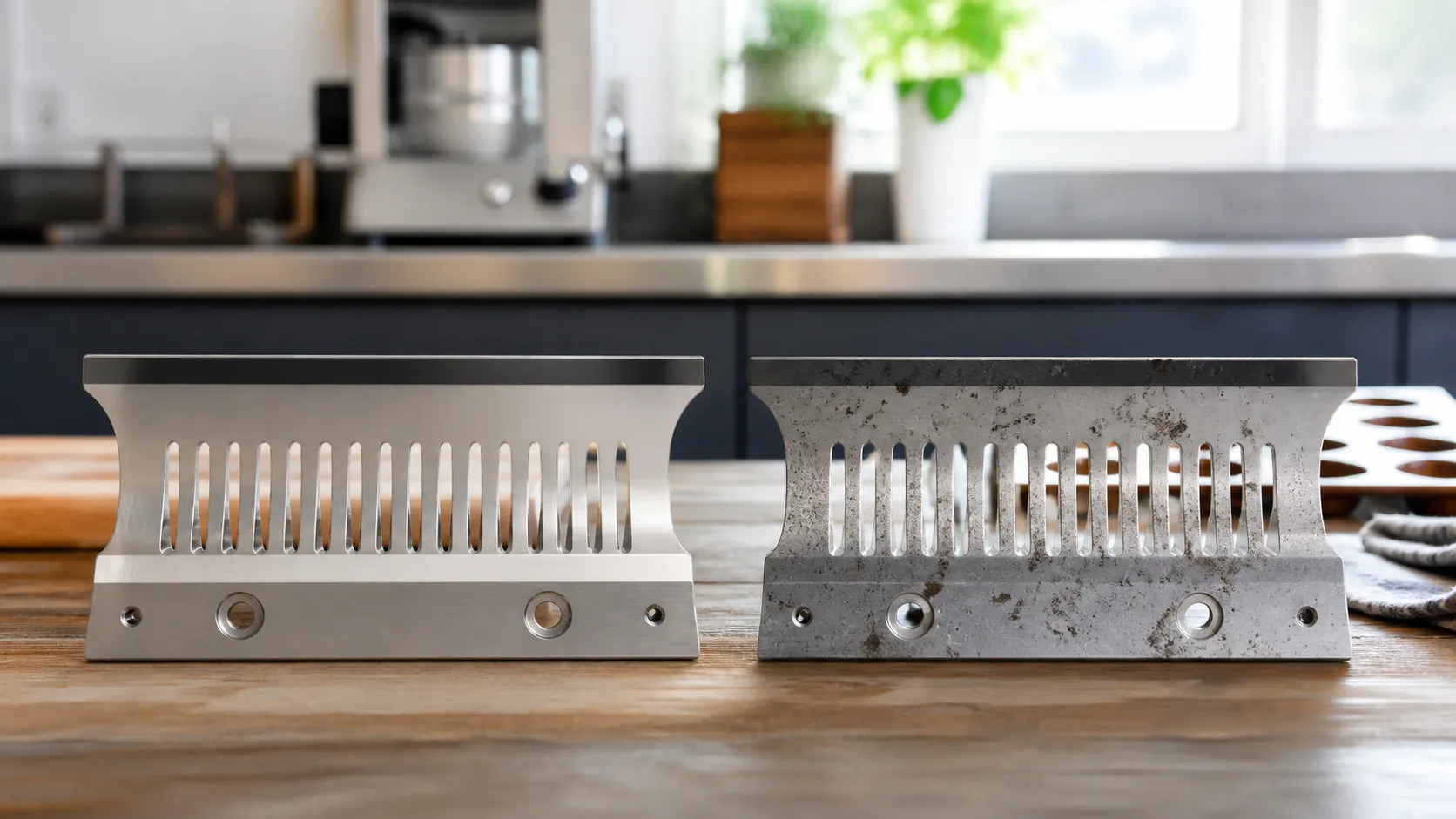
For 440C vs 316L for Pet Treat Cutting Blades, the choice depends on the working environment and the required blade performance. 440C is not listed as a standard material on the ZSCNC reference page, so its hardness, heat-treatment condition, and suitability must be confirmed during engineering review. 316L is a listed stainless steel option with strong corrosion resistance and compatibility with sanitary finishing.
| Selection factor | 440C | 316L |
|---|---|---|
| Material status at ZSCNC | Custom evaluation required | Listed material |
| Hardness and wear target | Confirm by RFQ and specification review | Confirm for the required blade design |
| Corrosion and washdown focus | Requires application review | Suitable for hygienic, moisture-exposed equipment |
| Sanitary finishing | Confirm finish compatibility | Passivation and electropolishing available |
Food Grade Safety and Hygiene Compliance
Food safety depends on the complete material and surface specification, not only the stainless steel grade. For 316L components, we can support sanitary finishing such as passivation, electropolishing, and food-grade polishing. These processes help reduce microscopic crevices where contamination may accumulate.
Because 440C is not identified on the source page, its material certification, surface treatment, and hygiene requirements should be reviewed before approval. Material mill reports, dimensional inspection, and the final finish specification should be included in the quality plan. Our stainless steel CNC machining capabilities support this type of documented material review.
Resharpening Frequency and Maintenance Demands
Resharpening frequency depends on blade geometry, treat formulation, production volume, cutting speed, and cleaning conditions. A harder blade design may be considered for wear-focused applications, but the required 440C condition is not verified by the available source information.
316L supports corrosion-focused applications and sanitary maintenance. For either grade, accurate cutter seats, blade holders, and mounting interfaces are essential. ZSCNC provides dimensional inspection, including CMM verification, with machining tolerances down to ±0.01 mm where the design requires it.
Material Cost and Overall Operational Lifespan
No fixed material or operating costs are published. Project pricing is custom and depends on the selected material, drawing, quantity, tolerances, and surface requirements. The most suitable grade should therefore be assessed by total operating needs rather than purchase price alone.
| Cost and service factor | Recommended evaluation |
|---|---|
| Initial material cost | Confirm through the project quotation |
| Service life | Review wear, moisture, cleaning, and production volume |
| Maintenance cost | Consider resharpening, inspection, and cleaning demands |
| Production risk | Validate the design through DFM review and first-article inspection |
For 440C, ZSCNC engineering must verify the grade and processing route before quoting. For 316L, the documented sanitary finishing and inspection options make it a practical choice when corrosion control and hygiene are the main priorities.
How to Choose the Right Steel for Pet Treat Cutting Blades
Material selection for 440C vs 316L for pet treat cutting blades should start with the product environment, cleaning process, and required blade geometry. We review each application against sanitary requirements, fitment tolerances, surface finish, and production conditions before machining.
When to Select 440C for Dry, Hard, or Extruded Treats
440C is not a standard material listed in our primary material range. For dry, hard, or extruded pet treats where wear and edge requirements are the main concern, it requires a custom engineering review.
We evaluate the drawing, cutting load, required blade profile, and sanitation process before confirming whether a high-carbon stainless option is suitable. This helps balance edge performance with the corrosion and hygiene needs of the line.
When to Select 316L for High-Moisture and Corrosive Processing
316L is a listed stainless steel option for food machinery components. It is a practical choice for wet pet food environments, frequent washdown, and applications that require corrosion resistance and sanitary surface finishing.
| Processing condition | Recommended direction |
|---|---|
| Wet or high-moisture treats | 316L |
| Frequent cleaning and washdown | 316L |
| Components requiring passivation or electropolishing | 316L |
| Custom high-wear blade requirement | Engineering evaluation for 440C |
For cutter seats, blade holders, brackets, and related assemblies, 316L can be precision machined and finished to reduce microscopic crevices. Our 5-axis CNC machining approach for food machinery components supports complex part geometry and close-fit blade assemblies.
Key Factors: Treat Moisture, Fat Content, and Production Line Setup
Use these factors when selecting stainless steel grades for pet treat cutting blades:
- Treat moisture: Wet products usually place more priority on corrosion resistance and cleanability.
- Fat, salt, and residue: Product buildup and cleaning exposure should guide the surface-finish requirement.
- Blade function: Separate the cutting edge requirement from the needs of the blade holder, cutter seat, and mounting hardware.
- Line configuration: Tight interfaces, moving parts, and repeatable blade positioning benefit from precision machining down to ±0.01 mm.
- Surface treatment: Passivation, electropolishing, food-grade polishing, or custom wear-enhancing options can be reviewed for the application.
For pet food systems that need added wear protection on non-cutting moving components, our DLC-coated conveyor flights for pet food lines show how coating options can support demanding production environments.